
Close Menu
    Facebook X (Twitter) Instagram
    SciTechDaily
    • Biology
    • Chemistry
    • Earth
    • Health
    • Physics
    • Science
    • Space
    • Technology
    Facebook X (Twitter) Pinterest YouTube RSS
    SciTechDaily
    Home»Biology»Paleontologists Solve 150-Year-Old Mystery – And Discover New Insect Group
    Biology

    Paleontologists Solve 150-Year-Old Mystery – And Discover New Insect Group

    By Simon Fraser UniversityMarch 5, 2021No Comments4 Mins Read
    Facebook Twitter Pinterest Telegram LinkedIn WhatsApp Email Reddit
    Share
    Facebook Twitter LinkedIn Pinterest Telegram Email Reddit
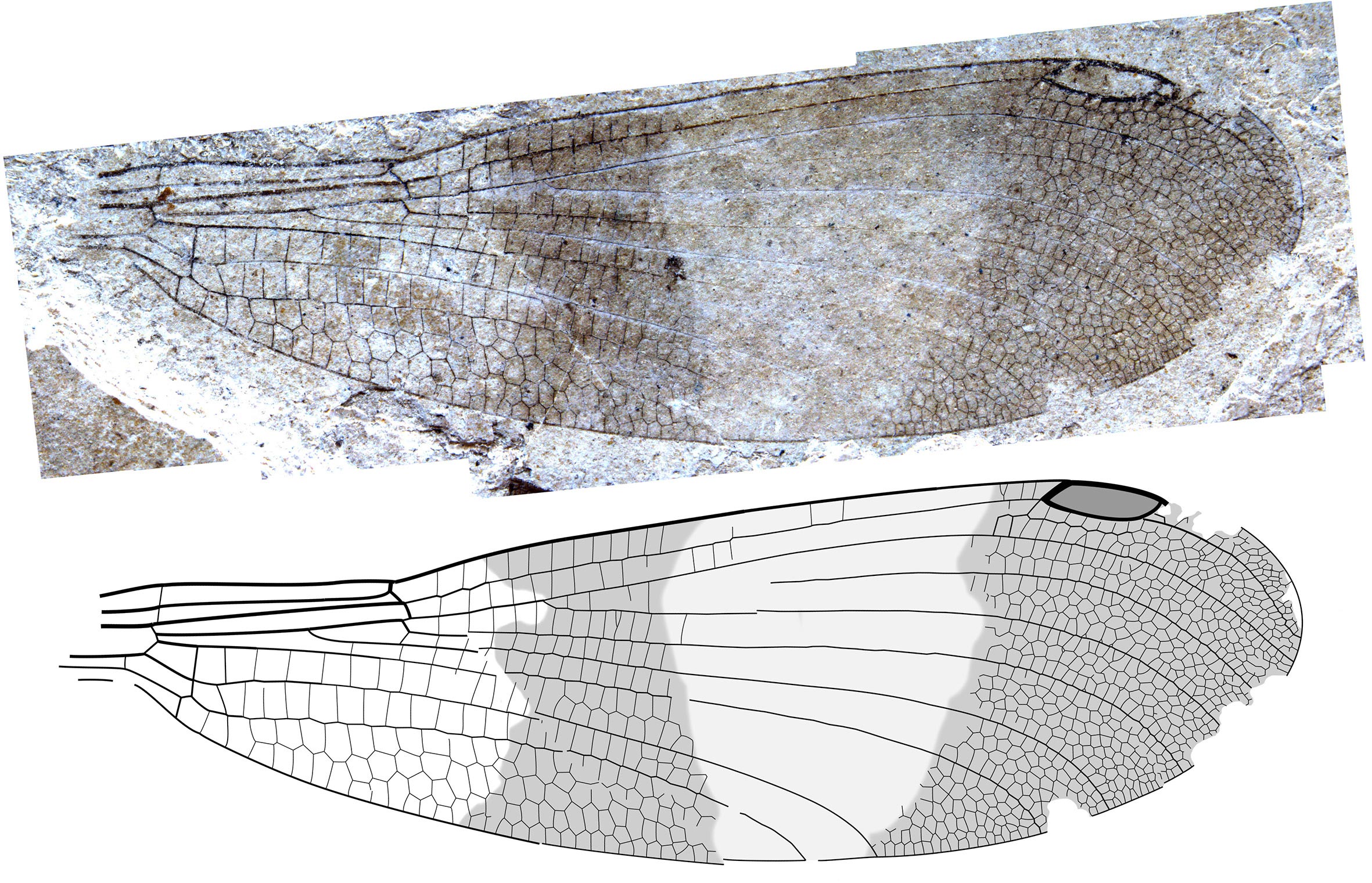
    Okanagrion hobani Wing
    Wing of the new species Okanagrion hobani, from the McAbee fossil site in British Columbia, a damselfly-like insect of the new suborder Cephalozygoptera. Credit: Copyright Zootaxa, used by permission

    SFU-led research team uncovers how fossil dragonfly relatives have been misclassified due to their striking similarity.

    For more than 150 years, scientists have been incorrectly classifying a group of fossil insects as damselflies, the familiar cousins of dragonflies that flit around wetlands eating mosquitoes. While they are strikingly similar, these fossils have oddly shaped heads, which researchers have always attributed to distortion resulting from the fossilization process.

    Now, however, a team of researchers led by Simon Fraser University (SFU) paleontologist Bruce Archibald has discovered they aren’t damselflies at all, but represent a major new insect group closely related to them.

    The findings, published today in Zootaxa, show that the distinctive shape of the insect’s non-protruding, rounded eyes, set close to the head, are the defining features of a suborder related to damselflies and dragonflies that the researchers have named Cephalozygoptera.

     “When we began finding these fossils in British Columbia and Washington State, we also thought at first they must be damselflies,” says Archibald.

    But on closer inspection, the team noticed they resembled a fossil that German paleontologist Hermann Hagen wrote about in 1858. Hagen set the precedent of linking the fossil to the damselfly suborder despite its different head shape, which didn’t fit with damselflies at all.

    Damselflies have short and wide heads with eyes distinctively protruding far to each side. Hagen’s fossil, however, had an oddly rounded head and eyes. But he assumed this difference was false, caused by distortion during fossilization.
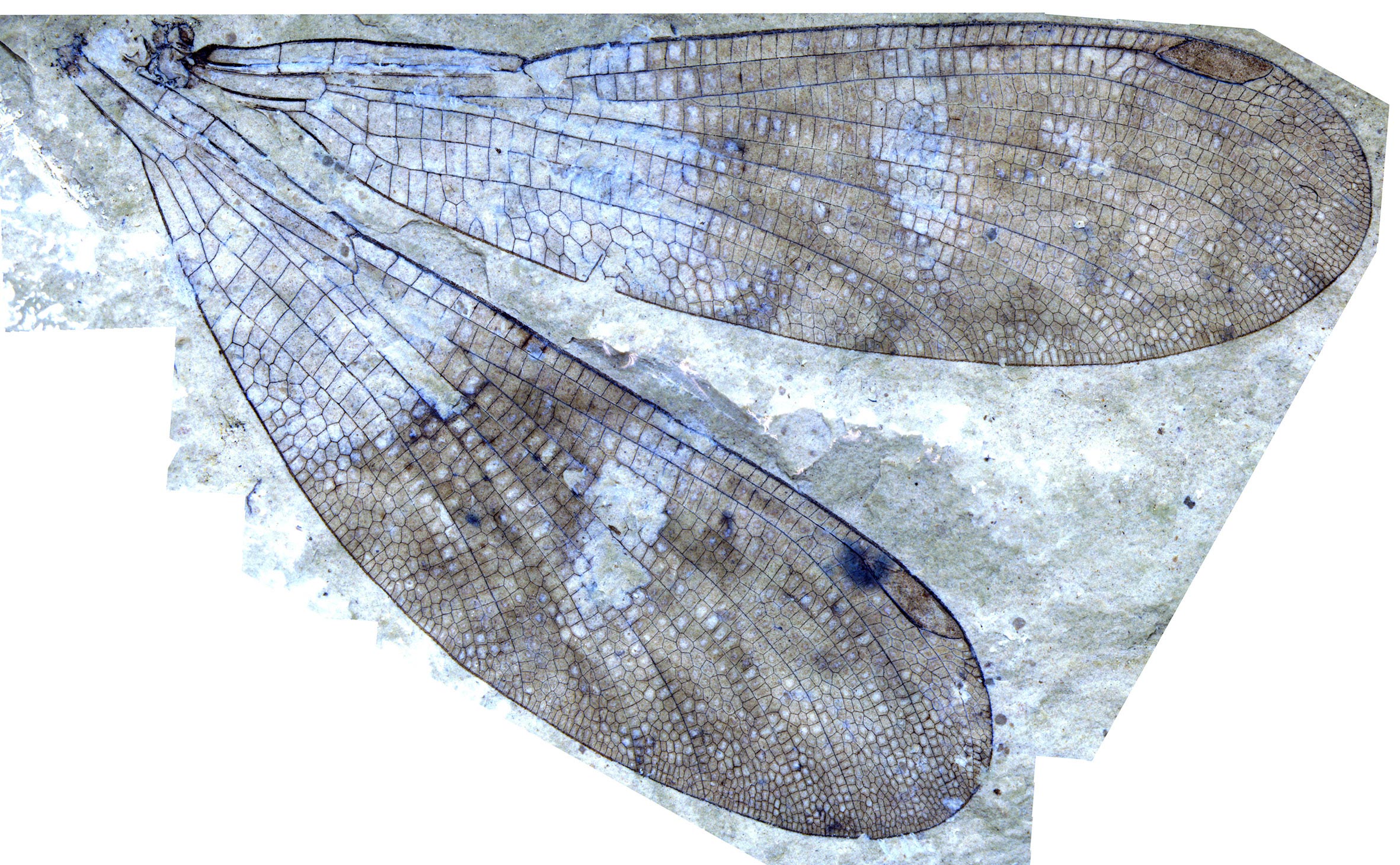
    Okanagrion threadgillae Wing
    Wings of the new species Okanagrion threadgillae, from the Republic fossil site in northern Washington, a damselfly-like insect of the new suborder Cephalozygoptera. Credit: Copyright Zootaxa, used by permission

    “Paleontologists since Hagen had written that these were damselflies with distorted heads,” Archibald says. “A few hesitated, but still assigned them to the damselfly suborder.”

    A Breakthrough in Fossil Interpretation

    The SFU-led team, including Robert Cannings of the Royal British Columbia Museum, Robert Erickson and Seth Bybee of Brigham Young University and SFU’s Rolf Mathewes, sifted through 162 years of scientific papers and discovered that many similar specimens have been found since Hagen’s time.

    They experienced a eureka moment when they realized the odd heads of their new fossils were, in fact, their true shape.

    The researchers used the fossil’s defining head shape to name the new suborder Cephalozygoptera, meaning “head damselfly.”

    The oldest known species of Cephalozygoptera lived among dinosaurs in the Cretaceous age in China, and were last known to exist about 10 million years ago in France and Spain.

    Bruce Archibald
    Paleontologist Bruce Archibald doing fieldwork at the McAbee fossil site in southern British Columbia, where many specimens were discovered of the new insect suborder Cephalozygoptera. Light-colored fossil-bearing sediments are exposed on the hillside behind him. Credit: Bruce Archibald

    Ancient Ecosystem Players

    “They were important elements in food webs of wetlands in ancient British Columbia and Washington about 50 million years ago, after the extinction of the dinosaurs,” says Archibald. “Why they declined and went extinct remains a mystery.”

    The team named 16 new species of Cephalozygoptera. Some of the fossils were found on the traditional land of the Colville Indian tribe of northern Washington, and so Archibald and his coauthors collaborated with tribal elders to name a new family of them. They called the family “Whetwhetaksidae,” from the word “whetwhetaks,” meaning dragonfly-like insects in the Colville people’s language.

    Archibald has spent 30 years combing the fossil-rich deposits of southern British Columbia and northern interior Washington. To date, in collaboration with others, he has discovered and named more than 80 new species from the area.

    Reference: “The Cephalozygoptera, a new, extinct suborder of Odonata with new taxa from the early Eocene Okanagan Highlands, western North America” by S. Bruce Archibald, Robert A. Cannings, Robert J. Erickson, Seth M. Bybee, Rolf W. Mathewes, 24 February 2021, Zootaxa.
    DOI: 10.11646/zootaxa.4934.1

    Never miss a breakthrough: Join the SciTechDaily newsletter.
    Follow us on Google and Google News.

    Entomology Evolution Geology Paleontology Simon Fraser University
    Share. Facebook Twitter Pinterest LinkedIn Email Reddit

    Related Articles

    Life Rebounded “Astoundingly” Fast After the Dinosaur-Killing Asteroid, Study Finds

    New Species of Beetle Discovered in Dinosaur Ancestor’s 230 Million-Year-Old Poop

    Unusual Fossil Discovered That Reveals Last Meal of a Prehistoric Pollinator

    Snakefly Mystery Deepens After Surprising Fossil Discovery

    Ancient Wasp-Mimicking Fly Discovered – Named After PSY’s ‘Gangnam Style’

    This Ancient “Giant Spider” Fossil Surprised Paleontologists – Detective Work Revealed a Hoax

    Frightening 500-Million-Year-Old Predator Unveils the Rise of Scorpions and Spiders

    New Approach to Studying Biomarkers Helped Solve 500-Million-Year-Old Mystery

    Scientists Replicate the Molecular Processes That Led from Dinosaur Snouts to Bird Beaks

    Leave A Reply Cancel Reply

    • Facebook
    • Twitter
    • Pinterest
    • YouTube

    Don't Miss a Discovery

    Subscribe for the Latest in Science & Tech!

    Trending News

    Researchers Have Found a Dietary Compound That Increases Longevity

    Scientists Baffled by Bizarre “Living Fossil” From 275 Million Years Ago

    Your IQ at 23 Could Predict Your Wealth at 27, Study Finds

    320 Light-Years Away, a Planet Confirms a Fundamental Cosmic Assumption

    The Crown Jewel of Dentistry? Breakthrough Tech Could Transform Tooth Repair

    Python Blood Could Hold the Secret to Weight Loss Without Side Effects

    Naturally Occurring Bacteria Completely Eradicate Tumors in Mice With a Single Dose

    New “Nanozyme Hypothesis” Could Rewrite the Story of Life’s Origins

    Follow SciTechDaily
    • Facebook
    • Twitter
    • YouTube
    • Pinterest
    • Newsletter
    • RSS
    SciTech News
    • Biology News
    • Chemistry News
    • Earth News
    • Health News
    • Physics News
    • Science News
    • Space News
    • Technology News
    Recent Posts
    • Scientists Uncover Hidden Clues to the Origin of the Genetic Code
    • Scientists Discover Unexpected Role of Alzheimer’s Protein in Cell Division
    • Scientists Uncover Brain Changes That Link Pain to Depression
    • A New Chapter in Chemistry? Scientists Uncover New Way Metals Bind Oxygen
    • New Study Reveals Earth Is Getting Brighter at Night – About 2% Each Year
    Copyright © 1998 - 2026 SciTechDaily. All Rights Reserved.
    • Science News
    • About
    • Contact
    • Editorial Board
    • Privacy Policy
    • Terms of Use

    Type above and press Enter to search. Press Esc to cancel.