
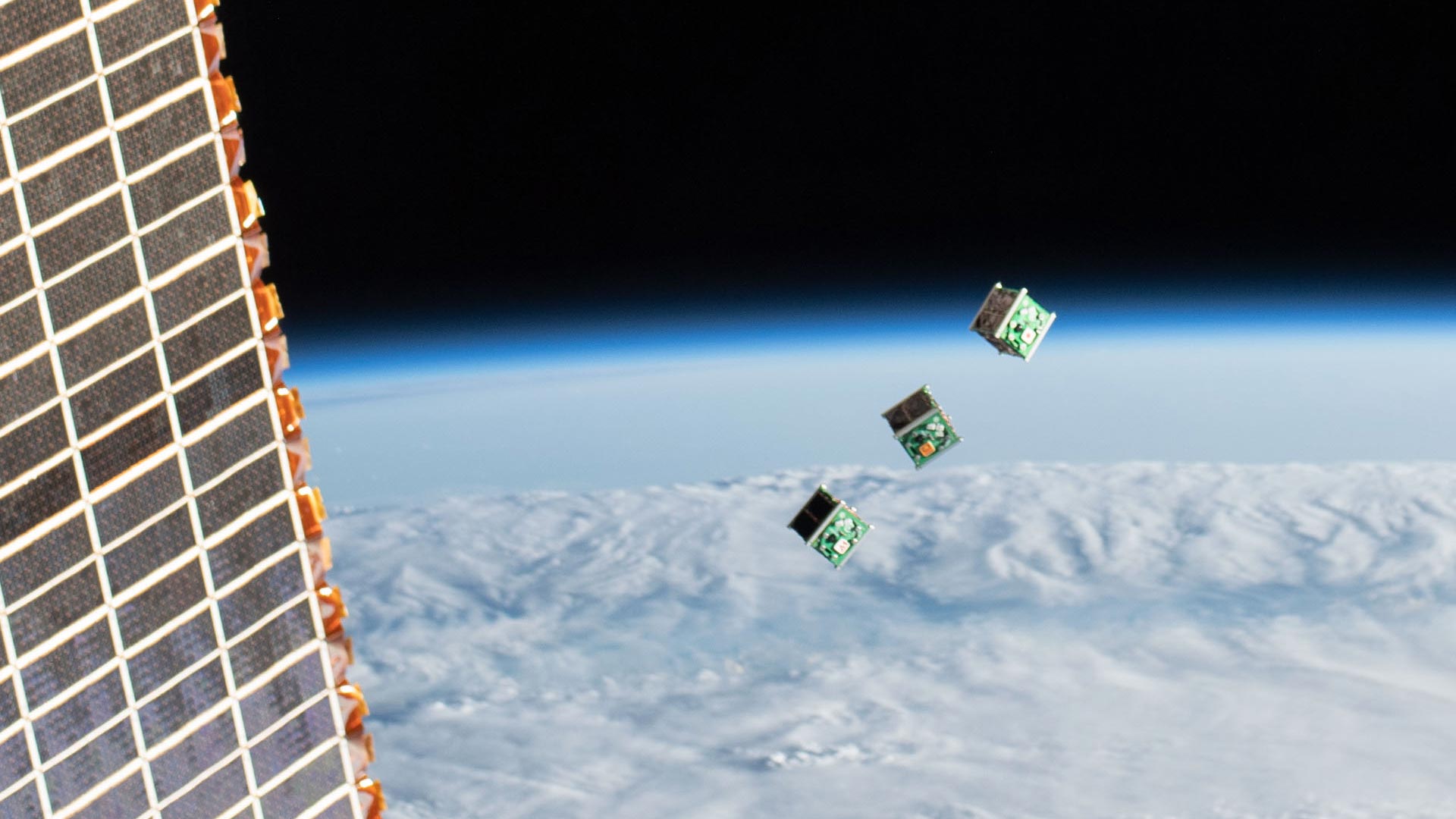
Paraguay’s first satellite tracks disease, builds space skills, and connects students to cutting-edge global science through the BIRDS-4 program.
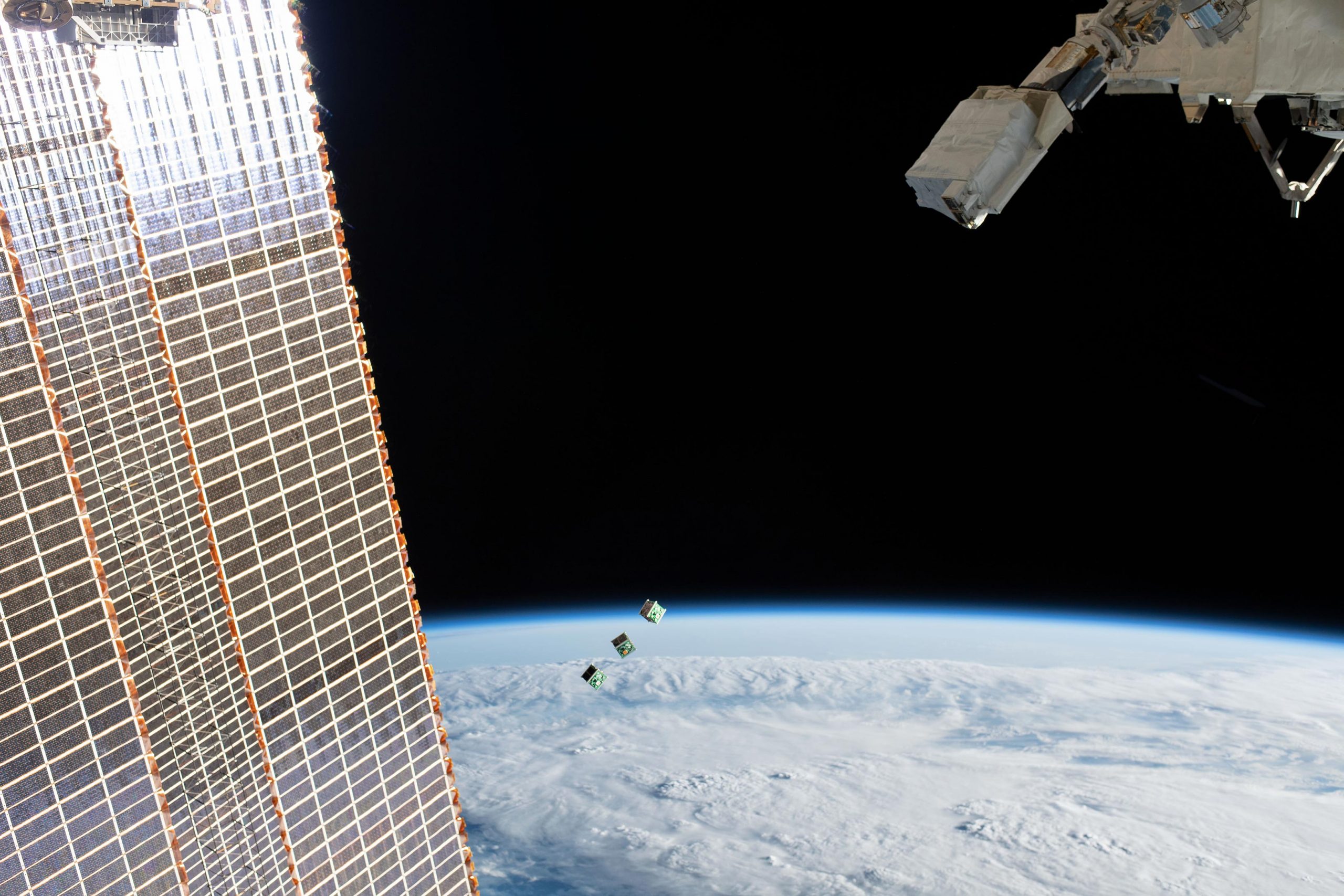
On March 14, the Paraguayan Space Agency (AEP) deployed a satellite from the International Space Station to help track a tiny parasite that causes Chagas disease. The satellite, Guaranisat-1, is the first developed and put into orbit by Paraguay. An estimated 8 million people in Mexico, Central America, and South America have Chagas disease, which if untreated can be life-threatening. Large-scale population movements from rural to urban areas of Latin America and other parts of the world have increased the geographic distribution of the disease.
Guaranisat-1 is part of the Joint Global Multi-Nation Birds Satellite project, or BIRDS, supported by the nation of Japan and the Kyushu Institute of Technology or Kyutech. Guaranisat-1 launched as a component of BIRDS-4, which also includes satellites from Japan and the Philippines. Previous BIRDS launches included first satellites from Ghana, Bangladesh, Mongolia, Bhutan, Nepal, and Sri Lanka.

“Our country’s first satellite marks a historical moment,” says Alejandro Román, AEP’s “Paraguay to Space” project manager. “It is the first step in a long path to bring the benefits of space to Paraguay in areas like disaster risk reduction, agriculture, natural resources management, land management, and climate.” A three-hour television program about the project drew 2.9 million viewers in a country with 7 million inhabitants, demonstrating its power as a tool for outreach about space benefits and careers in science, technology, and engineering.
One of the missions of BIRDS-4 satellites is to demonstrate collection of data through ground stations in regions that are difficult to access. In Paraguay, scientists installed sensors to detect the presence of the triatomine, or kissing bug, which carries the parasite that causes Chagas disease. Data from those sensors will be automatically transmitted via a central hub to the satellite and downloaded by a ground station to create a map of disease risk. Health authorities can use this map to help determine prevention actions.
Through this type of project, BIRDS supports space engineers in non-space-faring nations. “Any emerging nation can afford the cost of the program,” says George Maeda, an assistant professor at Kyutech who handles international interactions. The principal investigator for the program is Kyutech professor Mengu Cho.
Satellite-Building as Education and Empowerment
The satellites provide a means to a larger end: teaching skills to engineering students and sending them home to teach others, creating a foundation for a sustainable space program in their country. Students from a participating country go to Japan to learn the entire process from mission planning to hardware design, testing, launching, and in-orbit operation.
The students do all the work, Maeda says, with only light supervision from Kyutech. “They have never designed and built a satellite, so they make a lot of mistakes, but that is an important part of the learning process. You cannot learn how to build a satellite by reading books. They learn by spending a lot of time in the labs experimenting and making mistakes.” All project work must be completed in 24 months, the time it takes to complete a master’s degree in Japan.

The students from Paraguay are Adolfo Jara and Anibal Mendoza. Jara is working on a Ph.D. and Mendoza on a master’s in electrical and space engineering.
“Chagas disease affects especially vulnerable populations, including indigenous communities in the region, representing a public health problem,” says Jara. While the satellite mission is a technology demonstration, if it achieves the results expected, risk mapping could be replicated on a broader scale, benefitting more communities.
The satellite also has a camera to take images from space. An onboard Image Classification Unit uses artificial intelligence to sort images into predefined categories and choose those suitable to download, making the project more cost-efficient. Guaranisat-1 will orbit for up to two years, transmitting every 90 seconds to a network of stations in each of the participating countries.
AEP plans to develop additional satellite missions, focusing on capacity building. “There is an advantage to starting late in space development,” says Román. “There are many lessons already learned that we can apply to improve and accelerate our country’s development.”
CABURE’I-4S and the Vision for Paraguayan Space Science
A team of AEP engineers and engineering students are working on a program called CApacity Building, REsearch and Innovation – 4 Space (CABURE’I-4S) as a next step, says Jorge Kurita, AEP director of planning and management. “Cabure’I” means “owl” in the indigenous Guarani language.
“Local capacity-building is an essential component of our space activities,” Kurita says. “College students all over Paraguay are actively participating in this exciting journey.”
Participating countries pay for student training, satellite hardware, and launch. The space station provides a low-cost option for launching satellites, helping to keep the program affordable. BIRDS-4 uses CubeSats, which are deployed by the Japanese Experiment Module Small Satellite Orbital Deployer-16 (J-SSOD) aboard the space station. The satellites verify the use of commercial off-the-shelf components in space and demonstrate a new type of solar cell, the Perovskite solar cell. Data on its performance in space will help evaluate the technology for use on future space missions.
“For the students, building their nation’s first satellite is thrilling beyond words,” says Maeda. “I see this on a daily basis. It’s magic.”
Never miss a breakthrough: Join the SciTechDaily newsletter.
Follow us on Google and Google News.