
Close Menu
    Facebook X (Twitter) Instagram
    SciTechDaily
    • Biology
    • Chemistry
    • Earth
    • Health
    • Physics
    • Science
    • Space
    • Technology
    Facebook X (Twitter) Pinterest YouTube RSS
    SciTechDaily
    Home»Space»Peregrine’s Unintended Experiment: How a Doomed Moon Mission Unlocks New Space Science
    Space

    Peregrine’s Unintended Experiment: How a Doomed Moon Mission Unlocks New Space Science

    By NASAJanuary 12, 20242 Comments4 Mins Read
    Facebook Twitter Pinterest Telegram LinkedIn WhatsApp Email Reddit
    Share
    Facebook Twitter LinkedIn Pinterest Telegram Email Reddit
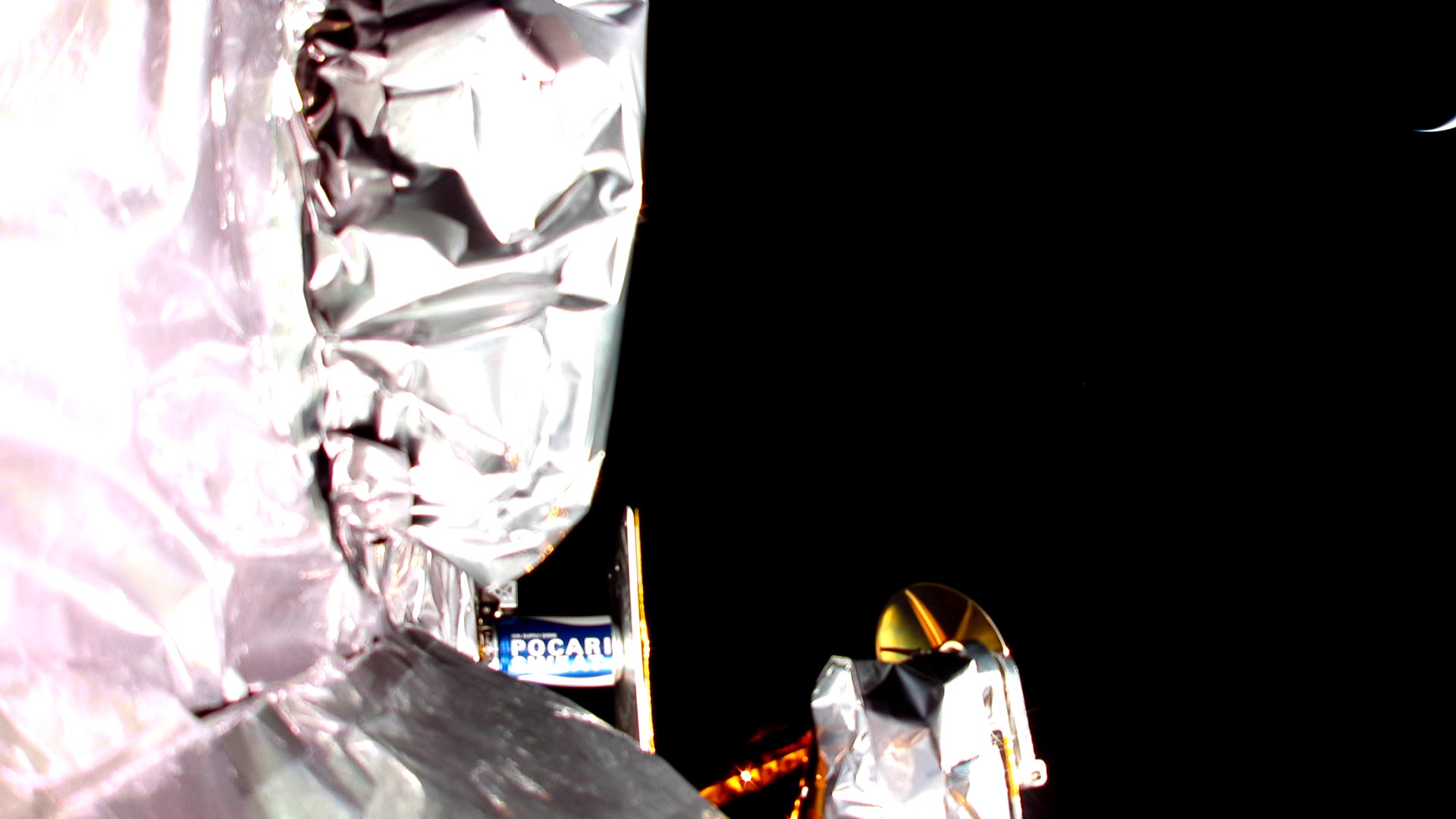
    Astrobotic Peregrine Lunar Lander in Space
    An image captured in space from Peregrine’s journey. The curved sliver in the upper right corner is Earth. The camera that took this image is located on the bottom of one of Peregrine’s payload decks. Just left of center in the image is the DHL MoonBox payload covered in MLI, which contains hundreds of thousands of messages from the people of Earth. Visible to the right of MoonBox and near the bottom center of the photo is Astroscale’s Pocari Sweat Lunar Dream Time Capsule – this was the first payload under contract with Astrobotic and contains messages from children around the world. The bottom center right of the image shows one of Peregrine’s landing legs obscured by the electrical interface where we were connected with the launch vehicle. Credit: Astrobotic

    NASA’s Peregrine lander, despite a launch setback, is conducting extended scientific research in cislunar space, gathering crucial data for future lunar missions.

    NASA’s CLPS (Commercial Lunar Payload Services) initiative aims to deliver science and technology to the Moon to advance our capabilities in lunar exploration. Shortly after launch, Astrobotic’s Peregrine lander experienced a failure in the propulsion system, causing a critical loss of propellant. Astrobotic announced due to the failure, Peregrine will not achieve a soft lunar landing for this mission.

    Efforts by the Astrobotic team have recovered the spacecraft and allowed Peregrine to remain operationally stable collecting data about the interplanetary environment. All NASA payloads that can power on have received power and are effectively gathering data, although interpreting the results will require some time.

    Extended Science in Cislunar Space

    Both Astrobotic and NASA are taking advantage of this flight time by extending the science of Peregrine’s Mission One into cislunar space. NASA payloads including, NSS (Neutron Spectrometer System), LETS (Linear Energy Transfer Spectrometer), PITMS (Peregrine Ion Trap Mass Spectrometer), and NIRVSS (Near Infrared Volatile Spectrometer System) have successfully powered on while the spacecraft has been operationally stable.

    Since the LRA (Laser Retroreflector Array) instrument is a passive experiment that can only be conducted on the lunar surface, it cannot conduct any operations in transit.
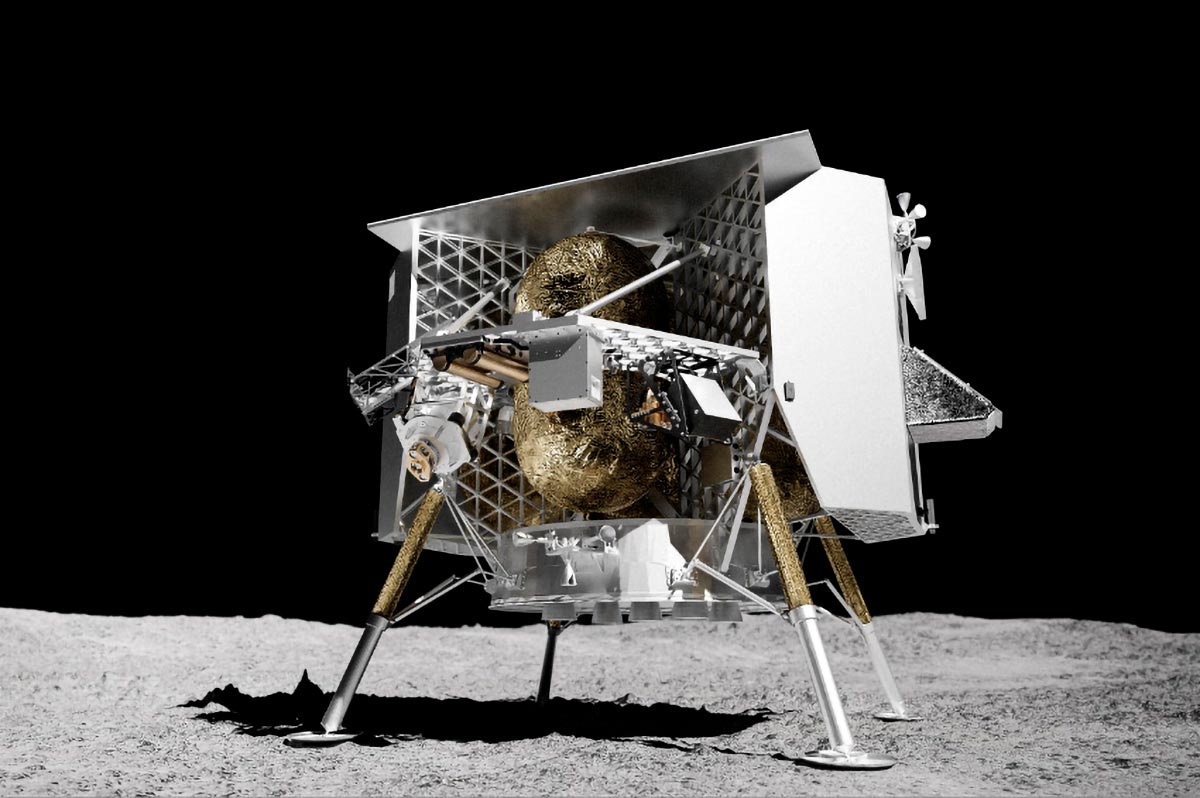
    Astrobotic Peregrine Lunar Lander
    Peregrine is Astrobotic’s small-class lunar lander, shown on the Moon in this illustration. Due to a failure in the propulsion system, it will not be able to make a soft landing on the Moon for this mission. Credit: Astrobotic Technology

    Innovative Technologies and Data Collection

    A novel NASA space technology guidance and navigation sensor, which Astrobotic incorporated as a Peregrine lander component, NDL (Navigation Doppler Lidar), has also been successfully powered on.

    “Measurements and operations of the NASA-provided science instruments on board will provide valuable experience, technical knowledge, and scientific data to future CLPS lunar deliveries,” said Joel Kearns, deputy associate administrator for exploration with NASA’s Science Mission Directorate at NASA Headquarters in Washington.

    Some of the NASA-provided payloads aboard Peregrine were already scheduled for future lunar flights. The team is taking this opportunity to collect as much science data as possible and to further characterize the performance and functionality of the science instruments while the spacecraft follows its current trajectory. Astrobotic is striving to extend Peregrine’s mission, allowing for additional data collection for NASA’s and other customers’ payloads.

    Two of the payloads, NSS and LETS, are making measurements of the radiation environment in interplanetary space around the Earth and the Moon. The two instruments are measuring different components of the radiation spectrum, which provide complementary insights into the galactic cosmic ray activity and space weather resulting from solar activity. This data helps characterize the interplanetary radiation environment for humans and electronics.

    Additional updates will be shared as they become available.

    Never miss a breakthrough: Join the SciTechDaily newsletter.
    Follow us on Google and Google News.

    ARTEMIS Mission Astrobotic Moon NASA Popular
    Share. Facebook Twitter Pinterest LinkedIn Email Reddit

    Related Articles

    NASA Begins Building VIPER – Its First Robotic Moon Rover

    NASA Unveils Next-Gen Spacesuit for Artemis III Moon Surface Mission

    See the Far Side of the Moon: Incredibly Detailed Pictures From Artemis I Orion Close Lunar Flyby

    Behold! NASA’s Artemis I Orion Close Flyby of the Moon

    Artemis I Distant Retrograde Orbit: NASA’s Orion Spacecraft Will Travel 40,000 Miles Beyond the Moon

    NASA Seeks New Astronaut Lunar Landers for Future Artemis Moon Missions

    NASA Identifies Lunar Landing Sites for Next Americans on Moon

    NASA’s Lunar IceCube – Moon-Observing CubeSat Ready for Artemis Launch

    NASA Priority Artemis Science on Moon To Investigate Mysterious Gruithuisen Domes

    2 Comments

    1. wend on January 16, 2024 2:18 am

      What the ef, isn’t it going to crash to earth? Plus in the way of a solar flare yesterday? Keep talking it up like its something though so you can secure future missions. While people starve and freeze to death and new york falls into the sea. Thank you for being here to explain all your shinanigans in space for us. I AM SURE the populations of the world have already purchased their new 2024 space suits with ai tech and are standing by waiting to board. Oh wait i guess they should bring shovels too, cause of exploration but mostly for exploitation. Please remember to say your prayers.

      Reply
    2. James Sloan on January 16, 2024 6:37 am

      The mission may not be successful in reporting science measurements from the surface of the moon, but the measurements of radiation around the earth and moon Cislunar Space will be invaluable data for the human crew of the Artemis II extended flight path around the moon.

      Reply
    Leave A Reply Cancel Reply

    • Facebook
    • Twitter
    • Pinterest
    • YouTube

    Don't Miss a Discovery

    Subscribe for the Latest in Science & Tech!

    Trending News

    Millions Take These IBS Drugs, But a New Study Finds Serious Risks

    Scientists Unlock Hidden Secrets of 2,300-Year-Old Mummies Using Cutting-Edge CT Scanner

    Bread Might Be Making You Gain Weight Even Without Eating More Calories

    Scientists Discover Massive Magma Reservoir Beneath Tuscany

    Europe’s Most Active Volcano Just Got Stranger – Here’s Why Scientists Are Rethinking It

    Alzheimer’s Symptoms May Start Outside the Brain, Study Finds

    Millions Take This Popular Supplement – Scientists Discover a Concerning Link to Heart Failure

    The Universe Is Expanding Too Fast and Scientists Can’t Explain Why

    Follow SciTechDaily
    • Facebook
    • Twitter
    • YouTube
    • Pinterest
    • Newsletter
    • RSS
    SciTech News
    • Biology News
    • Chemistry News
    • Earth News
    • Health News
    • Physics News
    • Science News
    • Space News
    • Technology News
    Recent Posts
    • U.S. Waste Holds $5.7 Billion Worth of Crop Nutrients
    • Scientists Say a Hidden Structure May Exist Inside Earth’s Core
    • Doctors Surprised by the Power of a Simple Drug Against Colon Cancer
    • Why Popular Diabetes Drugs Like Ozempic Don’t Work for Everyone: The “Genetic Glitch”
    • Scientists Create Improved Insulin Cells That Reverse Diabetes in Mice
    Copyright © 1998 - 2026 SciTechDaily. All Rights Reserved.
    • Science News
    • About
    • Contact
    • Editorial Board
    • Privacy Policy
    • Terms of Use

    Type above and press Enter to search. Press Esc to cancel.