
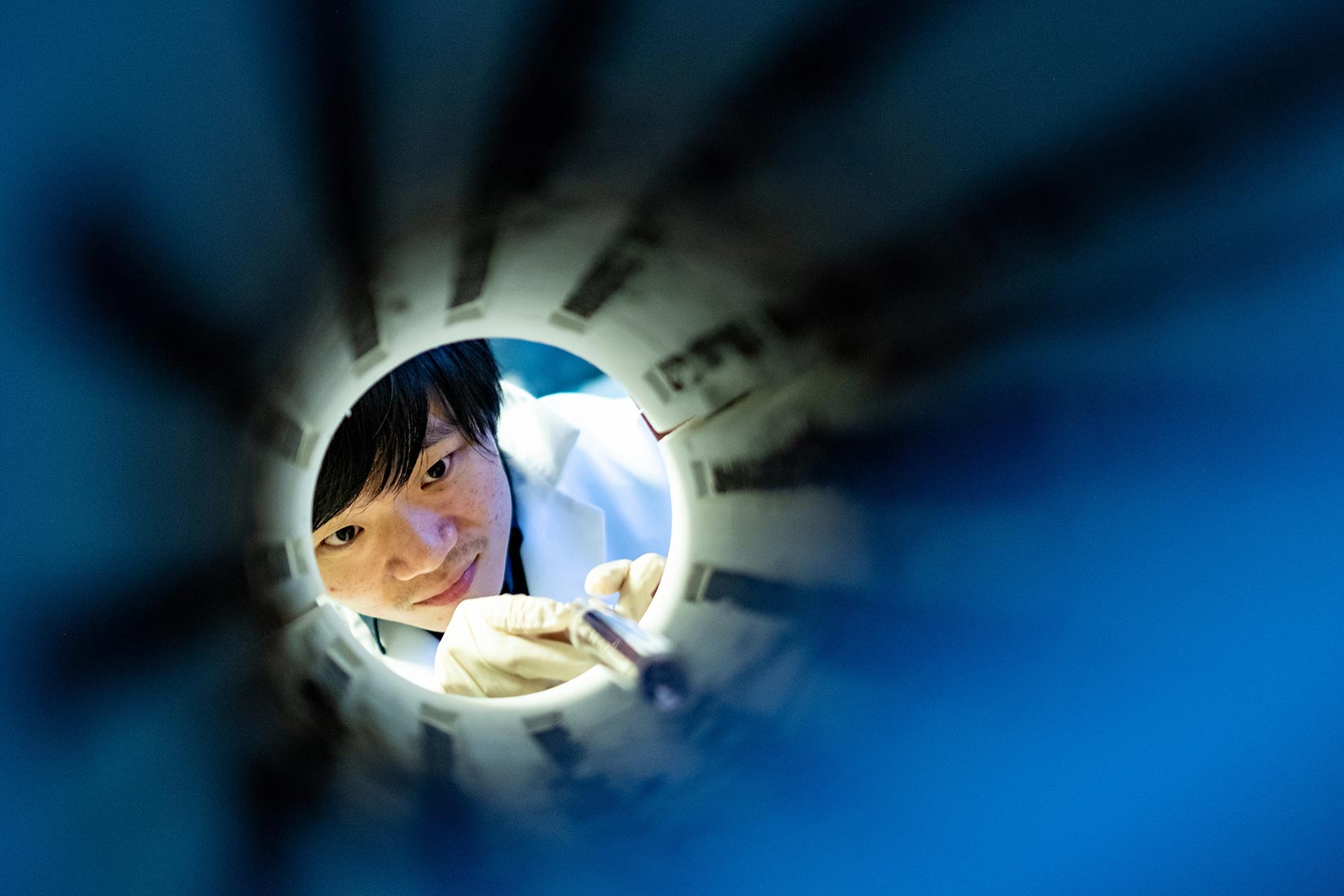
Topological feature could prove useful for encoding information in electron spins.
Rice physicists have confirmed the topological origins of magnons, magnetic features they discovered three years ago in a 2D material that could prove useful for encoding information in the spins of electrons.
The discovery, described in a study published online recently in the American Physical Society journal Physical Review X, provides a new understanding of topology-driven spin excitations in materials known as in 2D van der Waals magnets. The materials are of growing interest for spintronics, a movement in the solid-state electronics community toward technologies that use electron spins to encode information for computation, storage, and communications.
Spin is an intrinsic feature of quantum objects and the spins of electrons play a key role in bringing about magnetism.
Neutron-Scattering Confirms Spin-Orbit Interaction
Rice physicist Pengcheng Dai, co-corresponding author of the PRX study, said inelastic neutron-scattering experiments on the 2D material chromium triiodine confirmed the origin of the topological nature of spin excitations, called magnons, that his group and others discovered in the material in 2018.
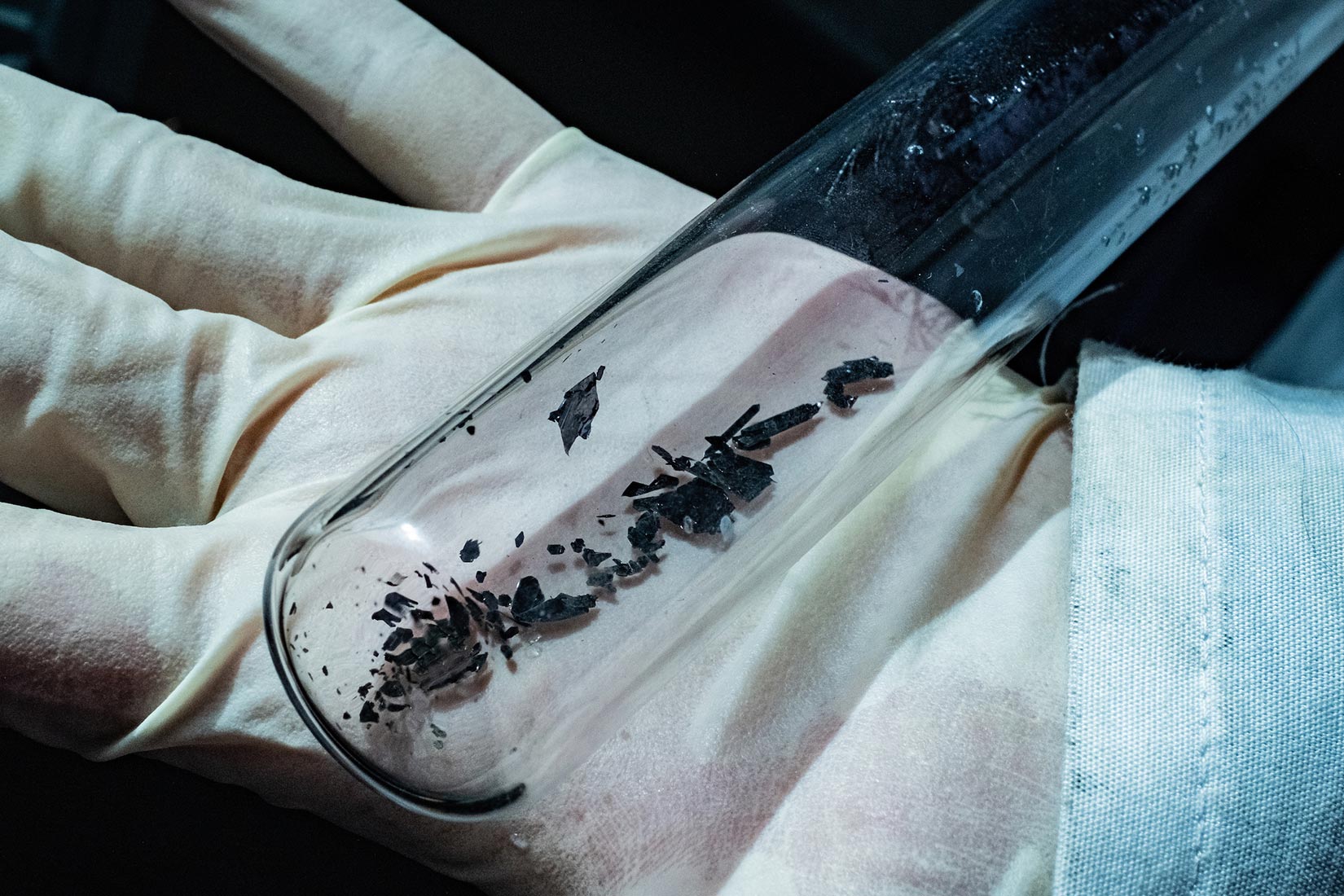
The group’s latest experiments at Oak Ridge National Laboratory’s (ORNL) Spallation Neutron Source showed “spin-orbit coupling induces asymmetric interactions between spins” of electrons in chromium triiodine, Dai said. “As a result, the electron spins feel the magnetic field of moving nuclei differently, and this affects their topological excitations.”
Ferromagnetic vs. Antiferromagnetic Stacking
In van der Waals materials, atomically thin 2D layers are stacked like pages in a book. The atoms within layers are tightly bonded, but the bonds between layers are weak. The materials are useful for exploring unusual electronic and magnetic behaviors. For example, a single 2D sheet of chromium triiodine has the same sort of magnetic order that makes magnetic decals stick to a metal refrigerator. Stacks of three or more 2D layers also have that magnetic order, which physics call ferromagnetic. But two stacked sheets of chromium triiodine have an opposite order called antiferromagnetic.
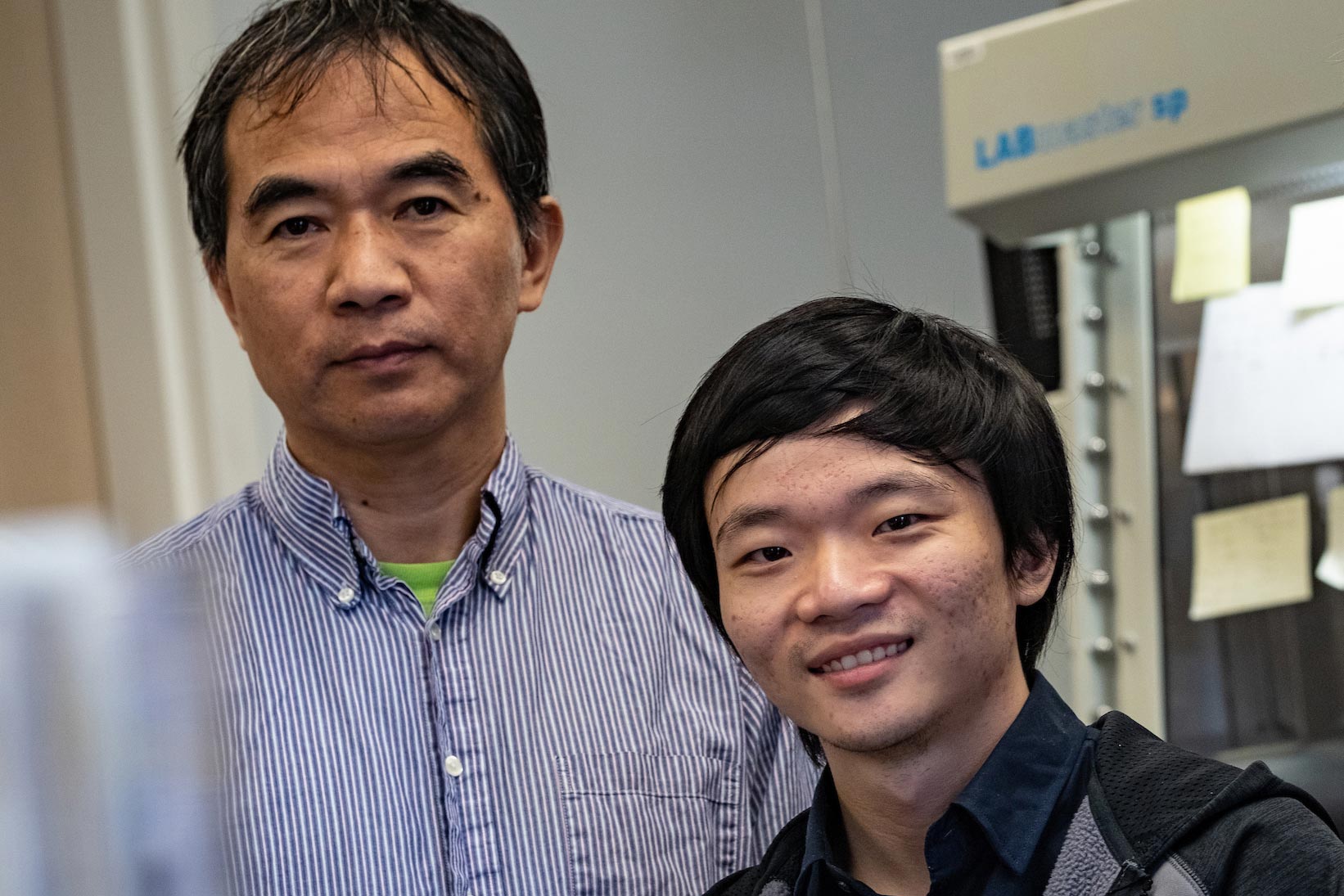
That strange behavior led Dai and colleagues to study the material. Rice graduate student Lebing Chen, the lead author of this week’s PRX study and of the 2018 study in the same journal, developed methods for making and aligning sheets of chromium triiodide for experiments at ORNL. By bombarding these samples with neutrons and measuring the resulting spin excitations with neutron time-of-flight spectrometry, Chen, Dai and colleagues can discern unknown features and behaviors of the material.
In their previous study, the researchers showed chromium triiodine makes its own magnetic field thanks to magnons that move so fast they feel as if they are moving without resistance. Dai said the latest study explains why a stack of two 2D layers of chromium triiodide has antiferromagnetic order.
“We found evidence of a stacking-dependent magnetic order in the material,” Dai said. Discovering the origins and key features of the state is important because it could exist in other 2D van der Waals magnets.
Reference: “Magnetic Field Effect on Topological Spin Excitations in CrI3” by Lebing Chen, Jae-Ho Chung, Matthew B. Stone, Alexander I. Kolesnikov, Barry Winn, V. Ovidiu Garlea, Douglas L. Abernathy, Bin Gao, Mathias Augustin, Elton J. G. Santos, and Pengcheng Dai, 31 August 2021, Physical Review X.
DOI: 10.1103/PhysRevX.11.031047
Additional co-authors include Bin Gao of Rice, Jae-Ho Chung of Korea University, Matthew Stone, Alexander Kolesnikov, Barry Winn, Ovidiu Garlea and Douglas Abernathy of ORNL, and Mathias Augustin and Elton Santos of the University of Edinburgh.
The research was funded by the National Science Foundation (1700081), the Welch Foundation (C-1839), the National Research Foundation of Korea (2020R1A5A1016518, 2020K1A3A7A09077712), the United Kingdom’s Engineering and Physical Research Council and the University of Edinburgh and made use of facilities provided by the United Kingdom’s ARCHER National Supercomputing Service and the Department of Energy’s Office of Science.
Never miss a breakthrough: Join the SciTechDaily newsletter.
Follow us on Google and Google News.