
Close Menu
    Facebook X (Twitter) Instagram
    SciTechDaily
    • Biology
    • Chemistry
    • Earth
    • Health
    • Physics
    • Science
    • Space
    • Technology
    Facebook X (Twitter) Pinterest YouTube RSS
    SciTechDaily
    Home»Physics»Physics Shows Why You Should Wash Your Hands for 20 Seconds
    Physics

    Physics Shows Why You Should Wash Your Hands for 20 Seconds

    By American Institute of PhysicsAugust 21, 2021No Comments3 Mins Read
    Facebook Twitter Pinterest Telegram LinkedIn WhatsApp Email Reddit
    Share
    Facebook Twitter LinkedIn Pinterest Telegram Email Reddit
    Hand-Washing Simulation
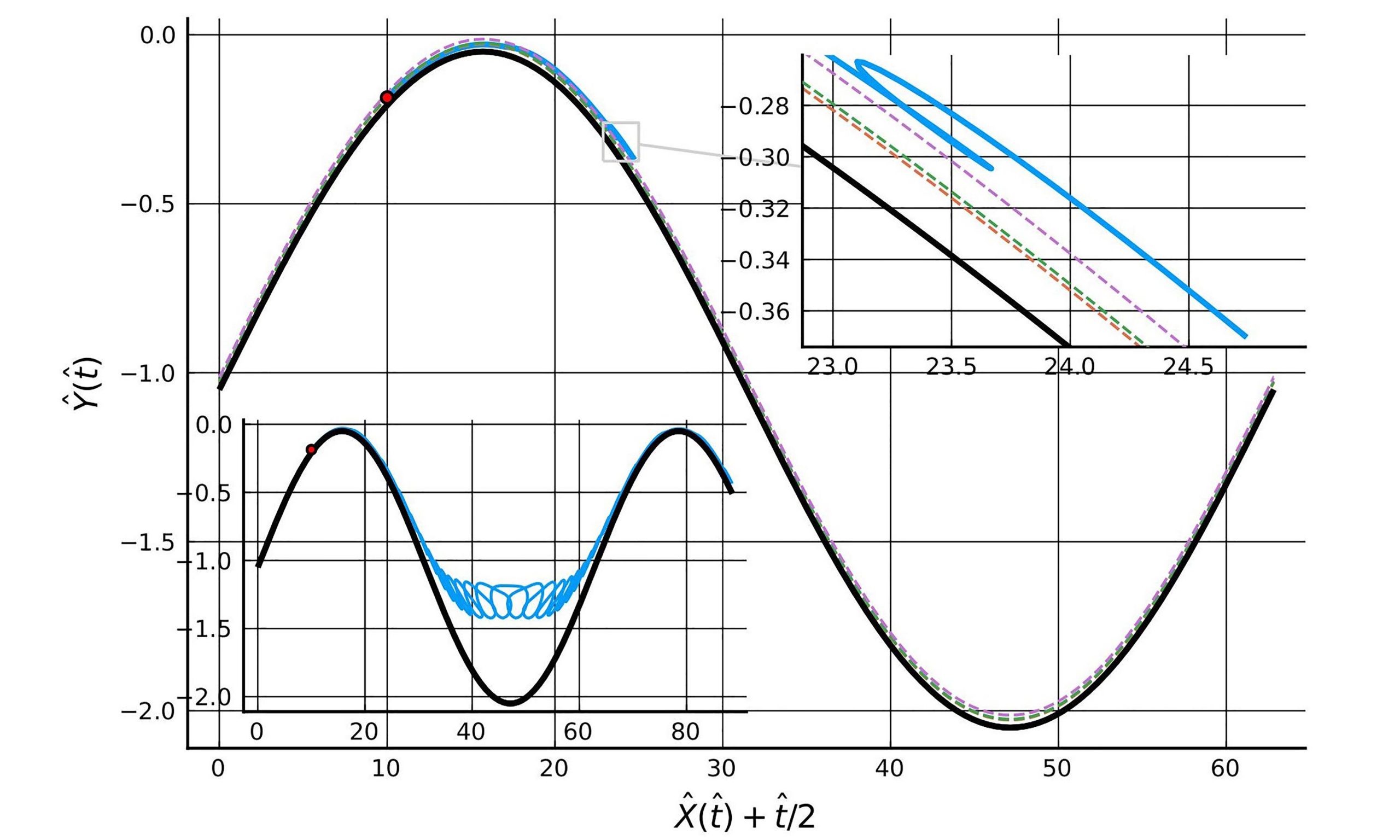
    One case of a particle’s movement. It begins as the red point, resting on the surface of the hand (black wavy line). It follows the blue path, escaping the hand and then moving freely through the hand-washing fluid. Credit: Paul Hammond

    Hand-Washing Model Uses Fluid Mechanics To Track Harmful Particles

    Though hand-washing is proven effective in combating the spread of disease and infection, the physics behind it has rarely been studied. But in Physics of Fluids, by AIP Publishing, researchers from Hammond Consulting Limited describe a simple model that captures the key mechanics of hand-washing.

    By simulating hand-washing, they estimated the time scales on which particles, like viruses and bacteria, were removed from hands.

    The mathematical model acts in two dimensions, with one wavy surface moving past another wavy surface, and a thin film of liquid between the two. Wavy surfaces represent hands because they are rough on small spatial scales.

    Particles are trapped on the rough surfaces of the hand in potential wells. In other words, they are at the bottom of a valley, and in order for them to escape, the energy from the water flow must be high enough to get them up and out of the valley.

    The strength of the flowing liquid depends on the speed of the moving hands. A stronger flow removes particles more easily.

    “Basically, the flow tells you about the forces on the particles,” said author Paul Hammond. “Then you can work out how the particles move and figure out if they get removed.”

    He likens the process to scrubbing a stain on a shirt: the faster the motion, the more likely it is to come out.

    “If you move your hands too gently, too slowly, relative to one another, the forces created by the flowing fluid are not big enough to overcome the force holding the particle down,” said Hammond.

    Why 20 Seconds of Scrubbing Is Key

    Even when particles are removed, that process is not fast. Typical hand-washing guidelines, like those from the Centers for Disease Control and Prevention, suggest at least 20 seconds under the faucet.

    Results from Hammond’s model agree. It takes about 20 seconds of vigorous movement to dislodge potential viruses and bacteria.

    The model does not consider chemical or biological processes that occur when using soap. However, knowing the mechanisms that physically remove particles from hands may provide clues to formulating more effective, environmentally friendly soaps.

    “Nowadays, we need to be a bit more thoughtful about what happens to the wash chemicals when they go down the plughole and enter the environment,” said Hammond.

    Hammond said this is not the whole story of hand-washing, but it does answer important questions and lay the foundation for future research.

    Reference: “Will we ever wash our hands of lubrication theory?” by Paul S. Hammond, 17 August 2021, Physics of Fluids.
    DOI: 10.1063/5.0060307

    Never miss a breakthrough: Join the SciTechDaily newsletter.
    Follow us on Google and Google News.

    American Institute of Physics Fluid Dynamics Infectious Diseases Popular Public Health
    Share. Facebook Twitter Pinterest LinkedIn Email Reddit

    Related Articles

    Cloth COVID Masks Filter Less Than 10% of Particles – Inferior for Protection Against Airborne Viral Spread

    Safe Social Distancing Alert: Long Streams of Virus-Laden Droplets Can Trail Behind Infected Individuals

    COVID-19 Transmission: Tracking Flight Trajectory of Evaporating Cough Droplets

    Scientists Compare How COVID-19 Cough Clouds Travel With and Without Face Masks

    COVID-19 Warning: Flushing Public Restroom Toilets Can Spew Clouds of Particles Carrying Viruses

    How Face Mask Construction & Materials Matter for Containing Coughing & Sneezing Droplets

    Seeing Is Believing: Comparing Facemask Effectiveness in Mitigating Transmission of COVID-19

    Yikes! Flushing Toilets Create Long-Lasting Clouds of Virus-Containing Particles

    Galileo’s Jupiter Entry Probe Vaporized – New Gaps Revealed in Heat Shield Modeling

    Leave A Reply Cancel Reply

    • Facebook
    • Twitter
    • Pinterest
    • YouTube

    Don't Miss a Discovery

    Subscribe for the Latest in Science & Tech!

    Trending News

    Scientists Warn That This Common Pet Fish Can Wreck Entire Ecosystems

    Scientists Make Breakthrough in Turning Plastic Trash Into Clean Fuel Using Sunlight

    This Popular Supplement May Interfere With Cancer Treatment, Scientists Warn

    Scientists Finally Solved One of Water’s Biggest Mysteries

    Could This New Weight-Loss Pill Disrupt the Entire Market? Here’s What You Should Know About Orforglipron

    Earth’s Crust Is Tearing Open in Africa, and It Could Form a New Ocean

    Breakthrough Bowel Cancer Trial Leaves Patients Cancer-Free for Nearly 3 Years

    Natural Compound Shows Powerful Potential Against Rheumatoid Arthritis

    Follow SciTechDaily
    • Facebook
    • Twitter
    • YouTube
    • Pinterest
    • Newsletter
    • RSS
    SciTech News
    • Biology News
    • Chemistry News
    • Earth News
    • Health News
    • Physics News
    • Science News
    • Space News
    • Technology News
    Recent Posts
    • Ancient Roman Ship Coating Reveals Secrets Hidden for 2,200 Years
    • Enormous Prehistoric Insects Puzzle Scientists
    • College Student Identifies Bizarre New Carnivorous Dinosaur Three Times Older Than T. rex
    • The Most Effective Knee Arthritis Treatments Aren’t What You Expect
    • Scientists Develop Bioengineered Chewing Gum That Could Help Fight Oral Cancer
    Copyright © 1998 - 2026 SciTechDaily. All Rights Reserved.
    • Science News
    • About
    • Contact
    • Editorial Board
    • Privacy Policy
    • Terms of Use

    Type above and press Enter to search. Press Esc to cancel.