
Close Menu
    Facebook X (Twitter) Instagram
    SciTechDaily
    • Biology
    • Chemistry
    • Earth
    • Health
    • Physics
    • Science
    • Space
    • Technology
    Facebook X (Twitter) Pinterest YouTube RSS
    SciTechDaily
    Home»Space»Planetary Heist: Astronomers Discover That Stars Can Steal Planets
    Space

    Planetary Heist: Astronomers Discover That Stars Can Steal Planets

    By University of SheffieldSeptember 24, 2022No Comments3 Mins Read
    Facebook Twitter Pinterest Telegram LinkedIn WhatsApp Email Reddit
    Share
    Facebook Twitter LinkedIn Pinterest Telegram Email Reddit
    BEASTie Artist's Impression
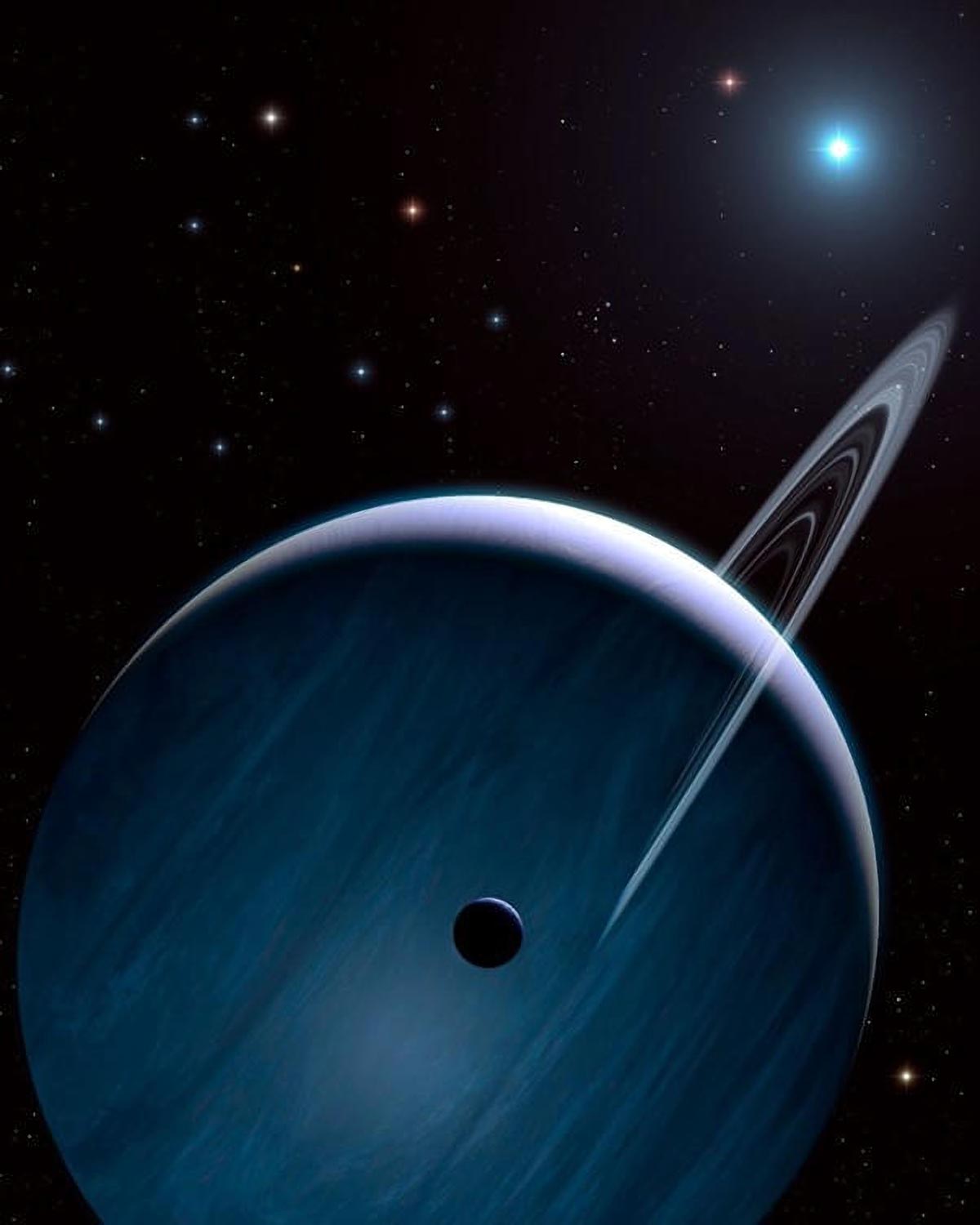
    Artist’s impression of a BEASTie. The image shows a gas giant planet (like Jupiter) on a distant orbit around a blue, massive star. The planet is likely to have been captured or stolen from another star. The background stars are members of the same star-forming region and could be the star the BEASTie was born around. Credit: Mark Garlick

    Researchers at the University of Sheffield have proposed a new origin for Jupiter-like planets orbiting massive stars three times the mass of our Sun.

    According to recent research, massive stars in the densely populated stellar nurseries where most stars are created may steal or capture planets the size of Jupiter.

    University of Sheffield researchers have presented a new explanation for the newly found B-star Exoplanet Abundance STudy (BEAST) planets. These are Jupiter-like planets that are located far from massive stars—hundreds of times further than the distance between the Earth and the Sun.

    Until recently, their development has been a mystery, since massive stars generate large amounts of ultraviolet radiation, which prevents planets from expanding to the size of Jupiter, our solar system’s largest planet.

    Planet Theft in Stellar Nurseries

    Dr. Emma Daffern-Powell, co-author of the study, from the University of Sheffield’s Department of Physics and Astronomy states, “Our previous research has shown that in stellar nurseries stars can steal planets from other stars, or capture what we call ‘free-floating’ planets. We know that massive stars have more influence in these nurseries than Sun-like stars, and we found that these massive stars can capture or steal planets – which we call ‘BEASTies’.”

    She adds, “Essentially, this is a planetary heist. We used computer simulations to show that the theft or capture of these BEASTies occurs on average once in the first 10 million years of the evolution of a star-forming region.”

    Explaining the Existence of Super-Jovian Planets

    Dr. Richard Parker, a lecturer in astrophysics in the University of Sheffield’s Department of Physics and Astronomy explains: “The BEAST planets are a new addition to the myriad of exoplanetary systems, which display incredible diversity, from planetary systems around Sun-like stars that are very different to our Solar System to planets orbiting evolved or dead stars The BEAST collaboration has discovered at least two super-Jovian planets orbiting massive stars. Whilst planets can form around massive stars, it is hard to envisage gas giant planets like Jupiter and Saturn being able to form in such hostile environments, where radiation from the stars can evaporate the planets before they fully form.”

    He continues, “However, our simulations show that these planets can be captured or stolen, on orbits very similar to those observed for the BEASTies. Our results lend further credence to the idea that planets on more distant orbits (more than 100 times the distance from Earth to Sun) may not be orbiting their parent star.”

    Reference: “Making BEASTies: dynamical formation of planetary systems around massive stars” by Richard J Parker and Emma C Daffern-Powell, 7 September 2022, Monthly Notices of the Royal Astronomical Society.
    DOI: 10.1093/mnrasl/slac086

    The research was conducted by Dr. Richard Parker and Dr. Emma Daffern-Powell at the University of Sheffield and is part of a larger research program that aims to establish how common planetary systems like our own are in the context of the many thousands of other planetary systems in the Milky Way galaxy.

    Never miss a breakthrough: Join the SciTechDaily newsletter.
    Follow us on Google and Google News.

    Astronomy Exoplanet Planets Popular Stars University of Sheffield
    Share. Facebook Twitter Pinterest LinkedIn Email Reddit

    Related Articles

    Astronomers May Have Discovered the Youngest Planet Ever Detected in Our Galaxy

    Surprise Planet Discovered Around Extreme Star Pair

    On the Quest for Other Earths in the Search for Extraterrestrial Life

    Earth Has a Hot New Neighbor – And It Could Change How We Look for Life in the Universe

    Vaporized Crusts of Earth-Like Planets Discovered in Dying Stars

    New Worlds in a River of Young Stars Discovered by NASA’s Transiting Exoplanet Survey Satellite

    Astronomers Detect Possible Radio Emission From Exoplanet for the First Time

    Hubble Discovers a Strange Exoplanet That Resembles the Long-Sought “Planet Nine”

    Stellar Flares With a Chance of Radio Bursts: Space Weather Discovery Puts “Habitable Planets” at Risk

    Leave A Reply Cancel Reply

    • Facebook
    • Twitter
    • Pinterest
    • YouTube

    Don't Miss a Discovery

    Subscribe for the Latest in Science & Tech!

    Trending News

    The Universe Is Expanding Too Fast and Scientists Can’t Explain Why

    “Like Liquid Metal”: Scientists Create Strange Shape-Shifting Material

    Early Warning Signals of Esophageal Cancer May Be Hiding in Plain Sight

    Common Blood Pressure Drug Shows Surprising Power Against Deadly Antibiotic-Resistant Superbug

    Scientists Uncover Dangerous Connection Between Serotonin and Heart Valve Disease

    Scientists Discover a “Protector” Protein That Could Help Reverse Hair Loss

    Bone-Strengthening Discovery Could Reverse Osteoporosis

    Scientists Uncover Hidden Trigger Behind Stem Cell Aging

    Follow SciTechDaily
    • Facebook
    • Twitter
    • YouTube
    • Pinterest
    • Newsletter
    • RSS
    SciTech News
    • Biology News
    • Chemistry News
    • Earth News
    • Health News
    • Physics News
    • Science News
    • Space News
    • Technology News
    Recent Posts
    • A Common Diabetes Drug May Hold the Key to Stopping HIV From Coming Back
    • Ancient “Syphilis-Like” Disease in Vietnam Challenges Key Scientific Assumptions
    • Drinking Alcohol To Cope in Your 20s Could Damage Your Brain for Life
    • Scientists Crack Alfalfa’s Chromosome Mystery After Decades of Debate
    • Ancient Ant-Plant Alliance Collapses As Predatory Wasps Move In
    Copyright © 1998 - 2026 SciTechDaily. All Rights Reserved.
    • Science News
    • About
    • Contact
    • Editorial Board
    • Privacy Policy
    • Terms of Use

    Type above and press Enter to search. Press Esc to cancel.