
Researchers have developed a hydrogel that can learn to play the game Pong, demonstrating that even simple materials can exhibit adaptive behaviors akin to those seen in living systems.
The study, led by Dr. Yoshikatsu Hayashi from the University of Reading, also revealed that similar hydrogels could mimic cardiac tissue, potentially offering new avenues for studying heart arrhythmias and reducing animal testing in medical research.
“Hydrogel Brain” Learns To Play Pong
In a study published today (August 22) in Cell Reports Physical Science, a team led by Dr. Yoshikatsu Hayashi demonstrated that a simple hydrogel — a type of soft, flexible material — can learn to play the simple 1970s computer game ‘Pong’. The hydrogel, interfaced with a computer simulation of the classic game via a custom-built multi-electrode array, showed improved performance over time.
Adaptive Behaviors of Simple Materials
Dr. Hayashi, a biomedical engineer at the University of Reading’s School of Biological Sciences, said: “Our research shows that even very simple materials can exhibit complex, adaptive behaviors typically associated with living systems or sophisticated AI.
“This opens up exciting possibilities for developing new types of ‘smart’ materials that can learn and adapt to their environment.”
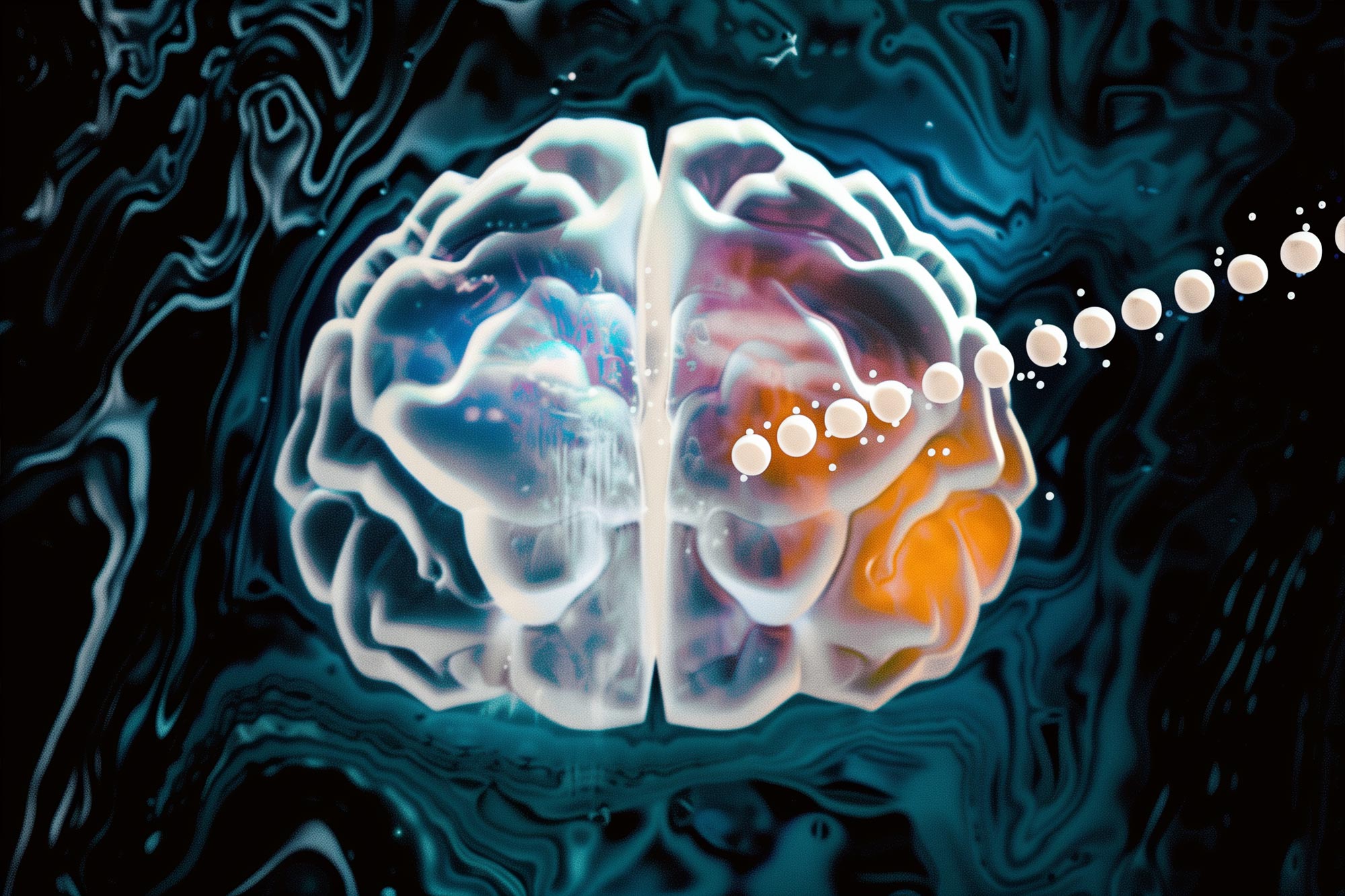
Non-living hydrogels can play the video game Pong and improve their gameplay with more experience, researchers report on August 23 in the journal Cell Reports Physical Science. The researchers hooked hydrogels up to a virtual game environment and then applied a feedback loop between the hydrogel’s paddle—encoded by the distribution of charged particles within the hydrogel—and the ball’s position—encoded by electrical stimulation. With practice, the hydrogel’s accuracy improved by up to 10%, resulting in longer rallies. The researchers say that this demonstrates the ability of non-living materials to use “memory” to update their understanding of the environment, though more research is needed before it could be said that hydrogels can “learn.” Credit: Cell Reports Physical Science/Strong et al.
Learning Mechanisms in Hydrogels
The emergent learning behavior is thought to arise from movement of charged particles within the hydrogel in response to electrical stimulation, creating a form of ‘memory’ within the material itself.
“Ionic hydrogels can achieve the same kind of memory mechanics as more complex neural networks,” says first author and robotics engineer, Vincent Strong of the University of Reading. “We showed that hydrogels are not only able to play Pong, they can actually get better at it over time.”
The researchers were inspired by a previous study that showed that brain cells in a dish can learn to play Pong if they are electrically stimulated in a way that gives them feedback on their performance.
“Our paper addresses the question of whether simple artificial systems can compute closed loops similar to the feedback loops that allow our brains to control our bodies,” said Dr. Hayashi, a corresponding author on the study.
“The basic principle in both neurons and hydrogels is that ion migration and distributions can work as a memory function which can correlate with sensory-motor loops in the Pong world. In neurons, ions run within the cells. In the gel, they run outside.”
Hydrogels and Artificial Intelligence
Because most existing AI algorithms are derived from neural networks, the researchers say that hydrogels represent a different kind of “intelligence” that could be used to develop new, simpler algorithms. In future, the researchers plan to further probe the hydrogel’s “memory” by examining the mechanisms behind its memory and by testing its ability to perform other tasks.
Beating Gel Mimics Cardiac Tissue
In a recent related study, published in the Proceedings of the National Academy of Sciences, Dr. Hayashi’s team, along with Reading colleagues Dr. Zuowei Wang and Dr. Nandini Vasudevan, demonstrated how a different hydrogel material can be taught to beat in rhythm with an external pacemaker. This is the first time this has been achieved using a material other than living cells.
Exploring Cardiac Arrhythmia With Hydrogels
The researchers demonstrated how a hydrogel material oscillates chemically and mechanically, much like the way heart muscle cells contract in unison. They provide a theoretical interpretation of these dynamic behaviors.
The researchers found that by applying cyclic compressions to the gel, they could entrain its chemical oscillations to sync with the mechanical rhythm. The gel retained a memory of this entrained beating even after the mechanical pacemaker was stopped.
“This is a significant step towards developing a model of cardiac muscle that might one day be used to study the interplay of mechanical and chemical signals in the human heart,” Dr. Hayashi said. “It opens up exciting possibilities for replacing some animal experiments in cardiac research with these chemically-powered gel models.”
Lead author of the study, Dr. Tunde Geher-Herczegh, said the findings could provide new ways to investigate cardiac arrhythmia, a condition in which the heart beats too fast, too slow or irregularly, which affects more than 2 million people in the UK.
She said: “An irregular heartbeat can be managed with drugs or an electrical pacemaker, but the complexity of biological heart cells makes it difficult to study the underlying mechanical systems, independently from the chemical and electrical systems in the heart.
“Our findings could lead to new discoveries and potential treatments for arrhythmia, and will contribute to our understanding of how artificial materials could be used in place of animals and biological tissues, for research and treatments in the future.”
Broader Implications and Future Directions
These studies, bridging concepts from neuroscience, physics, materials science, and cardiac research, suggest that the fundamental principles underlying learning and adaptation in living systems might be more universal than previously thought.
The research team believes their findings could have far-reaching implications for fields ranging from soft robotics and prosthetics to environmental sensing and adaptive materials. Future work will focus on developing more complex behaviors and exploring potential real-world applications, including the development of alternative lab models for advancing cardiac research and reducing the use of animals in medical studies.
Reference: “Electro-active polymer hydrogels exhibit emergent memory when embodied in a simulated game environment” by Vincent Strong, William Holderbaum and Yoshikatsu Hayashi, 22 August 2024, Cell Reports Physical Science.
DOI: 10.1016/j.xcrp.2024.102151
Both projects were supported by funding from the Engineering and Physical Sciences Research Council.
Never miss a breakthrough: Join the SciTechDaily newsletter.
Follow us on Google and Google News.