
Close Menu
    Facebook X (Twitter) Instagram
    SciTechDaily
    • Biology
    • Chemistry
    • Earth
    • Health
    • Physics
    • Science
    • Space
    • Technology
    Facebook X (Twitter) Pinterest YouTube RSS
    SciTechDaily
    Home»Science»Predator X Officially Named Pliosaurus funkei
    Science

    Predator X Officially Named Pliosaurus funkei

    By SciTechDailyOctober 17, 2012No Comments2 Mins Read
    Facebook Twitter Pinterest Telegram LinkedIn WhatsApp Email Reddit
    Share
    Facebook Twitter LinkedIn Pinterest Telegram Email Reddit
    pliosaurus-funkei
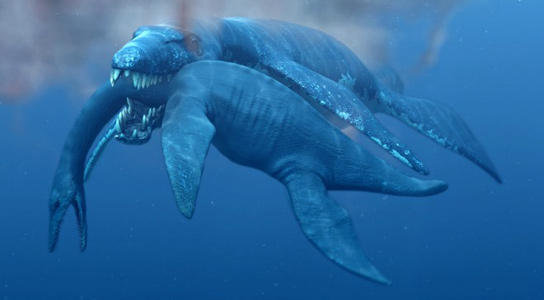
    Pliosaurus funkei chomps on a plesiosaur. Credit: Atlantic Productions

    Back in 2009, researchers had become quite excited about Predator X, an immense, big-headed marine reptile that was supposed to have a bite four times stronger than Tyrannosaurus rex. Now six years after the initial discovery, the pliosaur has finally been named Pliosaurus funkei.

    The researchers published their findings in the Norwegian Journal of Geology. The apex predator was discovered six years ago, and paleontologists Espen Knutsen, Patrick Druckenmiller and Jørn Hurum uncovered two big specimens between 2004 and 2012. The short-necked, large-mawed, four-paddled marine reptiles’ fossils were discovered on Svalbard, an Arctic island. Before this, paleontologists had only uncovered part of a tail vertebra.
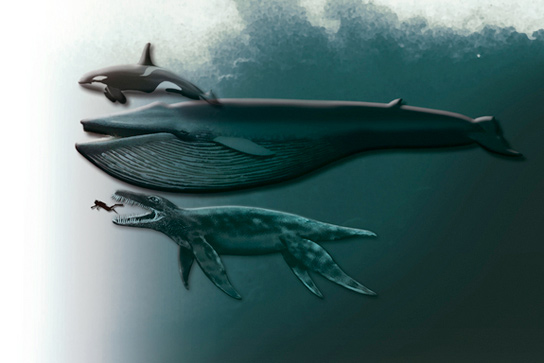
    size-comparison-pliosaurus-funkei
    A size comparison of a killer whale, blue whale, a Pliosaur (Predator X), and a human diver. Credit: or Sponga, Bergens Tidende

    The regular freeze-thaw cycles at Svalbard severely fragmented the skeletons, and the fossils were further degraded in the lab as they dried. PMO 214.135 consists of jaw fragments, some vertebrae from the neck and back, and elements of the right forelimb. The larger specimen, PMO 214.136, includes bones from the back of the skull, vertebrae and some unidentified bones.

    Due to the incomplete nature of both specimens, it was difficult to estimate the size of these animals, but they were initially estimated at about 50 feet long. The paper actually reveals that the skull would have been between six and eight feet long for the larger specimen and between five and six and a half feet long for the smaller one. Using vertebrae measurements, the body lengths were estimated at 33 to 42 feet.

    Without complete P. funkei skeletons, it will be difficult to know whether this species was any larger than estimated. It’s no longer considered as the largest of all marine predators, instead it is now considered one of the largest pliosaurs described so far.

    No actual bite force analysis could be complete due to the lack of a complete skull.
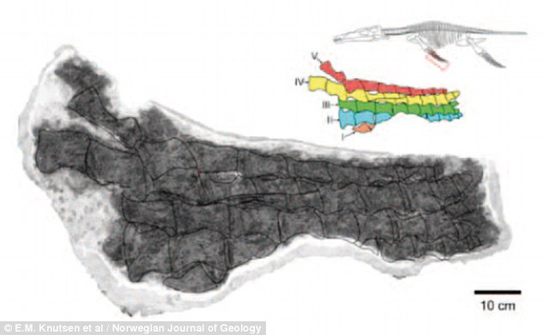
    phalanges-pliosaur
    The phalanges of the right front paddle of PMO 214.135.

    Reference: “A new species of Pliosaurus (Sauropterygia: Plesiosauria) from the Middle Volgian of central Spitsbergen, Norway” by Espen M. Knutsen, Patrick S. Druckenmiller and Jørn H. Hurum, 2012, Norwegian Journal of Geology.
    PDF

    Never miss a breakthrough: Join the SciTechDaily newsletter.
    Follow us on Google and Google News.

    Fossils Paleontology Pliosaur Predator X
    Share. Facebook Twitter Pinterest LinkedIn Email Reddit

    Related Articles

    Prehistoric Fossilized Eocene Epoch Turtles Died Locked In Coitus

    27-Foot Long Crocodylus Thorbjarnarsoni Roamed Kenya

    Carbonemys Was a Giant Turtle From Late Paleocene

    Mysterious “Godzillus” Fossil Discovered by Amateur Paleontologist

    Cretaceous Period Sankofa Pyrenaica Fossilized Eggs Are Unusually Shaped

    Burtele Foot Points to Other Past Hominins

    Microraptor Feathers Were Black With Iridescent Sheen

    Jurassic Period Super-Sized Fleas Had Armored Mouthparts to Attack the Thick Hide of Dinosaurs

    Hundreds of Lost Fossils From the Darwin Collection Rediscovered by the British Geological Survey

    Leave A Reply Cancel Reply

    • Facebook
    • Twitter
    • Pinterest
    • YouTube

    Don't Miss a Discovery

    Subscribe for the Latest in Science & Tech!

    Trending News

    New Research Challenges Common Exercise Advice for Bone Health

    Avoiding These 3 Health Risks in Midlife Linked to 13 More Years Without Dementia

    Where Were All the Tiny Dinosaurs? Scientists May Finally Have an Answer

    Humanity May Soon Have the Technology To Reach Other Star Systems

    Popular GLP-1 Weight-Loss Drugs Linked to 30% Lower Breast Cancer Risk

    A Deadly Fungus Has Found the Perfect Hiding Place: Human Hair Follicles

    Ancient Neanderthal DNA May Give Some People More Muscle

    How a Low-Fat Vegan Diet Helped People Lose Weight Without Counting Calories

    Follow SciTechDaily
    • Facebook
    • Twitter
    • YouTube
    • Pinterest
    • Newsletter
    • RSS
    SciTech News
    • Biology News
    • Chemistry News
    • Earth News
    • Health News
    • Physics News
    • Science News
    • Space News
    • Technology News
    Recent Posts
    • Why Arthritis Can Come Back Stronger After Cancer Immunotherapy
    • Dormant Breast Cancer Cells May Hide Inside Protective Cellular “Shields”
    • New Research May Change How We Think About Weight Loss Drugs Like Ozempic
    • Your Teeth May Reveal a Surprising Clue About Pancreatic Cancer Survival
    • Childhood Pesticide Exposure May Shift the Timing of Puberty
    Copyright © 1998 - 2026 SciTechDaily. All Rights Reserved.
    • Science News
    • About
    • Contact
    • Editorial Board
    • Privacy Policy
    • Terms of Use

    Type above and press Enter to search. Press Esc to cancel.