
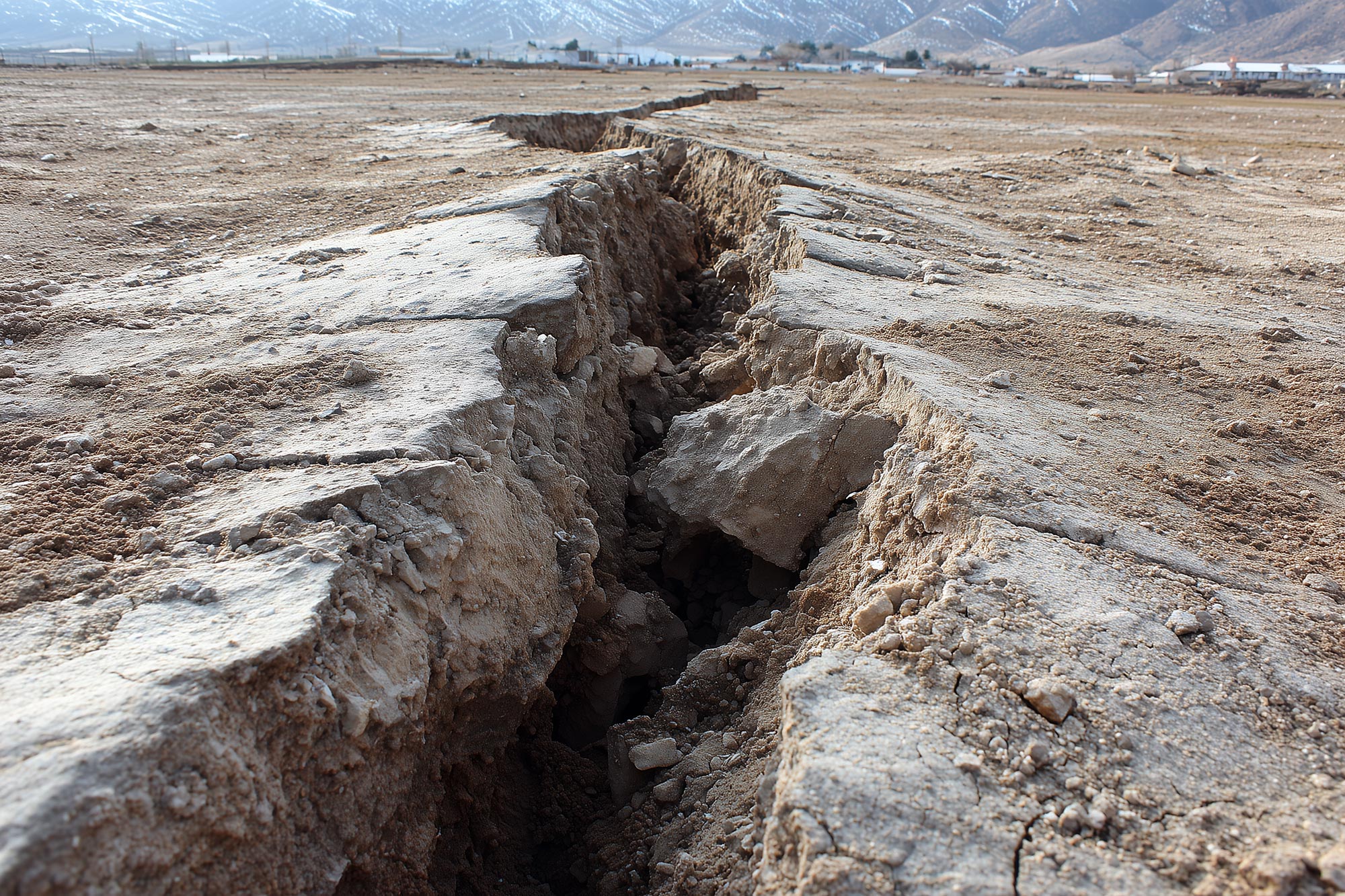
A new study in GSA Bulletin aims to better determine how often and where faults trigger earthquakes beneath central Seattle.
In the Pacific Northwest, major fault systems such as the Cascadian subduction zone offshore tend to receive most of the attention. However, smaller fault systems can also present serious risks, and a new study in the journal GSA Bulletin examines the behavior of a complex fault network located directly beneath Seattle.
“My job as a paleoseismologist,” says Dr. Stephen Angster, a research geologist at the U.S. Geological Survey’s Earthquake Science Center in Seattle and lead author of the new study, “is to figure out when and how often these local faults rupture, which would help us predict roughly when we come in the window of the next potential rupture.”
Secondary faults reshape hazard understanding
The research centers on the Seattle Fault Zone (SFZ), an east-west fault system that runs beneath Bainbridge Island and the city of Seattle. While scientists have long understood that the main fault ruptures on timescales exceeding 5,000 years, only more recently have smaller secondary faults within the SFZ been mapped in detail. These smaller structures are often excluded from standard hazard models, and Angster aims to better understand their potential impact.
“When we generate the National Seismic Hazard Model for the U.S., we leave out these shorter faults because they don’t meet the minimum requirement for length and thus are considered to have a low magnitude potential,” says Angster. “In the case of the SFZ, we don’t fully understand the rupture dynamics at depth, but they’re rupturing more frequently and pretty close to home.”
Hidden strain builds beneath Seattle
The Seattle Fault Zone plays a key role in accommodating strain caused by compression of the Earth’s crust between Portland, Oregon, and Vancouver, British Columbia. This strain builds continuously over time and is released intermittently through earthquakes. The SFZ accounts for about 15% of the total strain in the region. Because these faults are not directly visible at the surface, understanding their behavior presents a significant challenge.
To investigate them, Angster and colleagues rely on indirect methods that reveal subsurface features. These include magnetic surveys that detect subtle variations in bedrock, as well as high-resolution lidar imaging that can penetrate dense vegetation and reveal surface features such as scarps formed by past earthquakes. The team also excavates trenches across these features to determine the timing and magnitude of previous rupture events.
Frequent ruptures reshape hazard picture
By reconstructing the histories of two recently identified secondary faults within the SFZ, the researchers found that these smaller faults rupture approximately every 350 years, which is far more frequently than the main fault.
“The surface ruptures from earthquakes within the SFZ have been dominated within the last 2500 years by these secondary fault events,” says Angster.
Evidence from radiocarbon dating and tree ring analysis suggests that the most recent rupture occurred in the nineteenth century. Moving forward, Angster and his team aim to refine estimates of how often these events occur and assess the level of risk they pose to the roughly four million people living in the Seattle area.
“The thing about the Seattle fault is that in the Cascadia event, we’ll shake pretty hard and long when it happens,” says Angster, “but it’s likely not going to be as destructive for Seattle as a major event on the Seattle fault. I think we’re still trying to wrap our heads around the size and the potential of these smaller faults and the relationship between main fault rupture and these more frequent, smaller ruptures.”
Reference: “Latest Pleistocene to nineteenth-century earthquakes on bending-moment reverse faults of the Seattle fault zone, Washington” by Stephen J. Angster, Brian L. Sherrod, Jessie K. Pearl, Lydia M. Staisch, Wes Johns and Richard J. Blakely, 27 January 2026, GSA Bulletin.
DOI: 10.1130/B38333.1
Never miss a breakthrough: Join the SciTechDaily newsletter.
Follow us on Google and Google News.