
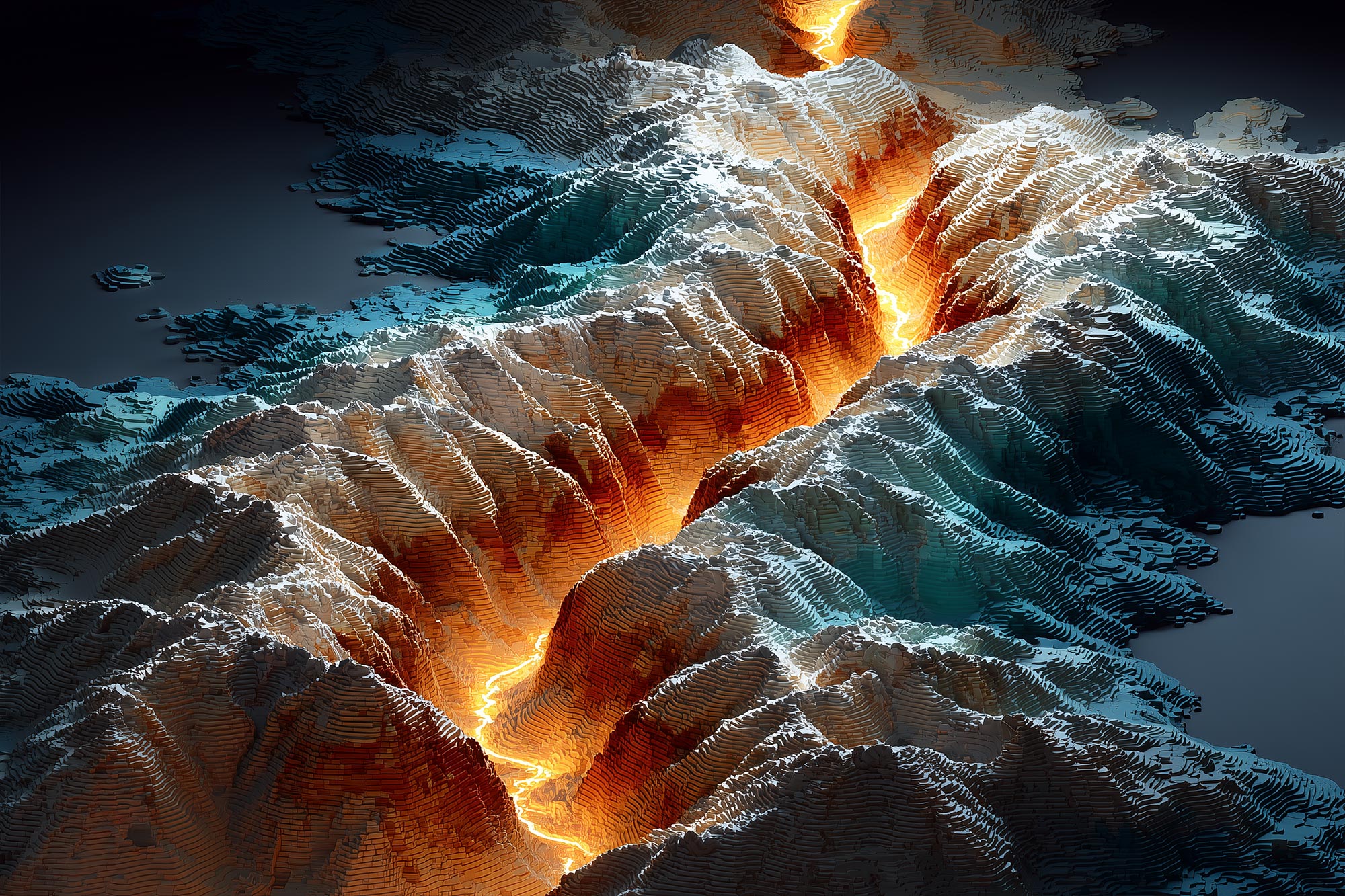
Geologic clues reveal a hidden link between two major faults. A Cascadia quake might set the San Andreas in motion soon after.
When the tectonic subduction zone beneath the Pacific Northwest shifts, it does so violently. A magnitude 9+ earthquake in this region would unleash powerful ground shaking, tsunamis, and landslides, each adding to the devastation.
Now, new research published in Geosphere suggests that such a massive quake—the “really big one”—could also trigger a significant earthquake in California.
“It’s kind of hard to exaggerate what a M9 earthquake would be like in the Pacific Northwest,” says Dr. Chris Goldfinger, a paleoseismologist at Oregon State University and lead author of the new study. “And so the possibility that a San Andreas earthquake would follow, it’s movie territory.”
How the Pacific coast moves
The Pacific coast of the United States sits along a complex network of tectonic boundaries. North of Cape Mendocino, California, the Juan de Fuca plate dives beneath the North American plate, forming a powerful megathrust subduction zone.
To the south, the Pacific and North American plates slide past each other, generating periodic earthquakes such as the devastating 1906 San Francisco event. The idea that both fault systems could rupture around the same time introduces a new and far greater level of seismic risk for the western United States.
An Accidental Discovery
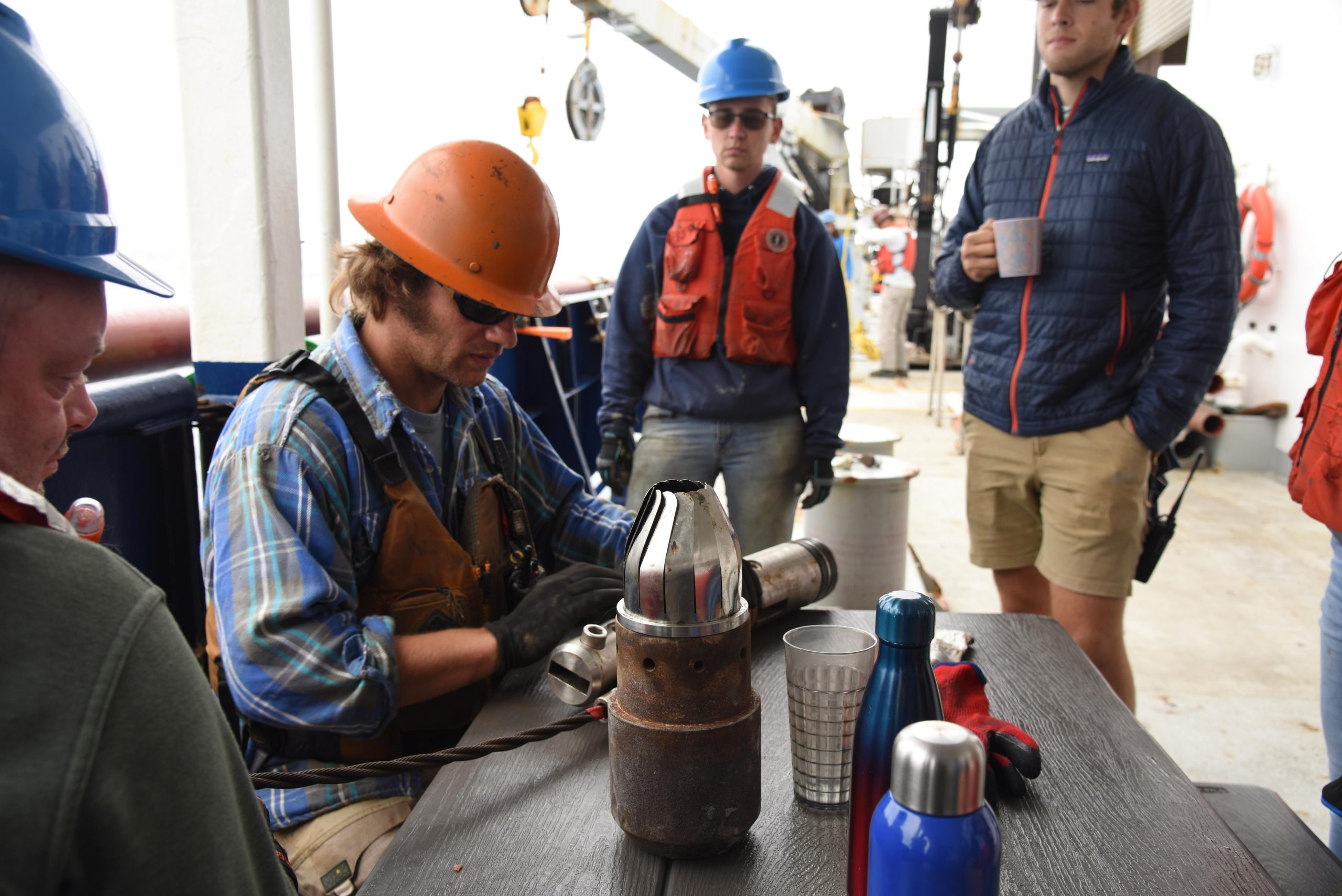
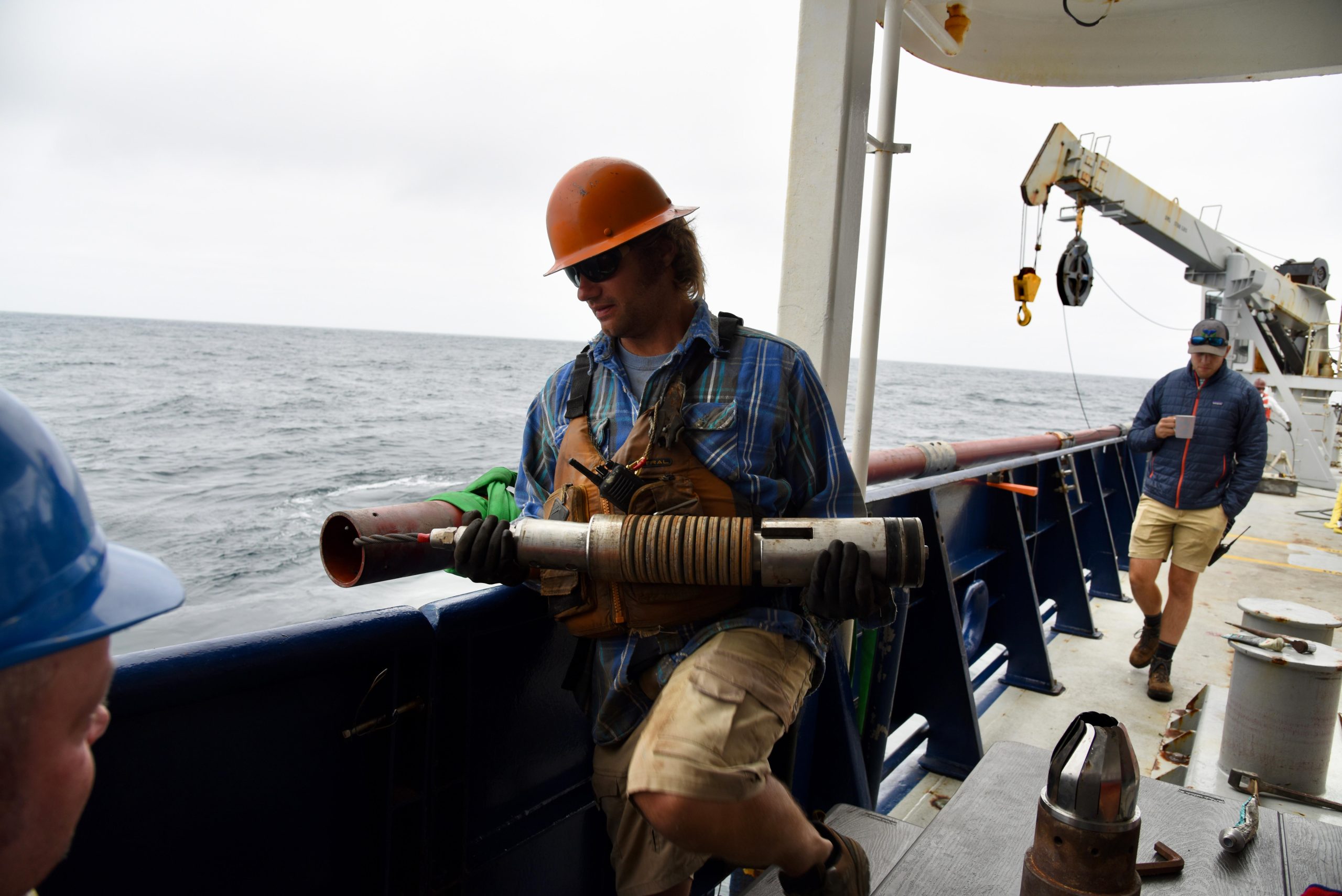
The researchers did not originally set out to explore this possibility. Their groundbreaking conclusion arose unexpectedly from a navigational mistake during a 1999 research expedition. The goal of the trip had been to examine the offshore sedimentary record of Cascadia earthquakes by drilling sediment cores and running seismic surveys along the Pacific Northwest margin. But late one night, a graduate student accidentally entered the wrong latitude, sending the ship much farther south than planned. By morning, the team realized they had left the Cascadia margin and were now 90 kilometers south of Cape Mendocino—squarely within the domain of the San Andreas Fault.
“We wound up off northern California,” says Goldfinger. “When I woke up, I was pretty hot. But, once we were there, I thought, ‘well, let’s take a core here.’”
When the team analyzed the core collected from the submarine Noyo Canyon, located off the California coast near Fort Bragg, they found something unexpected. The sediment, which spanned roughly 3,000 years, contained multiple layers known as turbidites—deposits formed by rapid underwater landslides called turbidity currents. These deposits typically display a distinct pattern, with coarse grains settling at the base and finer material layering on top. However, in this case, many of the turbidites from both the Noyo Canyon core and the Cascadia samples appeared in pairs, an unusual feature that immediately caught the researchers’ attention.
“There were these big, thick, sandy doublet events where it had a fine-grained element, and on top of it was a very coarse grained sandy unit. And we were just scratching our heads,” says Goldfinger.
Once they’d used radiocarbon to date the turbidite events up and down the coast, they found another surprise. In cores taken both north and south of Cape Mendocino, more than half of the turbidites were deposited at the same time, within the error of radiocarbon dating.
The researchers felt that was too many to be a coincidence and had to be due to a common cause. After ruling out other conceivable explanations, they were left with the realization that the first unit of each doublet in Noyo Canyon was a turbidity current set off by a large earthquake on the Cascadia megathrust. The second unit of the doublet, then, had to have been caused by movement on the nearby San Andreas.
“A lightbulb went on and we realized that the Noyo channel was probably recording Cascadia earthquakes, and that at a similar distance, Cascadia sites were probably recording San Andreas earthquakes,” says Goldfinger. “Well, what if? What if Cascadia went off and triggered a weak turbidity current near the San Andreas, and then the San Andreas went off some time later and triggered a very coarse, sandy deposit to come down. It would create this upside-down doublet stratigraphy.”
Cascading Hazards
The timing between the earthquakes is uncertain, as the top turbidite could have eroded away sediment between the doublets. But, in some of the turbidite deposits, the researchers saw evidence that the second unit of the doublet was deposited within minutes or hours of the first, raising the possibility that almost the entire US Pacific coast could experience a major earthquake nearly simultaneously.
The potential impact of such a series of earthquakes raises questions about preparedness for that scope of hazard to people’s lives and infrastructure.
“I’m from the Bay Area originally,” says Goldfinger. “If I were in my hometown of Palo Alto, and Cascadia went off, I think I would drive east. There looks to me like a very high risk the San Andreas would go off next.”
Reference: “Unravelling the dance of earthquakes: Evidence of partial synchronization of the northern San Andreas fault and Cascadia megathrust” by C. Goldfinger, J. Beeson, B. Black, A. Vizcaino, C.H. Nelson, A. Morey, J.R. Patton, J. Gutiérrez-Pastor, C. Romsos and M.D. Walzcak, 29 September 2025, Geosphere.
DOI: 10.1130/GES02857.1
Never miss a breakthrough: Join the SciTechDaily newsletter.
Follow us on Google and Google News.
8 Comments
Don’t tease us! Say when!
I must warn my whole city by all means possible. I’m going to make flyers today of this and other articles warning of a catastrophically deadly earthquake coming real soon. This is dead serious. In the event of the next big one, San Francisco is going to become an extinction of a city. All the high rises will fall and the bridges will be no more. The city will seriously erupt in flames due to the insane amount of old gas manes and pipes exploding. Then soon after a massive tsunami will engulf the city into the ocean, forcing San Francisco to be an underwater Atlantis. There will be no more human life remaining in the city. Any humans who survive will be forced to move to Livermore, Dublin and Pleasanton… Which will be the NEW beaches of the West Coast due to their closeness to the valley. Tracy will become a mega city WITHOUT high rise buildings due to city ordinance rules and regulations. It will be three times bigger than Sacramento and San Jose. Tracy also has one of the biggest crime rates of the valley, with little to no police force or emergency responders. After the quake it will become much worse. Ultimately people will move to Nevada where it’s bigger in size, no dangerous ocean front AND has a ton of casinos and hotels.
“I would drive east.” And then it hits while you are still in the western half of California and all the gas stations and charging stations lose power. Better break out the hiking and biking gear, kemo sabe.
{^_-}
Best thing that could happen to the planet is the termination of human kind. Sayonara, and good riddance.
As much as I tend to agree with you, let it happen after I’m done with this Earth. I’d like to die peacefully, in my sleep, like my uncle – and not screaming in agony, like the passengers in his bus.
Fascinating research. Another reason to stay put in the South.
Will the city of pinole be safe from the big one ?
Cris Goldfinger, some name😂 says it’s hard to exaggerate lol 🤦