
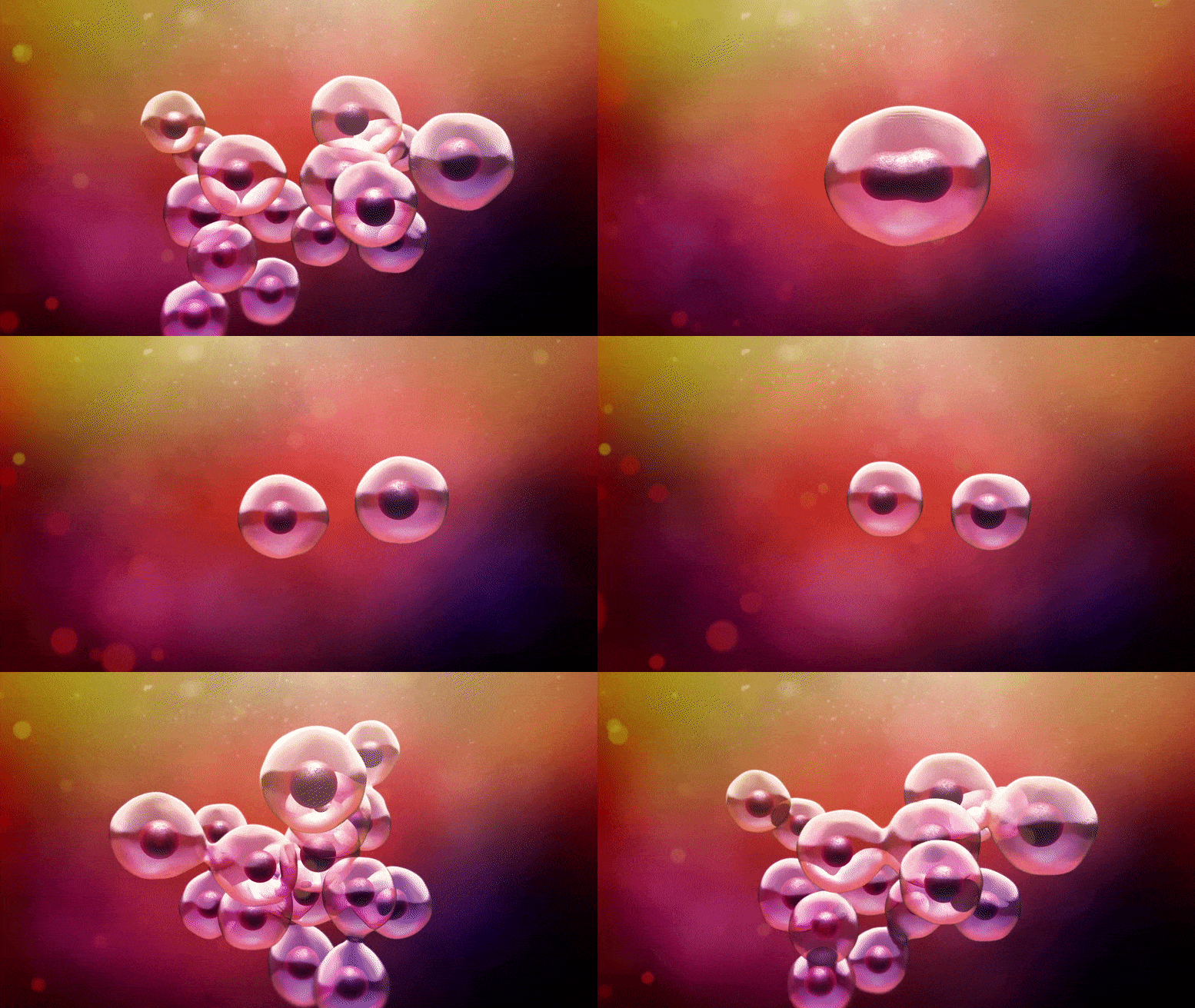
A Bacterial Protein Stimulates the Reproduction of Insulin-Producing Cells, Pointing to a Potential Treatment
Nearly ten years ago, graduate student Jennifer Hampton Hill of the University of Oregon (UO) made a fortuitous find: a protein produced by gut bacteria that triggered the division of cells that make insulin. The protein was an important clue of the biological basis of Type 1 diabetes, an autoimmune condition where the pancreas is unable to produce insulin.
As a postdoctoral researcher at the University of Utah, Hill has continued to study this protein, known as BefA. Additionally, Karen Guillemin’s lab at UO has continued to research BefA. Together with other colleagues, they have now gathered new understandings of BefA’s functions and the causes of its production.
Those discoveries have “important, profound implications,” said Guillemin. “If we understand how BefA works, it could give us a way to stimulate beta cell production therapeutically.” That could someday lead to treatments for Type 1 diabetes, which affects millions of people worldwide.
The researchers’ findings were recently published in the journal Cell Metabolism.
The body requires insulin to control blood sugar, but only a certain kind of pancreatic cell known as beta cells can produce insulin. Additionally, beta cells only replicate and increase in number within a brief window of time during early childhood development. In individuals with Type 1 diabetes, the immune system attacks beta cells, reducing their number and limiting the amount of insulin that can be produced.
Immune development microbiome stimulation helps to appropriately educate the immune system and avoid autoimmune. The research by Guillemin’s team points to another role for the microbiome: Early in development, it stimulates beta cell population growth, acting as a protective buffer against later depletion by autoimmune attack.
Beta Cell Growth and Microbiome Diversity
Beta cell population growth “is happening at the same time that microbial communities are diversifying in the gut,” said Hill. “A hallmark of diabetes is kids who develop it tend to have a less diverse gut microbiome. It’s possible they’re missing some of the bacteria that make BefA.”
In their most recent paper, Hill, Guillemin, and their colleagues take a deeper look at BefA. They captured detailed images of BefA’s structure, to identify the parts of it that interact with cell membranes. Then, through a series of experiments in zebrafish, mice, and cultured cells, the researchers sketched a picture of BefA’s function.
BefA can disrupt the membranes of many kinds of cells, both bacterial and animal, they showed. It makes sense that gut bacteria would attack competing bacteria. But unexpectedly, they also found that BefA’s attacks on the membranes of insulin-producing cells triggered those cells to reproduce.
The finding suggests that bacterial warfare in the gut can have collateral beneficial effects on the body, boosting the population of cells that can make insulin throughout the lifespan.
The team also tested a mutated version of BefA that was modified so that it couldn’t mess with cell membranes. That version of the protein didn’t impact beta cell production, further suggesting that membrane damage is driving BefA’s effects.
“There are other examples in developmental biology were poking holes in membranes is critical in stimulating development,” Hill said, but the researchers don’t yet know exactly how the damage is triggering cell replication here.
And they don’t know why BefA, which can actually alter the membranes of many kinds of cells, targets beta cells so specifically.
“We think that there’s something special about beta cells that they may be highly sensitized to respond to cues that cause membrane permeabilization,” Hill said. “They’re the only cell type in the whole body that can secrete insulin — they’re highly important.”
Hill was awarded the NOSTER & Science Microbiome Prize this year for her work on BefA. The annual award is given to an early career scientist who has contributed new understanding to microbiome research that could influence human health.
The Microbiome’s Protective Role Against Type 1 Diabetes
“The microbiome plays a role in educating the immune system. If you don’t have that education, the immune system can be hyper-reactive,” Guillemin said. “We think there’s also this other layer here—if you don’t develop a pool of beta cells against future disruption, you’re more at risk for Type 1 diabetes.” And a healthy, diverse microbiome plays a key role in building that cell population.
In the future, Guillemin’s team imagines possible therapeutic applications for the finding. For example, proactively fortifying the microbiomes of high-risk infants with BefA-producing bacteria could prevent them from later developing type 1 diabetes.
Reference: “BefA, a microbiota-secreted membrane disrupter, disseminates to the pancreas and increases β cell mass” by Jennifer Hampton Hill, Michelle Sconce Massaquoi, Emily Goers Sweeney, Elena S. Wall, Philip Jahl, Rickesha Bell, Karen Kallio, Daniel Derrick, L. Charles Murtaugh, Raghuveer Parthasarathy, S. James Remington, June L. Round and Karen Guillemin, 13 October 2022, Cell Metabolism.
DOI: 10.1016/j.cmet.2022.09.001
Never miss a breakthrough: Join the SciTechDaily newsletter.
Follow us on Google and Google News.
1 Comment
Fascinating research on a microbe that may assist the development of insulin producing cells.
Is it necessary for normal development of insulin producers? Or is it helpful in the event of some other immune event that interferes?
Is it assistive only for a short time in early development?