
Close Menu
    Facebook X (Twitter) Instagram
    SciTechDaily
    • Biology
    • Chemistry
    • Earth
    • Health
    • Physics
    • Science
    • Space
    • Technology
    Facebook X (Twitter) Pinterest YouTube RSS
    SciTechDaily
    Home»Technology»Prosthetic Retina May Help Restore Vision
    Technology

    Prosthetic Retina May Help Restore Vision

    By American Chemical SocietyNovember 12, 2014No Comments3 Mins Read
    Facebook Twitter Pinterest Telegram LinkedIn WhatsApp Email Reddit
    Share
    Facebook Twitter LinkedIn Pinterest Telegram Email Reddit
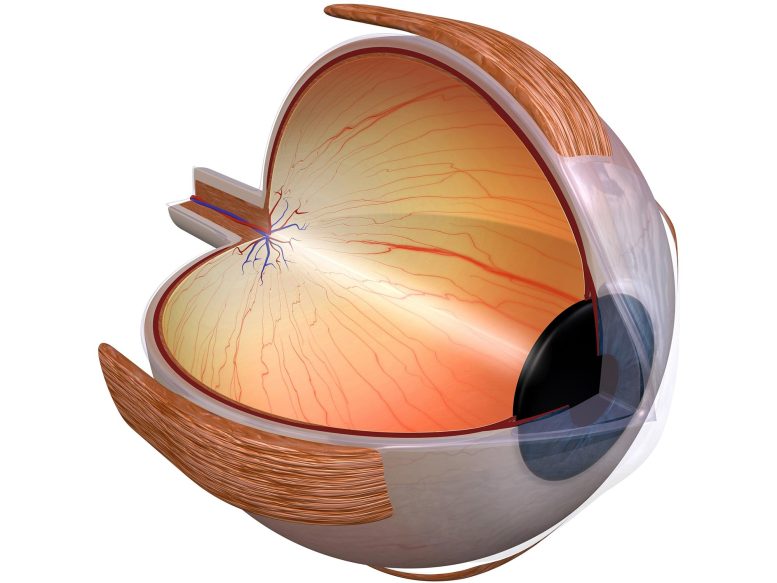
    Eye Retina Anatomy Diagram
    In the future, an artificial prosthetic retina could help restore vision.

    New research shows that an artificial retina could someday help restore lost vision caused by retinal degeneration.

    The loss of eyesight, often caused by retinal degeneration, is a life-altering health issue for many people, especially as they age. But a new development toward a prosthetic retina could help counter conditions that result from problems with this crucial part of the eye. Scientists published their research on a new device, which they tested on tissue from laboratory animals, in the ACS journal Nano Letters.
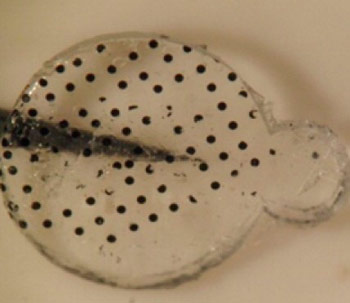
    Artificial Retina Could Help Restore Vision
    This novel, flexible film that can react to light is a promising step toward an artificial retina. Credit: American Chemical Society

    Yael Hanein and colleagues point out that a growing range of medical devices has become available to treat conditions, including visual impairment, that involve sending sensory signals to the brain. Patients with one type of eye disorder called age-related macular degeneration (AMD), for example, could potentially benefit from such a device, they say. AMD usually affects people age 60 or older who have damage to a specific part of the retina, limiting their vision. Scientists are trying different approaches to develop an implant that can “see” light and send visual signals to a person’s brain, countering the effects of AMD and related vision disorders. But many attempts so far use metallic parts, cumbersome wiring or have low resolution. The researchers, an interdisciplinary team from Tel Aviv University, the Hebrew University of Jerusalem Centers for Nanoscience and Nanotechnology and Newcastle University, wanted to make a more compact device.

    The researchers combined semiconductor nanorods and carbon nanotubes to create a wireless, light-sensitive, flexible film that could potentially act in the place of a damaged retina. When they tested it with a chick retina that normally doesn’t respond to light, they found that the film absorbed light and, in response, sparked neuronal activity. In comparison with other technologies, the researchers conclude theirs is more durable, flexible and efficient, as well as better able to stimulate neurons.

    Reference: “Semiconductor Nanorod–Carbon Nanotube Biomimetic Films for Wire-Free Photostimulation of Blind Retinas” by Lilach Bareket, Nir Waiskopf, David Rand, Gur Lubin, Moshe David-Pur, Jacob Ben-Dov, Soumyendu Roy, Cyril Eleftheriou, Evelyne Sernagor, Ori Cheshnovsky, Uri Banin and Yael Hanein, 28 October 2014, Nano Letters.
    DOI: 10.1021/nl5034304

    The authors acknowledge funding from the Israel Ministry of Science and Technology, the European Research Council and the Biotechnology and Biological Sciences Research Council.

    Never miss a breakthrough: Join the SciTechDaily newsletter.
    Follow us on Google and Google News.

    American Chemical Society Bionanotechnology Nanoscience Nanotechnology Vision
    Share. Facebook Twitter Pinterest LinkedIn Email Reddit

    Related Articles

    Scientists Develop a Nanowire Device to Detect Cancer with a Urine Test

    “Quantum Dot” Nanoparticles Provide a New Path for Biological Imaging

    Tethered Nanoparticles Improve the Performance of Immune-Based Drugs

    MIT Develops Nanobionic Plants That Can Detect Explosives

    Optimal Size and Shape Results in Better Medical Implants

    Nanomaterials Give Immune Cells a Cancer-Fighting Boost

    Researchers Develop Peptoid Nanosheets that Mimic Natural Antibodies

    Scientists Develop a New Nanobiocomposite Material

    Nanosensors Check if Replacement Cells Are Still Alive

    Leave A Reply Cancel Reply

    • Facebook
    • Twitter
    • Pinterest
    • YouTube

    Don't Miss a Discovery

    Subscribe for the Latest in Science & Tech!

    Trending News

    New Study Reveals Why Ozempic Works Better for Some People Than Others

    Climate Change Is Altering a Key Greenhouse Gas in a Way Scientists Didn’t Expect

    New Study Suggests Gravitational Waves May Have Created Dark Matter

    Scientists Discover Why the Brain Gets Stuck in Schizophrenia

    Scientists Engineer “Tumor-Eating” Bacteria That Devour Cancer From Within

    Even “Failed” Diets May Deliver Long-Term Health Gains, Study Finds

    NIH Scientists Discover Powerful New Opioid That Relieves Pain Without Dangerous Side Effects

    Collapsing Plasma May Hold the Key to Cosmic Magnetism

    Follow SciTechDaily
    • Facebook
    • Twitter
    • YouTube
    • Pinterest
    • Newsletter
    • RSS
    SciTech News
    • Biology News
    • Chemistry News
    • Earth News
    • Health News
    • Physics News
    • Science News
    • Space News
    • Technology News
    Recent Posts
    • The Surprising Reason You Might Want To Sleep Without a Pillow
    • Household Cats Could Hold the Secret to Fighting Breast Cancer
    • Scientists Say This Natural Hormone Reverses Obesity by Targeting the Brain
    • This 15,000-Year-Old Discovery Changes What We Know About Early Human Creativity
    • 35-Million-Year-Old Mystery: Strange Arachnid Discovered Preserved in Amber
    Copyright © 1998 - 2026 SciTechDaily. All Rights Reserved.
    • Science News
    • About
    • Contact
    • Editorial Board
    • Privacy Policy
    • Terms of Use

    Type above and press Enter to search. Press Esc to cancel.