
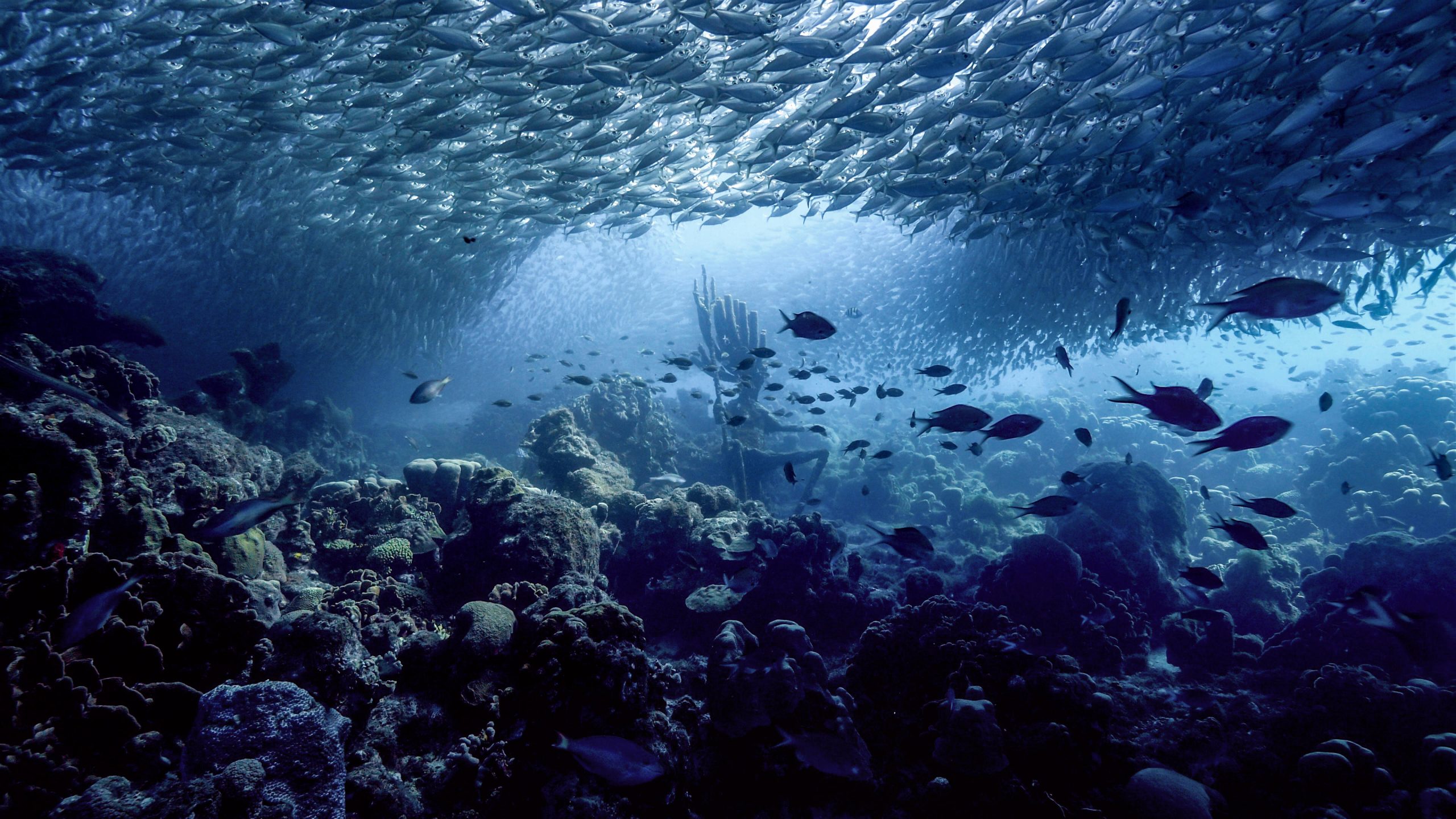
New research indicates that protecting the world’s oceans from escalating harm due to human activities might be more cost-effective and require less space than previously believed.
The University of Queensland’s Professor Anthony Richardson collaborated on the study, which looks to halt the rapid decline of marine biodiversity from expanding industrial activities in marine areas beyond national jurisdictions (ABNJ).
“This ‘blue acceleration’ as we call it, has seen a greater diversity of stakeholders interested in ABNJs, such as the high seas and the international seabed beyond exclusive economic zones,” Professor Richardson said. “This has led to an issue where current marine protection methods look at each sector separately – such as fishing, shipping, and deep-sea mining industries – all of which have their own suite of impacts on species, communities, and ecosystems.”
Cross-sectoral Approach in Marine Protection
In response, researchers assessed the design of different networks of marine protection areas (MPA) across the Indian Ocean that target rich biodiversity areas with minimal impact on profitable human activity.
“Essentially, we assessed the potential trade-offs associated with including multiple stakeholders in a cross-sectoral, as opposed to sector-specific, protected area network, for ABNJs in the Indian Ocean,” Professor Richardson said. “First, we created three sector-specific plans – involving fishing, shipping, and mining separately – to identify optimal locations for strict, no-take, MPAs. We then created a cross-sectoral no-take plan that minimizes the opportunity cost to all stakeholders simultaneously, looking at the overall picture with each stakeholder in mind. After generating these plans, we compared the three sector-specific solutions, as well as their sum, to the cross-sectoral solution.”
Lead researcher from the Royal Belgian Institute of Natural Sciences, Léa Fourchault, said the cross-sectoral approach met the same conservation targets at much lower additional costs for each stakeholder than if all sector-specific plans are implemented without coordination.
Reduction in MPA Size with Same Conservation Goals
“For example, the fishing sector might lose 20 percent of its potential revenue under the cross-sectoral plan, but it would lose 54 percent if all sector-specific plans were implemented simultaneously without coordination,” Ms Fourchault said. “This was consistent for the shipping and mining sectors, with the shipping sector now losing two percent, instead of 26 percent of its potential revenue, and the mining sector now losing one percent instead of close to eight percent. Our results also show that we can reduce the size of MPAs from 25 percent of the spatial plan to eight percent while meeting the same conservation objectives. This would still achieve 30 percent coverage for important biodiversity features, including key life-cycle areas for marine megafauna, areas of biological and ecological interest, and areas important to deep-sea ecosystems, such as seamounts, vents, and plateaus.”
Researchers believe the cross-sectoral approach can be a first step to implementing the conservation objectives of the recently signed United Nations High Seas Treaty.
“The code from our research is available online and can be used by scientists, conservationists, and politicians alike – and can be applied to any ocean on Earth,” Ms Fourchault said.
“Ultimately, the goal is not only to minimize conflicts between conservationists and multiple industries but also to ensure marine life is protected against negative cumulative impacts from all three industries simultaneously.”
Reference: “Generating affordable protection of high seas biodiversity through cross-sectoral spatial planning” by Léa Fourchault, Farid Dahdouh-Guebas, Daniel C. Dunn, Jason D. Everett, Jeffrey O. Hanson, Kristine C.V. Buenafe, Sandra Neubert, Alvise Dabalà, Kanthi K.A.S. Yapa, Stefano Cannicci and Anthony J. Richardson, 10 January 2024, One Earth.
DOI: 10.1016/j.oneear.2023.12.006
Never miss a breakthrough: Join the SciTechDaily newsletter.
Follow us on Google and Google News.
1 Comment
Every useless luxury party yacht should be seized, refitted, and crewed with eager and energetic youth. Deploy them to do hands-on ocean restoration projects such as replanting sea grass and kelp forests, removing harmful overpopulation such as kelp-eating sea urchins, and the like. We can “monitor” and “study” all we want, but in the end hands-on work is the only thing that will change anything.