
Close Menu
    Facebook X (Twitter) Instagram
    SciTechDaily
    • Biology
    • Chemistry
    • Earth
    • Health
    • Physics
    • Science
    • Space
    • Technology
    Facebook X (Twitter) Pinterest YouTube RSS
    SciTechDaily
    Home»Biology»Pushing the Limits of Neuroscience: BARseq Is Mapping the Brain at a Million-Neuron Scale
    Biology

    Pushing the Limits of Neuroscience: BARseq Is Mapping the Brain at a Million-Neuron Scale

    By Cold Spring Harbor LaboratoryJune 12, 2024No Comments4 Mins Read
    Facebook Twitter Pinterest Telegram LinkedIn WhatsApp Email Reddit
    Share
    Facebook Twitter LinkedIn Pinterest Telegram Email Reddit
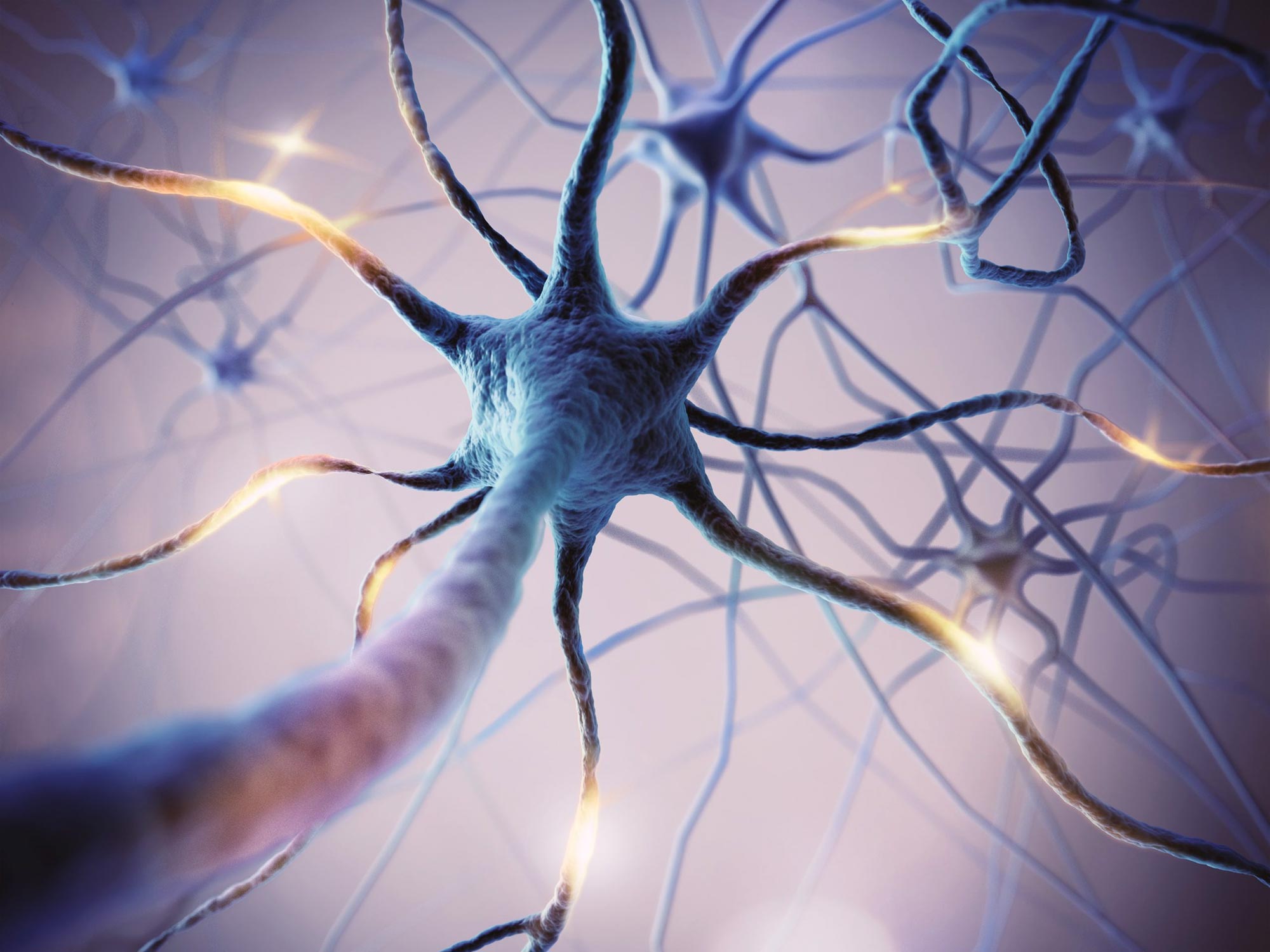
    Neuron Illustration
    Understanding the connections between different brain regions could lead to better treatment options for conditions like Alzheimer’s, schizophrenia, and depression. In 2019, a technique known as BARseq was developed to map these connections by identifying brain cells through the genes they express and tracing their neural circuitry. Initially capable of mapping thousands of pathways using RNA “barcodes,” this technique has now been enhanced to map millions of neurons. The research has expanded into the visual cortex, investigating how brain function changes when neural pathways are disrupted, providing deeper insights into brain development and functioning.

    Researchers developed and enhanced BARseq, a technique to map brain cell connections by gene expression, aiming to improve treatments for neurological conditions. They discovered that blindness alters visual cortex gene expression, and ongoing work seeks to expand BARseq’s capabilities to understand brain connectivity and development.

    Exploring how different areas of the brain interact could lead to improved treatments for conditions such as Alzheimer’s, schizophrenia, and depression.

    In 2019, as a postdoc in Cold Spring Harbor Laboratory’s (CSHL’s) Zador lab, Xiaoyin Chen helped develop a technique to map these connections. BARseq identifies cells in the brain by the genes they use and traces the connecting neural circuitry. Early versions of BARseq mapped gene expression across thousands of neural pathways, using “barcodes” or short snippets of RNA.

    BARseq Maps
    “I think of BARseq’s maps as sort of like a painting aid,” says former CSHL postdoc Xiaoyin Chen. “All these little dots make up shapes. And you can actually zoom in and look at different parts and distinguish different cell types.” Credit: Chen lab/Allen Institute for Brain Science

    Chen is now an assistant investigator at the Allen Brain Institute. He recently reunited with CSHL Professor Anthony Zador to upgrade BARseq’s capabilities. What does that look like? Instead of thousands of neurons, BARseq can now map millions.

    “We are focused on pushing BARseq forward. We want to make this easy for everybody to use, faster, more sensitive. Can we read out more information with it? With a much higher scale, you can start to answer different questions,” says Chen.

    Research on Visual Cortex Using BARseq

    The team began their search for answers in the brain’s visual cortex. Sight is one of the most common ways humans perceive the world. Information travels from the eyes to the visual cortex for processing. But what happens in the brain when the visual cortex’s neural inroads are cut or don’t form at all?

    “People have known for a while that visual inputs are very important in shaping the brain,” Chen explains. “But we don’t know, at the exact cell-type resolution BARseq provides, what actually happens.”

    BARseq Brain Cortex
    Left: Each colored dot in this image of the brain’s outer layer, or cortex, is an individual gene. Right: Using BARseq, scientists can see how genes are clustered and identify the corresponding neurons, the larger colored dots seen here. Credit: Chen lab/Allen Institute for Brain Science

    The team used BARseq to map the brains of nine mice and traced gene expression in each mouse’s visual cortex. It’s the first time the technique has been used to map this many entire brains. Amazingly, the team found that if the mice went blind, the genes in the visual cortex started to look like those in neighboring cortical areas of the brain.

    “The effects of losing vision were very broad,” Chen explains. “The visual cortex itself changes. It becomes more similar to the areas around it. There are still a lot of questions about how development controls this patterning.”

    Chen is now working to expand BARseq’s capabilities even further. He and his team are using the technique to investigate how connections are wired in developing brains and how these connections evolve.

    “Understanding how cortical areas are set up is the first step in understanding these connections,” he says. “But it’s not enough. We still need to discover how they progress during development. BARseq can bring us closer to that goal.”

    Reference: “Whole-cortex in situ sequencing reveals input-dependent area identity” by Xiaoyin Chen, Stephan Fischer, Mara C. P. Rue, Aixin Zhang, Didhiti Mukherjee, Patrick O. Kanold, Jesse Gillis and Anthony M. Zador, 24 April 2024, Nature.
    DOI: 10.1038/s41586-024-07221-6

    Never miss a breakthrough: Join the SciTechDaily newsletter.
    Follow us on Google and Google News.

    Brain Cold Spring Harbor Laboratory Imaging Neuroscience
    Share. Facebook Twitter Pinterest LinkedIn Email Reddit

    Related Articles

    Scientists Unveil Unprecedented “Live” View Into the Brain’s Complexity

    Scientists Discover Previously Unknown Anatomical Structure in the Brain

    Overeating? Researchers Discover That These Cells May Be To Blame

    Scientists Discover How Sex Hormones Define Brain Differences Between Men and Women

    New Atlases Will Map All 180+ Billion Cells in the Human Brain

    Capturing the Intricacies of the Brain’s Activity at Unprecedented Resolution

    The Brain Balances Pleasure and Pain – Here’s How

    Neural Activity Differences Between an Expert’s Brain and a Novice’s

    Researchers Use FDDNP–PET Scanning to Predict Cognitive Decline

    Leave A Reply Cancel Reply

    • Facebook
    • Twitter
    • Pinterest
    • YouTube

    Don't Miss a Discovery

    Subscribe for the Latest in Science & Tech!

    Trending News

    Millions Take These IBS Drugs, But a New Study Finds Serious Risks

    Scientists Unlock Hidden Secrets of 2,300-Year-Old Mummies Using Cutting-Edge CT Scanner

    Bread Might Be Making You Gain Weight Even Without Eating More Calories

    Scientists Discover Massive Magma Reservoir Beneath Tuscany

    Europe’s Most Active Volcano Just Got Stranger – Here’s Why Scientists Are Rethinking It

    Alzheimer’s Symptoms May Start Outside the Brain, Study Finds

    Millions Take This Popular Supplement – Scientists Discover a Concerning Link to Heart Failure

    The Universe Is Expanding Too Fast and Scientists Can’t Explain Why

    Follow SciTechDaily
    • Facebook
    • Twitter
    • YouTube
    • Pinterest
    • Newsletter
    • RSS
    SciTech News
    • Biology News
    • Chemistry News
    • Earth News
    • Health News
    • Physics News
    • Science News
    • Space News
    • Technology News
    Recent Posts
    • Scientists Say Adding This Unusual Seafood to Your Diet Could Reverse Signs of Aging
    • U.S. Waste Holds $5.7 Billion Worth of Crop Nutrients
    • Scientists Say a Hidden Structure May Exist Inside Earth’s Core
    • Doctors Surprised by the Power of a Simple Drug Against Colon Cancer
    • Why Popular Diabetes Drugs Like Ozempic Don’t Work for Everyone: The “Genetic Glitch”
    Copyright © 1998 - 2026 SciTechDaily. All Rights Reserved.
    • Science News
    • About
    • Contact
    • Editorial Board
    • Privacy Policy
    • Terms of Use

    Type above and press Enter to search. Press Esc to cancel.