
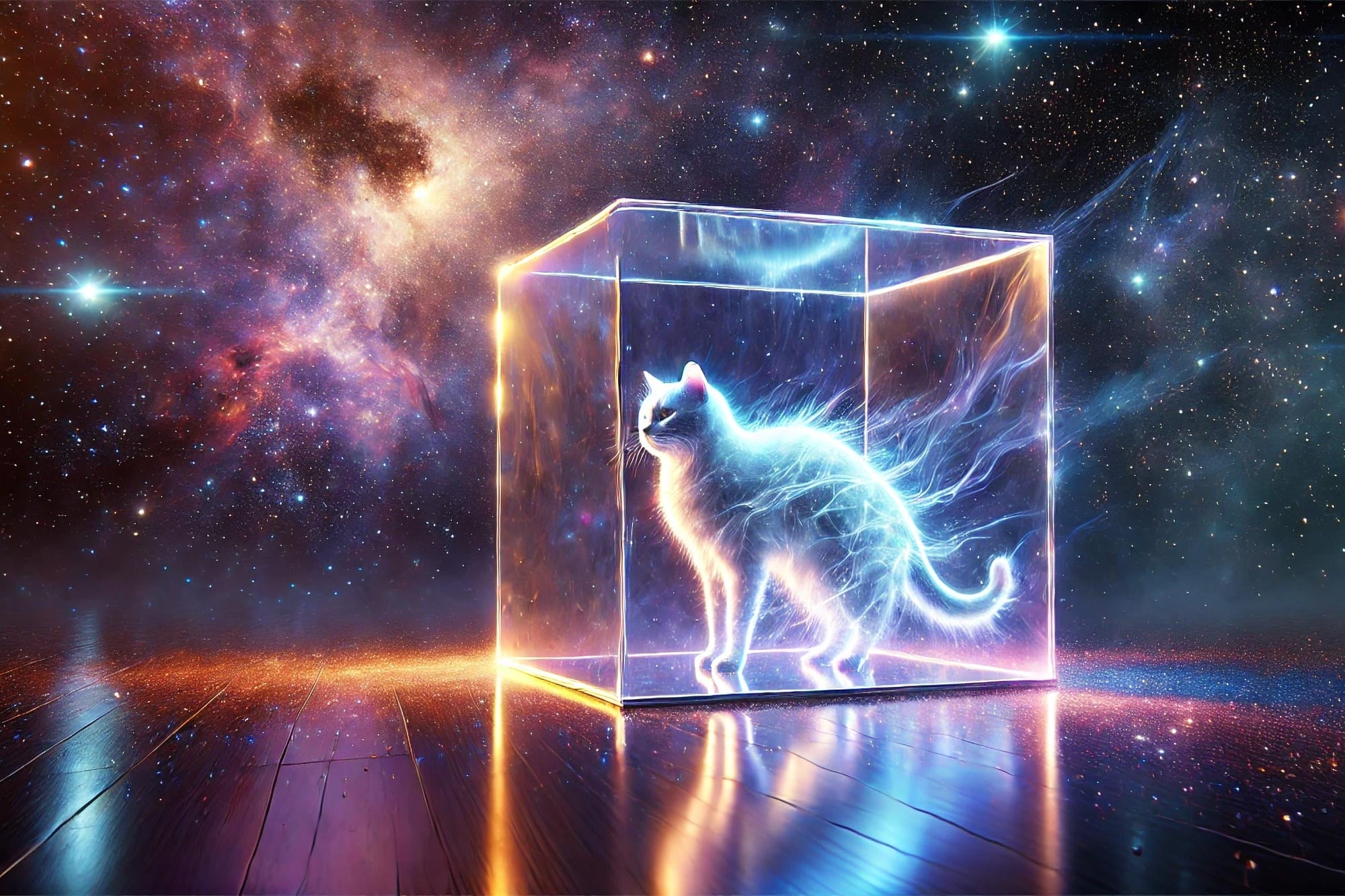
An international team of physicists has devised a method to test alternatives to standard quantum theory, proposing a possible explanation for why quantum effects don’t appear in larger objects like cats.
Their findings explore why objects only display quantum properties at microscopic levels, involving sophisticated experiments with spontaneous radiation that could validate these new models.
Exploring Quantum Paradoxes
The apparent weirdness of the quantum world is often exemplified by the paradox of Schrödinger’s imaginary cat that exists in a limbo state of being both alive and dead until looked upon by an observer. But in the real world, we never encounter such zombie felines. Quantum effects do not seem to extend to very large objects–like cats, people, or houses–and physicists do not agree on exactly why not.
Now, an international team of scientists, funded by the Foundational Questions Institute, FQxI, has proposed a new and refined way to test the validity of some proposed alternative models to standard quantum theory, which offer a possible explanation. Their work was recently reported in the journal Physical Review Letters.
Superpositions and Their Limits
According to standard quantum theory, before an object is observed it can exist in a superposition state with multiple contradictory properties. A simplified way of understanding this is to say that particles can be in two places at once, or a radioactive atom can have decayed and not decayed, at the same time, says Catalina Curceanu, a member of FQxI and an experimental nuclear and quantum physicist at the National Institute for Nuclear Physics (INFN), in Frascati, Italy.
“So, if you imagine locking a cat in a box with a vial of poison that will be released when a radioactive atom decays, there is a scenario in which the radioactive source is in a decayed and not decayed superposition of states, and so the vial is both open and closed, the poison is both released and contained, and the cat is in a superposition of life and death,” she says.
The Measurement Problem in Quantum Mechanics
In experiments, such superpositions have been observed in objects as large as a sapphire crystal weighing in at 16 micrograms, for example. According to standard quantum theory, superpositions could, in principle, persist in even bigger objects. But we do not see these superpositions in everyday life. Physicists describe quantum systems mathematically using a ‘wavefunction’ that can track its evolution.
“For some reason, these wavefunctions when observed are prone to ‘collapse’–at which point, quantum systems behave like everyday ‘classical’ systems, losing their genuine quantum attributes,” says Curceanu. “But standard quantum theory cannot tell us how or why this happens. This is the essence of the so-called ‘measurement problem’ in quantum mechanics.”
“Wavefunctions when observed are prone to ‘collapse’–but standard quantum theory cannot tell us how or why this happens,” says Curceanu.
Pushing the Boundaries of Quantum Collapse Models
The measurement problem led independent teams of scientists to develop a suite of different explanations, among which are ‘quantum collapse models’–rival alternatives to standard quantum theory “that propose a physical process triggers the collapse of the wavefunction in such a way that the bigger the system is, the faster the collapse goes,” says Curceanu.
These models are exciting because they predict effects that are not present in standard quantum mechanics, in the form of spontaneous radiation, Curceanu explains. “This means that experiments could one day find evidence that these models are correct,” she says.
Advances in Quantum Collapse Research
There are two main types of quantum collapse models: The first are called Continuous Spontaneous Localization (CSL) models, in which the collapse is caused by an intrinsic, random process, which may or may not be related to gravity or something else. This process happens spontaneously and continuously. In the second set of models, the collapse is related explicitly to gravity–for instance, in the so-called Diósi-Penrose models, developed independently by FQxI members Lajos Diósi at the Eötvös Loránd University, in Budapest, Hungary, and Nobel Laureate physicist Roger Penrose, of Oxford University, in the UK.
Curceanu and her colleagues–and other independent groups–have spent many years searching for signs of such spontaneous radiation, in the form of high-energy “gamma” radiation. But, as yet, they have found no evidence for them. This has enabled physicists to constrain and rule out various versions of the collapse models–in particular the simplest version of the gravity-related collapse models–and also to constrain the CSL models’ parameters.
New Insights Into Spontaneous Radiation
In their most recent work, reported in the journal Physical Review Letters, in June, Curceanu, Diósi, Kristian Piscicchia, and Simone Manti, also at INFN, Sandro Donadi, at Queen’s University, in Belfast, Ireland, Angelo Bassi, at the University of Trieste, in Italy, and Maaneli Derakhshani, an FQxI member at Rutgers University in New Jersey, calculated the features of the spontaneous electromagnetic radiation that should be emitted from atomic systems at lower energies, in the X-ray domain.
The team found big differences with previous expectations for the simplest models. “Quite surprisingly, in this low-energy regime the spontaneous radiation rate was found to strongly depend on the atomic species under investigation,” says Piscicchia. “For the first time, the emission was also found to depend on the specific collapse model,” adds Manti.
“For the first time, the emission was also found to depend on the specific collapse model,” says Manti.
The work was partially funded by FQxI, a philanthropically-funded think tank and funding body that supports blue skies research in the physical sciences. “Thanks to FQxI we were able to advance our calculations of the spontaneous radiation features and apply new methods to extend them for atomic systems,” says Curceanu.
The Future of Quantum Experiments
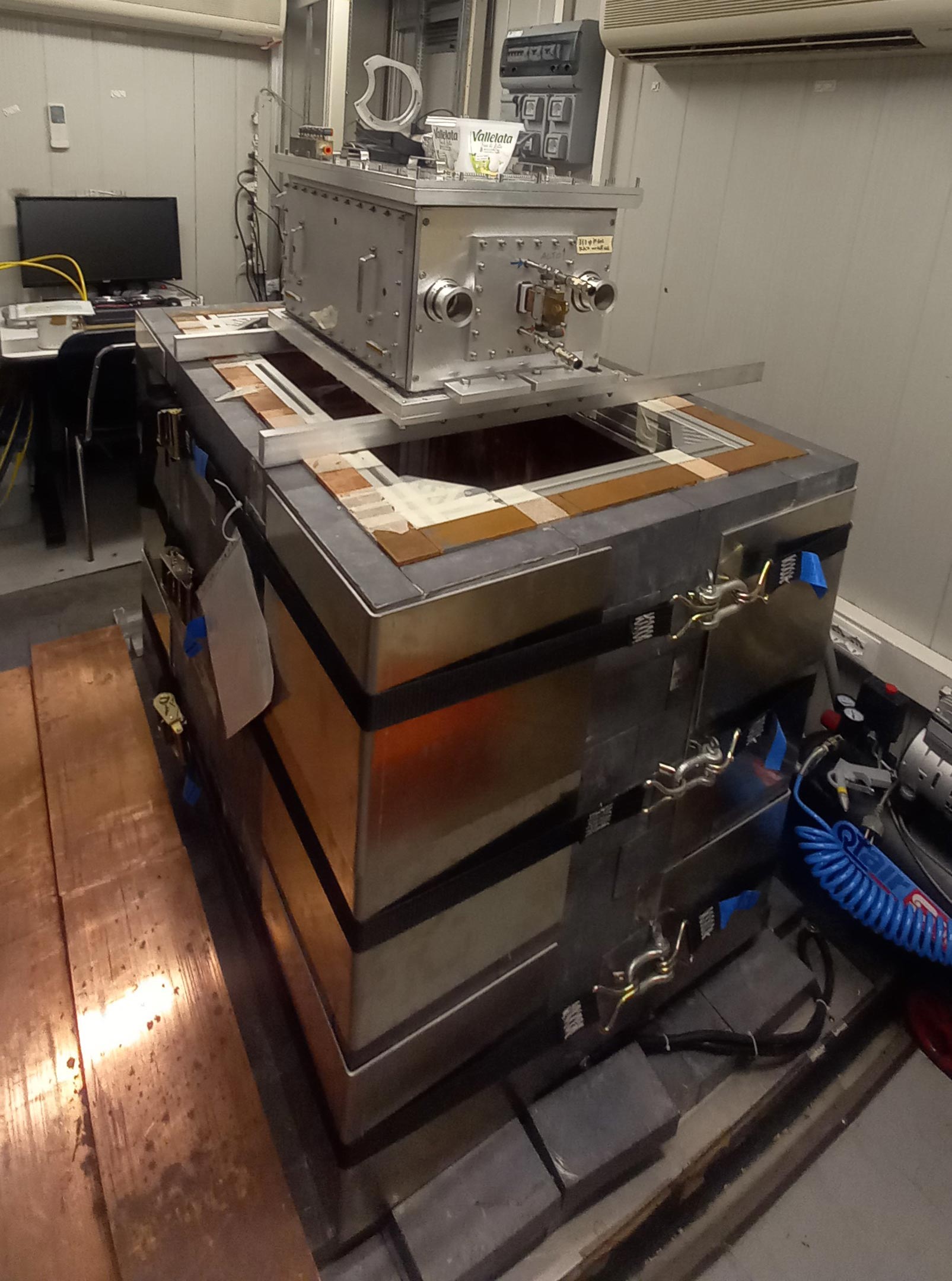
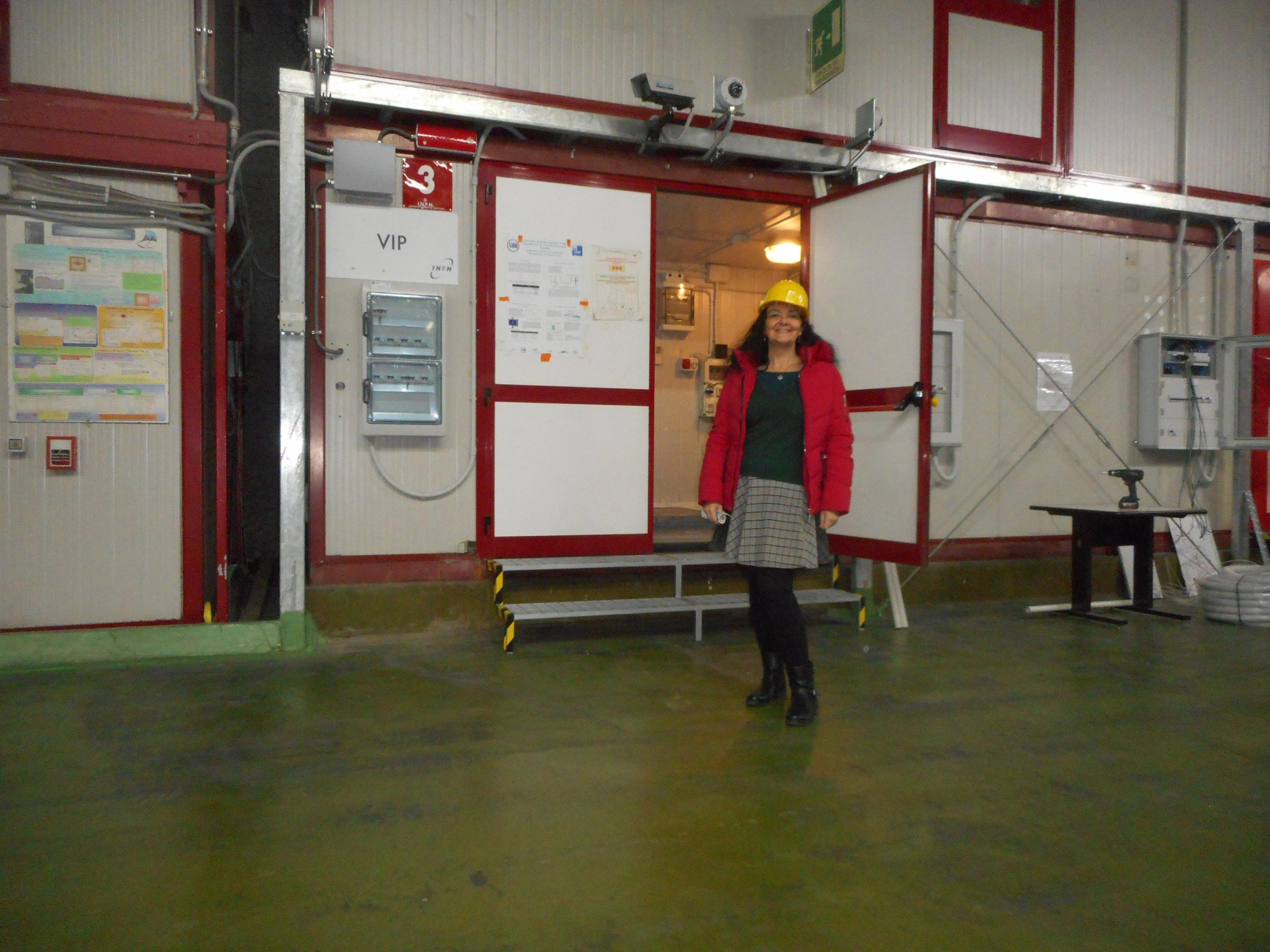
Curceanu and her colleagues are updating their own experiment performed at the LNGS-INFN underground laboratory in Italy, to search for these X-rays. They plan to explore the predicted relationship between the spontaneous radiation and the atomic structure in dedicated experiments using several targets. “This would allow us to better constrain the collapse models and, if a signal is found, to pin down what causes it, which, of course, would have enormous implications in all science,” Curceanu says.
“This would allow us to better constrain the collapse models and, if a signal is found, to pin down what causes it, which, of course, would have enormous implications in all science,” Curceanu says.
Reference: “X-Ray Emission from Atomic Systems Can Distinguish between Prevailing Dynamical Wave-Function Collapse Models” by Kristian Piscicchia, Sandro Donadi, Simone Manti, Angelo Bassi, Maaneli Derakhshani, Lajos Diósi and Catalina Curceanu, 18 June 2024, Physical Review Letters.
DOI: 10.1103/PhysRevLett.132.250203
This work was supported through FQxI’s Consciousness in the Physical World program.
Never miss a breakthrough: Join the SciTechDaily newsletter.
Follow us on Google and Google News.
6 Comments
Latent magnetism. Up positive down negative ,1 repels the other! Opposites cannot exist the same!!!
Their work was recently reported in the journal Physical Review Letters. Is the Physical Review Letters a scientific journal?
The so-called academic journals (such as Physical Review Letters, Nature, Science, etc.) firmly believe that two high-dimensional spacetime objects (such as two sets of cobalt-60) rotating in opposite directions can be transformed into two objects that mirror each other, is a typical case of pseudoscience rampant.
Please witness the exemplary collaboration between theoretical physicists and experimentalists ( https://scitechdaily.com/microscope-spacecrafts-most-precise-test-of-key-component-of-the-theory-of-general-relativity/#comment-854286 ).
My ruthless repetition may make some people unhappy, but in order to fight against rampant pseudoscience, I can only do so.
Today, the so-called official of physics firm belief that two sets of cobalt-60 rotating in opposite directions can become two sets of objects that mirror each other, had been a typical case of rampant pseudoscience.
Nope! They missed it on this one. As far as the “Cat in a box” idea, the results can’t be trusted because even if you aren’t touching the box or opening the box you are still causing X-rays to pass through the box and cat and that would still be causing a change in the conditions. The addition of X-rays to the conditions and circumstances of the box and cat! Thus an outside source causing a change in conditions.
What if the radiation emitted by the waveform collapse is actually along the lines of dark matter radiation. It would conveniently explain things, time into the idea that consciousness is, in part, a function of quantum mechanics, and that – taking this analogy to the absolute extreme – the concept of GOD in the spiritual sense is dark matter energy that we interact with on some unseen level via an as yet to be discovered process…?
All God needs, in order to be God, is a medium in which superposition may be maintained regardless of observations. How? Use a sheet of paper to represent a simulated universe { i.e. Carl Sagans’s ‘flatworld’ }. Draw an image of a rock on the paper, then lift the paper. You’ve just hefted the ‘flatworld’ universe and, by association, the rock. Now grasp only the rock and lift it…whoops! The rock is made up of graphite atoms embedded on the paper. You cannot grasp the rock separately, therefore you cannot lift the rock. And, hence, the paradox. Just because me and you cannot solve a problem doesn’t mean the problem cannot be solved…it just means me and you can’t do it. And now the trolls will pounce…..