

Close Menu
    Facebook X (Twitter) Instagram
    SciTechDaily
    • Biology
    • Chemistry
    • Earth
    • Health
    • Physics
    • Science
    • Space
    • Technology
    Facebook X (Twitter) Pinterest YouTube RSS
    SciTechDaily
    Home»Physics»Quantum Sensing Revolution: Networked Atoms for Ultimate Precision
    Physics

    Quantum Sensing Revolution: Networked Atoms for Ultimate Precision

    By University of InnsbruckMarch 27, 2024No Comments3 Mins Read
    Facebook Twitter Pinterest Telegram LinkedIn WhatsApp Email Reddit
    Share
    Facebook Twitter LinkedIn Pinterest Telegram Email Reddit
    Abstract Quantum Networking Art Concept
    New research demonstrates that quantum sensors, through a networked approach and noise cancellation techniques, achieve superior precision in environmental measurements. Credit: SciTechDaily.com

    Successful demonstration of noise cancellation using correlation spectroscopy.

    The quantum systems employed in quantum technologies, for example, single atoms, are also very sensitive: any interaction with the environment can induce changes in the quantum system, leading to errors. However, this remarkable sensitivity of quantum systems to environmental factors actually represents a unique advantage. This sensitivity enables quantum sensors to surpass conventional sensors in precision, for example when measuring magnetic or gravitational fields.

    Noise cancellation using correlation spectroscopy

    The delicate quantum properties needed for sensing can be covered up by noise—rapid interactions between the sensor and the environment that disrupt the information within the sensor, rendering the quantum signal unreadable. In a new paper, physicists led by Christian Roos from the Department of Experimental Physics at the University of Innsbruck, together with partners in Israel and the USA, present a method for making this information accessible again using “correlation spectroscopy.”
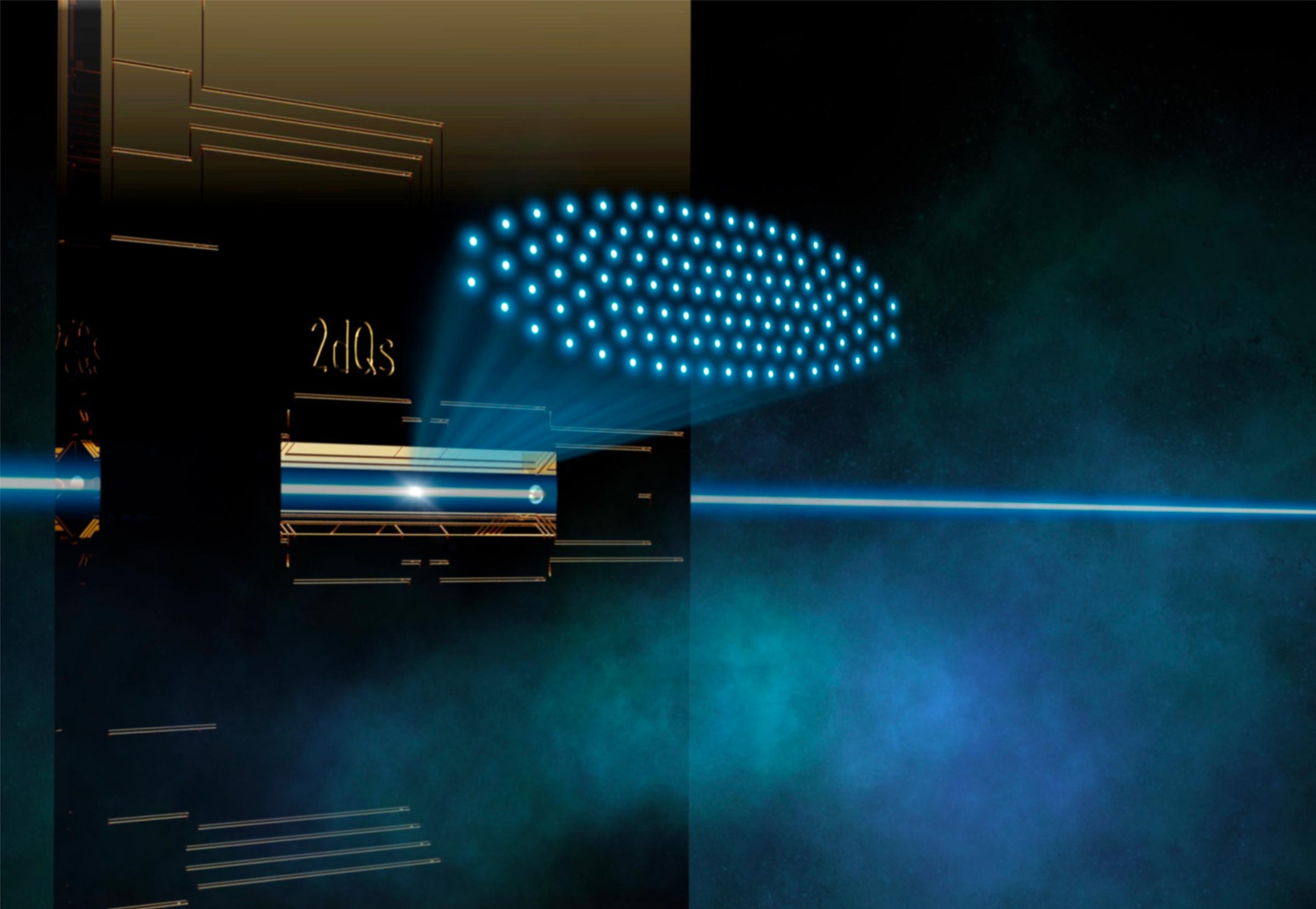
    Network of Quantum Sensors
    Up to 91 atoms form a sensor network that enables even more precise measurements of physical phenomena thanks to a new method. Credit: Helene Hainzer

    “Here, the key idea is that we do not just use a single sensor, but a network of up to 91 sensors, each consisting of a single atom,” explains Helene Hainzer, the first author of the paper. “Since noise affects all sensors equally, analyzing simultaneous changes in the states of all sensors allows us to effectively subtract the environmental noise and reconstruct the desired information. This allows us to precisely measure magnetic field variations in the environment, as well as determine the distance between the quantum sensors.”

    Beyond that, the method is applicable for various other sensing tasks and within diverse experimental platforms, reflecting its versatility.

    Precision increases with the number of sensors

    While correlation spectroscopy has been demonstrated previously with two atomic clocks, allowing for a superior precision in measuring time, “our work marks the first application of this method on such a large number of atoms,” emphasizes ERC award winner Christian Roos.

    “In order to establish experimental control over so many atoms, we built an entirely new experimental setup over several years.”

    In their publication, the Innsbruck scientists show that the precision of the sensor measurements increases with the number of particles in the sensor network. Notably, entanglement— conventionally used to enhance quantum sensor precision but hard to create in the laboratory—fails to provide an advantage compared to the multi-sensor network.

    The work has been published in the journal Physical Review X.

    Reference: “Correlation Spectroscopy with Multiqubit-Enhanced Phase Estimation” by H. Hainzer, D. Kiesenhofer, T. Ollikainen, M. Bock, F. Kranzl, M. K. Joshi, G. Yoeli, R. Blatt, T. Gefen and C. F. Roos, 29 February 2024, Physical Review X.
    DOI: 10.1103/PhysRevX.14.011033

    This study was financially supported by the Austrian Science Fund FWF, the Austrian Federal Ministry of Education, Science and Research, the European Union and the Federation of Austrian Industries Tyrol, among others.

    Never miss a breakthrough: Join the SciTechDaily newsletter.
    Follow us on Google and Google News.

    Quantum Information Science Sensor University of Innsbruck
    Share. Facebook Twitter Pinterest LinkedIn Email Reddit

    Related Articles

    This Quantum Computer Simulates the Hidden Forces That Shape Our Universe

    Unlocking the Quantum Realm: A New Tool for Uncharted Phenomena

    Entanglement Enhanced Sensing Paves the Way for Advanced Quantum Sensors

    A Cutting-Edge Diamond Sensor for Neutron Experiments and Quantum Information Science

    Quantum Simulation: Measurement of Entanglement Made Much Easier

    Physicists Demonstrate Probing Topology by “Heating”

    Physicists Encode One Qubit in Entangled States Distributed Over Several Particles

    Physicists Realize New Quasiparticle in Ultracold Quantum Gas

    Physicists Create a Condensate of Erbium

    Leave A Reply Cancel Reply

    • Facebook
    • Twitter
    • Pinterest
    • YouTube

    Don't Miss a Discovery

    Subscribe for the Latest in Science & Tech!

    Trending News

    Even Occasional Binge Drinking May Triple Liver Damage Risk

    Liftoff! NASA’s Artemis II Launch Sends Astronauts Around the Moon for First Time in 50 Years

    Scientists Discover New Way To Eliminate “Zombie Cells” Driving Aging

    This New Quantum Theory Could Change Everything We Know About the Big Bang

    This One Vitamin May Help Protect Your Brain From Dementia Years Later

    Stopping Weight-Loss Drugs Like Ozempic Can Quickly Erase Heart Benefits

    A 500-Million-Year-Old Surprise Is Forcing Scientists to Rethink Spider Evolution

    Coffee and Blood Pressure: What You Need To Know Before Your Next Cup

    Follow SciTechDaily
    • Facebook
    • Twitter
    • YouTube
    • Pinterest
    • Newsletter
    • RSS
    SciTech News
    • Biology News
    • Chemistry News
    • Earth News
    • Health News
    • Physics News
    • Science News
    • Space News
    • Technology News
    Recent Posts
    • Scientists Discover Cancer Tumors Are “Addicted” to This Common Antioxidant
    • Tiny 436-Million-Year-Old Fish Fossil Rewrites the Origins of Vertebrates
    • 1,800 Miles Down: Scientists Uncover Mysterious Movements at the Edge of Earth’s Core
    • Scientists Uncover Earth’s Hidden “Gold Kitchen” Beneath the Ocean Floor
    • You Don’t Need To Be Rich: New Study Reveals a Simple Life Is the Real Secret to Happiness
    Copyright © 1998 - 2026 SciTechDaily. All Rights Reserved.
    • Science News
    • About
    • Contact
    • Editorial Board
    • Privacy Policy
    • Terms of Use

    Type above and press Enter to search. Press Esc to cancel.