
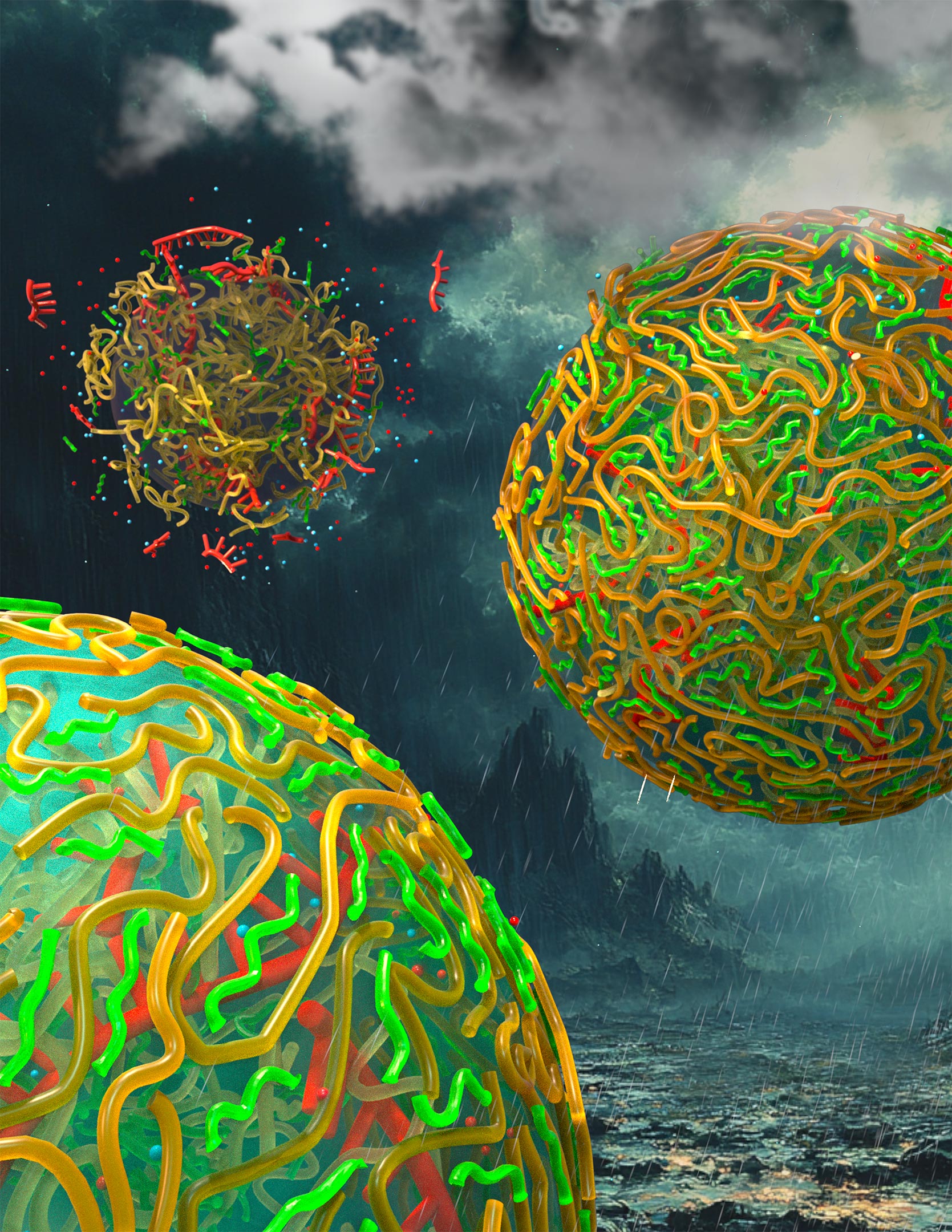
A new study indicates that rainwater may have helped early RNA structures develop into protocells by forming protective barriers around them, aiding in their evolution into complex life forms.
A fundamental question about the origin of life is how droplets of RNA floating around the primordial soup turned into the membrane-protected packets of life we call cells.
Now, a team of researchers from the University of Chicago’s Pritzker School of Molecular Engineering (UChicago PME), the University of Houston’s Chemical Engineering Department, and the UChicago Chemistry Department have proposed a solution.
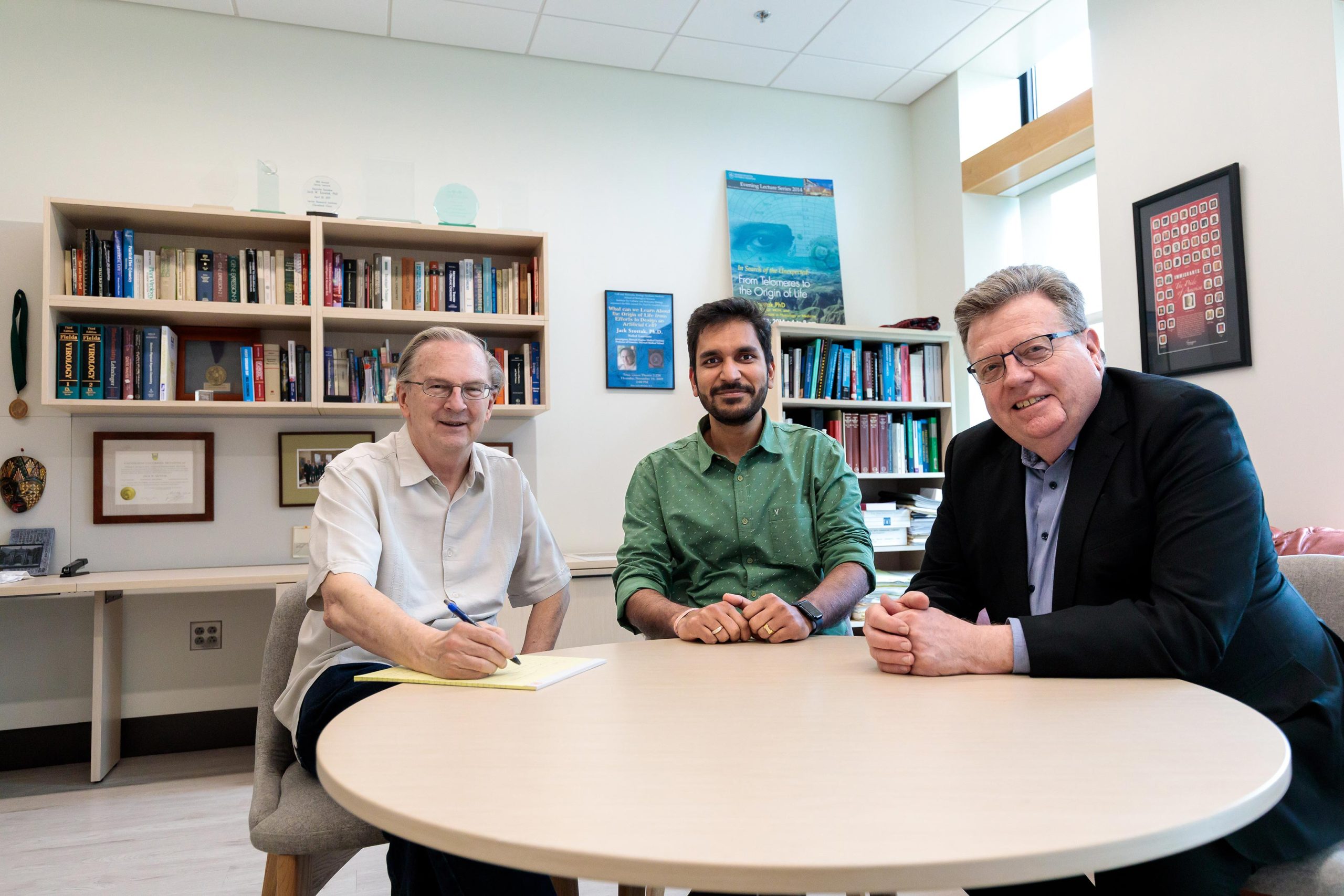
In a new study published Science Advances, UChicago PME postdoctoral researcher Aman Agrawal and his co-authors – including UChicago PME Dean Emeritus Matthew Tirrell and Nobel Prize-winning biologist Jack Szostak – show how rainwater could have helped create a meshy wall around protocells 3.8 billion years ago, a critical step in the transition from tiny beads of RNA to every bacterium, plant, animal, and human that ever lived.
“This is a distinctive and novel observation,” Tirrell said.
Protocell Stability Challenge
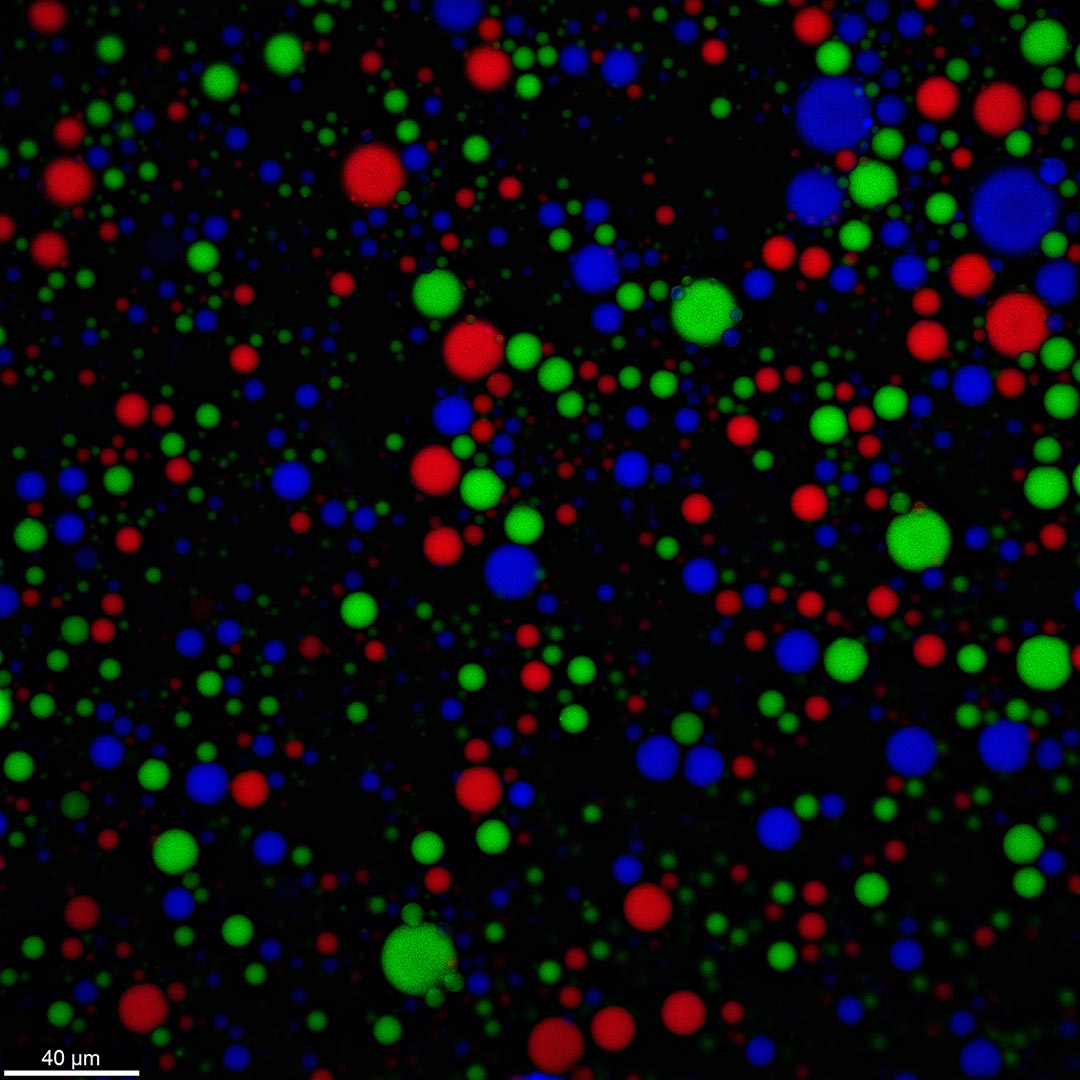
The research looks at “coacervate droplets” – naturally occurring compartments of complex molecules like proteins, lipids, and RNA. The droplets, which behave like drops of cooking oil in water, have long been eyed as a candidate for the first protocells. But there was a problem. It wasn’t that these droplets couldn’t exchange molecules between each other, a key step in evolution, the problem was that they did it too well, and too fast.
Any droplet containing a new, potentially useful pre-life mutation of RNA would exchange this RNA with the other RNA droplets within minutes, meaning they would quickly all be the same. There would be no differentiation and no competition – meaning no evolution. And that means no life.
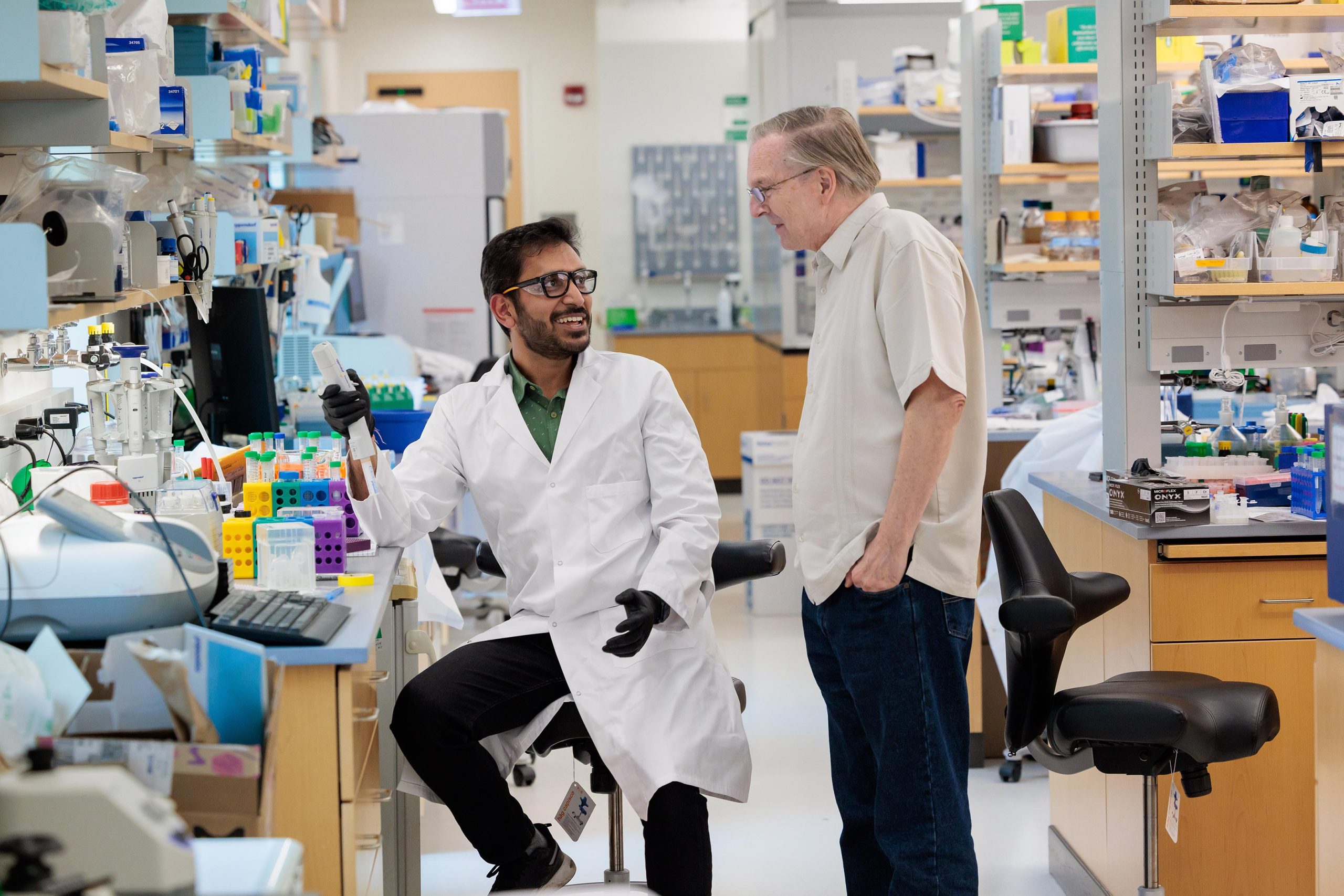
“If molecules continually exchange between droplets or between cells, then all the cells after a short while will look alike, and there will be no evolution because you are ending up with identical clones,” Agrawal said.
Collaborative Research and RNA’s Role
Life is by nature interdisciplinary, so Szostak, the director of UChicago’s Chicago Center for the Origins of Life, said it was natural to collaborate with both UChicago PME, UChicago’s interdisciplinary school of molecular engineering, and the chemical engineering department at the University of Houston.
“Engineers have been studying the physical chemistry of these types of complexes – and polymer chemistry more generally – for a long time. It makes sense that there’s expertise in the engineering school,” Szostak said. “When we’re looking at something like the origin of life, it’s so complicated and there are so many parts that we need people to get involved who have any kind of relevant experience.”
In the early 2000s, Szostak started looking at RNA as the first biological material to develop. It solved a problem that had long stymied researchers looking at DNA or proteins as the earliest molecules of life.
“It’s like a chicken-egg problem. What came first?” Agrawal said. “DNA is the molecule which encodes information, but it cannot do any function. Proteins are the molecules which perform functions, but they don’t encode any heritable information.”
Researchers like Szostak theorized that RNA came first, “taking care of everything” in Agrawal’s words, with proteins and DNA slowly evolving from it.
“RNA is a molecule which, like DNA, can encode information, but it also folds like proteins so that it can perform functions such as catalysis as well,” Agrawal said.
RNA was a likely candidate for the first biological material. Coacervate droplets were likely candidates for the first protocells. Coacervate droplets containing early forms of RNA seemed a natural next step.
Discovery of RNA Stability in Rainwater
That is until Szostak poured cold water on this theory, publishing a paper in 2014 showing that RNA in coacervate droplets exchanged too rapidly.
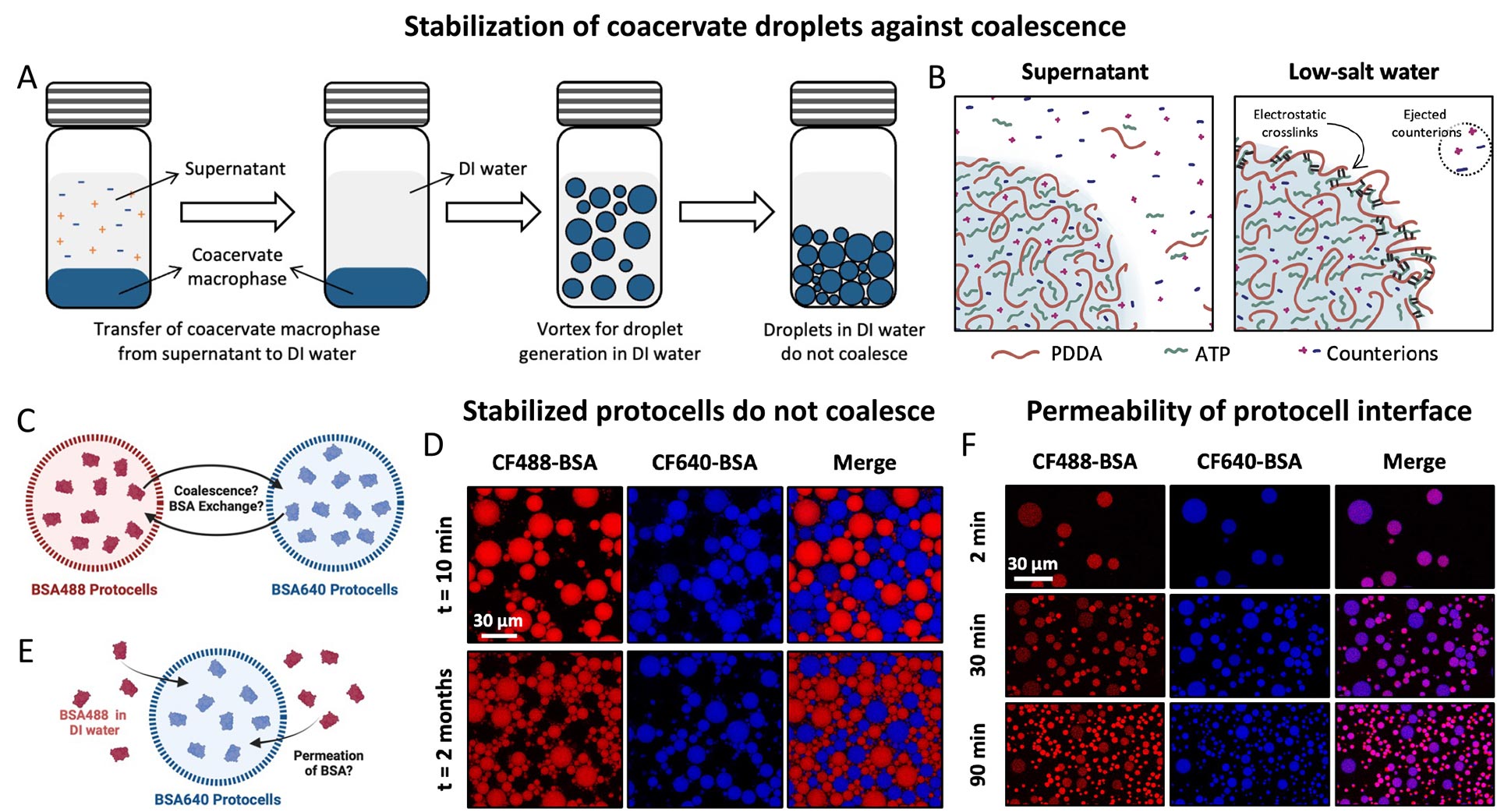
“You can make all kinds of droplets of different types of coacervates, but they don’t maintain their separate identity. They tend to exchange their RNA content too rapidly. That’s been a long-standing problem,” Szostak said. “What we showed in this new paper is that you can overcome at least part of that problem by transferring these coacervate droplets into distilled water – for example, rainwater or freshwater of any type – and they get a sort of tough skin around the droplets that restricts them from exchanging RNA content.”
Bridging Engineering and Biology
Agrawal started transferring coacervate droplets into distilled water during his PhD research at the University of Houston, studying their behavior under an electric field. At this point, the research had nothing to do with the origin of life; it was just studying fascinating material from an engineering perspective.
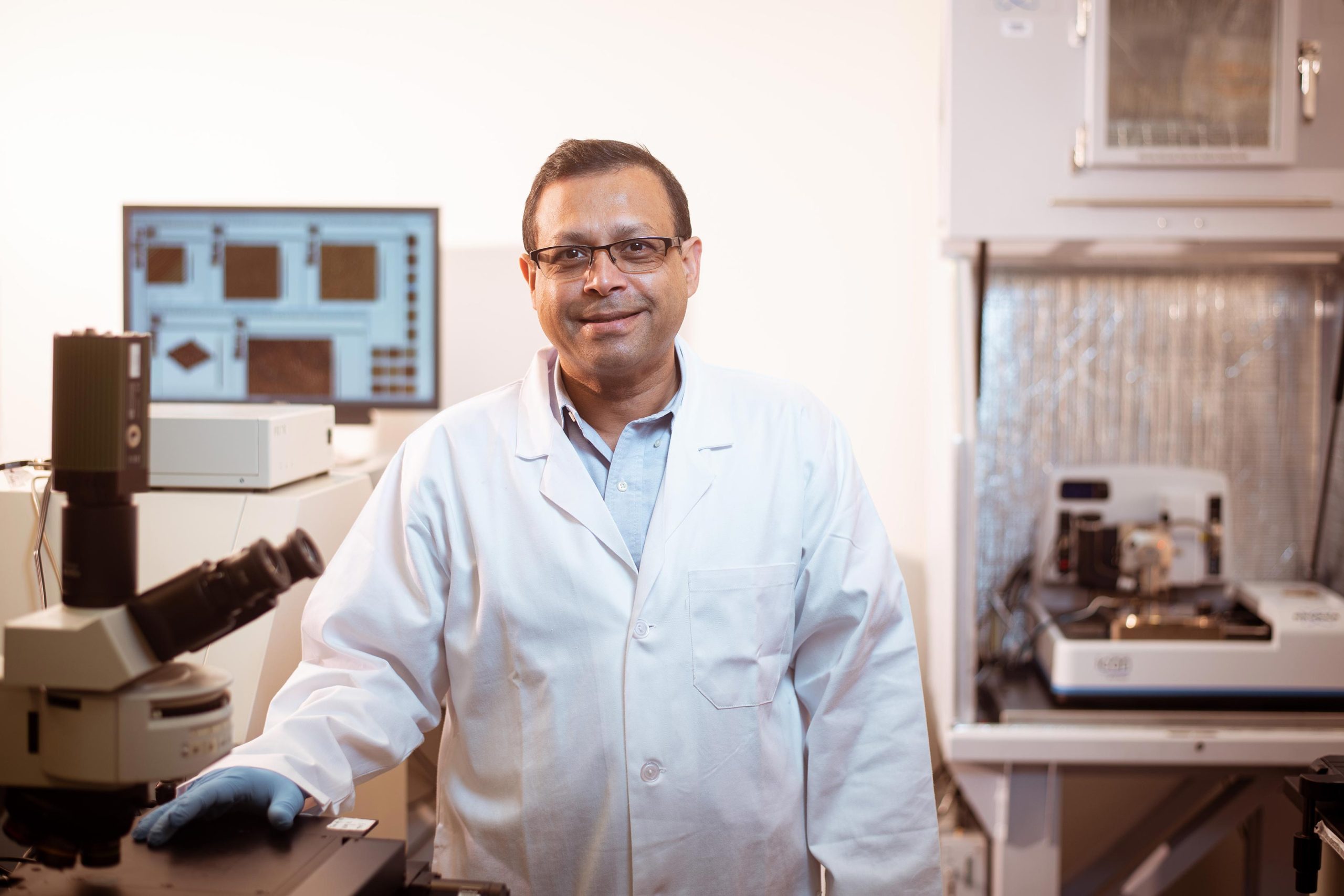
“Engineers, particularly Chemical and Materials, have good knowledge of how to manipulate material properties such as interfacial tension, role of charged polymers, salt, pH control, etc.,” said University of Houston Prof. Alamgir Karim, Agrawal’s former thesis advisor and a senior co-author of the new paper. “These are all key aspects of the world popularly known as ‘complex fluids’ – think shampoo and liquid soap.”
Agrawal wanted to study other fundamental properties of coacervates during his PhD. It wasn’t Karim’s area of study, but Karim had worked decades earlier at the University of Minnesota under one of the world’s top experts – Tirrell, who later became the founding dean of the UChicago Pritzker School of Molecular Engineering.
During a lunch with Agrawal and Karim, Tirrell brought up how the research into the effects of distilled water on coacervate droplets might relate to the origin of life on Earth. Tirrell asked where distilled water would have existed 3.8 billion years ago.
“I spontaneously said ‘rainwater!’ His eyes lit up and he was very excited at the suggestion,” Karim said. “So, you can say it was a spontaneous combustion of ideas or ideation!”
Tirrell brought Agrawal’s distilled water research to Szostak, who had recently joined the University of Chicago to lead what was then called the Origins of Life Initiative. He posed the same question he had asked Karim.
“I said to him, ‘Where do you think distilled water could come from in a prebiotic world?’” Tirrell recalled. “And Jack said exactly what I hoped he would say, which was rain.”
Implications for Prebiotic Evolution
Working with RNA samples from Szostak, Agrawal found that transferring coacervate droplets into distilled water increased the time scale of RNA exchange – from mere minutes to several days. This was long enough for mutation, competition, and evolution.
“If you have protocell populations that are unstable, they will exchange their genetic material with each other and become clones. There is no possibility of Darwinian evolution,” Agrawal said. “But if they stabilize against exchange so that they store their genetic information well enough, at least for several days so that the mutations can happen in their genetic sequences, then a population can evolve.”
Initially, Agrawal experimented with deionized water, which is purified under lab conditions. “This prompted the reviewers of the journal who then asked what would happen if the prebiotic rainwater was very acidic,” he said.
Real-world Testing and Future Directions
Commercial lab water is free from all contaminants, has no salt, and lives with a neutral pH perfectly balanced between base and acid. In short, it’s about as far from real-world conditions as a material can get. They needed to work with a material more like actual rain.
“We simply collected water from rain in Houston and tested the stability of our droplets in it, just to make sure what we are reporting is accurate,” Agrawal said.
In tests with the actual rainwater and with lab water modified to mimic the acidity of rainwater, they found the same results. The meshy walls formed, creating the conditions that could have led to life.
The chemical composition of the rain falling over Houston in the 2020s is not the rain that would have fallen 750 million years after the Earth formed, and the same can be said for the model protocell system Agrawal tested. The new paper proves that this approach of building a meshy wall around protocells is possible and can work together to compartmentalize the molecules of life, putting researchers closer than ever to finding the right set of chemical and environmental conditions that allow protocells to evolve.
“The molecules we used to build these protocells are just models until more suitable molecules can be found as substitutes,” Agrawal said. “While the chemistry would be a little bit different, the physics will remain the same.”
Reference: “Did the exposure of coacervate droplets to rain make them the first stable protocells?” by Aman Agrawal, Aleksandar Radakovic, Anusha Vonteddu, Syed Rizvi, Vivian N. Huynh, Jack F. Douglas, Matthew V. Tirrell, Alamgir Karim and Jack W. Szostak, 21 August 2024, Science Advances.
DOI: 10.1126/sciadv.adn9657
Never miss a breakthrough: Join the SciTechDaily newsletter.
Follow us on Google and Google News.
18 Comments
A fundamental question about the origin of life is how droplets of RNA floating around the primordial soup turned into the membrane-protected packets of life we call cells.
VERY GOOD!
Please ask researchers to think deeply:
1. Where does your primordial soup come from?
2. What is the temporal and spatial background of the formation of your primordial soup?
Scientific research guided by correct theories can help humanity avoid detours, failures, and pomposity. Please witness the exemplary collaboration between theoretical physicists and experimentalists (https://scitechdaily.com/microscope-spacecrafts-most-precise-test-of-key-component-of-the-theory-of-general-relativity/#comment-854286). Some people in contemporary physics has always lived in a self righteous children’s story world. Whose values have been overturned by such a comical and ridiculous reality?
From Physical Review Letters (PRL), to Nature, and Science, even the Proceedings of the National Academy of Sciences (PNAS), the so-called academic journals firmly believe that two high-dimensional spacetime objects (such as two sets of cobalt-60) rotating in opposite directions can be transformed into two objects that mirror each other, and that the asymmetry between the amount of created matter and antimatter led to the matter-dominated Universe as we know it today.
Does the facts tell the so-called academic journals that two sets of cobalt-60 rotating in opposite directions can be transformed into two objects that mirror each other? Does mathematics tell the so-called academic journals that matter and antimatter are asymmetric? When physics no longer believes in facts and mathematics, it is no different from theology.
Naked walkers never consider themselves ugly, but rather consider themselves cool.
Space has physical properties of zero viscosity and absolute incompressibility. Zero viscosity and absolute incompressibility are physical characteristics of ideal fluids. The space with ideal fluid physical characteristics forms vortices via topological phase transitions, which is not difficult to understand mathematically. Once the topological vortex is formed, it occupies space and maintains its presence in time. This is the transition from chaos to order via two bidirectional coupled continuous chaotic systems.
From cosmic accretion disks to particle spins, topological vortex fractal structures are ubiquitous. Symmetry of topological vortex can be used to explore particle behavior under spatial, temporal, and quantum reversals, involving gravitation, discrete and continuous changes. It underpins the consistency of natural laws and experiment reproducibility.
The physical phenomena observed in scientific experiments are always just appearances, not the natural essence of things. The natural essence of things needs to be extracted and sublimated based on natural phenomena via mathematical theories. Mathematics is the main environment for modeling problems in other areas. Observations and experiments, theory, and modeling reinforce each other and together lead to our understanding of physical phenomena. After understanding and mastering the natural essence of things, humans can predict more possible natural phenomena, and even manipulate and implement them.
Biology, Physics, and Chemistry are no clear boundary in terms of their origins, they jointly promote the progress and development of Science and Technology.
What is the origin of physics? What factors determines its change? Is chemistry dependent on physics? If so how do you determine the correlation? How is the interaction between physics and chemistry and vice-versa? What were the physics and physical factors that determined the chemistry of life’s origin?? These are brainstorming questions of a common man!
Even if you get a few amino acids needed for life it’s a big leap to complex self-replicating organisms. The simplest proteins (built out of amino acids) are much more sophisticated than its parts (amino acids). It’s the difference between Lego blocks and the design for the Empire State Building. To get the latter you need some sort of organizing intelligent presumably conscious principle, just as a few tinker toys floating around a “primordial soup will never develop anything sophisticated. The rink toy blocks may connect in very simple ways but that’s about it. Without the input design for the Empire State Building, no matter how many years they float around the will never develop into anything signifying intelligent design.
The simple chemical results produced by Miller’s experiment (recreating the speculated initial conditions of the earth, then running electricity through ammonia, methane, etc., to create simple amino acids) has not yet demonstrated how complex cellular components and mechanisms could arise. It’s one thing to create tinker toys-it’s quite another to produce the Empire State Building.
Stanley Miller, a chemistry professor at the University of California at San Diego, sought to reconstruct conditions he believed existed at the “dawn of life” and thereby generate primitive organic forms from physical elements. Into a flask he placed gases thought to comprise the ancient atmosphere, and by passing a spark through this mixture he produced a brown, tarry substance on the walls of the container. This tarry substance included amino acids, the constituents of protein molecules.
He heralded this as a significant breakthrough and managed to impress many people, both inside and outside the scientific community. Yet Miller’s experiments are actually of little, if any, significance. We would expect amino acids to form in Miller’s experiment, because this technique automatically produces practically every simple organic molecule found in nature (the vast majority of which are poisonous to present-day life forms). Asked to predict the outcome of Miller’s experiments, Harold Urey, a chemist at the University of California, put the whole affair into perspective when he replied, “Bielstein.” (Bielstein is the German catalog of all known organic chemicals.) Furthermore, amino acids are relatively simple molecules, serving merely as the building blocks of the far more complex protein molecules found in cells. It’s not surprising that a simple technique like Miller’s produces simple chemical results, but it has yet to be demonstrated that such a simple process can produce complex cellular components and mechanisms. It’s quite a step to go from unorganized building blocks to a house.
All organisms are simply complex structures formed by amino acids via proteins etc. In order to get anything but more amino acids you have to introduce more information. In fact you’d have to assemble them into machines that can produce similar machines like complex proteins. In other words you need structures to house dna or even rna in order to have cellular life as we know it. Such structures are prerequisites if we want anything more complex than simple amino acids. Some propose an RNA primordial soup world yet the idea of rna replicating and preceding dna has many problems.
Manfred Eigen proposed hyper cycles that would catalyze different types of rna, but, the model requires a mechanism for producing complicated proteins (in the form of enzymes) from information coded in RNA. Eigen has not been able to suggest a workable mechanism of this kind. In other words the hyper cycles must be enclosed as pointed out by John Maynard Smith; unless the hypercycle were enclosed within a compartment resembling a cell wall, it’s different parts would compete with each other and thus there is no certainty they would evolve.
50 years ago in I learned of the ignorance from the dark ages when it was believed life came from spontaneous generation. We laughed to learn that they actually believed that frogs came from the rain. We were enlightened that Louis Pasteur proved that life comes from preexisting life. Based on this article I would say that humans seem to be devolving instead of evolving.
The actual important process would be the formation of micro droplets at the evaporation points this would create trillions of independent subunits with autonomous selective systems. These would then accrete into droplets at a local dew point and that would create larger common selective units with each proto RNA unit encountering thousands of alternatives. Then at rainfall these would be accreted into a new larger system, then at the hydrospheric-atmospheric junction evaporation would recur, repeating the process.
The evaporative microcell stage would be the equivalent of the mutational stage while the oceanic level would be a more finalized organismal or culmination phase.
So I’m sure that Shostak and his team is investigating the chemical features that are most reproducible and stable under the different temperature and time constraints in the stages of these cycles.
The article sId scientists proved where the origins of life came from but this is a lie because your article said its just a theory,there is no proof, just guesses
A theory in science is a verified, demonstrated hypothesis.
Get an education, a real one.
And learn to read and interpret what you read.
Interesting and possibly building towards a better understanding of things but, until we can create life in the laboratory, this still requires the “and then a miracle happens” step.
I see some very intelligent people already pointed out the problems I was about to mention. Thank you.
Sounds like we have some very smart people commenting here. Unfortunately they are wasting time and money in their quest for answers that have existed for thousands of years. “But God chose the foolish things of the world to confound the wise; and God chose the weak things of the world to confound the strong” I Corinthians 1:27. The use of “may” and “could” at the being of these articles speak the loudest. Forget that the vast majority of mutations are deleterious and are at best neutral to the organism and always leave the cell with less information than previously. Without a divine Creator (Jesus Christ) there is no chicken AND there is no egg! Romans 1:25 explains very well… “because they exchanged the truth about God for a lie and worshiped and served the creature rather than the Creator, who is blessed forever!
So basically God doesn’t exist then? 🤔
These articles are all the same. They open with bold titles declaring how scientists made key breakthroughs in solving the mystery of the origin of life. The reality is, the articles are full of wild and fanciful conjectures, wasting billions of dollars in research. And this will continue as long as scientists continue to use the discredited naturalistic paradigm. They will be, “…ever learning, and never able to come to the knowledge of the truth.” (2 Tim. 3:7) “Life comes only from life.” “In the beginning was the Word, and the Word was with God, and the Word was God. The same was in the beginning with God. All things were made by him; and without him was not any thing made that was made. In him was life; and the life was the light of men.” (John 1:1-4)
At this point I’m beginning to wonder if it even matters.
I realize it does when regarding the fragility of human egos, but there are so many theories and possibilities that it’s beginning to seem like life was inevitable rather than some random fluke.
Furthermore, utilizing everything we do actually know, it seems mitochondria were likely the proto-cells that came first rather than a bacteria that was later “swallowed”.
With the electro-chemical gradients creating an electromagnetic field around the initial process that not only allowed for the formation of the double membrane but also stored, carried, and transferred it’s instructional processes.
The simple variations in oxygen, hydrogen, calcium, magnesium, sodium, etc would allow for the mutational phases just as they continue to do now.
Whereas other single cell organisms lost their mitochondria but retained enough energy production to continue their stored/saved nuclear processes.
In fact, there are several instances/processes we are aware of where mitochondria “leave” the cell.
(Yes, I am well aware this is the exact opposite of nearly every theory out there.)
It is also the opposite of common sense.
Connecting English words using English grammar hardly constitutes a scientific theory.
Al Quran .
Allah Says in Quran . We prepare a life through water from sky on earth.
Thats amazing Allah mentioned this in his Holy Boook 1400 years ago.
I am deeply concerned that if x created y then who created x
Interesting.
Since Allah never wrote anything,
Then the creator God gets the credit..only God is holy.