

Close Menu
    Facebook X (Twitter) Instagram
    SciTechDaily
    • Biology
    • Chemistry
    • Earth
    • Health
    • Physics
    • Science
    • Space
    • Technology
    Facebook X (Twitter) Pinterest YouTube RSS
    SciTechDaily
    Home»Biology»Reaction to Placebo Effect May Be Genetic
    Biology

    Reaction to Placebo Effect May Be Genetic

    By SciTechDailyOctober 31, 2012No Comments3 Mins Read
    Facebook Twitter Pinterest Telegram LinkedIn WhatsApp Email Reddit
    Share
    Facebook Twitter LinkedIn Pinterest Telegram Email Reddit
    placebo-acupuncture
    Acupuncture therapy

    The reason why some people tend to respond to treatments that have no active ingredients might be down to genetics. A new study indicates that the placebo effect could be linked to a genetic component.

    The scientists published their findings in the journal PLoS ONE. The placebo effect was examined in 104 patients with irritable bowel syndrome (IBS). Those with a particular version of the COMT gene saw an improvement in their health after placebo acupuncture, in which the needles never pierced the skin.
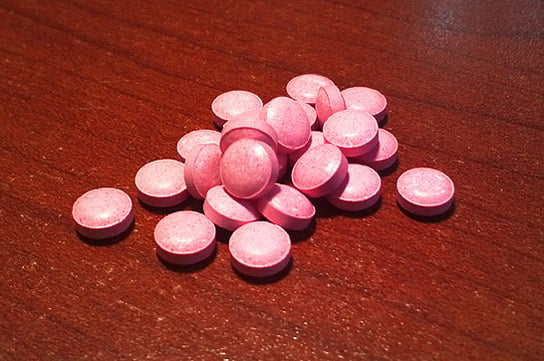
    placebo-sugarpills
    Placebo sugar pills. Image by Best Raw Organic.

    It’s hoped that these findings will be seen in other conditions. The study sample is small, and independent replications are needed to determine if this phenomenon applies just to IBS or to all diseases, or to different classes of infections and/or ailments.

    Generally speaking, the placebo effect is seen when a patient experiences an improvement in their condition while undertaking a treatment that is inert, like taking a sugar pill or placebo acupuncture. The patient believes that the needles are going into their skin, but they aren’t.

    There isn’t a single placebo response and a single mechanism, states Fabrizio Benedetti of the University of Turin Medical School. Two groups in this study received different treatment. One received theirs in a business-like clinical manner, while the other received it from a warm, supportive practitioner. A third group received no treatment at all.

    After three weeks, the patients were asked if they had seen an improvement in their IBS. The team used blood samples to look at what variant the individual had of the catechol-O-methyltranferase (COMT) gene, which plays a role in the dopamine pathway.

    This gene was chosen because there had been increasing evidence that the neurotransmitter dopamine is activated when people anticipate and respond to placebos. Individuals with a COMT variant that tripled the amount of dopamine in the front of the brain felt no improvement without treatment but an improvement with placebo acupuncture.

    However, dopamine might not be the only chemical involved in the placebo effect. Previous studies indicate that serotonin is also associated with it.

    Reference: “Catechol-O-Methyltransferase val158met Polymorphism Predicts Placebo Effect in Irritable Bowel Syndrome” by Kathryn T. Hall, Anthony J. Lembo, Irving Kirsch, Dimitrios C. Ziogas, Jeffrey Douaiher, Karin B. Jensen, Lisa A. Conboy, John M. Kelley, Efi Kokkotou and Ted J. Kaptchuk, 23 October 2012, PLoS ONE.
    DOI: 10.1371/journal.pone.0048135

    Never miss a breakthrough: Join the SciTechDaily newsletter.
    Follow us on Google and Google News.

    Brain Genetics Medicine Neurology Placebo Effect
    Share. Facebook Twitter Pinterest LinkedIn Email Reddit

    Related Articles

    How Does a Single Cell Build a Brain? Scientists Reveal a Surprisingly Simple Rule

    Scientists Discover Gene Critical for a Healthy Brain

    First Direct Evidence That Fragile X Syndrome Neurons Can Be Restored

    New Insight on CLOCK Gene May Hold Answers to Human Brain Evolution

    Gene Linking Brain Structure to Intelligence Identified

    Alzheimer’s Spreads Throughout the Brain by Jumping From Neuron to Neuron

    Researchers Use fMRI to Study How Humor Activates Kids’ Brain Regions

    Neuroscientists Decode Correlation Between Sound and Brain Activity

    Mother’s Nurturing Results in Larger Hippocampus in Children

    Leave A Reply Cancel Reply

    • Facebook
    • Twitter
    • Pinterest
    • YouTube

    Don't Miss a Discovery

    Subscribe for the Latest in Science & Tech!

    Trending News

    Your Blood Pressure Reading Could Be Wrong Because of One Simple Mistake

    Astronomers Stunned by Ancient Galaxy With No Spin

    Physicists May Be on the Verge of Discovering “New Physics” at CERN

    Scientists Solve 320-Million-Year Mystery of Reptile Skin Armor

    Scientists Say This Daily Walking Habit May Be the Secret to Keeping Weight Off After Dieting

    New Therapy Rewires the Brain To Restore Joy in Depression Patients

    Giant Squid Detected off Western Australia in Stunning Deep-Sea Discovery

    Popular Sugar-Free Sweetener Linked to Liver Disease, Study Warns

    Follow SciTechDaily
    • Facebook
    • Twitter
    • YouTube
    • Pinterest
    • Newsletter
    • RSS
    SciTech News
    • Biology News
    • Chemistry News
    • Earth News
    • Health News
    • Physics News
    • Science News
    • Space News
    • Technology News
    Recent Posts
    • Scientists Reverse Stroke Damage Using Stem Cells in Breakthrough Study
    • Eating One Egg a Day Could Cut Alzheimer’s Risk by 27%
    • Hidden Warm Water Beneath Antarctica Could Rapidly Raise Global Sea Levels
    • Scientists Revive Ancient Chemistry Trick To Engineer Next-Generation Glass
    • Scientists Use AI To Supercharge Ultrafast Laser Simulations by More Than 250x
    Copyright © 1998 - 2026 SciTechDaily. All Rights Reserved.
    • Science News
    • About
    • Contact
    • Editorial Board
    • Privacy Policy
    • Terms of Use

    Type above and press Enter to search. Press Esc to cancel.