
Close Menu
    Facebook X (Twitter) Instagram
    SciTechDaily
    • Biology
    • Chemistry
    • Earth
    • Health
    • Physics
    • Science
    • Space
    • Technology
    Facebook X (Twitter) Pinterest YouTube RSS
    SciTechDaily
    Home»Chemistry»Reducing Blue Light: A New Type of LED That Won’t Keep You Up All Night
    Chemistry

    Reducing Blue Light: A New Type of LED That Won’t Keep You Up All Night

    By American Chemical SocietyApril 28, 2021No Comments3 Mins Read
    Facebook Twitter Pinterest Telegram LinkedIn WhatsApp Email Reddit
    Share
    Facebook Twitter LinkedIn Pinterest Telegram Email Reddit
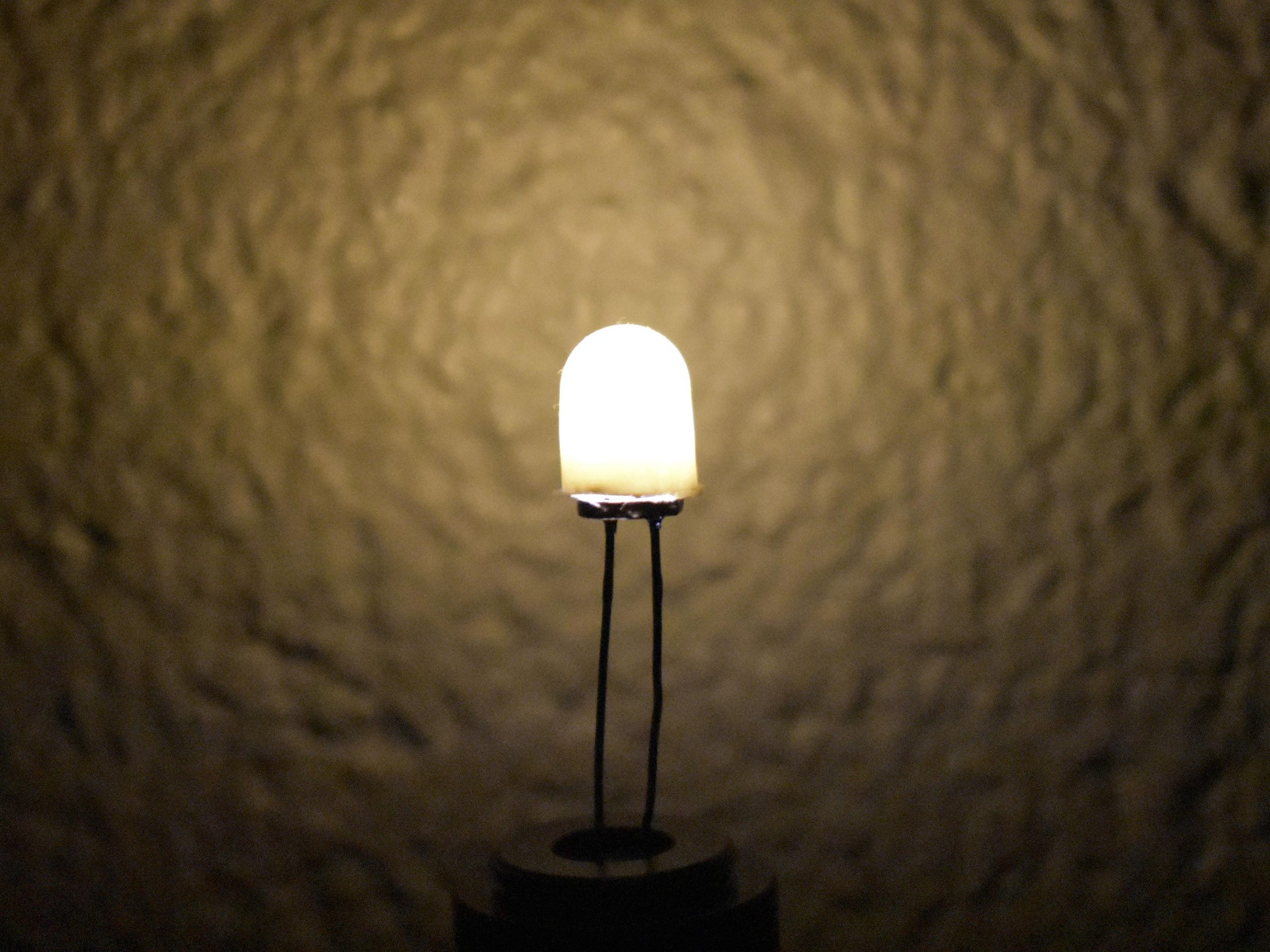
    Warm Light LED Prototype
    This prototype device creates a warm white light without the blue hues that can cause health problems. Credit: Jakoah Brgoch

    A new violet-light LED prototype reduces blue light and delivers sunlight-like color accuracy for healthier indoor lighting.

    To be more energy efficient, many people have replaced their incandescent lights with light-emitting diode (LED) bulbs. However, those currently on the market emit a lot of blue light, which has been linked to eye troubles and sleep disturbances. Now, researchers reporting in ACS Applied Materials & Interfaces have developed a prototype LED that reduces — instead of masks — the blue component, while also making colors appear just as they do in natural sunlight.

    LED light bulbs are popular because of their low energy consumption, long lifespan, and ability to turn on and off quickly. Inside the bulb, an LED chip converts electrical current into high-energy light, including invisible ultraviolet (UV), violet, or blue wavelengths. A cap that is placed on the chip contains multiple phosphors — solid luminescent compounds that convert high-energy light into lower-energy visible wavelengths. Each phosphor emits a different color, and these colors combine to produce a broad-spectrum white light.

    Commercial LED bulbs use blue LEDs and yellow-emitting phosphors, which appear as a cold, bright white light similar to daylight. Continual exposure to these blue-tinted lights has been linked to cataract formation, and turning them on in the evening can disrupt the production of sleep-inducing hormones, such as melatonin, triggering insomnia and fatigue.

    To create a warmer white LED bulb for nighttime use, previous researchers added red-emitting phosphors, but this only masked the blue hue without getting rid of it. So, Jakoah Brgoch and Shruti Hariyani wanted to develop a phosphor that, when used in a violet LED device, would result in a warm white light while avoiding the problematic wavelength range.

    A Novel Phosphor with Health-Conscious Potential

    As a proof of concept, the researchers identified and synthesized a new luminescent crystalline phosphor containing europium ((Na1.92Eu0.04)MgPO4F). In thermal stability tests, the phosphor’s emission color was consistent between room temperature and the higher operating temperature (301°F or 149°C) of commercial LED-based lighting. In long-term moisture experiments, the compound showed no change in the color or intensity of light produced.

    To see how the material might work in a light bulb, the researchers fabricated a prototype device with a violet-light LED covered by a silicone cap containing their luminescent blue compound blended with red-emitting and green-emitting phosphors. It produced the desired bright warm white light while minimizing the intensity across blue wavelengths, unlike commercial LED light bulbs.

    The prototype’s optical properties revealed the color of objects almost as well as natural sunlight, fulfilling the needs of indoor lighting, the researchers say, though they add that more work needs to be done before it is ready for everyday use.

    Reference: “Advancing Human-Centric LED Lighting Using Na2MgPO4F:Eu2+” by Shruti Hariyani and Jakoah Brgoch, 30 March 2021, ACS Applied Materials & Interfaces.
    DOI: 10.1021/acsami.1c00909

    The authors acknowledge funding from the U.S. National Science Foundation and the Welch Foundation.

    Never miss a breakthrough: Join the SciTechDaily newsletter.
    Follow us on Google and Google News.

    American Chemical Society Electrical Engineering Materials Science Ophthalmology
    Share. Facebook Twitter Pinterest LinkedIn Email Reddit

    Related Articles

    Researchers Develop a Flexible Color-Changing Film Inspired by Chameleon Skin

    What Happens Between the Sheets? Extremely-Promising Superconductor Surprises Everyone

    Sustainable Green Chemistry Used to Create Safer, More Comfortable Uniforms for Soldiers

    New Hydrogel Can Cool Down Electronic Devices and Convert Waste Heat Into Electricity

    Underwater Smart Glue Goes From Sticky to Not With a Small Zap of Electricity

    Watch This Blacksmith Forge a Sword Using Chemistry

    Super Durable, Flexible, Water-Repelling Material Inspired by Porcupinefish

    New Polyurethane Designed to Easily Degrade for Reuse

    Degradable Polyurethane Gives Its Components a Second Life

    Leave A Reply Cancel Reply

    • Facebook
    • Twitter
    • Pinterest
    • YouTube

    Don't Miss a Discovery

    Subscribe for the Latest in Science & Tech!

    Trending News

    First-of-Its-Kind Discovery: Homer’s Iliad Found Embedded in a 1,600-Year-Old Egyptian Mummy

    Beyond Inflammation: Scientists Uncover New Cause of Persistent Rheumatoid Arthritis

    A Simple Molecule Could Unlock Safer, Easier Weight Loss

    Scientists Just Built a Quantum Battery That Charges Almost Instantly

    Researchers Unveil Groundbreaking Sustainable Solution to Vitamin B12 Deficiency

    Millions of People Have Osteopenia Without Realizing It – Here’s What You Need To Know

    Researchers Discover Boosting a Single Protein Helps the Brain Fight Alzheimer’s

    World-First Study Reveals Human Hearts Can Regenerate After a Heart Attack

    Follow SciTechDaily
    • Facebook
    • Twitter
    • YouTube
    • Pinterest
    • Newsletter
    • RSS
    SciTech News
    • Biology News
    • Chemistry News
    • Earth News
    • Health News
    • Physics News
    • Science News
    • Space News
    • Technology News
    Recent Posts
    • Weight-Loss Drugs Like Ozempic May Come With an Unexpected Cost
    • After Decades, MIT Researchers Capture the First 3D Atomic View of a Mysterious Material
    • Your Favorite Fishing Spot Is Turning Brown – and the Fish Are Changing
    • 380-Million-Year-Old Fish Fossil Reveals Secrets of Life’s First Steps Onto Land
    • Mezcal “Worm” in a Bottle Mystery: DNA Testing Reveals a Surprise
    Copyright © 1998 - 2026 SciTechDaily. All Rights Reserved.
    • Science News
    • About
    • Contact
    • Editorial Board
    • Privacy Policy
    • Terms of Use

    Type above and press Enter to search. Press Esc to cancel.