
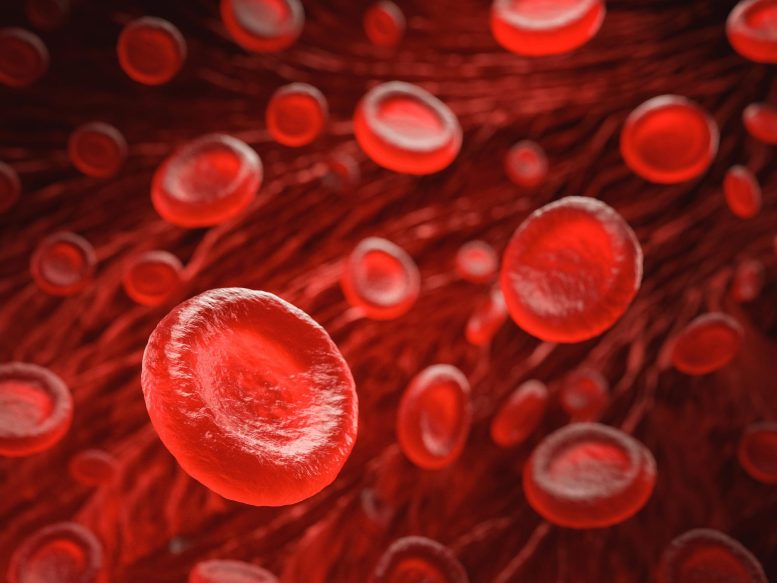
Research shows young mice sharing blood with old mice had reduced lifespans, while old mice saw no benefit from young blood, indicating aging factors in old blood.
In a new study, young and old mice were surgically joined such that they shared blood circulation for three months. According to the results, the old mice did not significantly benefit in terms of lifespan. On the other hand, the young mice that were exposed to blood from old animals had significantly decreased lifespan compared to mice that shared blood with other young mice. The study was published on July 22 in the peer-reviewed journal Rejuvenation Research.
Heterochronic parabiosis is a research tool that is used to assess the effect of organs and of blood-borne factors on young and old animals. Less controlled than direct blood exchange, parabiosis is a model of blood sharing between two surgically connected animals. Iryna Pishel, from Kyiv National Taras Shevchenko University and Bienta Ltd, in Kyiv, Ukraine, and coauthors used heterochronic parabiosis between young and old mice and the isochronic controls for three months. Then they disconnected the animals and studied the effects of being joined on the blood plasma and animal lifespan.
Old Blood Contains Aging Factors
“The most robust and interesting result of this study is the fact of a significant decrease in the lifespan of young mice from heterochronic parabiotic pairs,” state the investigators. “These data support our assumption that old blood contains factors capable of inducing aging in young animals. Finding and selective suppression of aging factor production in the organism could be the key research field for life extension,” they conclude.
Editor-in-Chief Irina Conboy, PhD, Professor, College of Engineering, University of California, Berkeley says “This work clarifies the question of whether the young blood or old blood control longevity, which has been debated (Nature 2005, Conboy, et. al). Are there lasting effects of heterochronic parabiosis and if so, is it a rejuvenation or aging? The work by the Pishel group established that the lifespan of the old mice does not increase after being parabiosed to young mice. In contrast, the young animals that were joined with the old mice suffer a shortened lifespan, even after being disconnected.
“This discovery is important in establishing the accurate direction for clinical anti-aging approaches and in providing key scientific evidence against the potency of the young blood factors in an aged organism. This work neatly follows the report previously published by this group that infusions of young blood plasma into mice do not increase their lifespan.”
On a very important note, Professor Pishel conducted these seminal studies as the Head of the Department at Kyiv National Taras Shevchenko University, yet composed the paper as a refugee, from data collected before the outbreak of war with Russia. Such important studies were interrupted by the war, and we hope that the research will soon continue and yield more breakthroughs.
Reference: “Three Month Heterochronic Parabiosis Has a Deleterious Effect on the Lifespan of Young Animals, Without a Positive Effect for Old Animals” by Tatiana Yankova, Tatiana Dubiley, Dmytro Shytikov and Iryna Pishel, 22 July 2022, Rejuvenation Research.
DOI: 10.1089/rej.2022.0029
Never miss a breakthrough: Join the SciTechDaily newsletter.
Follow us on Google and Google News.
3 Comments
Interesting.
Have always wondered about longevity and quality of blood donated for medical use in emergency. Blood plasma is isolated and stored.
What about other factors which constitute healthy blood?
DO blood cells decay and how long do they last outside the biological specimen? Does it differ for different specimens?
Can we stop such decay , and impact of time on such blood cells?
Fresh blood cells are constantly produced by the biological specimens. Does the quality of such blood deteriorate over time. ?
Lots of unanswered questions.
Views are personal.
Disturbing at the very least.
Elizabeth Bathory.