
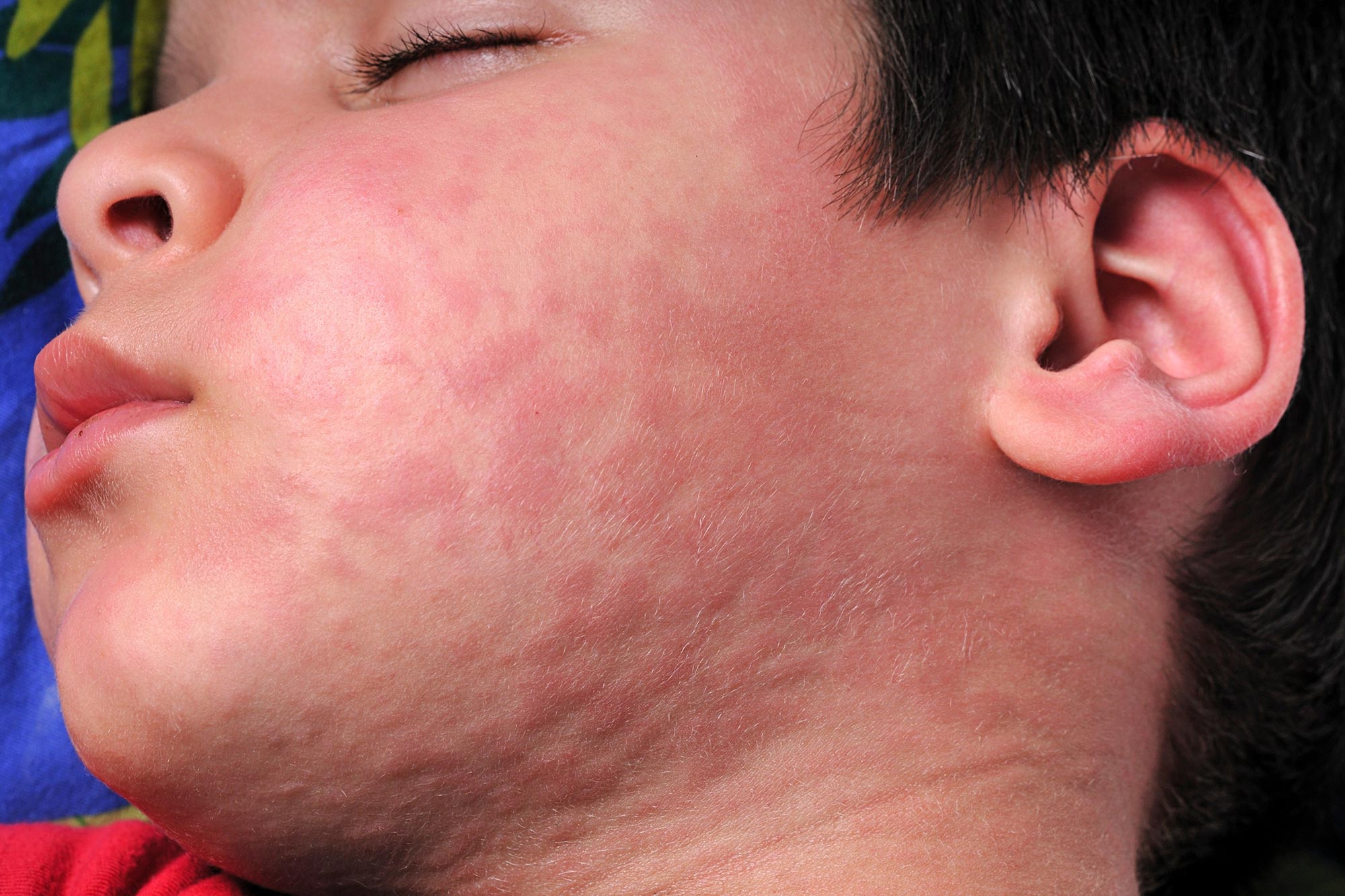
While studying people that suffer from cold urticarial, researchers at the National Institutes of Health discovered a genetic mutation in the gene for phospholipase C-gamma2 (PLCG2.) By identifying this genetic mutation, which they named PLAID, the researchers hope to find a potential cure and shed new light on how the immune system functions.
National Institutes of Health (NIH) scientists have identified a genetic mutation that causes cold temperatures to trigger allergic reactions—a condition called cold urticaria. In addition to pointing the way toward a potential cure, this finding will help shed light on how the immune system functions.
Cold urticaria is an allergic disease in which cold temperatures bring itchy, sometimes painful hives, episodes of fainting, and potentially life-threatening immune reactions. Earlier research had tied the disease to immune system cells called mast cells. Mast cells release toxic compounds that help destroy invading microbes in a process called degranulation. In people with cold urticaria, mast cells degranulate in response to cold. What leads to this misfire, however, wasn’t known.
A research team led by Dr. Joshua Milner of NIH’s National Institute of Allergy and Infectious Diseases (NIAID) and Dr. Daniel Kastner of NIH’s National Human Genome Research Institute (NHGRI) set out to investigate. Support for the study also came from NIH’s National Institute of Arthritis and Musculoskeletal and Skin Diseases (NIAMS). Results appeared in the online edition of the New England Journal of Medicine on January 11, 2012.
The scientists studied 27 people from 3 separate families. All the participants suffered from an inherited form of cold urticaria. A genetic analysis uncovered mutations in the gene for phospholipase C-gamma2 (PLCG2), an enzyme involved in activating immune cells. These mutations cause the enzyme to function without shutting off. The team named the condition PLCG2-associated antibody deficiency and immune dysregulation, or PLAID.
The researchers found that patients with PLAID can have excessive or deficient immune system reactions. Analysis of blood samples revealed that many participants produced antibodies to their own cells and tissues (autoantibodies), making them more likely to develop autoimmune disease. More than half had a history of recurrent infections. Three had common variable immunodeficiency, which requires frequent intravenous infusions of antibody to prevent severe infections. Seven suffered from granulomas (inflamed masses of tissue) on their fingers, ears, nose, and other parts of their skin.
Laboratory tests showed that the mutated gene causes abnormal activity in several types of immune cells, including B cells, which are responsible for producing antibodies. Mast cells with the mutations spontaneously degranulate at cool temperatures, which could explain why the patients develop cold-induced hives.
These results suggest that inhibiting PLCG2 activity could be a way to treat PLAID. They also suggest that people previously diagnosed with common variable immunodeficiency disease or granulomas might have a PLCG2 gene mutation.
“We not only identified a disease-causing mutation but uncovered a unique and fascinating genetic mechanism at the crux of allergy, immune defense and self-tolerance,” says Milner.
Never miss a breakthrough: Join the SciTechDaily newsletter.
Follow us on Google and Google News.