
Researchers Emphasize the Heightened Urgency To Save and Restore the River’s Population
A Penn State research team, in collaboration with the Pennsylvania Fish and Boat Commission, has embarked on a mission to save a unique darter from the lower Susquehanna River. Their findings revealed that this fish is a unique subspecies not found elsewhere, emphasizing the urgency to restore its population.
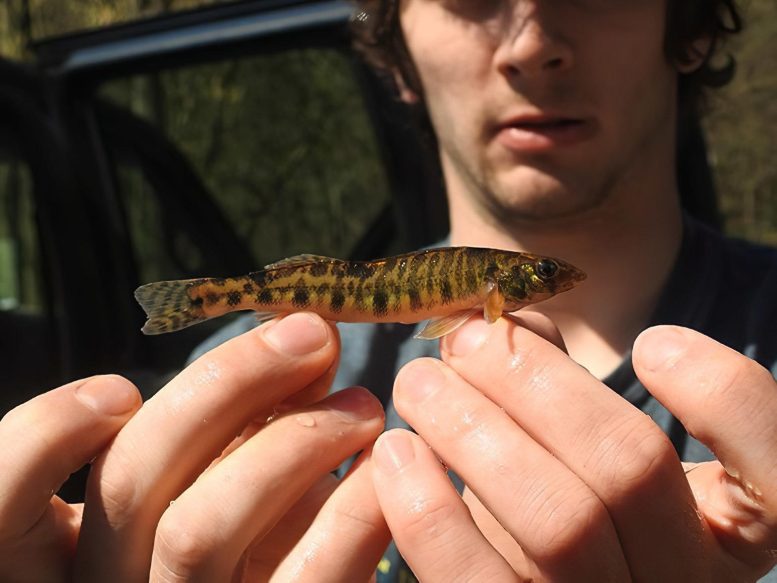
Characterized by its yellow to olive hue, the Chesapeake logperch is a darter family member with dark patterns often resembling zebra stripes. Usually measuring just a few inches, this fish has a petite mouth and a short, cone-shaped snout. Historically, its habitat has been limited to the lower stretches of the Susquehanna and Potomac rivers. However, there have been no sightings of it in the Potomac since the late 1930s.
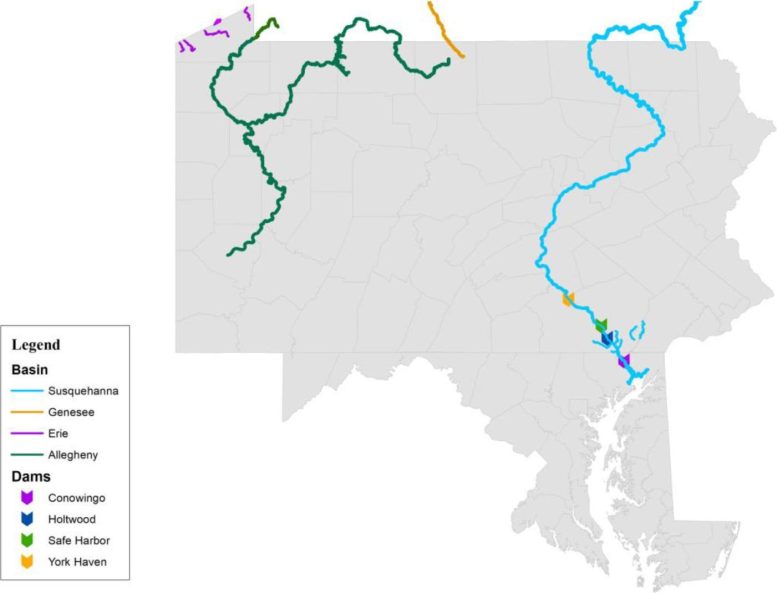
To reach their conclusion that the Chesapeake logperch, Percina bimaculata, is one of a kind — recently published in Fishes — the researchers collected thousands of specimens of logperch using seines, electrofishing units, and electrified benthic trawls from the Allegheny River, from tributaries of Lake Erie and from the lower Susquehanna River. They also included specimens from the Mississippi River drainage, collected in Illinois and Minnesota and stored at the Illinois Natural History Survey, in the study.
To compare the fish from the different populations, researchers made 18 measurements and seven counts on specimens, quantifying characteristics such as the presence or absence of scales on the fishes’ nape, and the number of rays of the pectoral fin, lateral-line scales, and gill rakers.
“We concluded that the Chesapeake logperch found in the lower Susquehanna River and a few of its tributaries is not the same as closely related fish found in the other drainages,” said team leader Jay Stauffer, distinguished professor of ichthyology at Penn State. “That makes our project to rescue and reintroduce the fish into the river and tributaries even more urgent.”
Stauffer and his research group in Penn State’s College of Agricultural Sciences, in conjunction with Doug Fischer of the Pennsylvania Fish & Boat Commission, just concluded a four-year effort to restore the logperch population in the lower Susquehanna, which was funded by grants totaling almost $500,000 from the Pennsylvania Fish and Boat Commission and the Pennsylvania Wild Resources Fund.
Breeding and Reintroduction in Historic Habitats
For the reintroduction, Stauffer and several graduate students completed underwater snorkel surveys in sections of the lower Susquehanna and select tributaries, capturing Chesapeake logperch and determining which habitats the fish frequents. They surveyed and collected fish from the Susquehanna River below the Holtwood Dam in Pennsylvania and in six tributaries.
In Maryland, the researchers collected darters from just below Conowingo Dam and in the Susquehanna Flats at the river’s mouth in the Chesapeake Bay.
The researchers then cultured — which means breeding and raising in this context — some 2,000 Chesapeake logperch in Penn State facilities and introduced the fish into selected spots with good habitats in their historical range in the Susquehanna River drainage.
“We tagged all Chesapeake logperch that were cultured before releasing them so they could be identified later, and we were able to recapture a few around Columbia,” Stauffer said. “And we also put electronic tags in a whole series of fish we put in Conodoquinet Creek, to see if they migrate out to the Susquehanna River. Unfortunately, we didn’t have enough time to see if they came back to spawn, so we’re continuing some of this work and seeking other funding.”
Threats from Invasive Predators
The fish has been a victim of past pollution, Stauffer pointed out, but now is threatened by predation by voracious invasive fishes, including the northern snakehead, flathead catfish and blue catfish that are colonizing the lower Susquehanna. The numbers of the Chesapeake logperch have dwindled significantly in the river and a few of its tributaries.
“Few people realize how serious and pervasive the threat invasive predatory fish present to native benthic fish fauna,” Stauffer said.
Already listed as endangered in Pennsylvania and Maryland, the Chesapeake logperch is on the verge of being added to the federal endangered species list. That could have dire consequences for the lower Susquehanna River, Stauffer warned.
“We don’t want to see that happen, because the Chesapeake logperch being federally listed would cause a lot of problems with development in the lower Susquehanna River basin and also with development around the upper Chesapeake Bay,” he said. “We think that we can restore the Chesapeake logperch to its original distribution in the Susquehanna River by culturing and translocating it and reintroducing it to its native habitat. But it is going to take some more time and perhaps more introductions.”
The effort to save the Chesapeake logperch is novel, Stauffer said he believes.
“There has been quite a bit of work done in the last 10 years or so trying to restore fishes to their habitats, but there are not many restoration projects of this magnitude with a species that has not been federally listed,” he said. “To try to prevent a species from being federally listed is pretty unique.”
Why Preserve the Chesapeake Logperch?
Why go to all this trouble to save this unimpressive little fish? Stauffer admitted he had asked himself that question. Because the Chesapeake logperch has no commercial value and it is not of recreational importance, a conventional cost-benefit analysis on losing the fish cannot be performed, he conceded.
“If it goes extinct, we have lost another species that inhabit the Earth,” he said. “I think there is something to be said for preserving the biodiversity of our aquatic systems. When a species goes extinct, it’s gone forever. You don’t get it back.”
At one point, Stauffer, 72, viewed the just-concluded first phase of the Chesapeake logperch rescue and reintroduction as his final research project. But now he wants to finish the job.
“I think I’m going to see this thing through and not retire for a while,” he said.
Reference: “Morphological Comparison of the Chesapeake Logperch Percina bimaculata with the Logperch Percina c. caprodes and Percina c. semifasciata in Pennsylvania” by Jay R. Stauffer, Jr., Jonathan A. Freedman, Douglas P. Fischer and Robert W. Criswell, 27 May 2023, Fishes.
DOI: 10.3390/fishes8060288
Contributing to the research were Jonathan Freedman, former graduate student; Douglas Fischer, Pennsylvania Fish and Boat Commission; and Robert Criswell, retired from the Pennsylvania Game Commission.
Funding for this research was provided by the Department of the Interior, the U.S. Fish and Wildlife Service, the Wild Resources Conservation Program, and the U.S. Department of Agriculture’s National Institute of Food and Agriculture.
Never miss a breakthrough: Join the SciTechDaily newsletter.
Follow us on Google and Google News.
2 Comments
Did you say Susquehanna?
Susquehanna! Susquehanna!
My brother was killed at the Susquehanna Hat Company!
https://youtu.be/EJxLDdIVX6g
Ha!
We found one of those fish in a creek here in Eastern Oregon 2 years ago. Showed it to the fish and game deputy, a few other people, nobody knew what it was. Never seen one around here my whole life.