
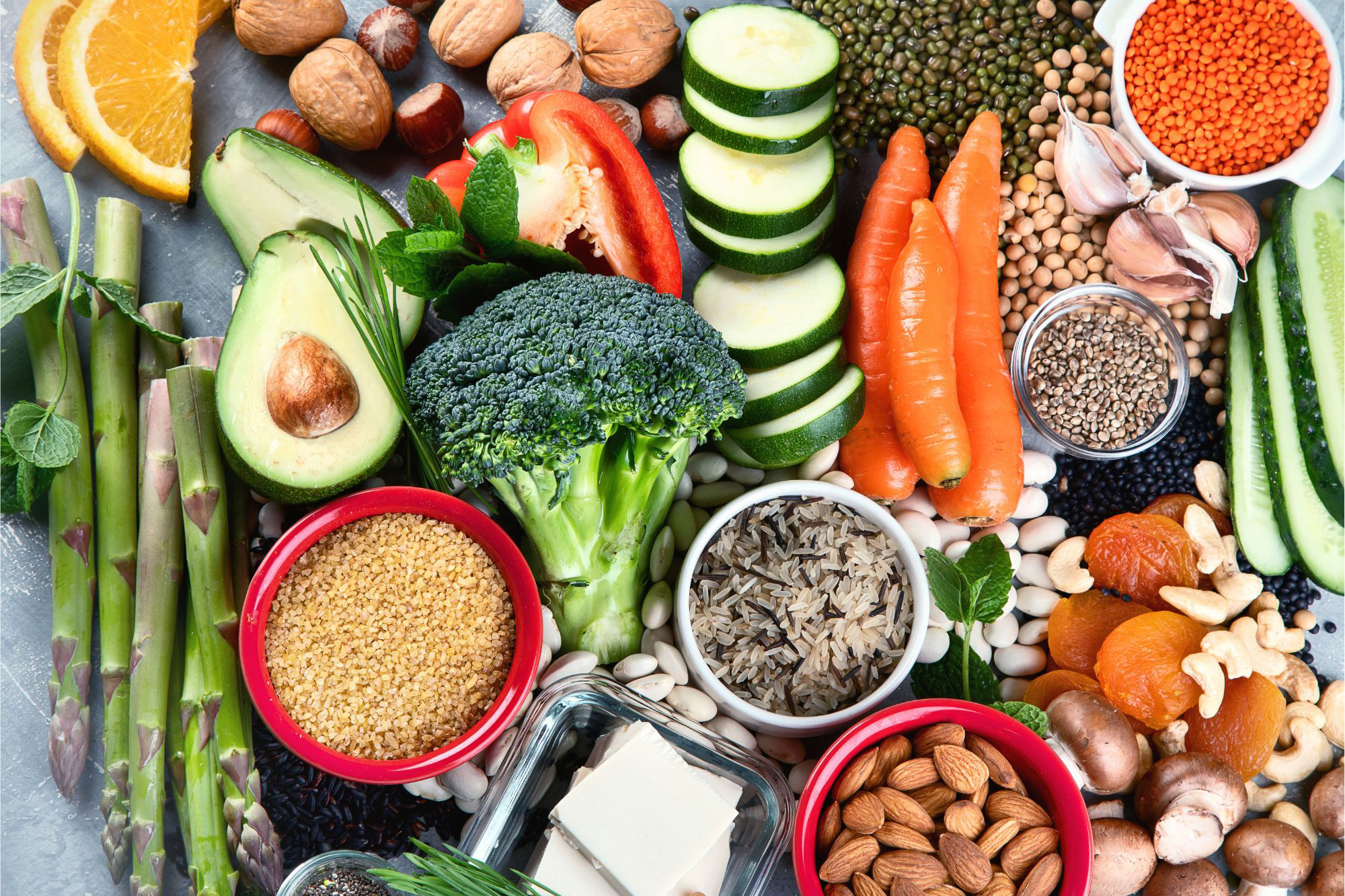
In a New Zealand study, 75% of vegans consumed enough protein overall, but only half met the recommended daily intake for lysine and leucine.
A new study from Massey University in New Zealand, published in PLOS ONE on April 16, 2025, examined the protein intake of individuals following long-term vegan diets. The researchers, led by Bi Xue Patricia Soh, found that while most participants consumed enough total protein daily, a significant number did not meet the recommended intake for two essential amino acids: lysine and leucine.
Proteins are composed of amino acids, which serve as fundamental building blocks for the body. Although the human body can produce many amino acids on its own, there are nine “indispensable amino acids” that must be obtained through diet. Because plant-based foods often contain lower or more variable levels of these essential amino acids compared to animal-based foods, meeting amino acid requirements can be more challenging for those on vegan diets.
Gaps in Previous Research
However, most prior research on protein in vegan diets has not considered specific amino acids nor the digestibility of different foods, which accounts for the fact that not all of what we eat, including amino acids, is fully utilized by the body.
To help deepen understanding of amino acid intake in vegan diets, Soh and colleagues analyzed detailed, four-day food diaries kept by 193 long-term vegans living in New Zealand. They used information from the United States Department of Agriculture and the New Zealand FoodFiles database to calculate participants’ intake of different amino acids from the different foods they ate.
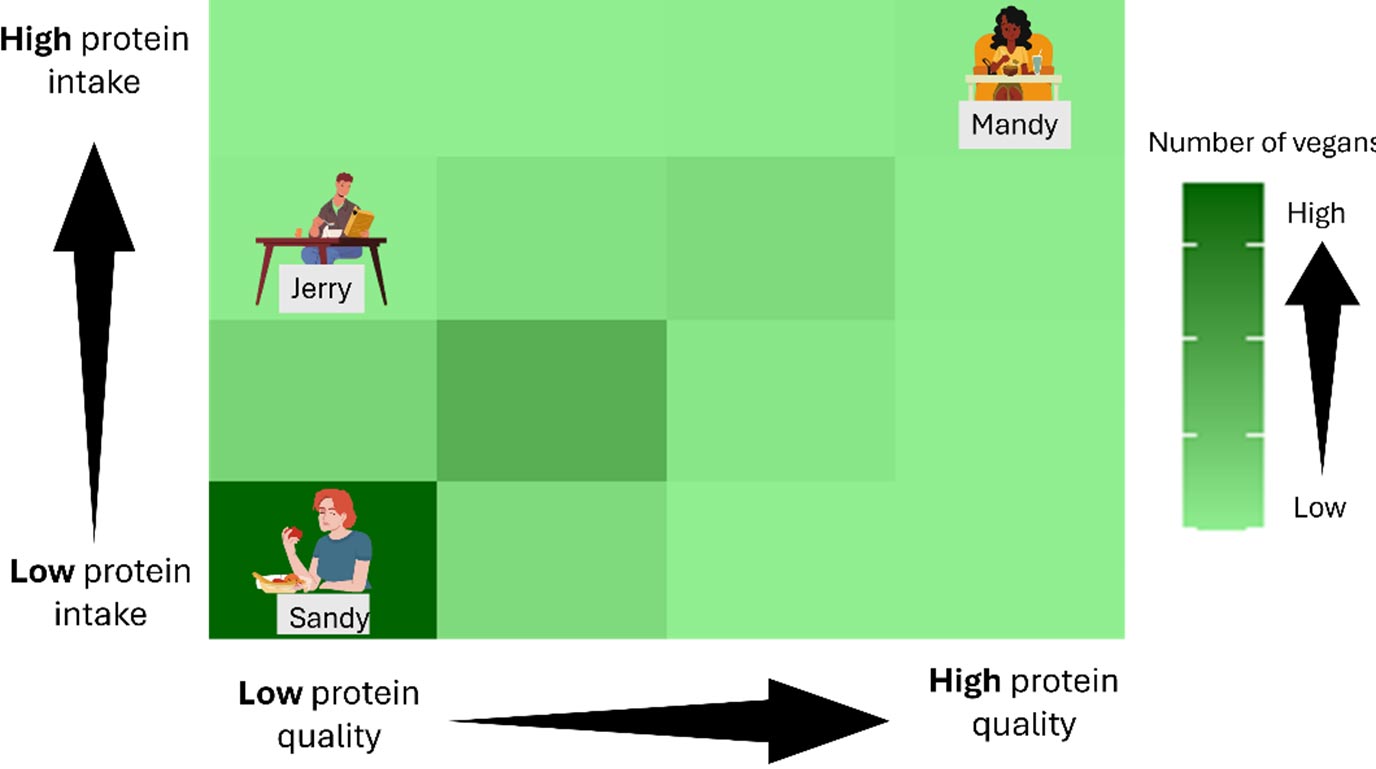
The analysis showed that about three-quarters of participants met daily total protein requirements. Accounting for body weight, intake of all indispensable amino acids also met requirements.
However, when considering digestibility, only about half of the participants met daily requirements for lysine and leucine levels, making them the most limiting indispensable amino acids in the study. Among the food types consumed by participants, legumes and pulses were the biggest contributors to overall protein and lysine intake.
Implications and Future Research
These findings underscore that meeting total daily protein requirements does not necessarily mean meeting indispensable amino acid requirements. On the basis of their findings, the researchers call for future research to explore how intake of leucine and lysine could be boosted for vegans in a nutritionally balanced manner.
The authors add: “Vegan diets are the most restrictive form of plant-based eating, relying entirely on plant sources for all nutrients. Achieving high protein quality on a vegan diet requires more than just consuming enough protein – it also depends on the right balance and variety of plant foods to supply all the amino acids in the quantities that our body needs. Prolonged deficiencies in these essential nutrients can negatively affect overall protein balance, muscle maintenance, and other physiological functions, especially in more vulnerable populations.”
“In our study, lysine and leucine were the most commonly under-consumed amino acids in our vegan cohort and fall below the daily requirements needed by our body. This is because many plant foods generally contain lower quantities of these amino acids that can be absorbed and utilized by the body. However, the inclusion of legumes, nuts, and seeds emerged as valuable plant sources – not only to support overall protein intake but also to specifically increase lysine and leucine quantities in a vegan diet.”
Reference: “Evaluation of protein intake and protein quality in New Zealand vegans” by Bi Xue Patricia Soh, Matthieu Vignes, Nick W. Smith, Pamela R. von Hurst and Warren C. McNabb, 16 April 2025, PLOS ONE.
DOI: 10.1371/journal.pone.0314889
Funding: Lottery Health Project Grant (LHR-2022-185) PhD stipend from the Riddet Institute, Massey University.
Never miss a breakthrough: Join the SciTechDaily newsletter.
Follow us on Google and Google News.
7 Comments
It’s not really news, is it? We all know that already, it’s just that the vegans are having a hard time accepting it.
No need to get our panties in a bunch. Just a few supplements evens it out nicely
Vegan diets are not normal for omnivorous humans, and require modern agriculture to provide all the plant material to eat. This makes veganism an artificial diet that is not natural for humans, who evolved prior to modern agriculture. However, veganism is not just about food, but is mostly about not harming animals, making it an ethics-focused diet, not a health-focused diet. Trying to make it seem healthy by vegan influencers is really an attempt to reduce animal suffering from factory farming and other animal abuses. So we need to approach veganism as a philosophy, and realize that it is not necessarily healthy. (Sugar and all the artificial ingredients used in processed foods are vegan, but unhealthy.) The point of veganism is not about food and health, but about animals.
Interesting research from the Land of the Wrong White Crowd and umpteen million sheep.
It’s too bad they didn’t also have results for non-vegan diets to show any deficiencies and surplus in those diets. More is not always better. Over consumption of protein is linked to poor metabolic health (i.e. diabetes). Not only that, but too much leucine, like the amount in cow’s milk that is 3x the amount in milk from a human, is linked to acne, breast cancer, and prostate cancer. See research on TOR for more details.
Like Chris said, vegans can take a few supplements if they want to increase their leucine. And by avoiding meat, dairy, and highly processed foods, like we all should be doing, they can prevent the most common diseases plaguing western society.
People reading this and thinking that *this* is evidence that a vegan diet is inferior to a non-vegan diet should go ahead and schedule their next prostate exam ASAP.
So, how is Mayim Bialik doing? By her own admission, her gut is a mess.
Like it or not, the Human organism needs animal protein. Just not exclusively.
It would be great if all foods with more than a certain threshold of grams per serving of protein (say 3 g) also had to list the mg amount of all 9 essential amino acids. Sure the label would be bigger, but most of the stuff printed on packages is worthless. Most vegans know about Cronometer which is an (ad supported) app that lets you track the amount of EAAs and other nutrients on a vegan (or any other diet). I started using it and I get enough protein (around 1.2 g/kg of lean body mass now), but it’s hard to know if I’m getting enough lysine and leucine because I am lazy and eat a lot of prepared food which doesn’t have this info.
I hope when precision fermentation cheese hits the market strong, that it has good amounts of lysine and leucine as I’m sure I’ll be eating a bit of that (I loved cheese before becoming vegan and many vegans miss this food more than meat, eggs, fish, etc.).
This New Zealand study is discussed on a vegan YouTube channel called Unnatural Vegan (episode is Vegans Really Can’t Get Enough Protein?) which I highly recommend.