

A study on mice investigating therapeutic food for malnourished children uncovers diverse functions of a newly identified gut bacterial enzyme.
To combat childhood malnutrition, which affects 200 million children worldwide, researchers at Washington University School of Medicine in St. Louis have developed a therapeutic food designed to nourish beneficial gut microbes and enhance children’s growth and overall health. To uncover how this food therapy works, the team, led by physician-scientist Jeffrey I. Gordon, MD, focused on studying the responses of children’s gut microbiomes to the treatment.
In their latest study, the researchers discovered potentially far-reaching effects of a particular gut bacterium that was linked to better growth in Bangladeshi children receiving a therapeutic food designed to nurture healthy gut microbes. This microbiota-directed therapeutic food is called MDCF-2. A strain of the bacterium harbored in the children’s gut microbial communities possessed a previously unknown gene capable of producing and metabolizing key molecules involved in regulating many important functions ranging from appetite, immune responses, neuronal function, and the ability of pathogenic bacteria to produce disease.
The results are published Oct. 25 in the journal Science.
“As we apply new therapies to treat childhood malnutrition by repairing their gut microbiomes, we have an opportunity to study the inner workings of our microbial partners,” said Gordon, the Dr. Robert J. Glaser Distinguished University Professor and director of the Edison Family Center for Genome Sciences & Systems Biology at WashU Medicine. “We are discovering how the gut microbes affect different aspects of our physiology. This study shows that gut microbes are master biochemists that possess metabolic capabilities that we have been unaware of.”
A better understanding of the effects our gut microbes have on our bodies could lead to new strategies to maintain human health and help guide the development of therapeutics for a wide variety of diseases beyond malnutrition, according to the researchers.
Key Findings From Clinical Trials
In two randomized controlled clinical trials of the therapeutic food in malnourished Bangladeshi children, the researchers identified a collection of microbes whose abundances and expressed functions correlated with the improved growth of study participants. One of these beneficial organisms is a bacterium called Faecalibacterium prausnitzii.
The paper’s co-first authors — Jiye Cheng, PhD, an assistant professor of pathology & immunology, and Sid Venkatesh, PhD, a former postdoctoral researcher in Gordon’s lab who is now with the University of Washington — studied mice born under sterile conditions and then colonized with defined communities of microbes cultured from the Bangladeshi children’s microbiomes. They discovered that levels of two molecules called oleoylethanolamide (OEA) and palmitoylethanolamide (PEA) were much lower in the guts of animals that had been colonized with microbial communities containing a specific strain of F. prausnitzii, compared with animals lacking this strain. This was notable given that OEA and PEA are naturally occurring lipid signaling molecules known to play important roles in regulating inflammation, metabolism, and appetite.
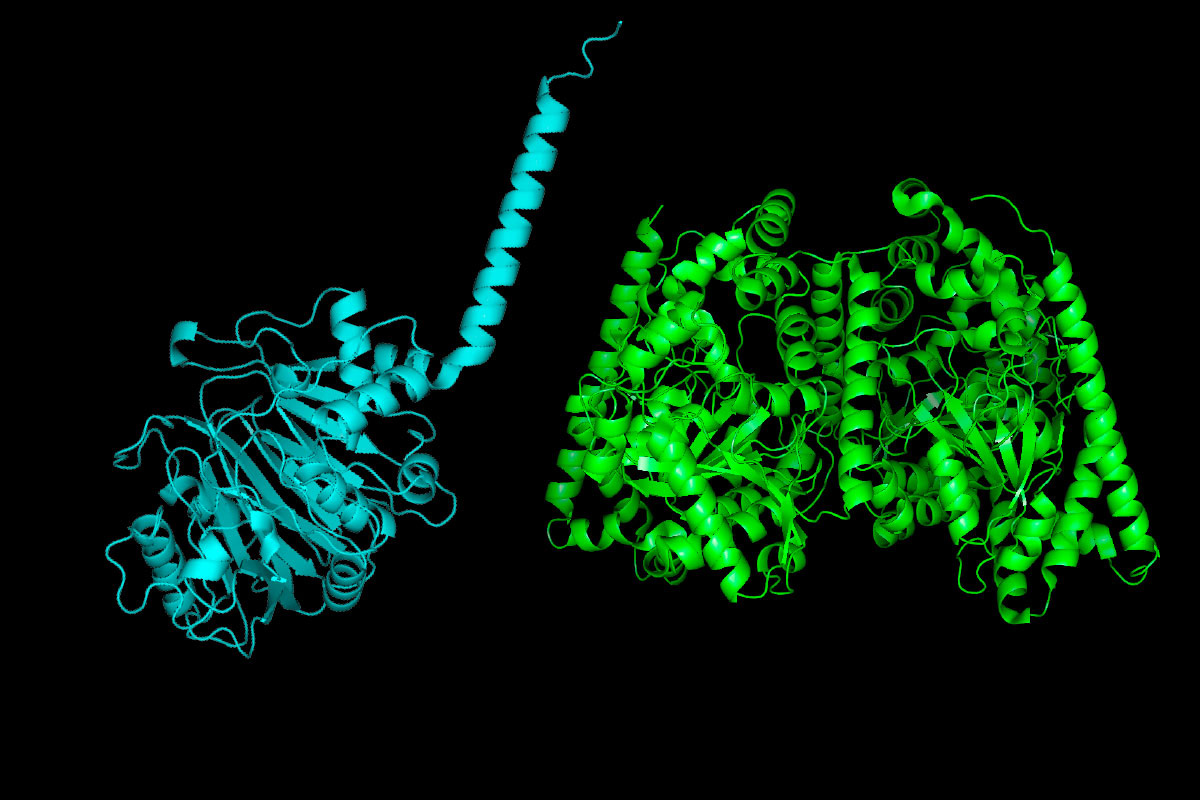
Gordon’s team employed a series of bioinformatics and biochemical tools to identify the enzyme — fatty acid amide hydrolase (FAAH) — that is produced by the bacterial strain and responsible for degrading OEA and PEA. The human version of FAAH is widely known for its ability to break down specific types of neurotransmitters called endocannabinoids, and in so doing, regulate aspects of human physiology throughout the body. In fact, the human version of this enzyme is the target of a number of investigational drugs, because it plays roles in chronic pain, anxiety, and mood, among other neurological states.
Cheng and Venkatesh noted that the discovery of the F. prausnitzii FAAH enzyme represents the first example of a microbial enzyme of this type and revealed a role for microbes in regulating levels of important molecules called N-acylethanolamides, including OEA and PEA, in the gut.
Implications for Malnutrition Treatment
Analysis of malnourished children’s fecal samples collected in the clinical trial of the therapeutic food revealed that the food treatment led to decreased levels of OEA while increasing the abundance of F. prausnitzii and expression of its enzyme. These results indicate that this gut bacterial enzyme could reduce intestinal OEA — an appetite-suppressing compound — which is desirable in children with malnutrition.
In addition to providing new insights into the beneficial effects of the therapeutic food, the paper describes how the bacterial enzyme has a dramatically wider range of capabilities than human FAAH does. These include a unique ability to synthesize lipid-modified amino acids, including a number of novel molecules that the team showed to function as modulators of human receptors involved in sensing the external environment of cells, as well as to serve as regulators of immune responses in the gut.
In addition to synthesizing important regulators of cell function, the bacterial enzyme can control levels of other lipid-containing signaling molecules including neurotransmitters involved in communications between neurons, and so-called quorum-sensing molecules that are used by pathogenic bacteria to coordinate infection and disrupt host immune responses.
“The structures of the human and bacterial FAAH enzyme are very distinct; the investigational drugs that inhibit the human enzyme were found to not affect the bacterial enzyme,” Gordon said. “This opens the door to developing new therapeutics to selectively manipulate the activity and products produced by the bacterial enzyme. This is an example of how microbes have evolved functions that aren’t encoded in our own human genomes but are still important for the normal functions of our human bodies. We now know that we have two different versions of this enzyme in two different locations — our human cells and our gut microbiome.”
Gordon and his colleague, Michael Barratt, PhD, a professor of pathology & immunology and a co-author of the paper, highlighted that the identification of this gut bacterial enzyme offers new opportunities to investigate the beneficial effects of the therapeutic food treatment. Barratt also noted that beyond processing components of the normal diet, enzymes like this in the gut could help explain differences in responses seen between individuals to certain orally administered drugs.
“It’s astonishing how much the microbial version of this enzyme can do,” Gordon said. “In our future studies, we’re interested in investigating whether cousins of this enzyme that might be encoded in the genomes of other bacteria could complement FAAH or perform entirely different activities. These organisms are master chemists, and we’re just beginning to explore what they can do.”
Reference: “A human gut Faecalibacterium prausnitzii fatty acid amide hydrolase” by Jiye Cheng, Siddarth Venkatesh, Ke Ke, Michael J. Barratt and Jeffrey I. Gordon, 25 October 2024, Science.
DOI: 10.1126/science.ado6828
This work was funded by the National Institutes of Health (NIH), grant number DK30292. The content is solely the responsibility of the authors and does not necessarily represent the views of the NIH.
Cheng, Venkatesh, Barratt and Gordon are inventors on a patient application submitted by Washington University in St. Louis that covers therapeutic applications of F. prausnitzii FAAH.
Never miss a breakthrough: Join the SciTechDaily newsletter.
Follow us on Google and Google News.