
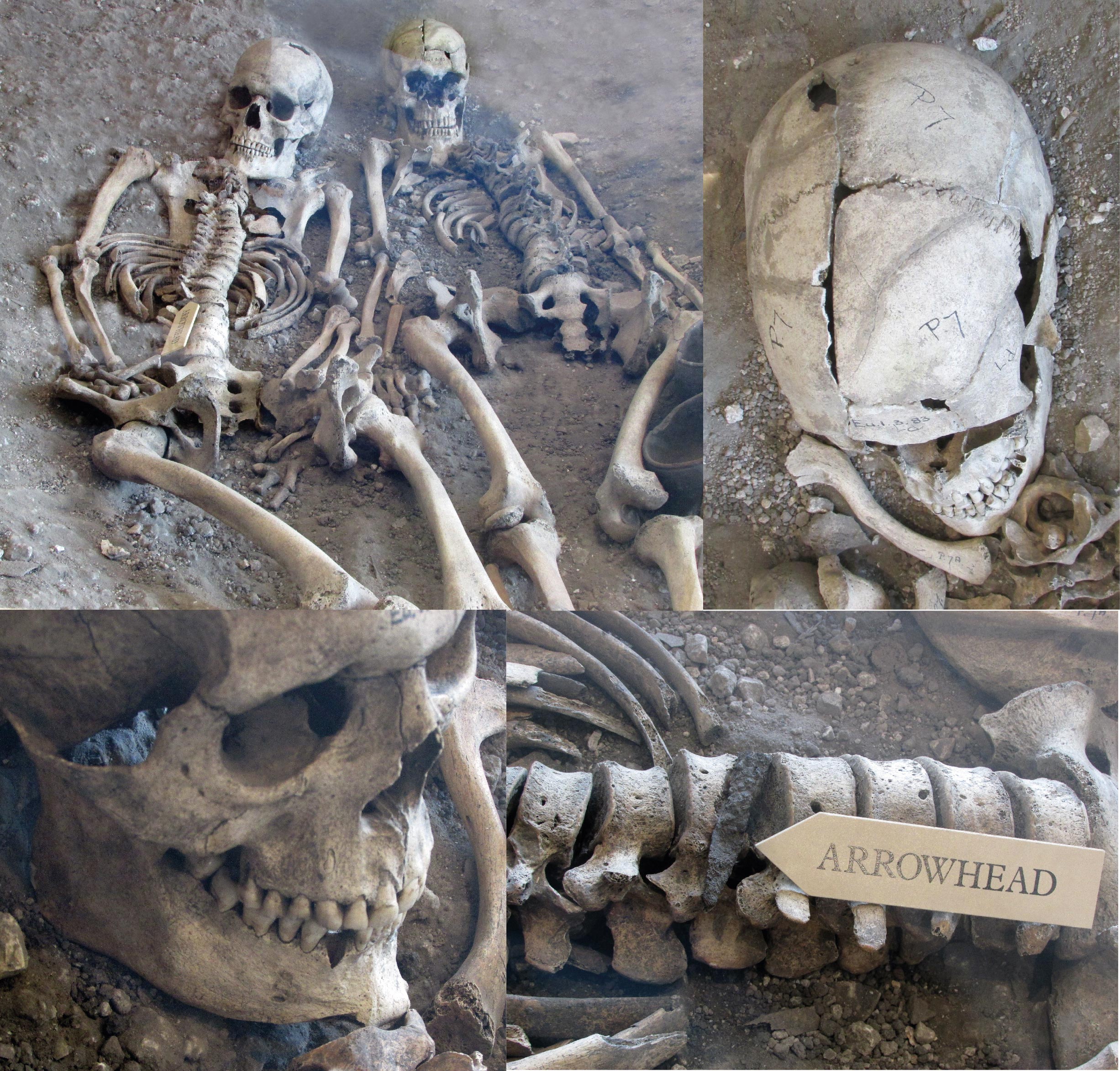
A new study reveals that the Maiden Castle burials, long thought to result from a Roman attack, were instead the product of decades of internal strife.
A new study from archaeologists at Bournemouth University has revealed a surprising twist in the history of Maiden Castle, an Iron Age hillfort in Dorset. Long believed to be the site of a single, brutal battle during the Roman Conquest of Britain, the so-called “war cemetery” tells a far more complex story.
By reanalyzing the burials and conducting a fresh program of radiocarbon dating, researchers discovered that these individuals did not perish all at once. Instead, they died over multiple generations, with lethal violence occurring sporadically from the late first century BC to the early first century AD. The findings suggest a pattern of recurring bloodshed, likely fueled by local unrest, executions, or power struggles within the community in the decades leading up to the Roman invasion.
Unraveling the Myth of a Roman Massacre
BU’s Dr Martin Smith, Associate Professor in Forensic and Biological Anthropology, who analyzed the bodies said: “The find of dozens of human skeletons displaying lethal weapon injuries was never in doubt, however, by undertaking a systematic program of radiocarbon dating we have been able to establish that these individuals died over a period of decades, rather than a single terrible event.”
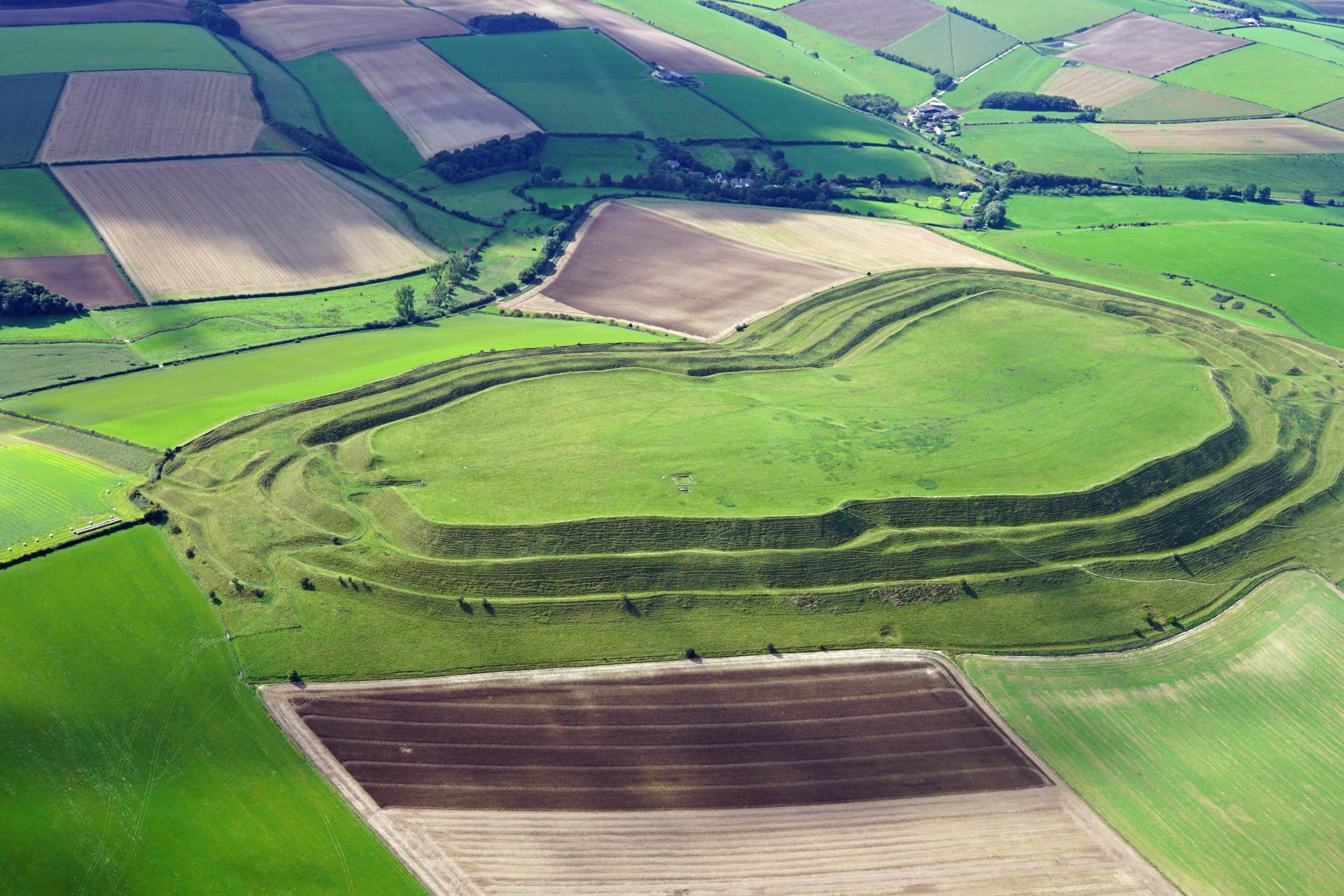
The ‘war-cemetery’ of Maiden Castle Iron Age hillfort in Dorset is one of Britain’s most famous archaeological discoveries. Discovered in 1936, many of the skeletons unearthed had clear evidence of trauma to the head and upper body.
Dig director at the time, Sir Mortimer Wheeler suggested, were “the marks of battle”, caused during a furious but ultimately futile defense of the hillfort against an all-conquering Roman legion. Wheeler’s colorful account of an attack on the native hillfort and the massacre of its defenders by invading Romans, was accepted as fact, becoming an iconic event in popular narratives of Britain’s ‘Island Story.’
Reassessing a Historical Icon
Principal Academic in Prehistoric and Roman Archaeology at BU, and the study’s Dig Director, Dr Miles Russell said: “Since the 1930s, the story of Britons fighting Romans at one of the largest hillforts in the country has become a fixture in historical literature. With the Second World War fast approaching, no one was really prepared to question the results. The tale of innocent men and women of the local Durotriges tribe being slaughtered by Rome is powerful and poignant. It features in countless articles, books and TV documentaries. It has become a defining moment in British history, marking the sudden and violent end of the Iron Age.”
Dr Russell added: “The trouble is it doesn’t appear to have actually happened. Unfortunately, the archaeological evidence now points to it being untrue. This was a case of Britons killing Britons, the dead being buried in a long-abandoned fortification. The Roman army committed many atrocities, but this does not appear to be one of them.”
New Perspectives on Maiden Castle and Beyond
The study has also raised further questions as to what may still lie undiscovered at Maiden Castle.
BU’s Visiting Fellow, Paul Cheetham commented that “Here we interpret this as either a number of distinct cultures living and dying together, or we can understand this as burial rights that were determined by complex social rules or hierarchical divisions within this Iron Age society. Whilst Wheeler’s excavation was excellent, he was only able to investigate a fraction of the site. It is likely that a larger number of burials remain undiscovered around the immense ramparts.”
The work at Maiden Castle also brings into question how other archaeological cemeteries across the UK have been interpreted, as Paul Cheetham continued: “The intermingling of differing cultural burial practices contemporaneously shows that simplistic approaches to interpreting archaeological cemeteries must now be questioned.”
Reference: “Fraught With High Tragedy: A Contextual and Chronological Reconsideration of the Maiden Castle Iron Age ‘War Cemetery’ (England)” by Martin Smith, Miles Russell and Paul Cheetham, 13 May 2025, Oxford Journal of Archaeology.
DOI: 10.1111/ojoa.12324
Never miss a breakthrough: Join the SciTechDaily newsletter.
Follow us on Google and Google News.