
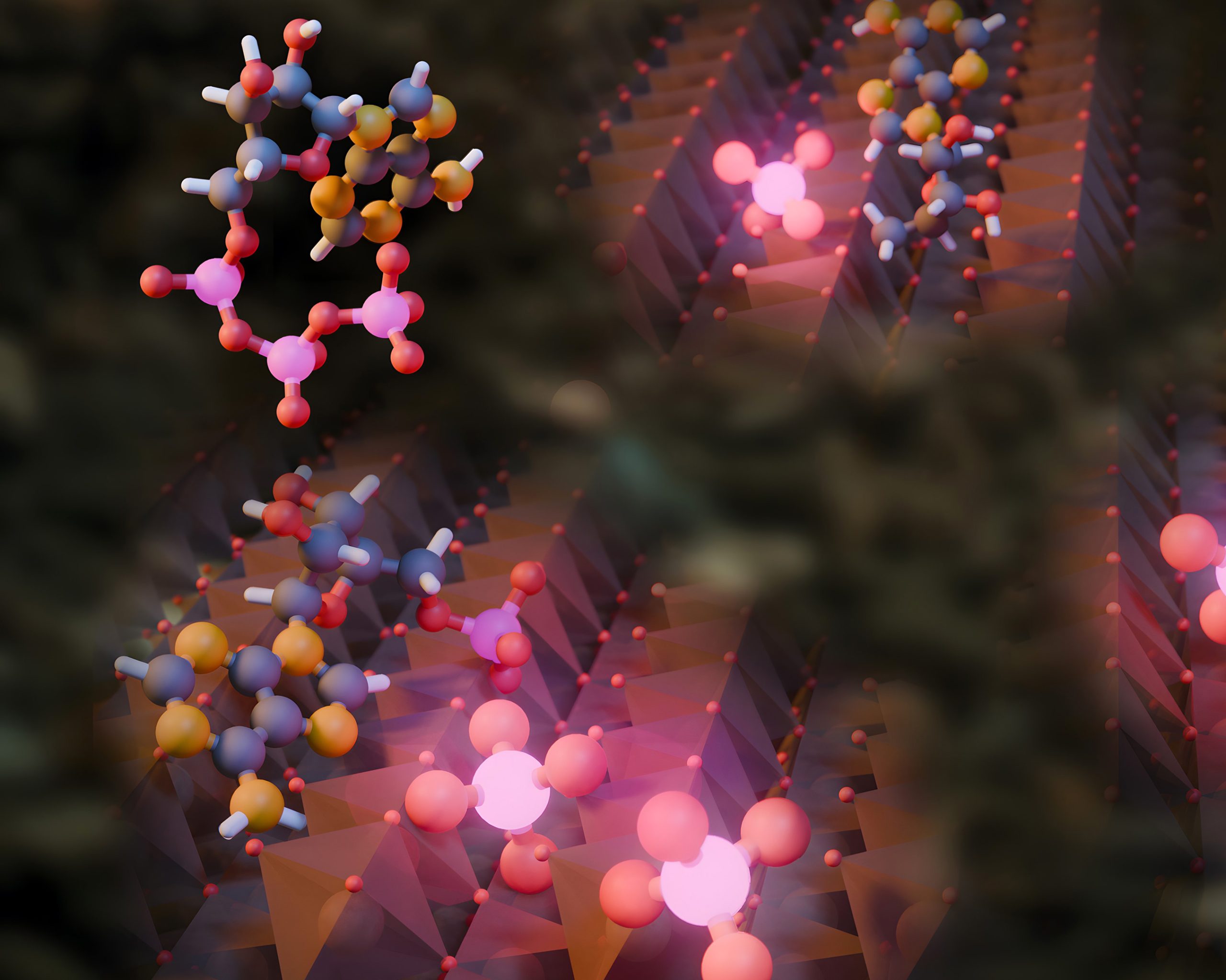
Scientists have uncovered that iron oxides, previously thought to trap phosphorus, actually help convert it into a plant-friendly form, much like enzymes do.
This game-changing discovery may improve fertilizer efficiency and secure future food production.
Rethinking Iron Oxides in Phosphorus Cycling
Northwestern University researchers are challenging the long-held belief that iron oxides simply trap phosphorus, revealing instead that they actively help convert it into a form plants can use.
Phosphorus is essential for life, but most of it in soil exists in an organic form — bound to the remains of plants, microbes, or animals. However, plants can only absorb inorganic phosphorus, the same type found in fertilizers. Until recently, scientists believed that only enzymes from microbes and plants could break down organic phosphorus into its usable inorganic form. But previous research from Northwestern University showed that iron oxides, naturally present in soil and sediments, can also drive this crucial transformation.
Iron Oxides: Nature’s Hidden Catalysts
In their latest study, the research team found that iron oxides are not just minor players in this process — they are highly efficient catalysts, facilitating phosphorus conversion at rates similar to those of enzymes. This discovery sheds new light on the phosphorus cycle and could help improve soil management and fertilizer use, particularly in agriculture.
The findings were published on March 4 in Environmental Science & Technology.
Understanding the Phosphorus Puzzle
“Phosphorus is essential to all forms of life,” said Northwestern’s Ludmilla Aristilde, who led the study. “The backbone of DNA contains phosphate. So, all life on Earth, including humans, depend on phosphorus to thrive. That’s why we need fertilizers to increase phosphorus in soils. Otherwise, the crops we need to feed our planet will not grow. There is a profound interest in understanding the fate of phosphorus in the environment.”
An expert in the dynamics of organics in environmental processes, Aristilde is an associate professor of environmental engineering at Northwestern’s McCormick School of Engineering. She also is a member of the Center for Synthetic Biology, International Institute for Nanotechnology and Paula M. Trienens Institute for Sustainability and Energy. Jade Basinski, a Ph.D. student in Aristilde’s laboratory, is the paper’s first author. Other Ph.D. students and postdoctoral researchers in Aristilde’s team contributed to the work.
Paths to Accessing Phosphorus
For centuries, farmers have added phosphorus to their fields to improve crop yields. Not only does it improve crop quality, phosphorus also promotes the formation of roots and seeds. Plants literally cannot survive without it.
But there’s a catch. Plants have evolved to use phosphorus in its simplest, most readily available form: inorganic phosphorus. Inorganic phosphorus is like a ready-to-use molecule that plants can easily consume and incorporate into their metabolism. Most phosphorus in the environment, however, is organic, meaning it’s bound to carbon atoms. To access this phosphorus, plants rely on their own secreted enzymes or enzymes secreted by microbes to break bonds in organic phosphorus and release the usable inorganic form.
In previous work, Aristilde’s team found that enzymes are not the only vehicles that can perform this essential conversion. Naturally occurring in soils and sediments, iron oxides, too, can perform the reaction that transforms organic phosphorus to generate the inorganic form.
How Much and How Fast?
After proving that iron oxides offer another pathway for plants to access phosphorus, Aristilde and her team sought to understand the rates and efficiency of this catalytic conversion.
“Iron oxides trap phosphorus because they have different charges,” Aristilde said. “Iron oxides are positively charged, and phosphorus is negatively charged. Because of this, anywhere you find phosphorus, you will find it linked with iron oxides. In our previous study, we showed iron oxides can serve as a catalyst to cleave the phosphorus. Next, we wanted to know how much they can cleave and how fast.”
To explore this question, the researchers investigated three common types of iron oxides: goethite, hematite and ferrihydrite. Using advanced analytical techniques, Aristilde and her team studied the interactions between these iron oxides and various structures of ribonucleotides, which are the building blocks of RNA and DNA. In their multiple experiments, Aristilde’s team looked for inorganic phosphorus both in the surrounding solution and on the surface of the iron oxides. By running experiments over a specific period of time and with different concentrations of ribonucleotides, the team determined the reaction’s rates and efficiency.
Unraveling the Iron Oxide Mystery
“We concluded that iron oxides are ‘catalytic traps’ because they catalyze the reaction to remove phosphate from organic compounds but trap the phosphate product on the mineral surface,” Aristilde said. “Enzymes don’t trap the product; they make everything available. We found goethite was the only mineral that didn’t trap all the phosphorus after the reaction.”
The team discovered that each type of iron oxide exhibited varying degrees of catalytic activity for cleaving phosphorus from the ribonucleotides. While goethite was more efficient with ribonucleotides containing three phosphorus, hematite was more efficient with ribonucleotides containing one phosphorus. Hematite is found in the midwestern part of United States, while goethite is commonly found in soils in the southern United States and South America.
What’s Next for Phosphorus Research?
Next, Aristilde’s team will seek to understand why different iron oxides have different efficiency for the catalysis process and how goethite is able to release the phosphate but ferrihydrite and hematite trap all the produced phosphate. While the researchers initially hypothesized that the phosphorus compounds’ surface structure would play a role, they did not find a clear trend. Now, they think the chemistry of the mineral itself might be the secret behind its success.
Because phosphorus is a finite resource, mined from phosphate rock found only in the United States, Morocco, and China, its supply is dwindling. Farmers and researchers worry phosphorus eventually will become so expensive that it will increase overall food costs, making basic staples unaffordable.
Finding new ways to convert trapped organic phosphorus into bioavailable inorganic phosphorus, therefore, is vital for the global food supply.
Towards a More Sustainable Future
“Our work is providing a stepping stone for designing and engineering a synthetic catalyst as a way to recycle phosphorus,” Aristilde said. “We uncovered a reaction that’s happening naturally. The dream will be to leverage our findings as a way to make catalysts to contribute to the production of fertilizers for our food security.”
Reference: “Quantitative Benchmarking of Catalytic Parameters for Enzyme-Mimetic Ribonucleotide Dephosphorylation by Iron Oxide Minerals” by Jade J. Basinski, Sharon E. Bone, Aurore Niyitanga Manzi, Nasrin Naderi Beni, Fernando R. Tobias, Marcos Sanchez, Cynthia X. Cheng, Wiriya Thongsomboon and Ludmilla Aristilde, 4 March 2025, Environmental Science & Technology.
DOI: 10.1021/acs.est.4c12049
The study, “Quantitative benchmarking of catalytic parameters for enzyme-mimetic ribonucleotide dephosphorylation by iron oxide minerals,” was supported by the U.S. Department of Energy (grant number SC0021172) and Northwestern International Institute of Nanotechnology.
Never miss a breakthrough: Join the SciTechDaily newsletter.
Follow us on Google and Google News.