
Close Menu
    Facebook X (Twitter) Instagram
    SciTechDaily
    • Biology
    • Chemistry
    • Earth
    • Health
    • Physics
    • Science
    • Space
    • Technology
    Facebook X (Twitter) Pinterest YouTube RSS
    SciTechDaily
    Home»Health»Scientists Begin Groundbreaking Study on How We Age
    Health

    Scientists Begin Groundbreaking Study on How We Age

    By Katherine Egan Bennett, University of Texas at ArlingtonMarch 22, 2025No Comments4 Mins Read
    Facebook Twitter Pinterest Telegram LinkedIn WhatsApp Email Reddit
    Share
    Facebook Twitter LinkedIn Pinterest Telegram Email Reddit
    Longevity Lifespan Time Miniature Humans
    A new study at the University of Texas at Arlington, the Arlington Study of Healthy Aging (ASHA), is exploring how lifestyle, diet, and social connections impact aging by using advanced imaging, genetics, and neuroscience. The study will follow 600 volunteers aged 50–80 to provide insights that help prevent age-related disease and promote healthier aging.

    A study of Tarrant County residents will use advanced imaging and genetic analysis to investigate health declines in older adults.

    How where you live, what you eat, and the friends you keep affect how you age is the focus of a new study from The University of Texas at Arlington.

    Researchers are currently enrolling volunteers for the Arlington Study of Healthy Aging (ASHA), which will use advanced imaging, genetics, exercise science, neuroscience, and remote monitoring to investigate age-related health decline. The goal is to help individuals and health care practitioners better prevent the effects of disease on older adults.
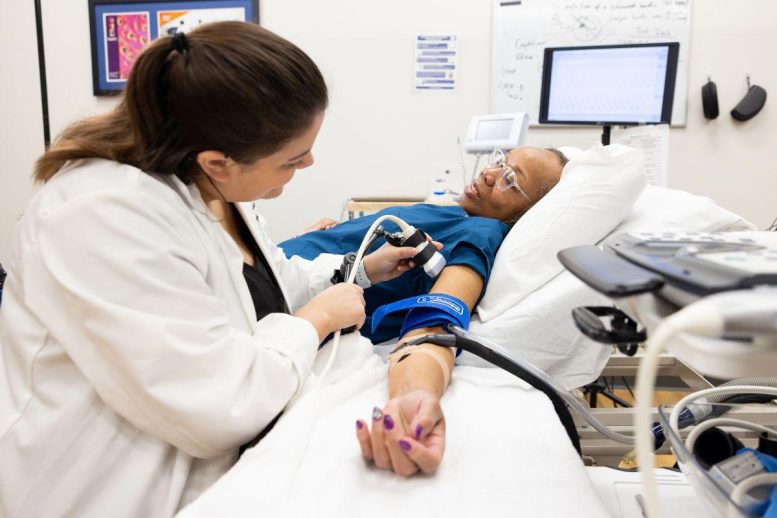
    Participants Gives a Blood Sample for Analysis
    “What’s really exciting about this project is that it provides a vehicle for cross-disciplinary collaboration,” Dr. Weidanz said. Credit: UTA

    “What’s unique about our study is that we’re focusing on the entire individual,” said Michael Nelson, lead investigator and director of UTA’s Center for Healthy Living and Longevity. He also oversees UTA’s new Clinical Imaging Research Center (CIRC), where the imaging studies will be conducted. “Other studies tend to focus on very specific parts of the body, like the brain or the blood vessels. But we are taking a fully encompassing approach—looking across the entire body from head to toe.”

    Volunteer Participation and Study Procedures

    The team aims to enroll 600 volunteers between the ages of 50 and 80 to participate in the program. Each person will participate in two days of testing at UTA. On the first day, they will receive a full-body MRI, including images of the brain, heart and skeletal muscle. On the second day, the team will study how the blood vessels are functioning, memory, and physical performance, and draw a small blood sample.
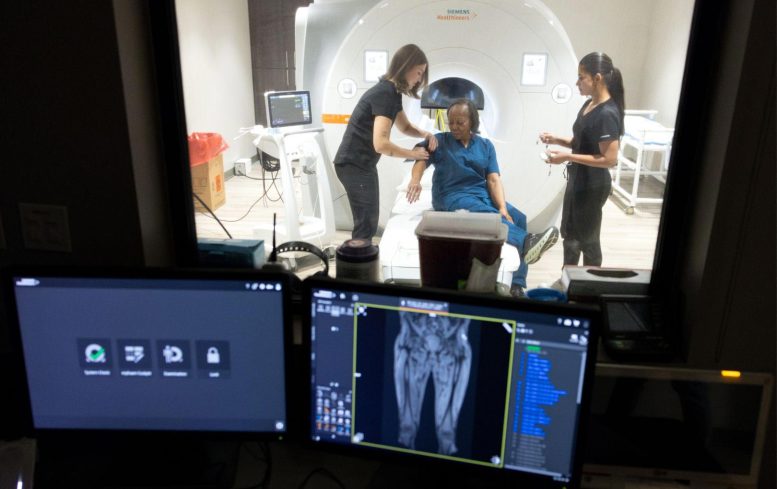
    Study Participant Receives a Full Body MRI
    Researchers are enrolling volunteers for the Arlington Study of Healthy Aging (ASHA), which will use advanced imaging, genetics, exercise science, neuroscience, and remote monitoring to investigate age-related health decline. The goal is to help individuals and health care practitioners better prevent the impact of disease on older adults. Credit: UTA

    “We are so grateful for everyone who volunteers their time and effort,” Dr. Nelson said. “In addition to helping to advance science, volunteering for a study like this is a great way to learn about your health and wellness.”

    The study also emphasizes community engagement.

    Benefits of Volunteering in the Study

    “We are excited to have so many community members visit our campus and interact with our amazing students, faculty, and staff,” said Jon Weidanz, senior associate vice president for research and innovation at UTA and a co-investigator on the project. “We hope they are impressed with the many new additions to our campus, such as the CIRC that opened last year, the Smart Hospital built in 2021 that houses Texas’ largest social work and nursing programs, and the Science and Engineering Innovation and Research Building that opened in 2018.”

    It will take four years to enroll and evaluate all 600 participants. Afterward, faculty, staff, and students from across campus will begin reviewing the data, including using UTA’s next-generation gene sequencer, the first of its kind in North Texas.

    Researcher Studies How Participant Walks
    “What’s unique about our study is that we’re focusing on the entire individual,” said Michael Nelson, lead investigator and director of UTA’s Center for Healthy Living and Longevity. Credit: UTA

    “What’s really exciting about this project is that it provides a vehicle for cross-disciplinary collaboration,” Dr. Weidanz said. “While our core investigative team is made up of members from multiple departments on campus, including kinesiology, psychology, social work, nursing, and bioengineering, we expect broad participation from across UTA, with partnerships forming in fields like math, business, computer science, and biology.”

    A Lasting Contribution to Science

    The study will generate thousands of anonymized data points, providing valuable insights for future researchers for decades to come.

    “In addition to the volunteers who donate their time to the project, the long-term success of ASHA will be due to the hard work and dedication of all the co-investigators, research scientists, support staff, graduate students, and undergraduate research assistants,” Nelson said. “It truly takes a village to put together a project of this scale.”

    Never miss a breakthrough: Join the SciTechDaily newsletter.
    Follow us on Google and Google News.

    Aging Genetics Medical Imaging Public Health University of Texas at Arlington
    Share. Facebook Twitter Pinterest LinkedIn Email Reddit

    Related Articles

    Unlocking the Secrets of Longevity: How Centenarians Defy Aging

    New Research Points to Treatment for COVID-19 Cytokine Storms, Solution to Global Pandemic

    Dementia Gene Doubles the Risk of Developing Severe COVID-19

    Whether the Coronavirus Puts You in the Hospital Could Depend on Your Genes – And We’re Unraveling Which Ones Matter

    New COVID-19 Test Accurately Detects Viral DNA in Minutes

    Clues to COVID-19 Treatment From DNA of Patients With Severe Forms of Coronavirus Disease

    “Snake Pneumonia” – Coronavirus Outbreak in China Traced to Snakes by Genetic Analysis

    Physical Exercise Improves Cognition in Alzheimer’s Disease

    Naturally Occurring Molecule Enhances Defense Mechanisms Against Neurodegenerative Diseases

    Leave A Reply Cancel Reply

    • Facebook
    • Twitter
    • Pinterest
    • YouTube

    Don't Miss a Discovery

    Subscribe for the Latest in Science & Tech!

    Trending News

    Why Popular Diabetes Drugs Like Ozempic Don’t Work for Everyone: The “Genetic Glitch”

    Scientists Stunned After Finding Plant Thought Extinct for 60 Years

    Scientists Discover Tiny New Spider That Hunts Prey 6x Its Size

    Natural Component From Licorice Shows Promise for Treating Inflammatory Bowel Disease

    Scientists Warn: Popular Sweetener Linked to Dangerous Metabolic Effects

    Monster Storms on Jupiter Unleash Lightning Beyond Anything on Earth

    Scientists Create “Liquid Gears” That Spin Without Touching

    The Simple Habit That Could Help Prevent Cancer

    Follow SciTechDaily
    • Facebook
    • Twitter
    • YouTube
    • Pinterest
    • Newsletter
    • RSS
    SciTech News
    • Biology News
    • Chemistry News
    • Earth News
    • Health News
    • Physics News
    • Science News
    • Space News
    • Technology News
    Recent Posts
    • 100,000-Year-Old Neanderthal Fossils in Poland Reveal Unexpected Genetic Connections
    • Unexpected Hormone Discovery Could Change How We Treat Arthritis
    • Scientists Supercharge “Natural Killer” Cells To Break Through Cancer’s Defenses
    • Simple “Gut Reset” May Prevent Weight Gain After Ozempic or Wegovy
    • 2.8 Days to Disaster: Scientists Warn Low Earth Orbit Could Suddenly Collapse
    Copyright © 1998 - 2026 SciTechDaily. All Rights Reserved.
    • Science News
    • About
    • Contact
    • Editorial Board
    • Privacy Policy
    • Terms of Use

    Type above and press Enter to search. Press Esc to cancel.