
A new longevity study reveals a sophisticated interplay of genetics, epigenetics, metabolism, immunity, and lifestyle.
What if living past 90 was not just a lucky break, but the result of a fascinating balance between your genes, your lifestyle, and your environment? Human healthy aging and longevity are shaped by a dynamic mix of genetic, epigenetic, metabolic, immune, and environmental factors. Scientists turn to long-lived individuals, especially centenarians, as real-life case studies for unlocking the secrets to a longer, healthier life. These individuals manage to delay or even avoid many of the age-related diseases that affect the majority of the population.
Recent research published in the journal Frontiers of Medicine brings together the latest discoveries on what drives exceptional longevity, with findings from studies on long-lived individuals across a variety of populations.
People who live beyond 90 years, known as long-lived individuals (LLIs), share some remarkable traits. They tend to experience fewer chronic illnesses, push back the onset of age-related diseases, and maintain better overall physiological function compared to the average person.
Interestingly, many LLIs are found in special regions called “longevity blue zones,” such as Okinawa in Japan and Sardinia in Italy. These areas reveal a powerful combination of healthy habits, supportive environments, and favorable genetic backgrounds. Gender differences are notable as well. While most centenarians are women, men who reach these advanced ages often show fewer signs of age-related diseases. Researchers categorize LLIs into groups called “escapers,” “delayers,” and “survivors” based on how they encounter disease throughout their lives. This diversity shows there is no single path to reaching an exceptional age.
Genes play a crucial role in this journey. Studies show that longevity tends to run in families, pointing to a strong heritable component. Several specific genes have been linked to longer life. For example, APOE ε2 is known to offer protection against cardiovascular disease and Alzheimer’s. FOXO3A helps cells handle oxidative stress and repair DNA, both key processes in aging.
Another gene, SIRT6, plays a role in maintaining genome stability. On the mitochondrial level, haplogroups like J and D are linked to reduced oxidative stress, which can damage cells over time. Meanwhile, genes like hTERT and TERC help keep telomeres — the protective caps on chromosomes — stable and intact. Among all these, large genome-wide association studies (GWAS) consistently highlight APOE and FOXO3A as standout genes closely connected to living longer across different populations.
Epigenetic Influences on Aging
Epigenetic mechanisms bridge genetics and environment. DNA methylation patterns in LLIs show delayed age-related methylation loss, particularly in heterochromatin regions, which may stabilize genome integrity. Noncoding RNAs, such as miR-363* and lncRNAs THBS1-IT1/AS1, regulate cellular senescence and gene expression, contributing to healthy aging. These epigenetic signatures correlate with younger biological age and reduced disease risk in LLIs and their offspring.
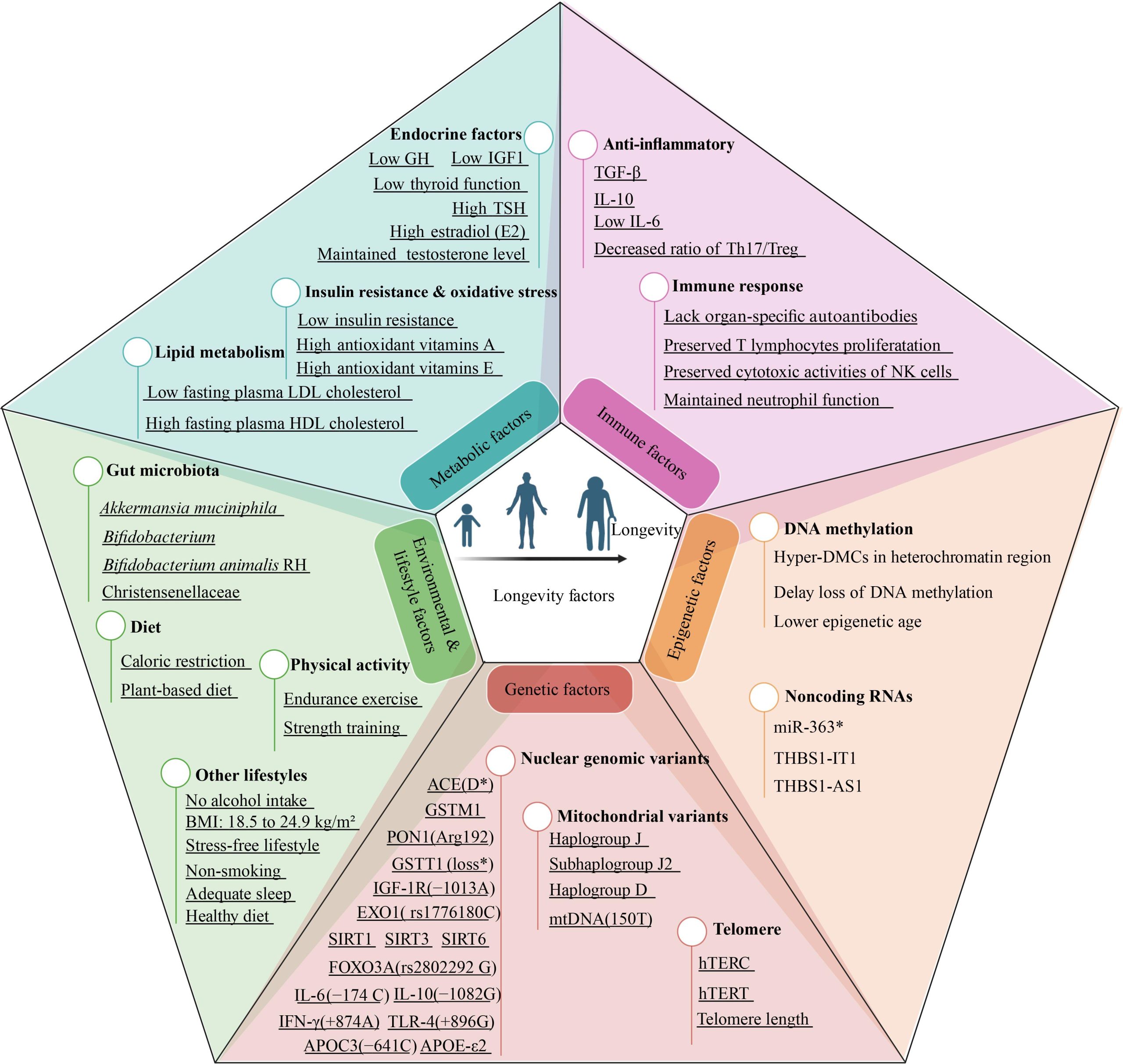
Metabolic profiles in LLIs are characterized by favorable lipid metabolism (low LDL cholesterol, high HDL), reduced insulin resistance, and enhanced antioxidant capacity. Endocrine factors like low thyroid hormone levels and preserved sex hormones (estradiol in females, testosterone in males) play protective roles.
Caloric restriction (CR), a well-established longevity intervention in model organisms, mimics metabolic states in LLIs, improving glucose tolerance and reducing inflammation. CR mimetics, such as metformin and resveratrol, show promise in translating these benefits to humans without dietary restriction.
Immune System Resilience
Immune system alterations in LLIs include reduced chronic inflammation (“inflammaging”) and preserved immune cell function. Centenarians exhibit lower IL-6 levels, higher TGF-β and IL-10 (anti-inflammatory cytokines), and maintained T-cell proliferation and natural killer cell activity. The balance between pro-inflammatory Th17 cells and regulatory T cells (Tregs) shifts toward anti-inflammatory states, contributing to disease resistance.
Environmental and lifestyle factors are equally critical. Gut microbiota in LLIs features increased diversity and enrichment of health-promoting taxa like Akkermansia muciniphila and Bifidobacterium, which enhance gut barrier function and produce anti-aging metabolites. Plant-based diets rich in vegetables, whole grains, and nuts correlate with lower risk of diabetes, cardiovascular disease, and neurodegeneration.
Regular physical activity, particularly endurance and strength training, improves metabolic health and extends lifespan through mechanisms like mitochondrial biogenesis and reduced oxidative stress. Other key lifestyle factors include non-smoking, moderate alcohol intake, adequate sleep, and stress management, which collectively reduce mortality risk.
Societal Contributions and Future Directions
Socioeconomic and medical advancements, such as improved sanitation, vaccination, and healthcare, have significantly increased average life expectancy, though genetic and epigenetic factors determine exceptional longevity. Future research leveraging multi-omics (transcriptomics, proteomics, metabolomics) on large LLI cohorts will deepen understanding of interactive mechanisms. Functional studies in model organisms and clinical trials of longevity-promoting interventions (e.g., probiotics, CR mimetics) are essential to translate findings into therapeutic strategies.
In summary, human longevity emerges from a synergistic interplay of genetic resilience, epigenetic stability, metabolic adaptability, immune balance, and healthy lifestyles. LLIs exemplify how these factors converge to delay aging and disease, offering actionable insights for promoting healthspan. As global aging populations grow, unraveling these mechanisms holds promise for developing personalized interventions to extend both lifespan and quality of life.
Reference: “Factors involved in human healthy aging: insights from longevity individuals” by Fan-Qian Yin, Fu-Hui Xiao and Qing-Peng Kong, 22 March 2025, Frontiers of Medicine.
DOI: 10.1007/s11684-024-1120-4
Never miss a breakthrough: Join the SciTechDaily newsletter.
Follow us on Google and Google News.