
Close Menu
    Facebook X (Twitter) Instagram
    SciTechDaily
    • Biology
    • Chemistry
    • Earth
    • Health
    • Physics
    • Science
    • Space
    • Technology
    Facebook X (Twitter) Pinterest YouTube RSS
    SciTechDaily
    Home»Technology»Scientists Direct the Growth of Hydrogel to Mimic Plant and Animal Tissue Structure
    Technology

    Scientists Direct the Growth of Hydrogel to Mimic Plant and Animal Tissue Structure

    By Nanyang Technological UniversityDecember 19, 2017No Comments3 Mins Read
    Facebook Twitter Pinterest Telegram LinkedIn WhatsApp Email Reddit
    Share
    Facebook Twitter LinkedIn Pinterest Telegram Email Reddit
    Scientists Direct the Growth of Hydrogel to Mimic Plant and Animal Tissue Structure
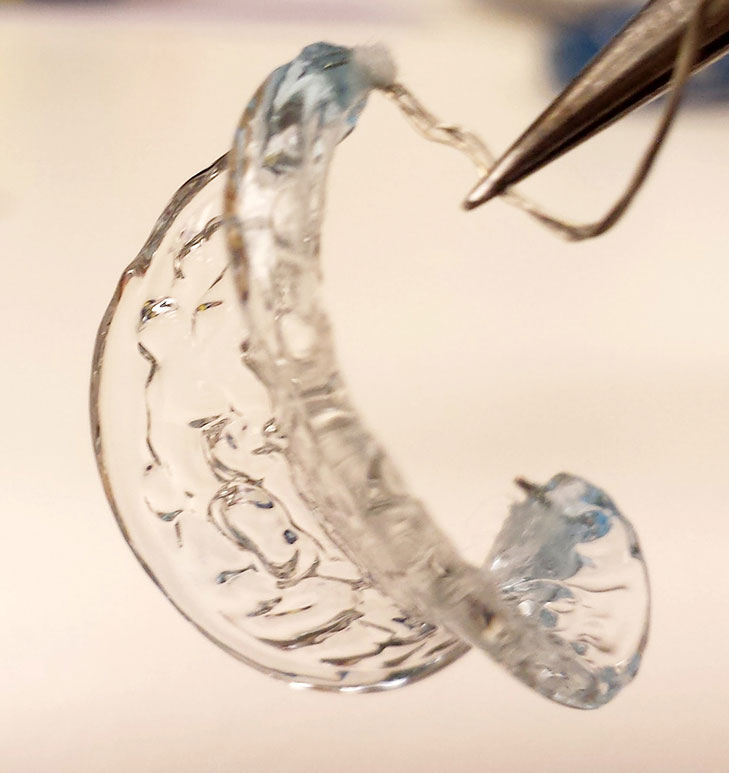
    Scientists from NTU and CMU created a leaf-like hydrogel structure through a process similar to how real leaf tissues grow. CMU and NTU

    Scientists from Nanyang Technological University, Singapore (NTU Singapore) and Carnegie Mellon University (CMU) have found a way to direct the growth of hydrogel, a jelly-like substance, to mimic plant or animal tissue structure and shapes.

    The team’s findings, published in Proceedings of the National Academy of Sciences today, suggest new applications in areas such as tissue engineering and soft robotics where hydrogel is commonly used. The team has also filed a patent at CMU and NTU.

    In nature, plant or animal tissues are formed as new biomass is added to existing structures. Their shape is the result of different parts of those tissues growing at different rates.

    Mimicking this behavior of biological tissues in nature, the research team comprising CMU scientists Changjin Huang, David Quinn, K. Jimmy Hsia, and NTU President-designate Prof Subra Suresh, showed that through manipulation of oxygen concentration, one can pattern and control the growth rate of hydrogels to create the desired complex 3D shapes.

    The team found that higher oxygen concentrations slow down the cross-linking of chemicals in the hydrogel, inhibiting growth in that specific area.

    Mechanical constraints such as soft wire, or glass substrate which chemically binds with the gel, can also be used to manipulate the self-assembly and formation of hydrogels into complex structures.
    Researchers Direct the Growth of Hydrogel to Mimic Plant and Animal Tissue Structure
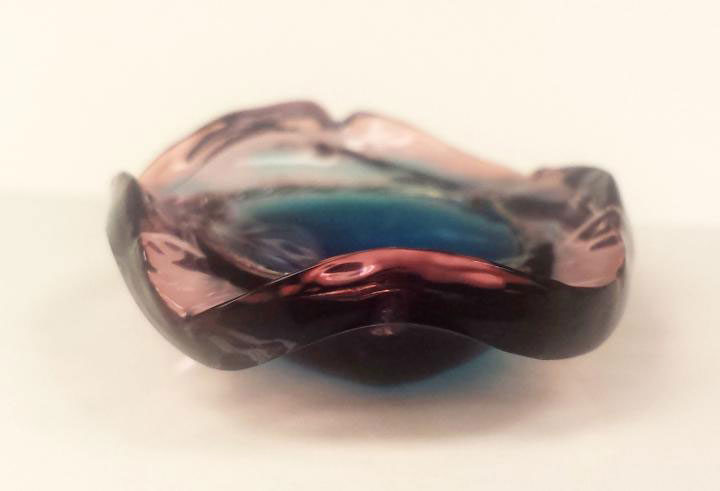
    This is a self-assembled hydrogel bowl with a wavy edge. Blue food dye solution is held in the bowl to demonstrate its structural integrity. CMU and NTU

    Such complex organ structures are essential for performing specialized body functions. For example, humans’ small intestines are covered with microscopic folds known as villi, which increase the gut’s surface area for more efficient absorption of food nutrients.

    The new technique differs from previous methods which create 3D structures by adding/printing or subtracting layers of materials. This technique, however, relies on continuous polymerization of monomers inside the porous hydrogel, similar to the process of enlargement and proliferation of living cells in organic tissues. Most living systems adopt a continuous growth model, so the new technique which mimics this approach will potentially be a powerful tool for researchers to study growth phenomena in living systems.

    “Greater control of the growth and self-assembly of hydrogels into complex structures offers a range of possibilities in medical and robotics fields. One field that stands to benefit is tissue engineering, where the goal is to replace damaged biological tissues, such as in knee repairs or in creating artificial livers,” said Professor Subra Suresh, who will be assuming office as the NTU President on 1 January 2018.

    Growth-controlled and structure-controlled hydrogels are also useful in the study and development of flexible electronics and soft robotics, providing increased flexibility compared to conventional robots, and mimicking how living organisms move and react to their surroundings.

    Reference: “Controlled molecular self-assembly of complex three-dimensional structures in soft materials” by Changjin Huang, David Quinn, Subra Suresh and K. Jimmy Hsia, 21 November 2017, PNAS.
    DOI: 10.1073/pnas.1717912115

    Never miss a breakthrough: Join the SciTechDaily newsletter.
    Follow us on Google and Google News.

    Biomedical Engineering Bionanotechnology Hydrogel Nanotechnology Nanyang Technological University Robotics
    Share. Facebook Twitter Pinterest LinkedIn Email Reddit

    Related Articles

    New Method of 3D-Printing Soft Materials Could Jump-Start Creation of Tiny Medical Devices for the Body

    Single-Stranded DNA and RNA Origami That Can Autonomously Fold Into Defined Structures

    “Quantum Dot” Nanoparticles Provide a New Path for Biological Imaging

    MIT Develops Nanobionic Plants That Can Detect Explosives

    New Process for 3D Printing of Highly Stretchable and Tough Hydrogels

    Carbon Nanotube Patches Improve Heart Function

    Synthetic Biology Circuits Perform Logic Functions and Remember the Results

    Magnetic Nanoparticles Control Thousands of Cells Simultaneously

    Researchers Study the Use of Photosystem-I as Photovoltaic Panels

    Leave A Reply Cancel Reply

    • Facebook
    • Twitter
    • Pinterest
    • YouTube

    Don't Miss a Discovery

    Subscribe for the Latest in Science & Tech!

    Trending News

    Even Occasional Binge Drinking May Triple Liver Damage Risk

    Liftoff! NASA’s Artemis II Launch Sends Astronauts Around the Moon for First Time in 50 Years

    Scientists Discover New Way To Eliminate “Zombie Cells” Driving Aging

    This New Quantum Theory Could Change Everything We Know About the Big Bang

    This One Vitamin May Help Protect Your Brain From Dementia Years Later

    Stopping Weight-Loss Drugs Like Ozempic Can Quickly Erase Heart Benefits

    A 500-Million-Year-Old Surprise Is Forcing Scientists to Rethink Spider Evolution

    Coffee and Blood Pressure: What You Need To Know Before Your Next Cup

    Follow SciTechDaily
    • Facebook
    • Twitter
    • YouTube
    • Pinterest
    • Newsletter
    • RSS
    SciTech News
    • Biology News
    • Chemistry News
    • Earth News
    • Health News
    • Physics News
    • Science News
    • Space News
    • Technology News
    Recent Posts
    • Even “Failed” Diets May Deliver Long-Term Health Gains, Study Finds
    • Childhood Junk Food May Rewire the Brain for Life
    • NIH Scientists Discover Powerful New Opioid That Relieves Pain Without Dangerous Side Effects
    • Breakthrough Study Reveals Why Damaged Nerves Struggle To Heal
    • 20-Year Study Reveals Cholera’s Surprising Weakness
    Copyright © 1998 - 2026 SciTechDaily. All Rights Reserved.
    • Science News
    • About
    • Contact
    • Editorial Board
    • Privacy Policy
    • Terms of Use

    Type above and press Enter to search. Press Esc to cancel.