
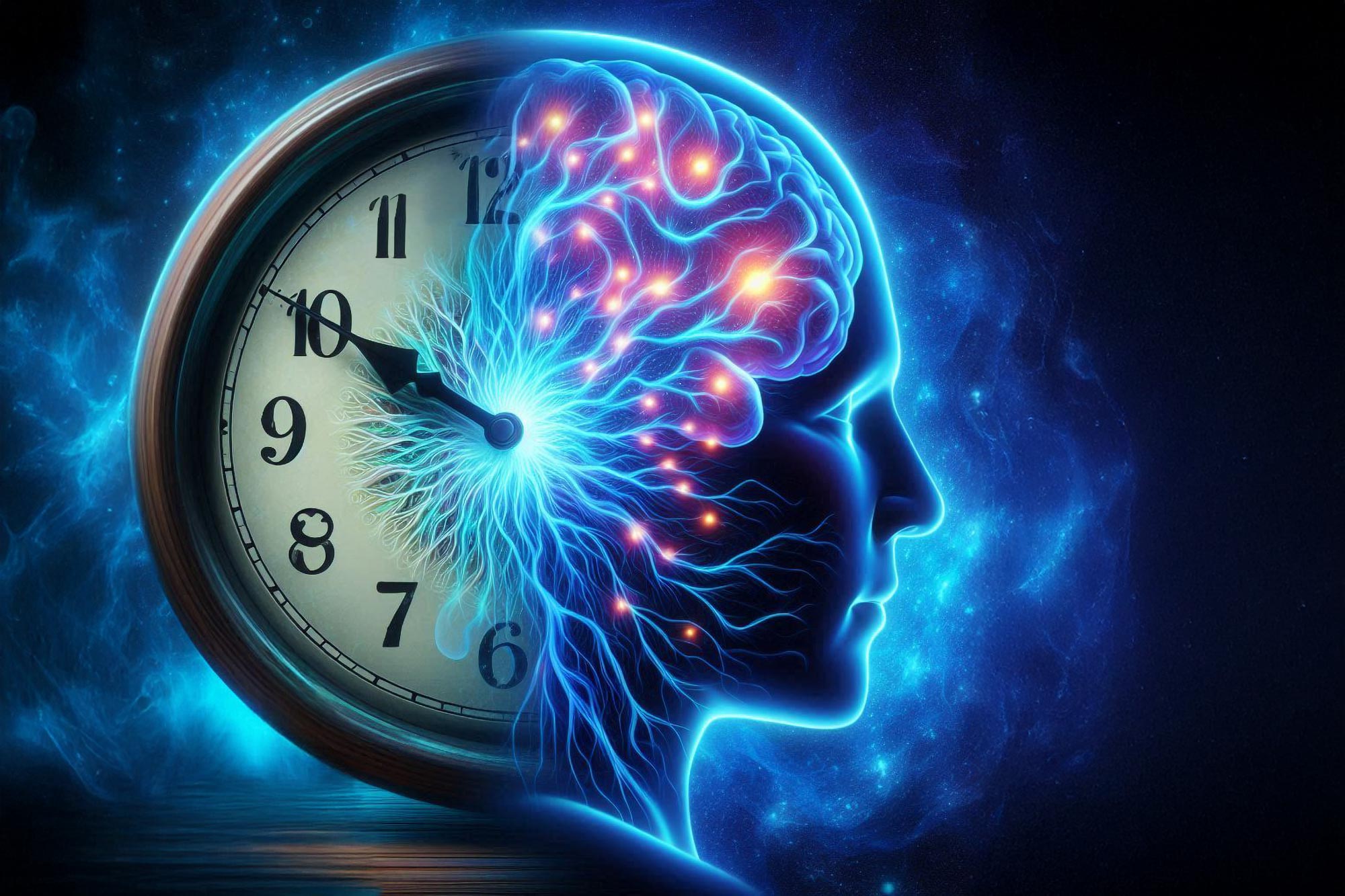
Researchers have identified a second dopamine-driven “clock” in the brain that works alongside the biological 24-hour cycle, potentially explaining the alternating states of mania and depression in bipolar disorder.
By activating this clock in mice, they replicated mood-swinging behavior and highlighted dopamine’s central role in mood regulation. This discovery opens doors for treatments targeting this newly identified mechanism, promising breakthroughs for stabilizing mood episodes.
A Rhythm Behind Bipolar Mood Swings
A newly discovered brain rhythm, working alongside the body’s natural sleep-wake cycle, may explain why individuals with bipolar disorder experience shifts between mania and depression, according to new research.
The study, led by McGill University and published in Science Advances, represents a major step forward in understanding the mechanisms behind these mood shifts. Lead author Kai-Florian Storch describes this discovery as the “holy grail” of bipolar disorder research.
“Our model offers the first universal mechanism for mood switching or cycling, which operates analogously to the sun and the moon driving spring tides at specific, recurring times,” explained Storch, an Associate Professor in McGill’s Department of Psychiatry and a researcher at the Douglas Research Centre.
The Two Clocks: Biological and Dopamine-Based
The findings suggest that regularly occurring mood switches in bipolar disorder patients are controlled by two “clocks”: the biological 24-hour clock, and a second clock that is driven by dopamine-producing neurons that typically influence alertness. A manic or depressed state may arise depending on how these two clocks, which run at different speeds, align at a given time.
Notably, the authors say this second dopamine-based clock probably stays dormant in healthy people.
To carry out their study, the scientists activated the second clock in mice to create behavioral rhythms similar to the mood swings in bipolar disorder. When they disrupted dopamine-producing neurons in the brain’s reward center, these rhythms ceased, highlighting dopamine as a key factor in the mood swings of bipolar disorder.
Hope for New Treatments: Silencing the Clock
Current treatments for bipolar disorder focus on stabilizing moods but often don’t address the root causes of mood swings, the researchers said.
“Our discovery of a dopamine-based arousal rhythm generator provides a novel and distinct target for treatment, which should aim at correcting or silencing this clock to reduce the frequency and intensity of mood episodes,” said Storch.
What remains unknown is the exact molecular workings of the dopamine clock, as well as the genetic and environmental factors that may activate it in humans. The research team’s next step will be to focus on these molecular “gears” and investigate these potential triggers.
Reference: “Mesolimbic dopamine neurons drive infradian rhythms in sleep-wake and heightened activity state” by Pratap S. Markam, Clément Bourguignon, Lei Zhu, Bridget Ward, Martin Darvas, Paul V. Sabatini, Maia V. Kokoeva, Bruno Giros and Kai-Florian Storch, 1 January 2025, Science Advances.
DOI: 10.1126/sciadv.ado9965
This research was supported by the Canadian Institutes for Health Research, the Natural Sciences and Engineering Research Council of Canada, the National Institutes of Health and the Graham Boeckh Foundation.
Never miss a breakthrough: Join the SciTechDaily newsletter.
Follow us on Google and Google News.
1 Comment
This article didn’t provide enough information to even convince me this “clock” system exists.
Sounds like they’re noticing the mitochondrial cycles and things are going awry during those cycles.
Talk about not reaching the root of the problem..