
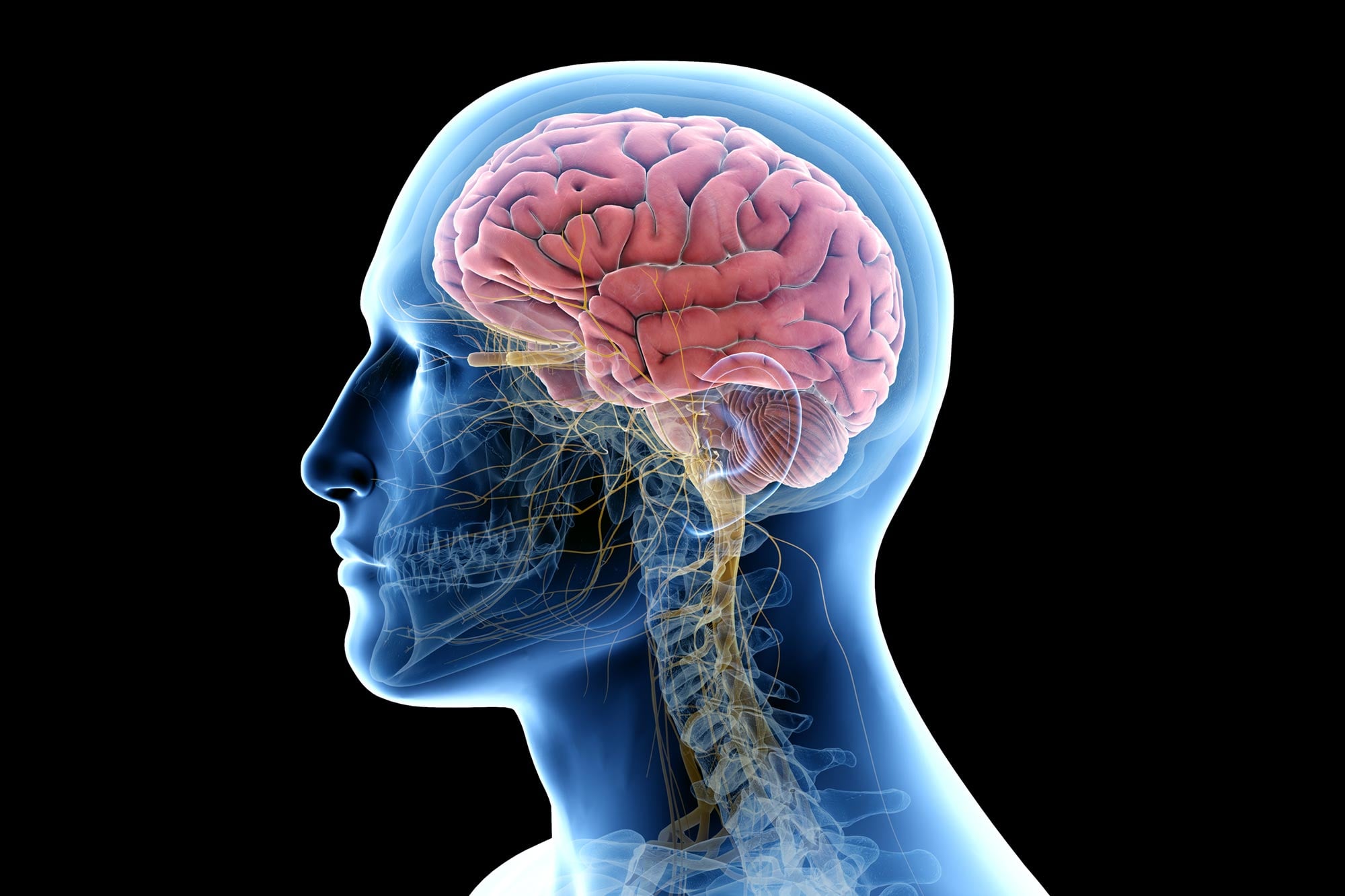
A newly identified lymphatic drainage pathway along the middle meningeal artery reveals how the human brain clears waste.
How does the brain clear away waste? This task is handled by the brain’s lymphatic drainage system, and attempts to understand how it operates have driven major advances in brain imaging.
A new study published in iScience by researchers at the Medical University of South Carolina reports the first human evidence of a previously unrecognized center of lymphatic drainage in the brain, the middle meningeal artery (MMA).
Using a NASA collaboration that gave them access to real-time MRI tools originally designed to study how spaceflight alters fluid movement in the brain, the MUSC team, led by Onder Albayram, Ph.D., followed the movement of cerebrospinal and interstitial fluids along the MMA in five healthy volunteers over six hours. Their observations showed that cerebrospinal fluid moved slowly and passively, a pattern consistent with lymphatic drainage rather than blood circulation, which would be faster and more pulsatile.
“We saw a flow pattern that didn’t behave like blood moving through an artery; it was slower, more like drainage, showing that this vessel is part of the brain’s cleanup system,” said Albayram, an associate professor in the Department of Pathology and Laboratory Medicine at MUSC.
Rethinking the brain’s immune isolation
The central nervous system, which includes the brain and spinal cord, is wrapped in a multi-layer protective covering called the meninges. For more than ten years, Albayram has studied meningeal lymphatic vessels, which he believes play a critical role in transporting waste out of the brain and into the body’s peripheral lymphatic system, where it can be removed.
Until roughly a decade ago, scientists largely believed that the meninges acted as a barrier separating the brain from the immune system, particularly the lymphatic network. Albayram’s research has helped overturn this view by demonstrating that lymphatic vessels are embedded within these membranes and connected to the rest of the body. Gaining a clearer picture of how fluids move between the brain and the periphery is key to expanding strategies for preventing and treating neurological and psychiatric disorders.
Imaging flow from vessels to cells
Albayram was among the first to visualize meningeal lymphatic vessels in humans, as reported in a 2022 article in Nature Communications. The study in iScience captures the flow of fluids within the meningeal lymphatic architecture deep within the human brain in real time and validates these findings through advanced imaging of postmortem human tissue.
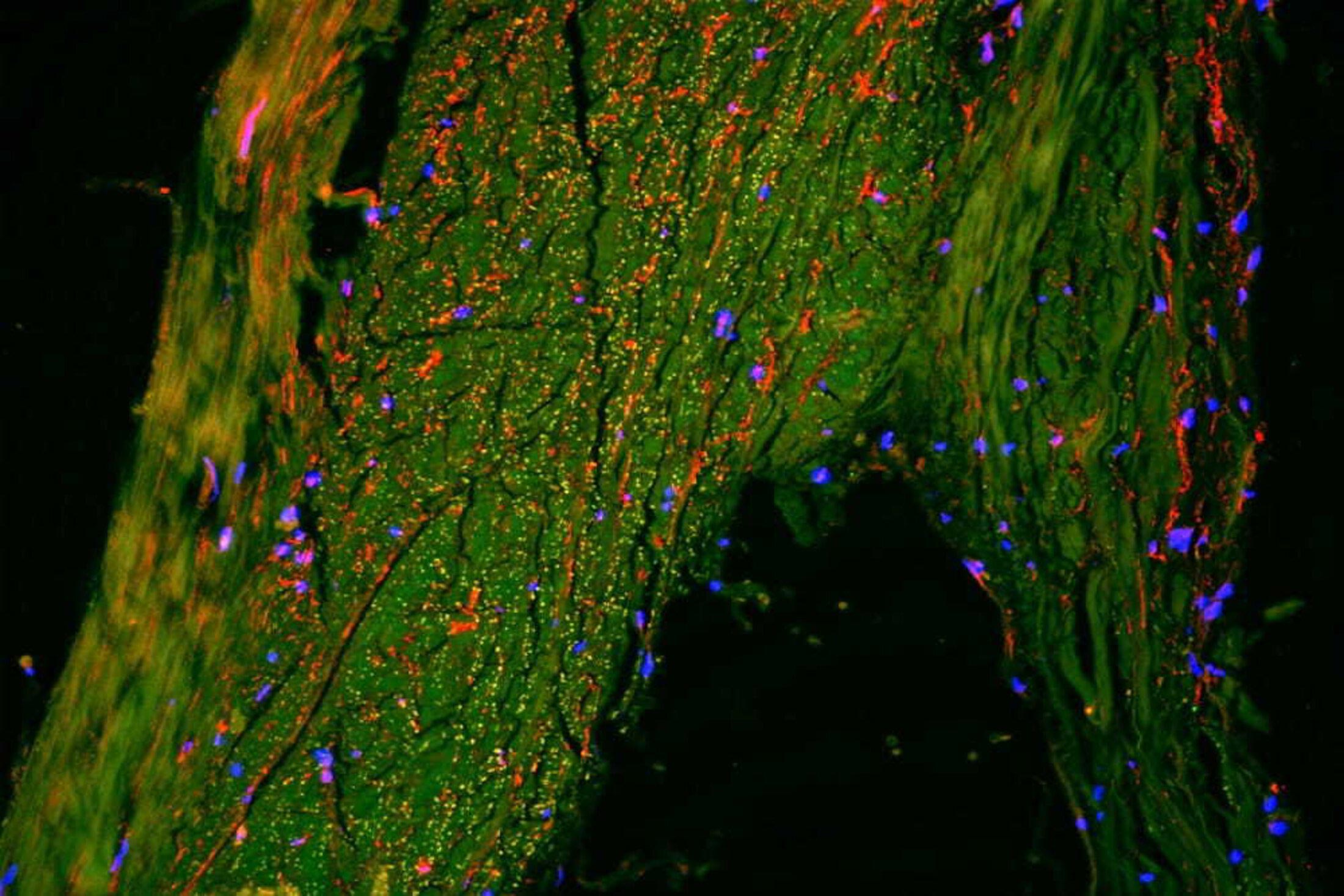
To confirm what they saw on MRI, Albayram’s team examined human brain tissue under extremely high-resolution imaging. Working with scientists at Cornell University, the team used an advanced technique that allows researchers to see many different cell types at once. This detailed mapping showed that the area around the MMA is lined with cells typically found in the body’s lymphatic vessels, the channels responsible for clearing waste.
These results confirmed that the slow-moving fluid seen on MRI was indeed flowing through true lymphatic vessels, not blood vessels – linking the brain images directly to cellular evidence.
Why healthy brains matter first
Core to Albayram’s work is a focus on making observations in humans first, before expanding out into experimental models, such as mice, rather than the other way around. One key element of this study is that it was conducted in healthy people. Having a clear understanding of how these structures function under normal conditions is essential for recognizing what changes when things go wrong – for example, after a traumatic brain injury or during neurodegenerative conditions.
The implications of this discovery extend to aging, neuroinflammation, brain injury, Alzheimer’s disease, and even psychiatric disorders. Albayram is already pursuing research based on key observations of the lymphatic drainage architecture in patients with neurodegenerative diseases, with the goal of developing better ways to diagnose these complex diseases earlier, prevent them, and design new treatments.
“A major challenge in brain research is that we still don’t fully understand how a healthy brain functions and ages,” said Albayram. “Once we understand what ‘normal’ looks like, we can recognize early signs of disease and design better treatments.”
References:
“Meningeal lymphatic architecture and drainage dynamics surrounding the human middle meningeal artery” by Mehmet Albayram, Sutton B. Richmond, Kaan Yagmurlu, Ibrahim S. Tuna, Eda Karakaya, Hiranmayi Ravichandran, Fatih Tufan, Emal Lesha, Melike Mut, Filiz Bunyak, Yashar.S. Kalani, Adviye Ergul, Rachael D. Seidler and Onder Albayram, 21 November 2025, iScience.
DOI: 10.1016/j.isci.2025.113693
“Non-invasive MR imaging of human brain lymphatic networks with connections to cervical lymph nodes” by Mehmet Sait Albayram, Garrett Smith, Fatih Tufan, Ibrahim Sacit Tuna, Mehmet Bostancıklıoğlu, Michael Zile and Onder Albayram, 11 January 2022, Nature Communications.
DOI: 10.1038/s41467-021-27887-0
Never miss a breakthrough: Join the SciTechDaily newsletter.
Follow us on Google and Google News.
2 Comments
Please provide what works to enhance deep sleep and what medications or activities enhance the glymphatic system to help rid the brain of waste products
Can spinal fluid be transfused, or maybe the pt receive iv. Fluids for hydration for better hydration