
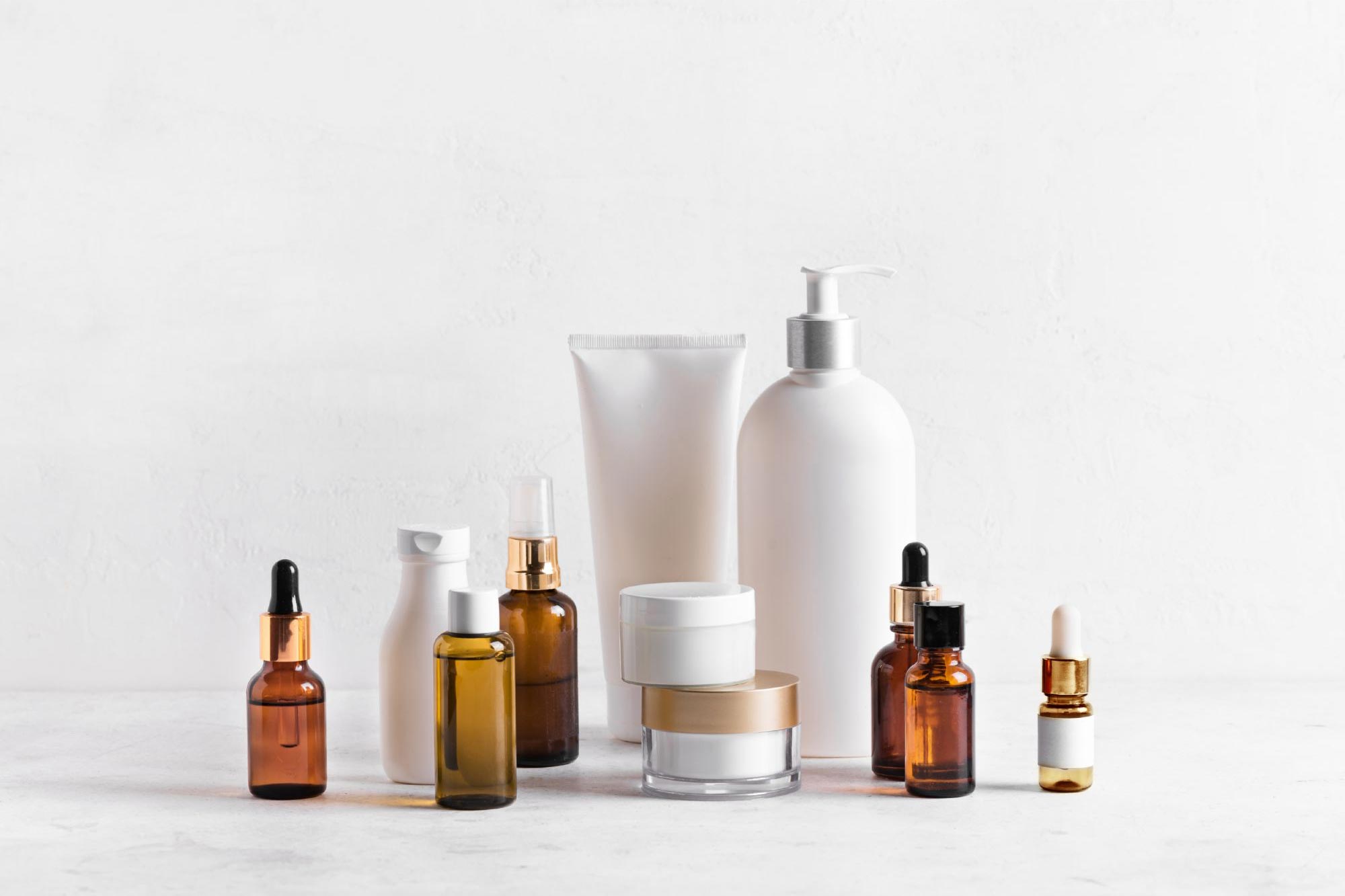
A new study has identified cancer-causing preservatives in lotions, soaps, and cosmetics commonly used by Black and Latina women.
More than half of Black and Latina women in a recent South Los Angeles study reported using personal care products that contain formaldehyde-releasing preservatives. This is a serious concern because formaldehyde is a chemical known to cause cancer in humans. The findings reveal major gaps in how personal care products are regulated in the United States and highlight how these gaps can unfairly impact the health of women of color.
Until now, most of the public attention around formaldehyde exposure has centered on hair relaxers. Several recent studies have found links between these products and a higher risk of uterine and breast cancer, especially among Black women.
But this new research, published in Environmental Science & Technology Letters, shows that the problem goes far beyond hair treatments. Formaldehyde-releasing preservatives were found in a wide variety of everyday products, including shampoo, body soap, lotion, and even eyelash glue.
“We found that this isn’t just about hair straighteners,” says lead author Dr. Robin Dodson, an exposure scientist at Silent Spring Institute. “These chemicals are in products we use all the time, all over our bodies. Repeated exposures like these can add up and cause serious harm.”
Uncovering hidden dangers
Companies add formaldehyde to personal care products to extend their shelf-life. Formaldehyde-releasing preservatives are often used as an alternative—these are chemicals that slowly release formaldehyde over time and serve the same purpose.
To understand the use of these chemicals in products, the researchers recruited 70 Black women and Latinas living in the Los Angeles area and asked them to track their use of personal care products over a period of five to seven days.
Each time participants used a product, they logged the information using a smartphone app developed by Silent Spring. The app also prompted the participants to take a photo of each ingredient label.
Co-author Dr. Elissia Franklin, an analytical chemist at Silent Spring, says previous studies on people’s use of personal care products have relied on imprecise surveys, asking participants questions like, “Did you use lotion in the past 24 hours?” But lotions can vary widely: some might have a few natural ingredients, like beeswax and shea butter, while others might have many toxic chemicals like formaldehyde releasers, phthalates, and parabens, says Franklin.
“We wanted to capture all that information,” she explains. “Everybody uses lotions. Saying ‘I used lotion’ is like saying ‘I am human!’ We wanted a much more detailed picture—an accurate reading of all the chemicals in that lotion, and any other products the women were using.”
To get that reading, the researchers used optical character recognition technology to translate each product label photo into plain text. The team analyzed over 1,100 products, looking for formaldehyde and formaldehyde releasing preservatives in the products’ ingredient lists.
Fifty-three percent of participants reported using at least one personal care product that listed formaldehyde releasers on its label. And many of the products with formaldehyde releasers that participants reported using were applied daily or multiple times per week.
DMDM hydantoin was the most common formaldehyde releasing preservative. Roughly 47% of skincare products and 58% of hair products with formaldehyde-releasing preservatives contained DMDM hydantoin. The team also identified several others, but Dodson stresses that their list is not definitive. “Those are just the ones we knew to look for. There could be more that we’re not aware of,” she says.
Protecting consumers
The study was part of a larger effort called the Taking Stock Study, a community-engaged research collaboration between Occidental College, Black Women for Wellness, Silent Spring, and Columbia University. The project investigates how exposures to chemicals in beauty products contribute to health inequities for Black women and Latinas in California.
Janette Robinson Flint, the executive director at Black Women for Wellness, says Black consumers live in a society governed by White beauty standards. They use many different personal care products—many of them made with toxic ingredients—to conform to that ideal. While they might have learned to avoid beauty products with formaldehyde on the label, many Black women are not familiar with formaldehyde releasers.
“We’re trying to do the right thing,” Flint says. “But there needs to be more government oversight. We shouldn’t have to be chemists to figure out what kinds of products will make us sick.”
Dodson says one way to reduce exposures would be to require that companies add warning labels to formaldehyde-releasing products like they do in Europe. She agrees that it can be hard for the average consumer—and even chemists—to identify a formaldehyde releasing preservative on a label. “They have long, weird, funny names, and they typically don’t have the word formaldehyde in them,” she says.
While warning labels might be a good first step, Dodson says banning the use of formaldehyde releasers altogether would be the best-case scenario. “Ideally, companies shouldn’t be putting these chemicals in products in the first place.”
Dr. Franklin suggests avoiding products that contain DMDM hydantoin. Silent Spring’s website also has tips on how to avoid formaldehyde releasers and an app called Detox Me that is designed to help consumers choose safer alternatives.
Another way consumers can protect themselves and their communities is to advocate for better legislation, the researchers say. The European Union and at least 10 U.S. states have banned or proposed to ban formaldehyde and formaldehyde releasers in personal care products. In 2023, the Food and Drug Administration proposed a national ban on formaldehyde and formaldehyde releasers in hair straighteners, but it has yet to be enacted.
Reference: “Formaldehyde and Formaldehyde Releasing Preservatives in Personal Care Products Used by Black Women and Latinas” by Robin E. Dodson, Elissia T. Franklin, Ami R. Zota, René LaPointe Jameson, Janette Robinson Flint, Lariah Edwards, Emily B. Weaver and Bhavna Shamasunder, 7 May 2025, Environmental Science & Technology Letters.
DOI: 10.1021/acs.estlett.5c00242
This project is funded by the California Breast Cancer Research Program (Grants # 23UB-6511 and B28TP5728) and charitable contributions to Silent Spring Institute, as well as the Passport Foundation and Forsythia Foundation.
Never miss a breakthrough: Join the SciTechDaily newsletter.
Follow us on Google and Google News.
3 Comments
Amazing! Realize that in 1961 and before and after, the military gave stateside beers to sailors and other military to drink that contain Formaldehyde. It was enough that this beer poured on a cut acted as an antiseptic! The VA has said zero about this poisoning of military personnel serving in Philippines or, other islands, Vietname, and other countries. Any stateside beer contained provided contained the Formaldehyde as a so called preservative.
Amazing work.. Keep informing us by new researches of science and technology
I’m shocked! Shocked, I say!