

Researchers at the Indiana University School of Medicine, at the school’s South Bend regional campus, and their colleagues at the University of Notre Dame, have discovered a novel therapeutic target for treating pulmonary hypertension. This form of high blood pressure specifically impacts the blood vessels in the lungs. The team’s research and findings have been recently published in the journal Circulation Research.
Pulmonary hypertension is a complex and often fatal condition that makes the heart work harder than normal to pump blood into the lungs. While the exact causes of pulmonary hypertension are unknown, one of its hallmarks is the thickening of the pulmonary blood vessels caused by an overgrowth of cells, also known as vascular remodeling.
New Therapeutic Discoveries
Margaret A. Schwarz, MD, a professor of pediatrics at IU School of Medicine and senior author on the study, said there are few treatments for pulmonary hypertension, and they typically treat the symptoms of vascular remodeling rather than the remodeling itself.
Schwarz said what’s exciting about her team’s findings is the discovery of an epigenetic pathway mediated via the protein SPHK2 that can reduce and potentially reverse vascular remodeling in pulmonary hypertension.
“This is one of the very first mechanisms of pulmonary hypertension identified that can be reversible,” she said. “Normally, pulmonary hypertension patients are given medications to reduce the vascular pressure in the lungs or to help the heart squeeze better to pump blood, which are both symptoms of vascular remodeling. Our study looks at targeting the epigenetic reversal of this mechanism. Ultimately, the treatment would be to stop the vascular remodeling process entirely.”
The concept is similar to cancer treatment, Schwarz said.
“In cancer, we stop tumor growth instead of just treating symptoms,” she said. “Vascular remodeling is a different mechanism, but the idea is that the treatment would target the mechanism instead of the symptoms.”
Key Findings and Future Directions
Other key findings from the study include:
- SPHK2 can drive pulmonary hypertension pathogenesis via histone H3K9 hyperacetylation, contributing to pulmonary artery smooth muscle cell (PASMC) vascular remodeling.
- SPHK2 deficiency confers reduced pulmonary vascular resistance, right ventricle hypertension, and distal vessel wall thickness.
- EMAP (endothelial monocyte activating polypeptide) II has a key role in the stimulation of nuclear SPHK2/S1P epigenetic modulating axis, suggesting that cooperation between SPHK2 and
- EMAPII could be a major driving force for epigenetic-mediated vascular PASMC reprogramming and remodeling in pulmonary hypertension.
- Pulmonary vascular endothelial cells are a priming factor of the EMAPII/SPHK2/S1P axis that alters the acetylome with a specificity for PASMC, through hyperacetylation of histone H3K9.
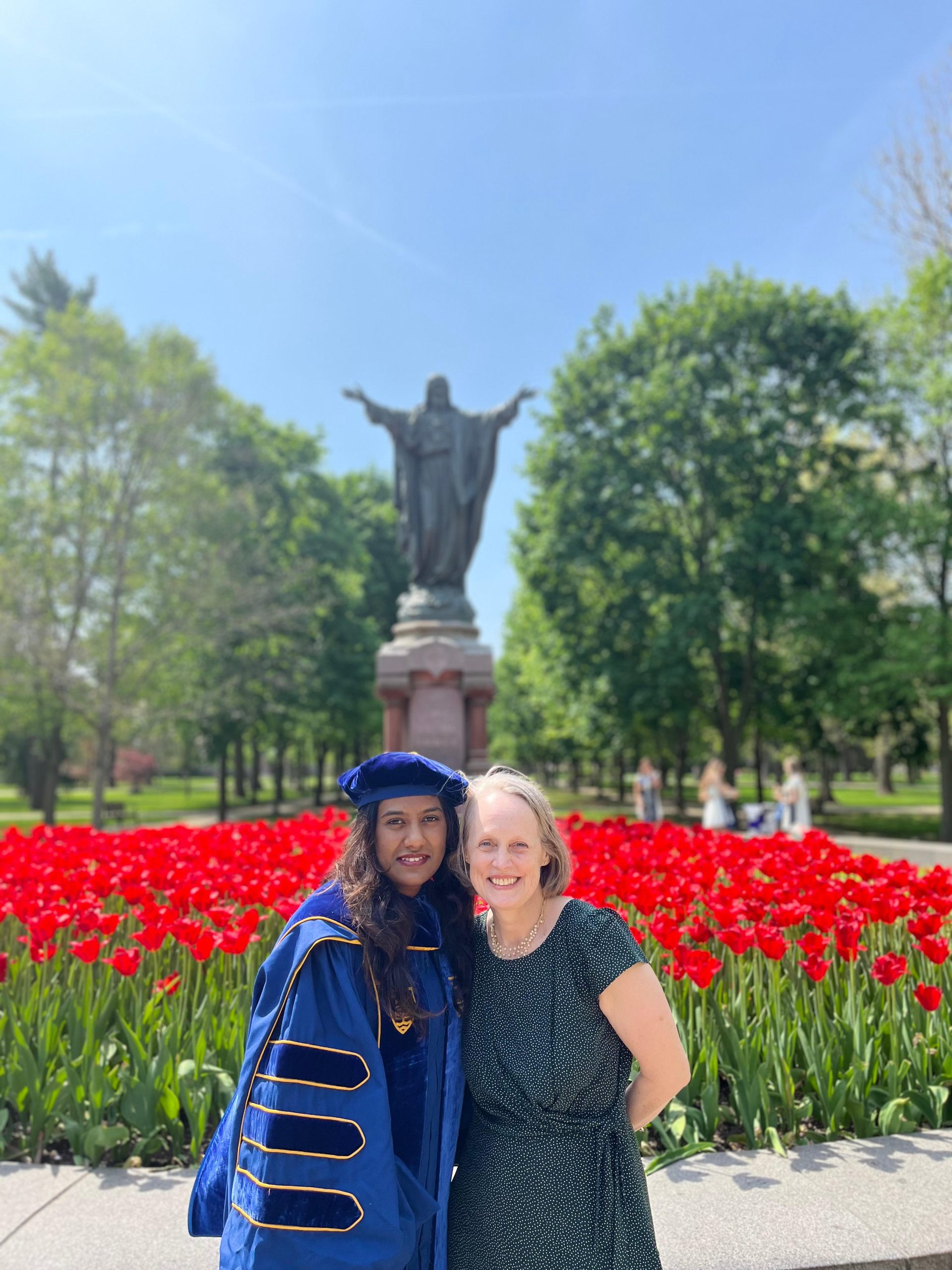
Schwarz and the study’s first author, Dushani Ranasinghe, Ph.D., who was a member of Schwarz’s lab while she was a graduate student at Notre Dame, were also interviewed about their findings for an episode of the “Discover CircRes” podcast, which is produced by Circulation Research.
Schwarz said the next steps for her research include further exploration of the SPHK2 protein as a therapeutic target for pulmonary hypertension, in collaboration with Brian Blagg, director of the Warren Center for Drug Discovery and Development at Notre Dame.
Reference: “Altered Smooth Muscle Cell Histone Acetylome by the SPHK2/S1P Axis Promotes Pulmonary Hypertension” by A. Dushani C.U. Ranasinghe, Maggie Holohan, Kalyn M. Borger, Deborah L. Donahue, Rafael D. Kuc, Martin Gerig, Andrew Kim, Victoria A. Ploplis, Francis J. Castellino and Margaret A. Schwarz, 12 September 2023, Circulation Research.
DOI: 10.1161/CIRCRESAHA.123.322740
Other IU authors on the study include Maggie Holohan and Martin Gerig.
This study was made possible in part by funding from the National Institutes of Health, the Lilly Endowment, the O’Brien Family Endowment for Excellence, the National Science Foundation and the Buckner Family Scholarship.
Never miss a breakthrough: Join the SciTechDaily newsletter.
Follow us on Google and Google News.