
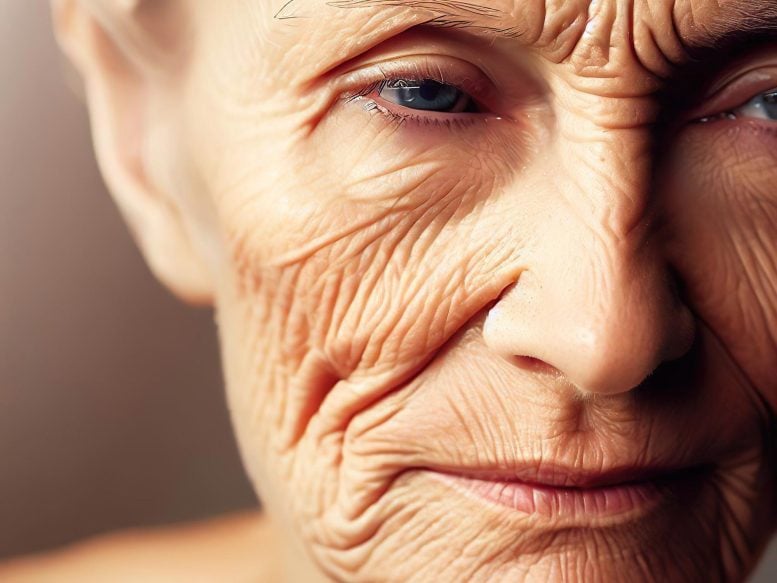
A scientific collaboration has found that the IL-17 protein plays a key role in skin aging, with its temporary inhibition resulting in delayed aging symptoms. Future research will further investigate the role of IL-17 in aging processes of other tissues and organs.
- A team of researchers from IRB Barcelona and CNAG identifies the IL-17 protein as a determining factor in skin aging.
- Blocking the function of IL-17 reduces the pro-inflammatory state and delays the appearance of age-related features in the skin.
- Published in the journal Nature Aging, the work opens up new perspectives in the development of therapies to improve skin aging health.
A team of scientists from the Institute for Research in Biomedicine (IRB Barcelona) in collaboration with the National Center for Genomic Analysis (CNAG) has discovered that IL-17 protein plays a central role in skin aging. The study, which was led by Dr. Guiomar Solanas, Dr. Salvador Aznar Benitah, both at IRB Barcelona, and Dr. Holger Heyn, at CNAG, highlights an IL-17-mediated aging process to an inflammatory state.
Skin aging is characterized by a series of structural and functional changes that gradually contribute to the deterioration and fragility associated with age. Aged skin has a reduced capacity to regenerate, poor healing ability, and diminished barrier function. Published in the journal Nature Aging, this work describes the changes undergone by different types of cells with aging and identifies how some immune cells in the skin express high levels of IL-17.
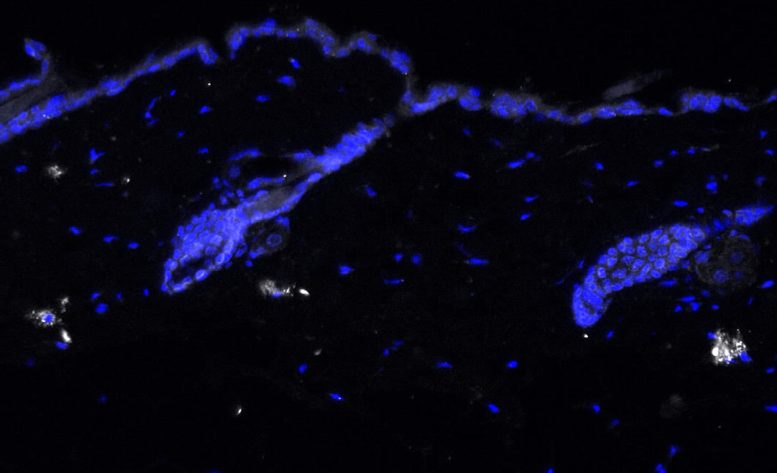
“Our results show that IL-17 is involved in various functions related to aging. We have observed that blocking the function of this protein slows down the appearance of various deficiencies associated with aging skin. This discovery opens up new possibilities for treating some of the symptoms or facilitating skin recovery after surgery, for example,” explains Dr. Aznar Benitah, ICREA researcher and head of the Stem Cells and Cancer laboratory at IRB Barcelona.
“Single cell sequencing has allowed us to dive deep into the complexity of cell types and states forming the skin and how these change during lifespan. We did not only find differences in the composition of aged skin, but also changes in cell activity states. Particularly immune cells showed specific age-related profiles, which we could pinpoint by analyzing thousands of individual cells at a time,” says Dr. Holger Heyn, head of the Single Cell Genomics laboratory at CNAG.
Immune Cells, Inflammation, and Aging
In addition to a wide variety of epithelial cells, hair follicle cells, and other components, the skin is also home to immune cells, which play a crucial role in preventing infection and protecting against different damages.
The study describes how, during aging, the presence of some of these immune cells, namely gamma delta T cells, innate lymphoid cells, and CD4+ T cells, significantly increases in the skin. These same cells also start expressing very high levels of the pro-inflammatory cytokine IL-17.
“Ageing is associated with mild but persistent inflammation and, in the skin, this is characterized by a significant increase in IL-17, which causes skin deterioration,” explains Dr. Paloma Solá, first author of the paper, together with Dr. Elisabetta Mereu, who is now a researcher at the Josep Carreras Leukemia Research Institute.
Reversing the Symptoms of Aging in Skin
Previous studies had described that IL-17 is related to some autoimmune skin diseases, such as psoriasis, and there are existing treatments that block this protein. The team of researchers studied the response of various aspects to blocking IL-17 activity, including hair follicle growth, transepidermal water loss, wound healing, and genetic markers of aging. These four parameters showed an improvement after treatment, as the acquisition of these aging traits was significantly delayed.
“IL-17 protein is essential for vital body functions, such as defense against microbes and wound healing, so permanently blocking it would not be an option. What we have observed is that its temporary inhibition offers benefits that could be of interest at a therapeutic level,” says Dr. Guiomar Solanas, associate researcher at IRB Barcelona.
Future work by the researchers will focus on clarifying the aging processes that are related to inflammatory states in the skin and how these are linked to IL-17. The team will also address whether IL-17 is involved in the aging and deterioration of other tissues and organs.
Reference: “Targeting lymphoid-derived IL-17 signaling to delay skin aging” by Paloma Solá, Elisabetta Mereu, Júlia Bonjoch, Marta Casado-Peláez, Neus Prats, Mònica Aguilera, Oscar Reina, Enrique Blanco, Manel Esteller, Luciano Di Croce, Holger Heyn, Guiomar Solanas and Salvador Aznar Benitah, 8 June 2023, Nature Aging.
DOI: 10.1038/s43587-023-00431-z
This research has received funding from the European Research Council (ERC), the Government of Catalonia, the Spanish Ministry of Science and Innovation, the Lilliane Bettencourt Foundation, the State Research Agency (AEI), and the European Regional Development Fund (ERDF).
Never miss a breakthrough: Join the SciTechDaily newsletter.
Follow us on Google and Google News.
1 Comment
You may not welcome aging process, but it keeps the body system normal. Any alteration of this natural process by inhibition, etc is harmful to your normal health. You can try it at risk of quality of the rest of your life though.
However, natural fresh organic diet in less than appetite at a time with 8 hour night sleep and walking or running for 20 minutes daily is a good practice, specially after 40 years of age.