
Close Menu
    Facebook X (Twitter) Instagram
    SciTechDaily
    • Biology
    • Chemistry
    • Earth
    • Health
    • Physics
    • Science
    • Space
    • Technology
    Facebook X (Twitter) Pinterest YouTube RSS
    SciTechDaily
    Home»Health»Scientists Discover Surprise Link Between Metabolism and Immunity
    Health

    Scientists Discover Surprise Link Between Metabolism and Immunity

    By Ziba Kashef, Yale UniversityAugust 6, 2018No Comments2 Mins Read
    Facebook Twitter Pinterest Telegram LinkedIn WhatsApp Email Reddit
    Share
    Facebook Twitter LinkedIn Pinterest Telegram Email Reddit
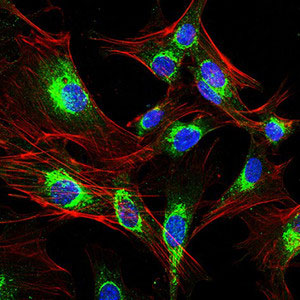
    Link Between Metabolism and Immunity
    Image shows expression of NUCB2 in immune cells. NUCB2 is a gene that provides a check on inflammation in obesity.

    In the search for obesity treatments, scientists recently zeroed in on a gene known as Nucleobindin-2 (Nucb2), which was believed to play a role in satiety. However, in a new study published in Cell Reports, Yale researchers uncovered an unexpected function for the gene in reducing inflammation.

    To better understand the role of Nucb2, a research team led by Vishwa Deep Dixit, the Waldemar Von Zedtwitz Professor of Comparative Medicine and professor of immunobiology, examined the gene — and the protein it encodes — in cells and in several mice models. They deleted the gene first from the whole animal, then specifically from neurons, fat cells, and immune cells. When they removed the gene from immune cells known as macrophages, and fed the mice a high-fat diet, the macrophages produced inflammation, which in turn caused insulin resistance in the animals lacking Nucb2. Insulin resistance can be caused by obesity and is a precursor for diabetes.

    The findings suggest that Nucb2 has no role in satiety, but rather has a key function in the immune system. “What our study does is clarify the physiological function of Nucb2,” said Dixit. “It has nothing to do with food intake. Its primary function is to control inflammation by regulating macrophage activation in fat tissue.” Future studies should explore further how inflammation, immunity, and metabolism are linked, and whether Nucb2 can be targeted by drug therapy to reduce insulin resistance in obesity, said Dixit.

    The other authors are Anthony Ravussin, Yun-Hee Youm, Jil Sander, Seungjin Ryu, Kim Nguyen, Luis Varela, Gerald I. Shulman, Sviatoslav Sidorov, Tamas L. Horvath, and Joachim L. Schultze. The study was supported in part by the National Institutes of Health and the Glenn Foundation.

    Reference: “Loss of Nucleobindin-2 Causes Insulin Resistance in Obesity without Impacting Satiety or Adiposity” by Anthony Ravussin, Yun-Hee Youm, Jil Sander, Seungjin Ryu, Kim Nguyen, Luis Varela, Gerald I. Shulman, Sviatoslav Sidorov, Tamas L. Horvath, Joachim L. Schultze and Vishwa Deep Dixit, 31 July 2018, Cell Reports. DOI:10.1016/j.celrep.2018.06.112

    Never miss a breakthrough: Join the SciTechDaily newsletter.
    Follow us on Google and Google News.

    Immunity Inflammation Medicine Metabolism Yale University
    Share. Facebook Twitter Pinterest LinkedIn Email Reddit

    Related Articles

    Yale Study Reveals Anti-Inflammatory Mechanism of Dieting and Fasting

    Yale Study Shows Metformin May be Safe for Patients with Kidney Disease

    Antifreeze Protein in Ticks Could Lead to New Antibiotics for Humans

    Study Finds Stimulant Use Increases by 30% During the School Year

    Yale Researchers Discover Glucose ‘Control Switch’ Linked to Diabetes

    Yale Researchers Discover New Cancer Cell Vulnerability

    Yale Study Shows No Link between Hospital Readmissions and Death Rates

    Intensive Glycemic Control Does Not Definitively Reduce the Risk of Impaired Kidney Function

    Obese Children with Genetic Variants Susceptible to Fatty Liver Disease

    Leave A Reply Cancel Reply

    • Facebook
    • Twitter
    • Pinterest
    • YouTube

    Don't Miss a Discovery

    Subscribe for the Latest in Science & Tech!

    Trending News

    One of the Universe’s Largest Stars May Be Getting Ready To Explode

    Scientists Discover Enzyme That Could Supercharge Ozempic-Like Weight Loss Drugs

    Popular Sweetener Linked to DNA Damage – “It’s Something You Should Not Be Eating”

    Ancient “Rock” Microbes May Reveal How Complex Life Began

    Researchers Capture Quantum Interference in One of Nature’s Rarest Atoms

    “A Plague Is Upon Us”: The Mass Death That Changed an Ancient City Forever

    Scientists Discover Game-Changing New Way To Treat High Cholesterol

    This Small Change to Your Exercise Routine Could Be the Secret to Living Longer

    Follow SciTechDaily
    • Facebook
    • Twitter
    • YouTube
    • Pinterest
    • Newsletter
    • RSS
    SciTech News
    • Biology News
    • Chemistry News
    • Earth News
    • Health News
    • Physics News
    • Science News
    • Space News
    • Technology News
    Recent Posts
    • Scientists Prove There Are Just Six Degrees of Separation in a Social Network
    • Bee Bacteria Could Fix a Major Flaw in Plant-Based Milk
    • Scientists Discover a Surprising Way To Make Bread Healthier and More Nutritious
    • Natural Compounds Boost Bone Implant Success While Killing Bacteria and Cancer Cells
    • After 60 Years, Scientists Uncover Unexpected Brain Effects of Popular Diabetes Drug Metformin
    Copyright © 1998 - 2026 SciTechDaily. All Rights Reserved.
    • Science News
    • About
    • Contact
    • Editorial Board
    • Privacy Policy
    • Terms of Use

    Type above and press Enter to search. Press Esc to cancel.