
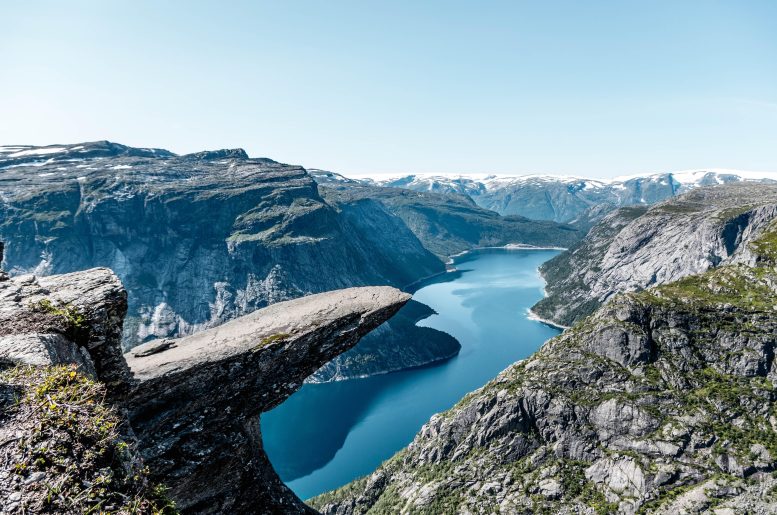
Coastal ecosystems, ranging from mangroves to fjords, have the ability to absorb or release greenhouse gases. However, on a global scale, these ecosystems are a vital sink.
International researchers, led by Australia’s Southern Cross University, have revealed in a recent study that coastal ecosystems worldwide act as a net greenhouse gas sink for carbon dioxide (CO2), as per a new greenhouse gas budget. However, the study also highlights that emissions of methane (CH4) and nitrous oxide (N2O) partially counterbalance the CO2 absorption.
The new findings of the coastal greenhouse gas balance (CO2 + CH4 + N2O), encompassing ten regions globally, were recently published in the journal Nature Climate Change.
From tropical lagoons to polar fjords, from coastal mangrove forests to underwater seagrass communities, many coastlines around the world show high diversity in greenhouse gas sinks and emissions.
Strategies to Enhance Coastal Carbon Sequestration
“Understanding how and where greenhouse gases are released and absorbed in coastal ecosystems is an important first step for implementing effective climate mitigation strategies,” said lead researcher, Dr Judith Rosentreter, Senior Research Fellow at Southern Cross University.
“For example, protecting and restoring mangrove and salt marsh habitats is a promising strategy to strengthen the CO2 uptake by these coastal wetlands.”
Other activities to curb human impact, like reducing nutrients, organic matter, and wastewater inputs into coastal waterways, can reduce the amount of CH4 and N2O released into the atmosphere.
The global team of scientists looked at ten different world regions: North America, South America, Europe, Africa, Russia, West Asia, South Asia, East Asia, Southeast Asia, and Australasia.
They found the strongest coastal greenhouse gas (GHG) sink was in Southeast Asia because of its extensive and productive tropical coastal wetlands that take up CO2. A second sink hotspot is North America, with its large areas of coastal wetlands but also CO2-uptaking fjords.
Fjords: Unsung Heroes of CO2 Uptake
“Our new research shows that fjords around the world take up ~40% of CO2 that would otherwise be released from tidal systems, deltas, and lagoons. Most (86%) of this important CO2 uptake by fjords comes from the North America region, mostly Greenland,” said co-author Professor Bradley Eyre, Professor of Biogeochemistry at Southern Cross University.
Dr. Rosentreter added: “Other coastal habitats are sources of greenhouse gases. For example, coastal wetlands such as mangrove forests, coastal salt marshes, and seagrasses, release more than three times more CH4 than all estuaries in the world.”
At the same time coastal wetlands, also called coastal ‘blue carbon’ wetlands, can be strong sinks of CO2 and some also take up N2O, which, on balance, makes them a net GHG sink for the atmosphere when all three greenhouse gases are considered.
“In our new study, we show that when we consider all three greenhouse gases (CO2 + CH4 + N2O), eight out of the 10 world regions are a coastal net greenhouse gas sink,” Dr. Rosentreter said.
The findings will inform the efforts of the Global Carbon Project’s RECCAP2.
“The research was initiated by the Global Carbon Project to establish greenhouse gas budgets of large regions covering the entire globe, and for which the contribution of these coastal ecosystems remained unaccounted for,” said co-author Pierre Regnier, Professor of Earth System Science at Université Libre de Bruxelles.
Snapshot: Coastal Greenhouse Gas Sinks and Sources Around the World
A dataset of observations from 738 sites from studies published between 1975 and 2020 was compiled to quantify CO2, CH4, and N2O fluxes in estuaries and coastal vegetation in 10 global regions.
Special coastal features (climate, hydrology, abundance) in each region around the world drive the GHG uptake and/or release from coastal systems.
Strongest coastal greenhouse gas sinks:
- Top: the archipelagic region of Southeast Asia, because of its extensive and productive tropical mangrove forests and seagrasses that take up large amounts of CO2.
- Next: North America because of its large areas of salt marshes, mangroves, and seagrasses but also CO2-uptaking fjords.
- Third: Africa with large CO2 uptake by mangroves and seagrasses that is moderately reduced by estuarine GHG emissions.
Moderate coastal greenhouse gas sinks:
- South America: moderate CO2 uptake by coastal wetlands, especially mangroves, and some estuarine GHG emissions.
- Australasia: long stretches of coastal wetlands that take up CO2, but this region also has a large number of estuaries along its coasts, many of which are a source of CO2, CH4 and N2O.
- West Asia: weak estuarine GHG source and moderate CO2 uptake by coastal wetlands, mostly seagrasses.
Weak coastal greenhouse gas sinks:
- East Asia and South Asia: the moderate coastal wetlands CO2 sink is largely reduced by estuarine GHG emissions.
Weakcoastal greenhouse gas sources:
- Europe and Russia: both regions release more coastal GHG than they can take up from the atmosphere. These regions have many impacted tidal estuaries that release greenhouse gases; a colder climate also means they have fewer coastal wetlands (eg mangroves) that would otherwise take up large amounts of CO2.
Reference: “Coastal vegetation and estuaries are collectively a greenhouse gas sink” by Judith A. Rosentreter, Goulven G. Laruelle, Hermann W. Bange, Thomas S. Bianchi, Julius J. M. Busecke, Wei-Jun Cai, Bradley D. Eyre, Inke Forbrich, Eun Young Kwon, Taylor Maavara, Nils Moosdorf, Raymond G. Najjar, V. V. S. S. Sarma, Bryce Van Dam and Pierre Regnier, 22 May 2023, Nature Climate Change.
DOI: 10.1038/s41558-023-01682-9
Never miss a breakthrough: Join the SciTechDaily newsletter.
Follow us on Google and Google News.