
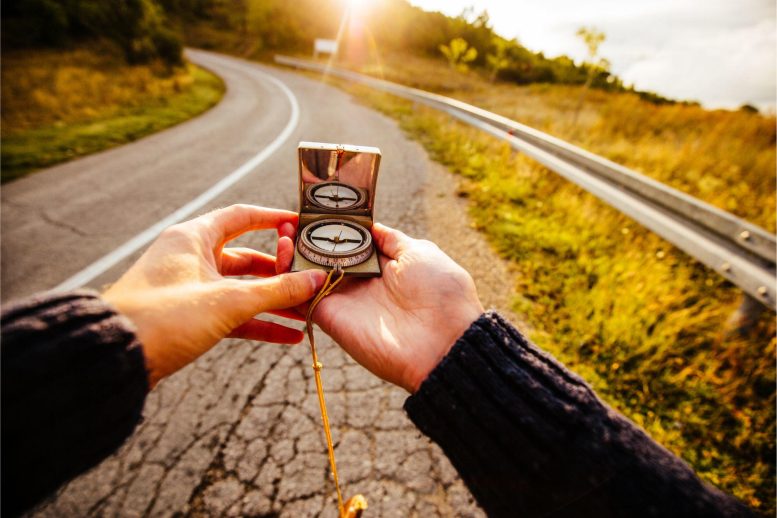
Navigating without GPS and challenging oneself spatially may preserve cognitive health and counteract neural atrophy associated with aging.
According to recent research from McMaster University, orienteering — a sport that combines athleticism, navigational skills, and memory — may serve as an effective intervention or preventive measure against cognitive decline related to dementia.
According to researchers, the integration of physical exercise and navigation in orienteering may stimulate certain parts of the brain that were crucial for hunting and gathering in our ancestors. It is believed that the brain evolved over thousands of years to adapt to harsh environments by developing new neural pathways.
Those same brain functions are not as necessary for survival today due to modern conveniences such as GPS apps and readily available food. Researchers suggest it is a case of “use it or lose it.”
“Modern life may lack the specific cognitive and physical challenges the brain needs to thrive,” says Jennifer Heisz, Canada Research Chair in Brain Health and Aging at McMaster University, who supervised the research. “In the absence of active navigation, we risk losing that neural architecture.”

Orienteering and Alzheimer’s Disease
Heisz points to Alzheimer’s disease, in which losing the ability to find one’s way is among the earliest symptoms, affecting half of all afflicted individuals, even in the mildest stage of the disease.
In the study, which was recently published in the journal PLOS ONE, researchers surveyed healthy adults, ranging in age from 18 to 87 with varying degrees of orienteering expertise (none, intermediate, advanced, and elite).
People who participate in orienteering reported better spatial navigation and memory, suggesting that adding elements of wayfinding into regular workouts could be beneficial over the span of a lifetime.
“When it comes to brain training, the physical and cognitive demands of orienteering have the potential to give you more bang for your buck compared to exercising only,” says lead author Emma Waddington, a grad student in the Department of Kinesiology who designed the study and is a coach and member of the national orienteering team.

The goal of orienteering is to navigate by running as quickly as possible over unfamiliar territory, finding a series of checkpoints using only a map and compass. The most skillful athletes must efficiently switch between several mental tasks, making quick decisions while moving across the terrain at a rapid pace.
The sport is unique because it requires active navigation while making quick transitions between parts of the brain that process spatial information in different ways. For example, reading a map depends on a third-person perspective relative to the environment. Orienteers must quickly translate that information relative to their own positions within the environment, in real time, as they run the course.
Modern Technology and Its Impact on Navigation Skills
It is a skill which GPS systems have engineered out of modern life, say researchers. That may affect not only our ability to navigate but also affect our spatial processing and memory more generally because these cognitive functions rely on overlapping neural structures.
Researchers suggest there are two simple ways to incorporate more orienteering into daily life: turn off the GPS and use a map to find your way when traveling and challenge yourself—spatially—by using a new route for your run, walk, or bike ride.
“Orienteering is very much a sport for life. You can often see participants spanning the ages of 6 to 86 years old engaged in orienteering,” says Waddington. “My long-term involvement in this sport has allowed me to understand the process behind learning navigational skills and I have been inspired to research the uniqueness of orienteering and the scientific significance this sport may have on the aging population,” says Waddington.
Reference: “Orienteering experts report more proficient spatial processing and memory across adulthood” by Emma E. Waddington and Jennifer J. Heisz, 20 January 2023, PLOS ONE.
DOI: 10.1371/journal.pone.0280435
Never miss a breakthrough: Join the SciTechDaily newsletter.
Follow us on Google and Google News.