
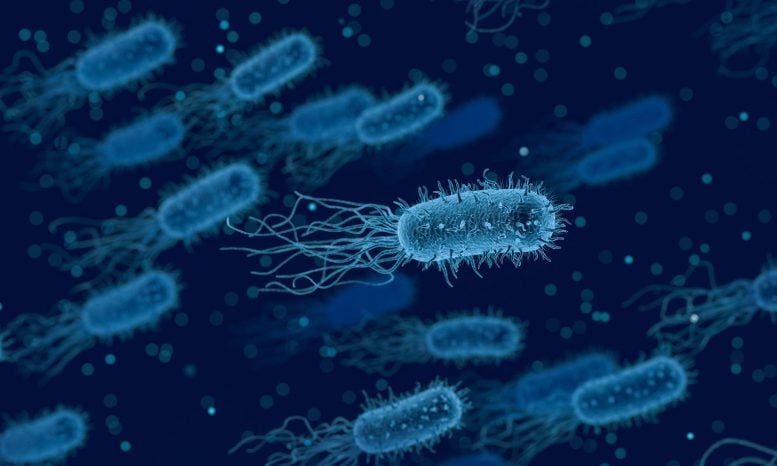
A team led by CU Boulder has uncovered a distinctive microbial community residing on the former island Hunga Tonga Hunga Ha’apai.
In 2015, an underwater volcano in the South Pacific erupted, giving rise to the short-lived Hunga Tonga Hunga Ha’apai island. The University of Colorado Boulder and the Cooperative Institute for Research in Environmental Sciences (CIRES) spearheaded a research team that seized the uncommon chance to investigate the initial microbial inhabitants of a recently formed landmass. Surprisingly, they detected a unique microbial population that can metabolize sulfur and atmospheric gases, akin to organisms present in deep-sea hydrothermal vents or geothermal hot springs.
“These types of volcanic eruptions happen all over the world, but they don’t usually produce islands. We had an incredibly unique opportunity,” said Nick Dragone, CIRES Ph.D. student and lead author of the study recently published in mBio. “No one had ever comprehensively studied the microorganisms on this type of island system at such an early stage before.”
“Studying the microbes that first colonize islands provides a glimpse into the earliest stage of ecosystem development – before even plants and animals arrive,” said Noah Fierer, CIRES fellow, professor of ecology and evolutionary biology at CU Boulder and corresponding author on the study.
A multi-institutional team of researchers on the ground collected soil samples from the island, then shipped them to CU Boulder’s campus. Dragone and Fierer could then extract and sequence DNA samples from the samples.
Unexpected Microbial Discoveries
“We didn’t see what we were expecting,” said Dragone. “We thought we’d see organisms you find when a glacier retreats, or cyanobacteria, more typical early colonizer species—but instead we found a unique group of bacteria that metabolize sulfur and atmospheric gases.”
And that wasn’t the only unexpected twist in this work: On January 15, 2022, seven years after it formed, the volcano erupted again, obliterating the entire landmass in the largest volcanic explosion of the 21st century. The eruption completely wiped out the island and eliminated the option for the team to continue monitoring their site.
“We were all expecting the island to stay,” said Dragone. “In fact, the week before the island exploded we were starting to plan a return trip.”
However, the same fickle nature of the Hunga Tonga Hunga Ha’apai (HTHH) that made it explode also explains why the team found such a unique set of microbes on the island. Hunga Tonga was volcanically formed, like Hawaii.
The Link Between Volcanic Origins and Unique Microbes
“One of the reasons why we think we see these unique microbes is because of the properties associated with volcanic eruptions: lots of sulfur and hydrogen sulfide gas, which are likely fueling the unique taxa we found,” Dragone said. “The microbes were most similar to those found in hydrothermal vents, hot springs like Yellowstone, and other volcanic systems. Our best guess is the microbes came from those types of sources.”
The expedition to HTHH required close collaboration with members of the government of the Kingdom of Tonga, who were willing to work with researchers to collect samples from land normally not visited by international guests. Coordination took years of work by collaborators at the Sea Education Association and NASA: a Tongan observer must approve and oversee any sample collection that takes place within the Kingdom.
“This work brought in so many people from around the world, and we learned so much. We are of course disappointed that the island is gone, but now we have a lot of predictions about what happens when islands form,” said Dragone. “So if something formed again, we would love to go there and collect more data. We would have a game plan of how to study it.”
Reference: “The Early Microbial Colonizers of a Short-Lived Volcanic Island in the Kingdom of Tonga” by Nicholas B. Dragone, Kerry Whittaker, Olivia M. Lord, Emily A. Burke, Helen Dufel, Emily Hite, Farley Miller, Gabrielle Page, Dan Slayback and Noah Fierer, 11 January 2023, mBio.
DOI: 10.1128/mbio.03313-22
Never miss a breakthrough: Join the SciTechDaily newsletter.
Follow us on Google and Google News.