
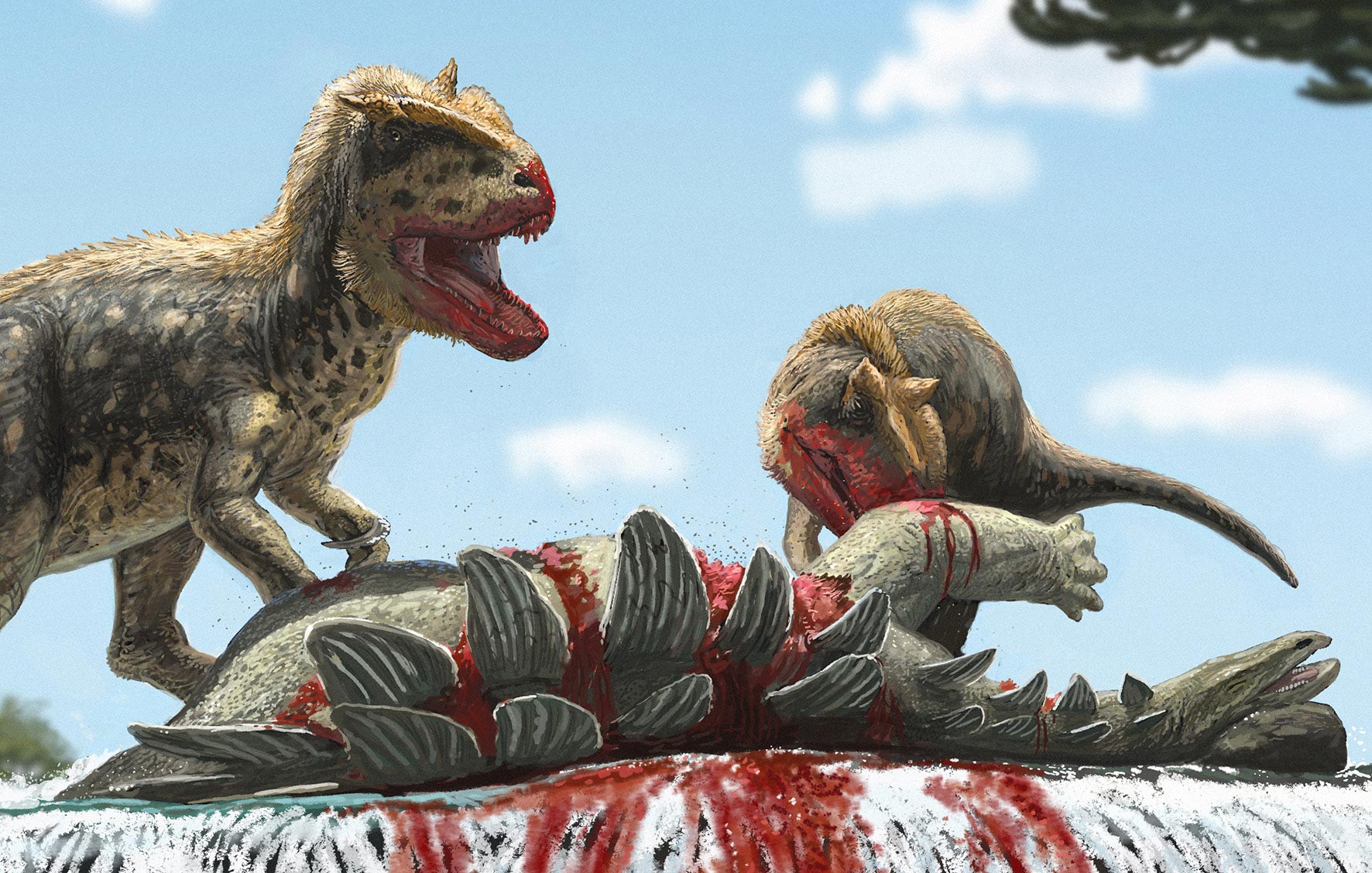
The newly discovered theropod, Alpkarakush kyrgyzicus, bridges a major knowledge gap in Jurassic theropod biogeography and evolution with its unique features and the recovery of both an adult and a juvenile.
Therapods are among the most diverse and important large groups of dinosaurs, including the infamous predators Tyrannosaurus and Allosaurus as well as modern birds. There is a huge variety of known theropods from the Mesozoic Era, the age of the dinosaurs.
Just as lions today are mainly found in Africa and tigers only in Asia, Allosaurus, for example, was widespread in the Jurassic of North America and southwestern Europe, while the similarly sized Metriacanthosaurs lived in China. However, there were previously no large Jurassic predatory dinosaurs known from the massive region between central Europe and East Asia.
Discovering Alpkarakush Kyrgyzicus
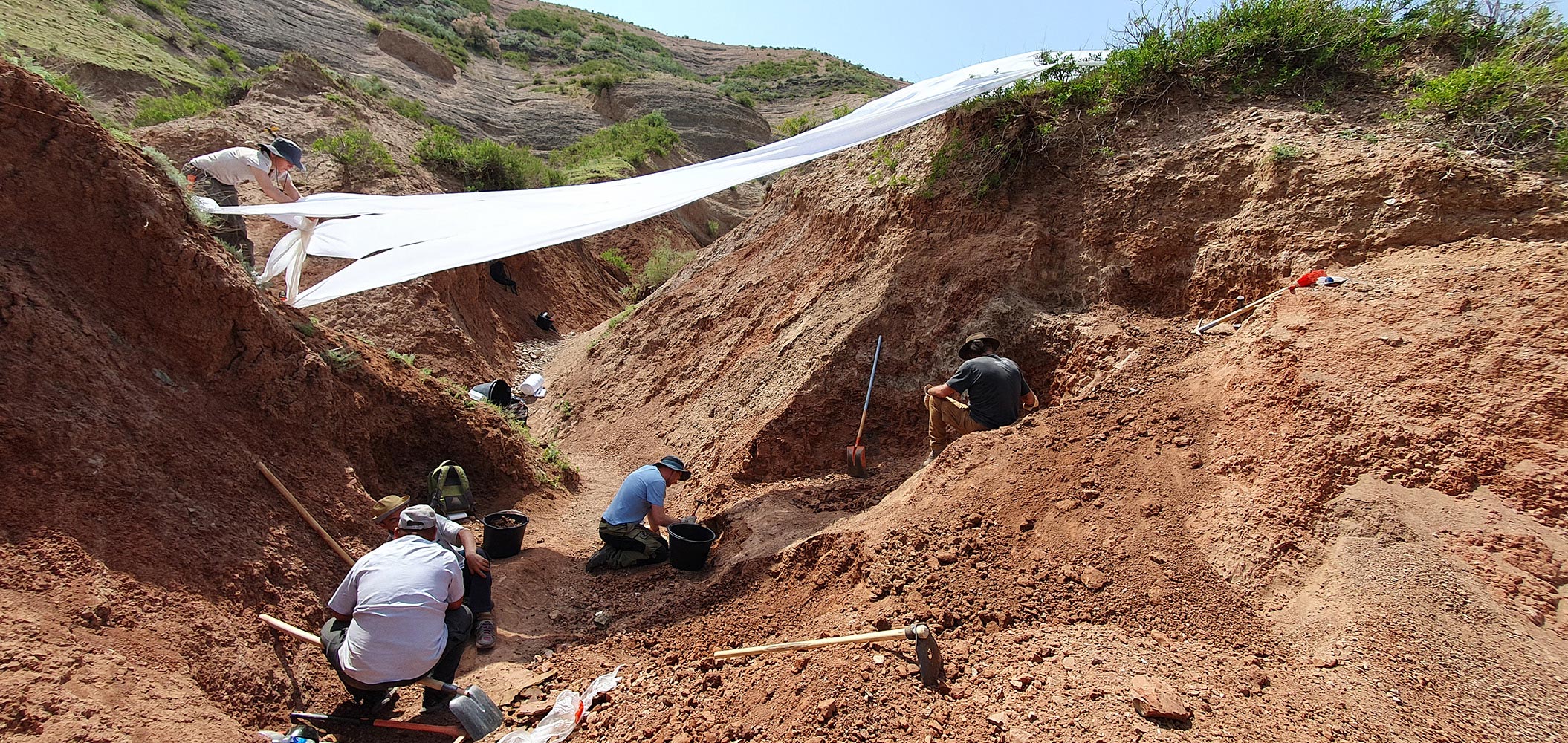
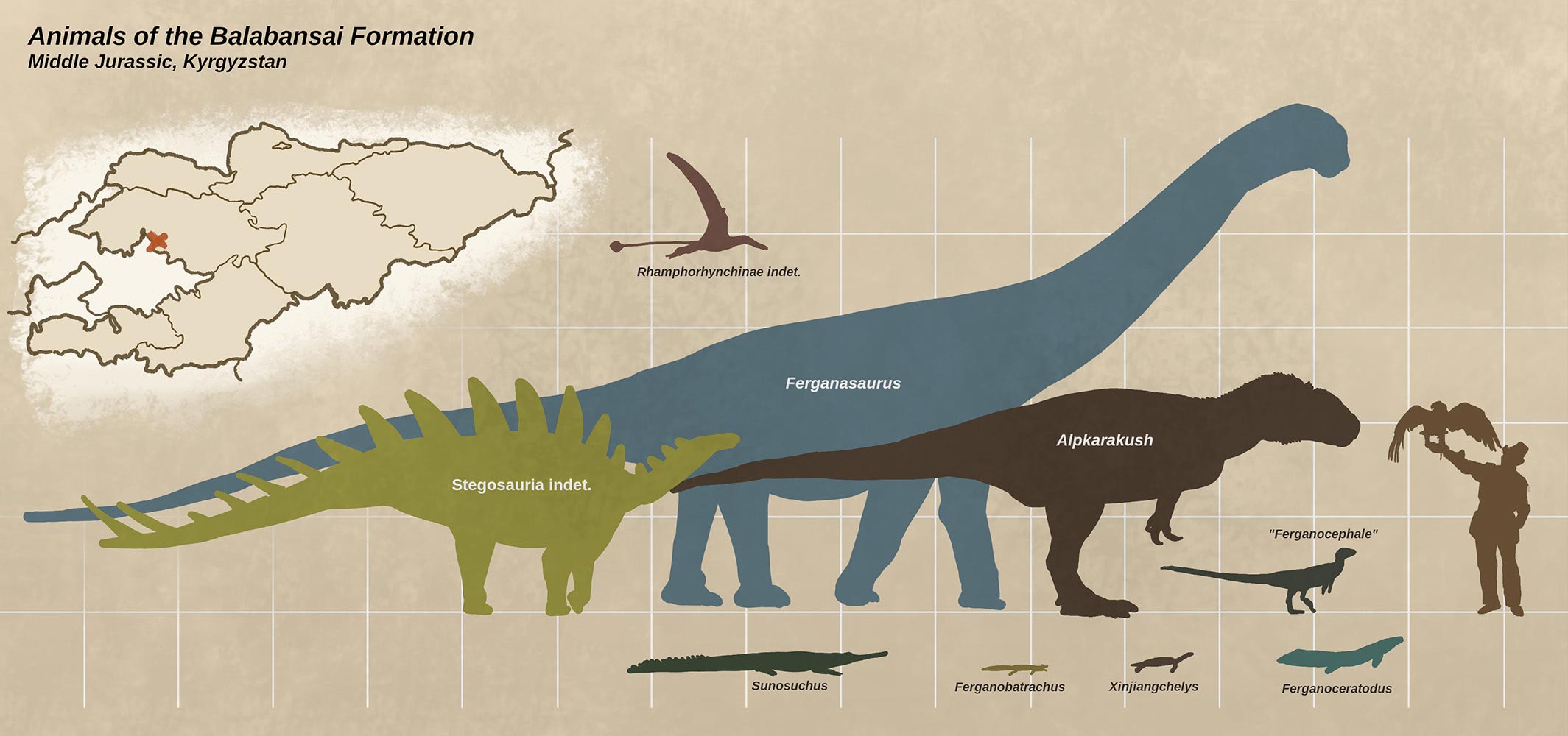
Now, researchers have discovered the remains of a new theropod dinosaur in Kyrgyzstan, Alpkarakush kyrgyzicus, marking the first theropod found in the region and filling this knowledge gap. The first remains of the fossil were discovered in 2006 by Kyrgyz paleontologist Aizek Bakirov. The discovery site is located in the mountainous desert regions near the city of Tashkumyr in western Kyrgyzstan. The sediments of the Balabansai Formation exposed here were deposited during the Middle Jurassic period around 165 million years ago.
Excavation Insights and Unique Features
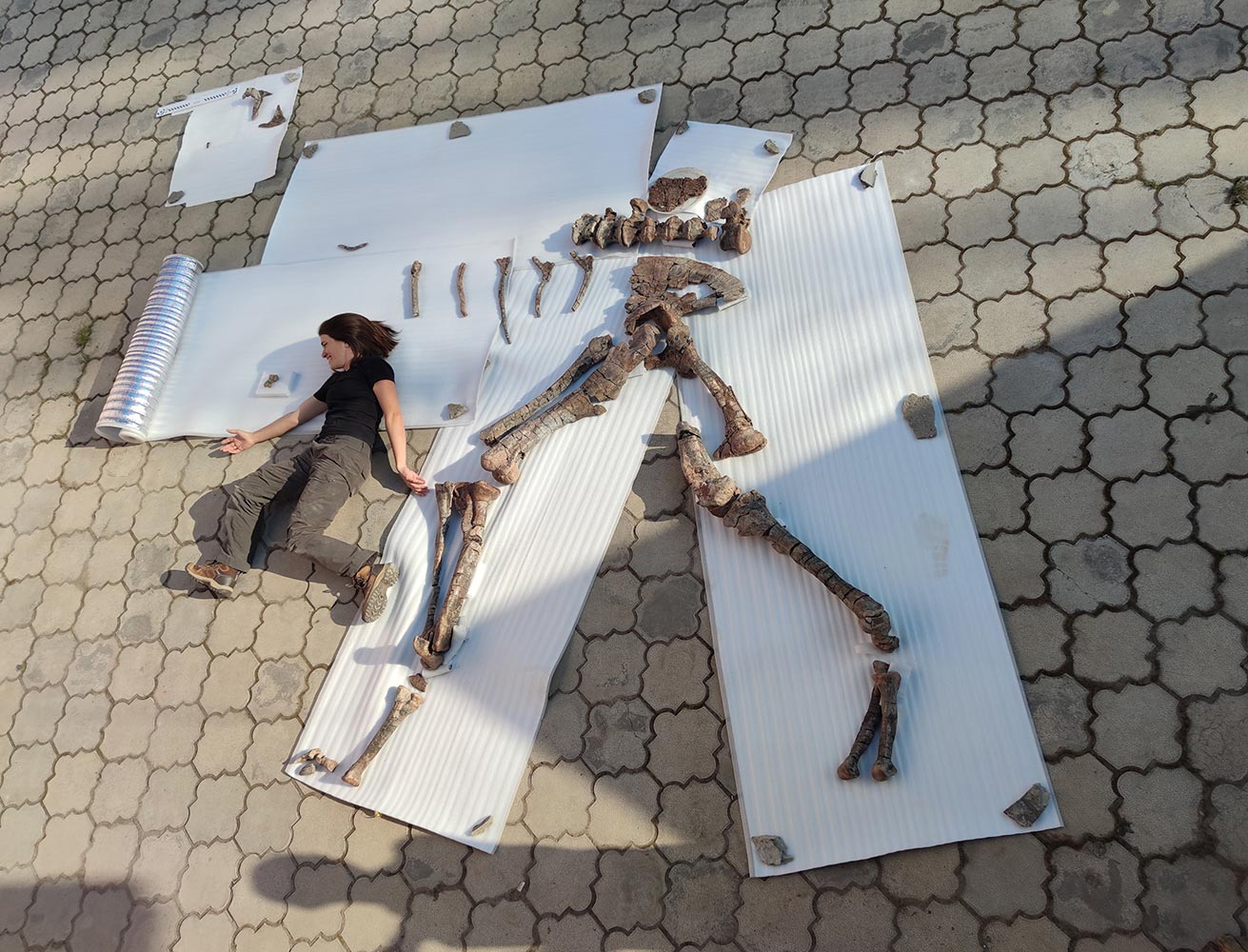
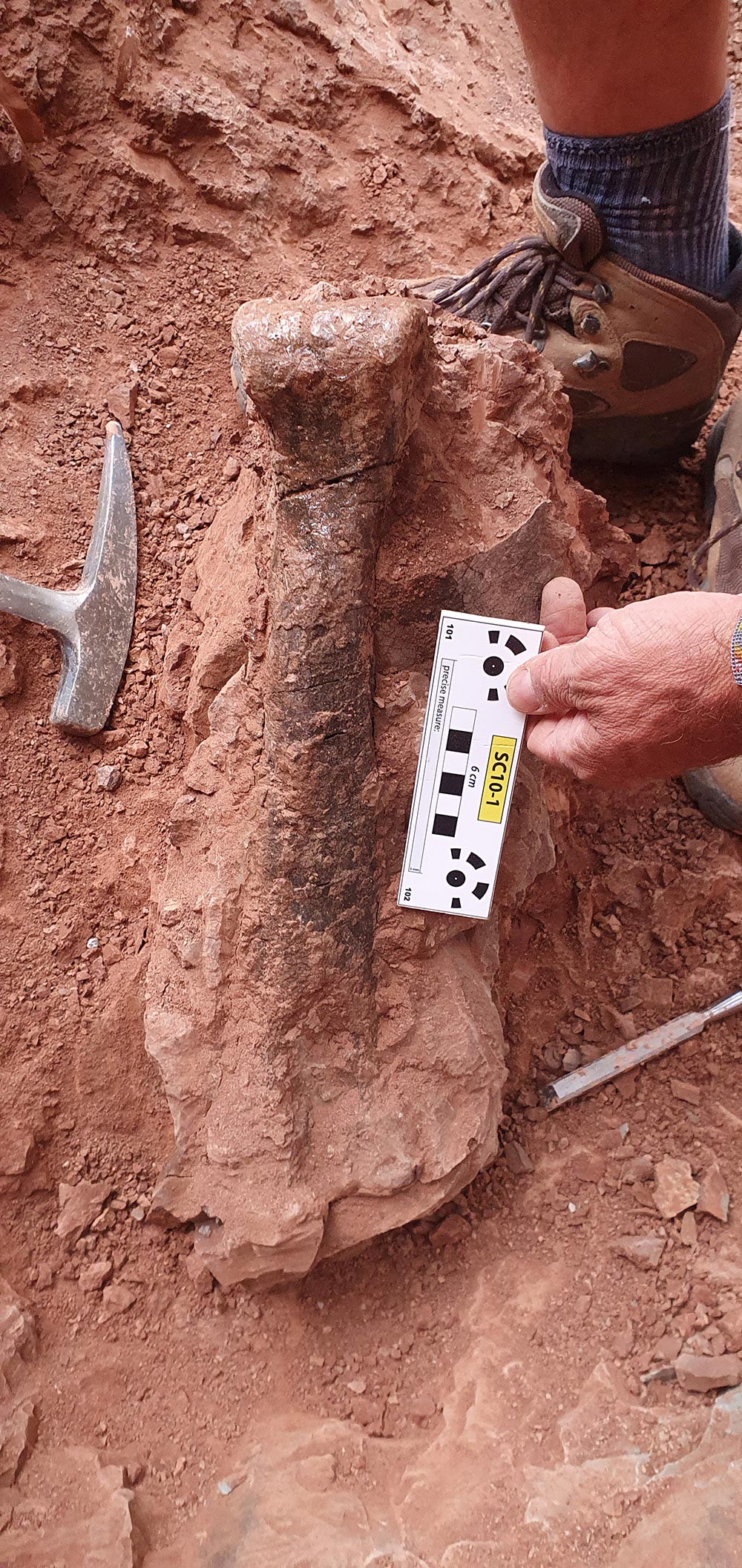
During several excavation campaigns between 2006 and 2023, skull bones, dorsal and pelvic vertebrae, fragments of the shoulder girdle and forelimbs as well as the almost complete pelvic girdle and hind limbs of a predatory dinosaur about eight to nine meters long were recovered. It is a new genus and species with previously unknown characteristics.
Particularly impressive is its extremely protruding “eyebrow” on the so-called postorbital bone, a skull bone behind the eye-opening, which indicates the presence of a horn at this point. Other unique features are found on the dorsal vertebrae and the femur.
Phylogenetic Importance and Biogeographical Implications
Comparisons with numerous other theropods show that the new species belongs to the metriacanthosaurids, it is closely related to the large predatory dinosaurs of East Asia. Paleontologists suggest the origin of metriacanthosaurids and other important theropod groups in Southeast Asia, from where they spread to other continents via Central Asia and Europe. “Although the affiliation of Alpkarakush with the metriacanthosaurids is not necessarily a surprise, this discovery closes a huge gap in our knowledge of the Jurassic theropods. It leads us to important new insights into the evolution and biogeography of these animals,” says Prof. Oliver Rauhut from the Bavarian Collection of Paleontology and Geology in Munich (SNSB-BSPG) and the first author of the study.
Age and Growth Analysis
The remains of a second, slightly smaller specimen of Alpkarakush kyrgyzicus were also found at the site. Examination of the internal bone structure revealed that the large specimen was an almost adult, at least seventeen years old, and certainly already sexually mature, while the smaller individual is a juvenile. Maybe a parent animal was on tour with its young 165 million years ago.
Technological Advances in Paleontology
Also, digital photogrammetric 3D models of all relevant bones of the Alpkarakush were generated. “These models are now available online and allow researchers worldwide to carry out follow-up studies and make 3D prints,” says co-author Dr. Oliver Wings, Director of the Bamberg Natural History Museum.
Cultural and Scientific Significance
The fossil is named after Alpkarakush, a giant bird in the mythological Kyrgyz “Manas” epic, which often comes to the aid of the heroes in critical moments. The species name “kyrgyzicus” refers directly to the Kyrgyz Republic, the origin of the new predatory dinosaur. Alpkarakush kyrgyzicus could even become the first original dinosaur skeleton ever to be exhibited in Kyrgyzstan: if enough supporters are found, it is planned to present a reconstruction as well as the original bones in the National Historical Museum in Bishkek, pending the acquisition of the necessary funding.
The study is the result of a research cooperation between the M.M. Adyshev Institute of Geology of the National Academy of Sciences of the Kyrgyz Republic and two departments of the Bavarian Natural History Collections (Bavarian Collection of Palaeontology and Geology in Munich and Bamberg Natural History Museum) and the Friedenstein Foundation Gotha. The study, funded by the German Research Foundation, has now been published in the Zoological Journal of the Linnean Society.
Reference: “A new theropod dinosaur from the Callovian Balabansai Formation of Kyrgyzstan” by Oliver W M Rauhut, Aizek A Bakirov, Oliver Wings, Alexandra E Fernandes and Tom R Hübner, 20 August 2024, Zoological Journal of the Linnean Society.
DOI: 10.1093/zoolinnean/zlae090
Never miss a breakthrough: Join the SciTechDaily newsletter.
Follow us on Google and Google News.
13 Comments
All the dinosaurs whose fossils were found were near the coasts. The dinosaurs that lived on land were all buried under a few kilometers of dust and dirt from the planets that disintegrated. I mean that the dinosaurs whose fossils were found were mostly aquatic. If they were on land, their fossils are under How many kilometers from the ground should it be?
Is it alright if we just call it Kyrgysaurus?
Taxpayers’ money at work, everyone!
Fly crocodilian again .? Modern crocodilian only tetanuran dinosaur alive spinosauridae is only dinosaur alive today the won with evidence.more evidence that dinosaur is a gator
This show common tetanuran 2 horn is not on the lacrimal bone like today crocodilian allso not found in spinosaurus because eyes are on top of skull baryonyx eye are not on top skull that why it has horn .the caiman is advance modern crocodilian so horn came back on lacrimal most modern crocodilian has it in another bone near the ears .it show how it happen in evolution .the slender snout crocodile has one horn this is not 2 species name likely a new species .one of slender snout crocodile lack horns .they cliam these older than Nile crocodile this is not true it is a advance crocodile with alligator feature not all lower jaw bone are fuse the spenial bone allso in gator
This horn not found in maniraptoran bird because it was heavy for flight they were flying and flightless bird they are not dinosaur .why was right headline not shown I think it is interesting today dinosaur modern crocodilian is cool .i guest I am only won know these thing a none scientist .
hmm
On academi edu they said big Nile crocodile has these giant horn and said 7 modern crocodilian has these horn .slender snout crocodile the hatchling has these horn in dinosaur and crocodilian only subadult and adult has these osteoderm armor skin .why spenial not fuse in gator slender it will make skull weak maybe follow mammal
Mammal only has one bone in the lower jaw almost all mesoeucrocodylia lost prearticular bone in lower jaw only one fossil with this primitive bone all dinosaur and pseudosuchus has this bone .the spenial bone likey has a joint or some movement now .all mesoeucrocodylia most of bone in lower jaw is fuse include spinosaurus only know of 2 bone fuse in spinosauridae is easy tell if it is mesoeucrocodylia any bone fuse in lower jaw it’s a mesoeucrocodylia dinosaur are primitive and have weak lower jaw none of bone are fuse .in bird and maniraptoran birds the lower jaw is fuse archaeopteryx velociraptor in the first modern bird the lower jaw is not fuse they gone back to reptile feature in some fish it is fuse .in higher up animal it is fuse they solid jaw for chewing side to side bite
They the. Spinosaurus and gator need the fuse lower jaw for the death roll that why skull is so strong .all mesoeucrocodylia can do the death roll include spinosauridae the first mesoeucrocodylia modern crocodilian is technology marvel the king dinosaur the last surviving spinosauridae
They said nile crocodile horn was small not like Cuban crocodile Siamese crocodile in another link more species in Nile crocodile they said some have belly osteoderm skin more species.the slender snout crocodile horn not v shape like most modern crocodilian it is rounded the horn they say these horn are use like dinosaur horn. Today bird lower jaw is fuse .velociraptor fuse lower jaw why birds are not dinosaur this is use by bandit scientist a lot allso the ankle
Alpkarakush is allosaurus no lacrimal horn it is not a Eustreptospondylus allso lack lacrimal horn Eustreptospondylus is a gator type mesoeucrocodilian it has serrated teeth spinosaurus allso lack lacrimal horn but lack serrated teeth .baryonyx has lacrimal horn spinosauridae has gator type ankle Eustreptospondylus compsognathus allso too a sprawling ankle most dinosaur do not have sprawling ankle they can not sprawl .on bandit popular ankle I am not talking about bird giant ankle as the tibia not found in dinosaur I am talking about bird 2,3,4, reptile is 3,4, ankle bone the dinosaur math
All the explanations given by our good friends may be true, but tell me why the fossils of humans who created the Philippines in the form of dinosaurs were not found with the fossils of dinosaurs near the coasts? The reason was that the carcasses of the dinosaurs were floating on the water and when the meteor showers stopped after several months and years and all the humans on the islands and continents were buried under several kilometers of soil and meteorites, the bodies of the dinosaurs were washed to the shores by strong and long waves. The carcasses of the dinosaurs were driven onto the beaches, and on the beaches, the fragmented carcasses of dinosaurs and other aquatic creatures became fossils