
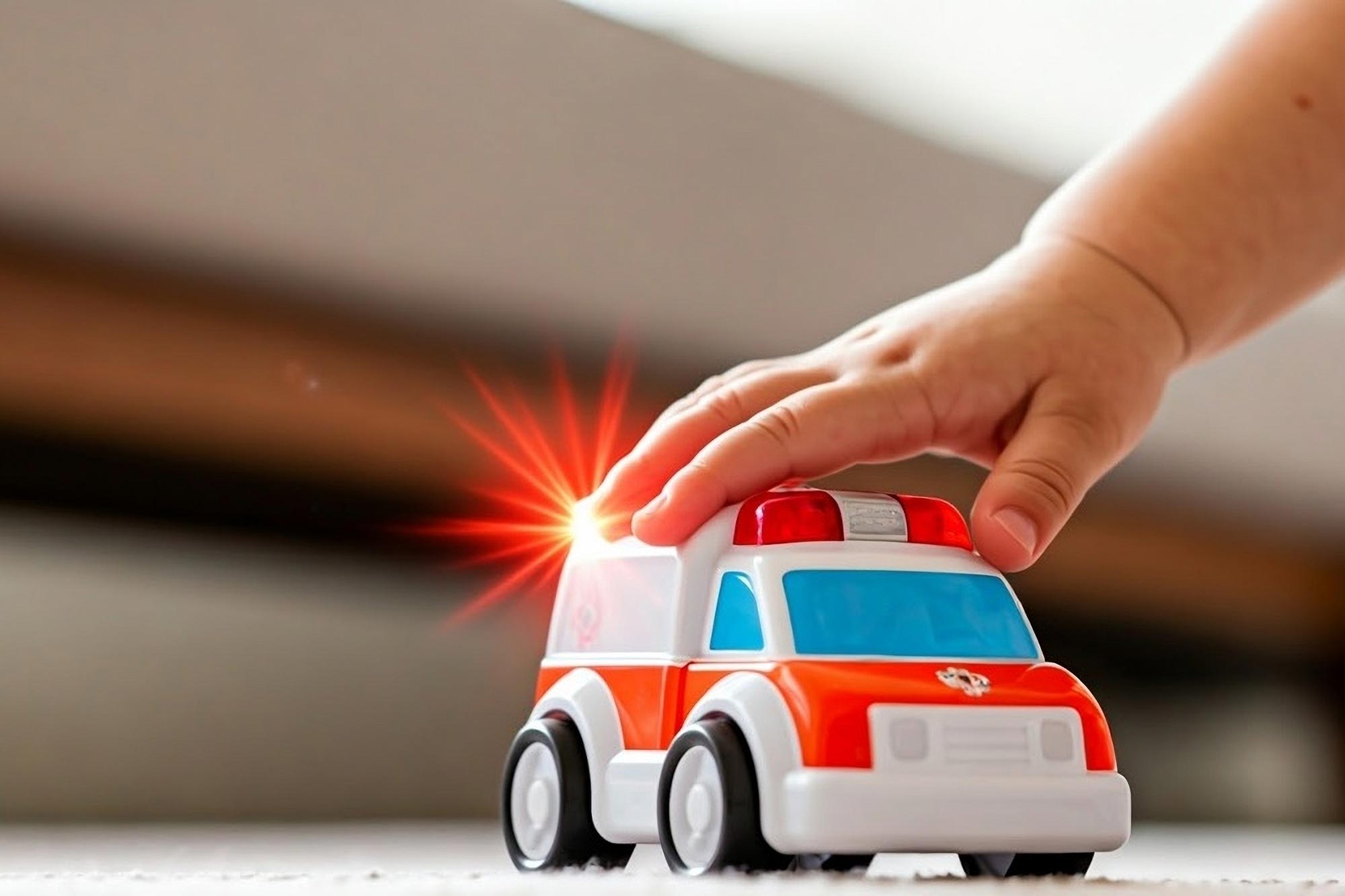
An analysis of 70 plastic children’s products sold in Brazil found that most samples were chemically contaminated, with toxin levels reaching up to 15 times above legal limits, and barium, lead, chromium, and antimony being the most frequently detected hazardous elements.
Researchers at the University of São Paulo (USP), working with the Federal University of Alfenas (UNIFAL), have discovered significant amounts of harmful chemicals in plastic toys sold throughout Brazil. Their investigation reviewed 70 products made both in the country and abroad, making it the most extensive assessment to date on chemical hazards in children’s items in Brazil. The findings were published in the journal Exposure and Health.
With support from FAPESP, the team found that many toys fail to meet safety requirements established by Brazil’s National Institute of Metrology, Quality, and Technology (INMETRO) as well as the European Union. The most concerning issue involved barium: 44.3% of the toys contained levels above the permitted threshold, and in some cases the concentration reached up to 15 times the legal limit. Barium exposure can lead to serious cardiac and neurological effects, including arrhythmias and paralysis.
Lead, Chromium, and Antimony Also Detected
The researchers also reported elevated concentrations of lead, chromium, and antimony. Lead, which is associated with permanent neurological harm, memory problems, and reduced IQ in children, exceeded approved levels in 32.9% of the samples and reached nearly four times the recommended amount. Antimony, a substance linked to gastrointestinal issues, and chromium, a known carcinogen, were present at irregular levels in 24.3% and 20% of the toys, respectively.
“These data reveal a worrying scenario of multiple contamination and lack of control. So much so that in the study we suggest stricter enforcement measures, such as regular laboratory analyses, product traceability, and more demanding certifications, especially for imported items,” says Bruno Alves Rocha. This work resulted from Rocha’s postdoctoral research, which was supported by FAPESP and was recently completed during his time as a visiting professor at UNIFAL.
For the study, toys were selected to represent different socioeconomic groups. Purchases were made at popular stores and shopping malls in Ribeirão Preto. “We chose toys intended for children aged 0 to 12, many of which were sized and shaped to facilitate oral exploration – that is, they could be put in the mouth – which increases the risk of exposure to toxic substances,” Rocha explained to Agência FAPESP.
Methods Used to Detect Contaminants
The substances were identified and quantified using inductively coupled plasma mass spectrometry (ICP-MS), a technique that can detect trace amounts of metals and non-metals. The investigation also employed a process known as microwave-assisted acid digestion to simulate the release of chemicals through contact with children’s saliva.
This analysis revealed 21 elements with toxic potential: silver (Ag), aluminum (Al), arsenic (As), barium (Ba), beryllium (Be), cadmium (Cd), cerium (Ce), cobalt (Co), chromium (Cr), copper (Cu), mercury (Hg), lanthanum (La), manganese (Mn), nickel (Ni), lead (Pb), rubidium (Rb), antimony (Sb), selenium (Se), thallium (Tl), uranium (U), and zinc (Zn).
Using bioavailability (acid digestion) tests, the researchers set up two exposure scenarios for toxic substances: normal exposure based on median values and high exposure based on maximum values. “Exposure varies according to the concentrations of toxic elements, but it can also vary greatly from one child to another depending on how long they play with or keep the object in their mouth,” says the researcher.
Extraction rates, or the release of substances through contact with gastric juice, ranged from 0.11% to 7.33%. This indicates that only a small fraction of total contaminants are released under conditions that simulate oral exposure. “While this is positive, the finding doesn’t eliminate safety concerns, particularly given the high total concentrations detected in many samples,” says Rocha.
Clues About Manufacturing Sources
The study also helped map the toy production chain and identify possible sources of contamination. “We found correlations between nickel, cobalt, and manganese, suggesting a common manufacturing origin. Beige-colored toys had higher metal concentrations, possibly due to the paint supplier, which is a relevant clue for future enforcement actions,” he says.
In addition to toxic elements, the group of researchers has investigated the presence of substances capable of interfering with the hormonal system in previous studies. These substances include bisphenols, parabens, and phthalates, which are known as endocrine disruptors.
“This isn’t the first study with such alarming results, which only reinforces the need for urgent action to protect children’s health,” Rocha concludes.
Reference: “Potentially Toxic Elements in Brazilian Toys: A Bioaccessibility-Based Childhood Health Risk Assessment” by Bruno Alves Rocha, Matheus Gallimberti, Gabriel Henrique Savietto, Ramon Alves de Oliveira Paula, Marília Cristina Oliveira Souza, Grazielle Cabral de Lima, Mariane Gonçalves Santos and Fernando Barbosa Jr., 22 August 2025, Exposure and Health.
DOI: 10.1007/s12403-025-00731-2
Never miss a breakthrough: Join the SciTechDaily newsletter.
Follow us on Google and Google News.