
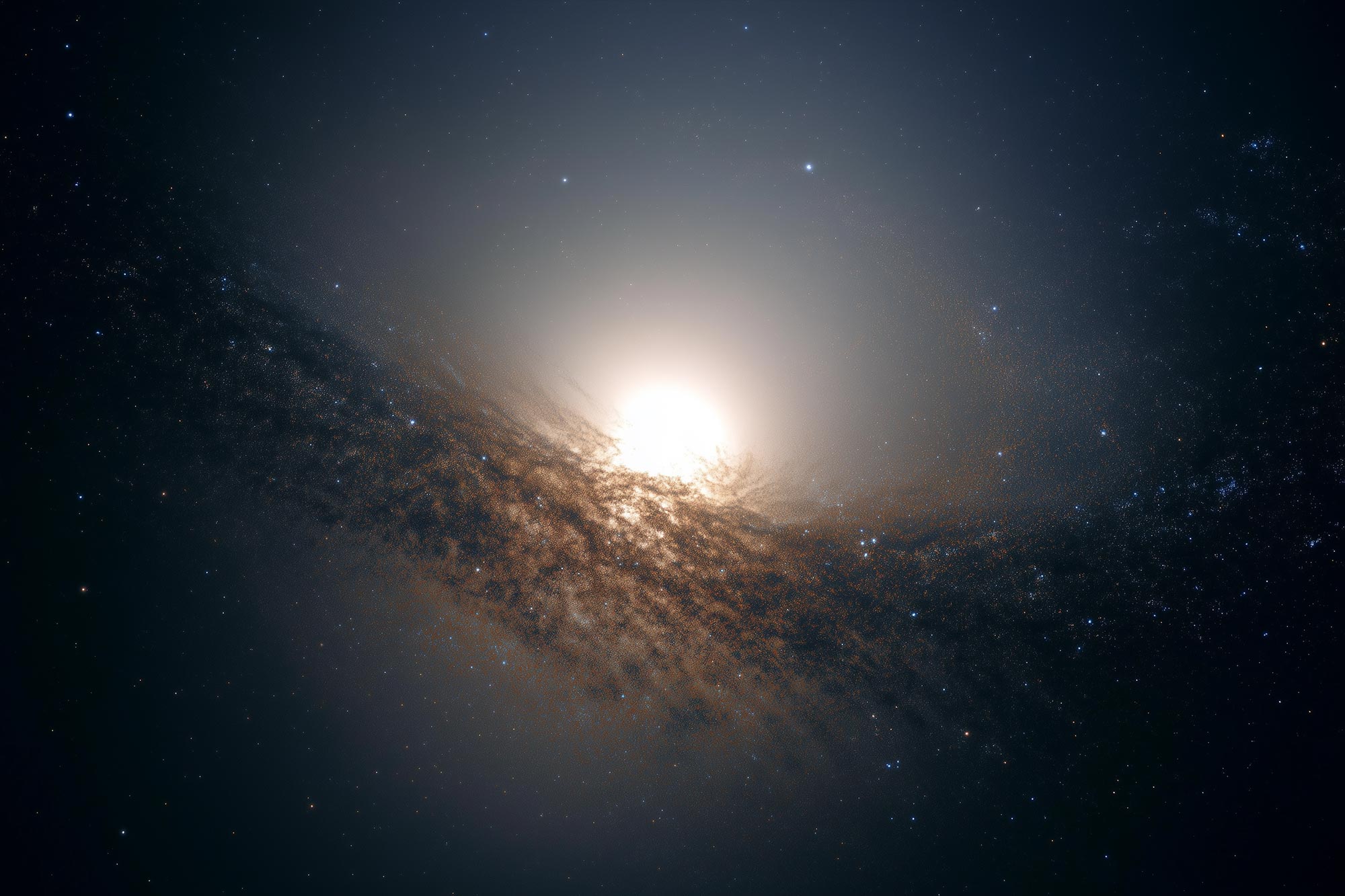
Astronomers have traced the hidden fingerprints of dark matter by observing rare, glowing galaxies that lived in the early universe.
A group of scientists led by Rutgers University has found new evidence about how galaxies grow, using clues hidden in the universe’s unseen framework shaped by dark matter.
The findings, published in Astrophysical Journal Letters, are based on what the team describes as the largest collection ever of Lyman-alpha emitters, a special type of galaxy. By tracking how these galaxies clustered over billions of years, the researchers gained fresh insight into how galaxies are connected to surrounding dark matter and how they change as the universe ages.
“Analyzing these fingerprints gives us insight into the mass of dark matter surrounding the galaxies,” said Eric Gawiser, a Distinguished Professor with the Department of Physics and Astronomy in the Rutgers School of Arts and Sciences and an author of the study. “The dark matter masses revealed by this study are consistent with the idea that Lyman-alpha emitting galaxies evolved into present-day galaxies like our own Milky Way.”
The team’s work examined wide-field images from three separate stages of the universe’s history, not long after the Big Bang. What they discovered were clear, fingerprint-like patterns that revealed where dark matter is most heavily concentrated.
The Invisible Glue of the Cosmos
Dark matter, a mysterious substance that doesn’t emit light or energy, cannot be seen, but makes up most of the matter in the universe, according to scientists. They know dark matter exists because its gravity affects how galaxies move and how these vast cosmic systems are arranged in space.
The study, led by Rutgers doctoral student Dani Herrera, used data from the ODIN (One-hundred-square-degree DECam Imaging in Narrowbands) survey, which is a large astronomical project designed to analyze more than 100,000 Lyman-alpha emitting galaxies.
The researchers focused on data taken from a region of the sky known as the Cosmic Evolution Survey Deep Field (COSMOS), in one of the largest deep-sky surveys ever conducted. Looking deep into space and into the distant past, they viewed three time periods, some 2.8 billion, 2.1 billion, and 1.4 billion years after the Big Bang. During these periods, Lyman-alpha emitter galaxies were young and actively forming stars, making them ideal markers for study. They also contain hydrogen gas that emits a special glow, which allows scientists to discover large numbers of them in the distant universe.
“We wanted to find the dark matter whose gravity drives galaxies to merge and grow,” Herrera said. “Understanding where it is and how it has evolved helps us understand how the universe itself has evolved.”
Dark matter plays a crucial role in galaxy formation by acting as a gravitational “glue” that helps pull gas together to form galaxies, Herrera said. Its invisible mass creates deep wells in space where galaxies can grow, merge, and evolve, forming the large-scale structure of the universe.
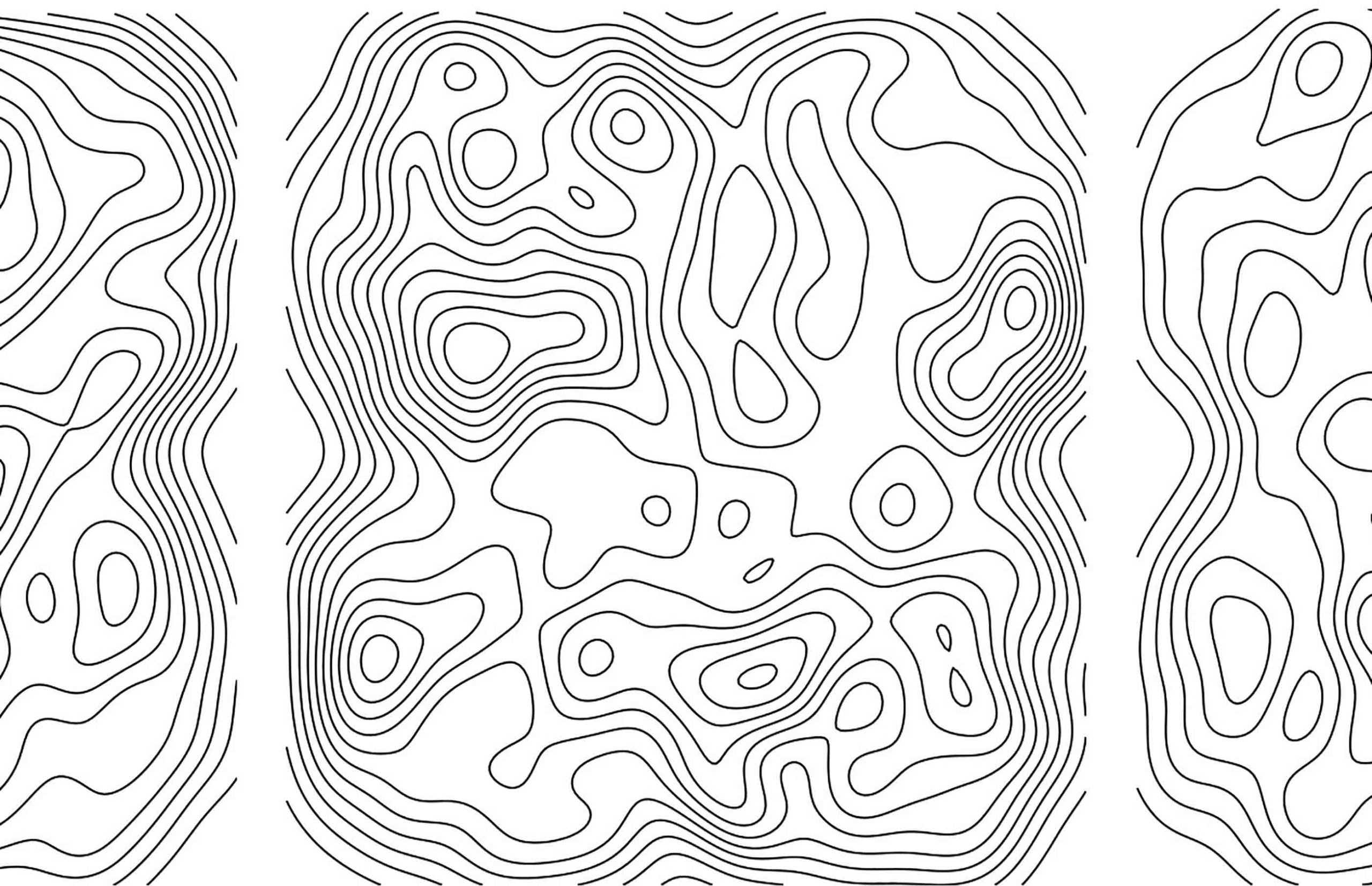
“We used the clumpiness of these galaxies to identify where the dark matter was densest,” Gawiser said. “Visualizing that with a contour map, much the way that a hiking map shows elevations, lets us observe the ‘fingerprints’ of dark matter in the distant universe.”
A Rare Glimpse of Lyman-alpha Galaxies
One result stood out. Three percent to 7% of the dense regions of dark matter capable of hosting galaxies contain Lyman-alpha emitting galaxies, they found. This means that Lyman-alpha emitting galaxies represent a small percentage of the galaxies forming where the dark matter is densest. The low percentage hints that the galaxies were observed during a short-lived phase, glowing in Lyman-alpha light for tens to hundreds of millions of years.
To uncover these results, the researchers used a technique called clustering, which measures how galaxies are grouped compared with random distributions. They calculated the angular correlation function, a method of counting pairs of galaxies.
This research, the scientists said, not only deepens understanding of galaxy evolution but also helps scientists refine models of the universe’s structure. As the ODIN survey continues, future studies will expand to more galaxies, offering a more complete view of the cosmic web, they said.
“While invisible to our telescopes, dark matter shapes the universe through interactions with visible material,” Gawiser said. “While some try to understand what it is, others, like this research team, try to understand where it is and what that implies about the evolution of the universe.”
Reference: “ODIN: Clustering Analysis of 14,000 Lyα-emitting Galaxies at z = 2.4, 3.1, and 4.5” by Danisbel Herrera, Eric Gawiser, Barbara Benda, Nicole M. Firestone, Vandana Ramakrishnan, Byeongha Moon, Kyoung-Soo Lee, Changbom Park, Francisco Valdes, Yujin Yang, María Celeste Artale, Robin Ciardullo, Caryl Gronwall, Lucia Guaita, Ho Seong Hwang, Jacob Kennedy, Ankit Kumar and Ann Zabludoff, 28 July 2025, The Astrophysical Journal Letters.
DOI: 10.3847/2041-8213/adec82
Funding: U.S. National Science Foundation, National Research Foundation of Korea
Never miss a breakthrough: Join the SciTechDaily newsletter.
Follow us on Google and Google News.
3 Comments
Coming up with “dark matter” was actually a tacit admission that the current model of the universe doesn’t really work.
Now, if only that dark thingy existed, everything would’ve been peachy, am I right. How rude of it to not have shown up already!
The models work, they just need to be refined.
“I see dark matter.”
(Could be a great byline for a blockbuster movie…maybe AI generated?)
In all seriousness, the researchers might repeat their clustering analysis of Lyα-emitting galaxies with modified gravity models and compare to the DM models.