
Close Menu
    Facebook X (Twitter) Instagram
    SciTechDaily
    • Biology
    • Chemistry
    • Earth
    • Health
    • Physics
    • Science
    • Space
    • Technology
    Facebook X (Twitter) Pinterest YouTube RSS
    SciTechDaily
    Home»Space»Scientists Find New Way of Exploring the Afterglow From the Big Bang
    Space

    Scientists Find New Way of Exploring the Afterglow From the Big Bang

    By Pamela Smyth, University of WaterlooApril 21, 2018No Comments3 Mins Read
    Facebook Twitter Pinterest Telegram LinkedIn WhatsApp Email Reddit
    Share
    Facebook Twitter LinkedIn Pinterest Telegram Email Reddit
    New Way of Exploring the Afterglow From the Big Bang
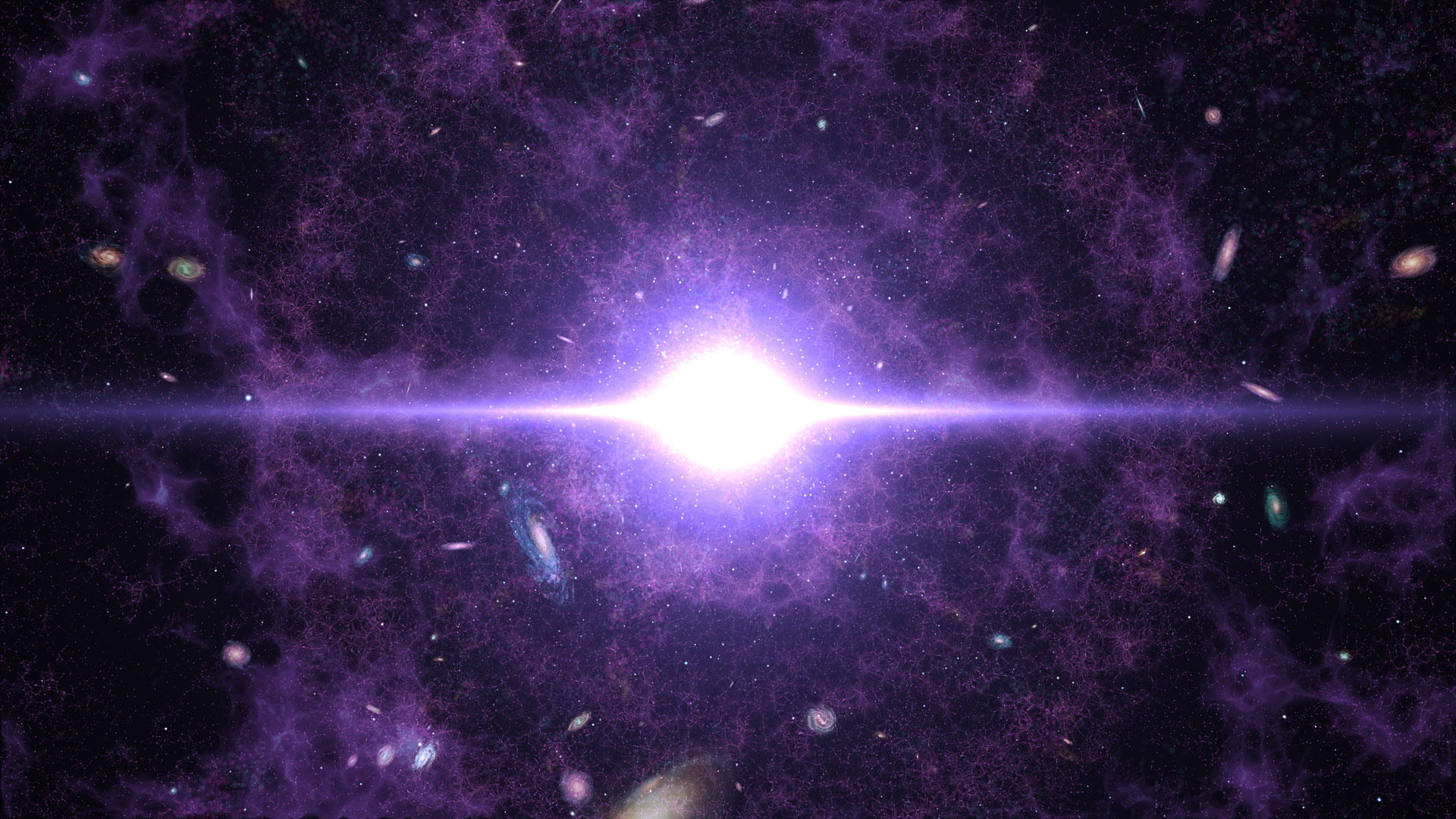
    Artist’s interpretation of the Big Bang, with representations of the early universe and its expansion. Credit: NASA’s Goddard Space Flight Center/CI Lab

    Researchers have developed a new way to improve our knowledge of the Big Bang by measuring radiation from its afterglow, called the cosmic microwave background radiation. The new results predict the maximum bandwidth of the universe, which is the maximum speed at which any change can occur in the universe.

    The cosmic microwave background (CMB) is a reverberation or afterglow left from when the universe was about 300,000 years old. It was first discovered in 1964 as a ubiquitous faint noise in radio antennas. In the past two decades, satellite-based telescopes have started to measure it with great accuracy, revolutionizing our understanding of the Big Bang.

    Achim Kempf, a professor of applied mathematics at the University of Waterloo and Canada Research Chair in the Physics of Information, led the work to develop the new calculation, jointly with Aidan Chatwin-Davies and Robert Martin, his former graduate students at Waterloo.

    “It’s like video on the Internet,” said Kempf. “If you can measure the CMB with very high resolution, this can tell you about the bandwidth of the universe, in a similar way to how the sharpness of the video image on your Skype call tells you about the bandwidth of your internet connection.”

    The study appears in a special issue of Foundations of Physics dedicated to the material Kempf presented to the Vatican Observatory in Rome last year. The international workshop entitled, Black Holes, Gravitational Waves and Spacetime Singularities, gathered 25 leading physicists from around the world to present, collaborate and inform on the latest theoretical progress and experimental data on the Big Bang. Kempf’s invitation was the result of this paper in Physical Review Letters, a leading journal in the field.

    “This kind of work is highly collaborative,” said Kempf, also an affiliate at the Perimeter Institute for Theoretical Physics. “It was great to see at the conference how experimentalists and theoreticians inspire each other’s work.”

    While at the Vatican, Kempf and other researchers in attendance also shared their work with the Pope.

    “The Pope has a great sense of humor and had a good laugh with us on the subject of dark matter,” said Kempf.

    Teams of astronomers are currently working on even more accurate measurements of the cosmic microwave background. By using the new calculations, these upcoming measurements might reveal the value of the universe’s fundamental bandwidth, thereby telling us also about the fastest thing that ever happened, the Big Bang.

    Reference: “Quantum Gravity, Information Theory and the CMB” by Achim Kempf, 5 April 2018, Foundations of Physics. doi:10.1007/s10701-018-0163-2

    Never miss a breakthrough: Join the SciTechDaily newsletter.
    Follow us on Google and Google News.

    Astronomy Astrophysics Big Bang Cosmology University of Waterloo
    Share. Facebook Twitter Pinterest LinkedIn Email Reddit

    Related Articles

    This New Quantum Theory Could Change Everything We Know About the Big Bang

    Why Does This Galaxy Have Tentacles? Deep Space Mystery Stuns Astronomers

    Is the Universe Lopsided? New Evidence Challenges Einstein’s Simplest Universe

    Milky Way Twin Found Shockingly Soon After the Big Bang

    A 13-Billion-Year-Old Signal Could Finally Reveal the First Stars

    “Cannibal Stars” and Black Holes May Have Formed in the Universe’s First Second

    Astronomers Study the Interstellar Medium a Billion Years After the Big Bang

    Astrophysicists Challenge the Cosmological Model

    Researchers Use New CMB Data to Analyze the First Hundred Thousand Years of Our Universe

    Leave A Reply Cancel Reply

    • Facebook
    • Twitter
    • Pinterest
    • YouTube

    Don't Miss a Discovery

    Subscribe for the Latest in Science & Tech!

    Trending News

    The Universe Is Expanding Too Fast and Scientists Can’t Explain Why

    “Like Liquid Metal”: Scientists Create Strange Shape-Shifting Material

    Early Warning Signals of Esophageal Cancer May Be Hiding in Plain Sight

    Common Blood Pressure Drug Shows Surprising Power Against Deadly Antibiotic-Resistant Superbug

    Scientists Uncover Dangerous Connection Between Serotonin and Heart Valve Disease

    Scientists Discover a “Protector” Protein That Could Help Reverse Hair Loss

    Bone-Strengthening Discovery Could Reverse Osteoporosis

    Scientists Uncover Hidden Trigger Behind Stem Cell Aging

    Follow SciTechDaily
    • Facebook
    • Twitter
    • YouTube
    • Pinterest
    • Newsletter
    • RSS
    SciTech News
    • Biology News
    • Chemistry News
    • Earth News
    • Health News
    • Physics News
    • Science News
    • Space News
    • Technology News
    Recent Posts
    • Scientists Create “Liquid Gears” That Spin Without Touching
    • The Simple Habit That Could Help Prevent Cancer
    • Forgotten Medicinal Plant Shows Promise in Fighting Dangerous Superbugs
    • Millions Take These IBS Drugs, But a New Study Finds Serious Risks
    • 5 Common Myths About Learning a New Language, Debunked
    Copyright © 1998 - 2026 SciTechDaily. All Rights Reserved.
    • Science News
    • About
    • Contact
    • Editorial Board
    • Privacy Policy
    • Terms of Use

    Type above and press Enter to search. Press Esc to cancel.