
Close Menu
    Facebook X (Twitter) Instagram
    SciTechDaily
    • Biology
    • Chemistry
    • Earth
    • Health
    • Physics
    • Science
    • Space
    • Technology
    Facebook X (Twitter) Pinterest YouTube RSS
    SciTechDaily
    Home»Science»Scientists Find Ways To Reconstruct Ancient Scents
    Science

    Scientists Find Ways To Reconstruct Ancient Scents

    By Max Planck Institute for the Science of Human HistoryMarch 28, 2022No Comments4 Mins Read
    Facebook Twitter Pinterest Telegram LinkedIn WhatsApp Email Reddit
    Share
    Facebook Twitter LinkedIn Pinterest Telegram Email Reddit
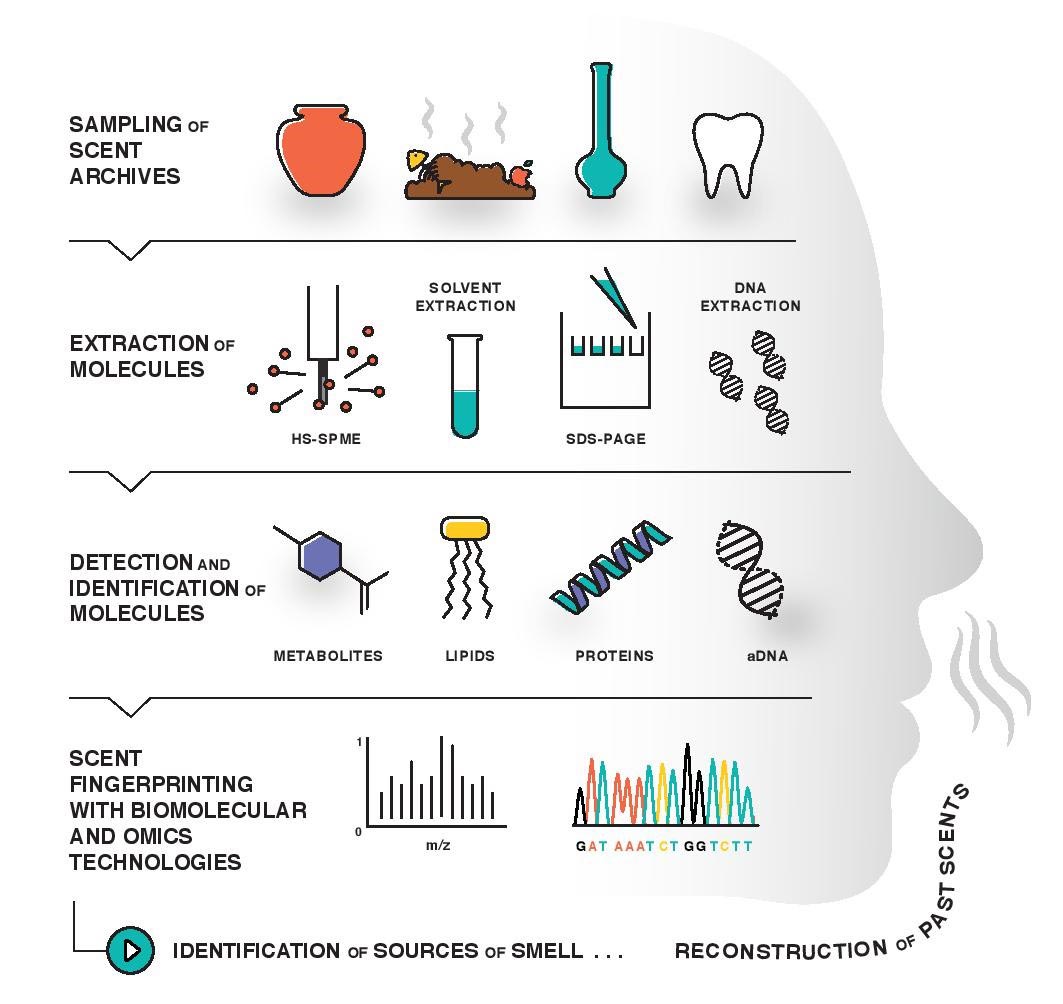
    Past Scents Can Be Recovered
    Past scents can be recovered from scent archives by extracting molecules using a variety of different methods. With successful detection and identification of the molecular composition of samples, ancient sources of smell can then be identified. Credit: Michelle O’Reilly

    The loss of smell during COVID-19 has renewed interest in the historical role of scent. Researchers are using innovative methods to reconstruct ancient odors and explore their impact on human history.

    In recent years, millions of people worldwide have suffered the loss of smell due to COVID-19. Even those who have avoided infection with the new coronavirus experience the world of scent differently now due to the very masks that provide protection from the virus. This loss of olfaction has highlighted the important role of smell in how we perceive and navigate the world, and underscored the connections between olfaction and mental and physical health.

    Scent has always been an integral component of the human experience, but up until now, the past has remained largely odorless. Most scents come from organic substances that decay quickly, leaving little for archaeologists to investigate thousands of years later. Now a team of researchers from the MPI for the Science of Human History is looking for new ways to bring the smellscapes of the past back to life and using smell to study past experience, behavior, and society.

    Scent in Human History

    “Tracking scent in the deep past is not a simple task,” says Barbara Huber, the lead author of the paper, “but the fact that history records expeditions of discovery, wars, and long-distance exchange to acquire materials with strong olfactory properties – like incense and spices – reveals how significant scent has been for humankind.”
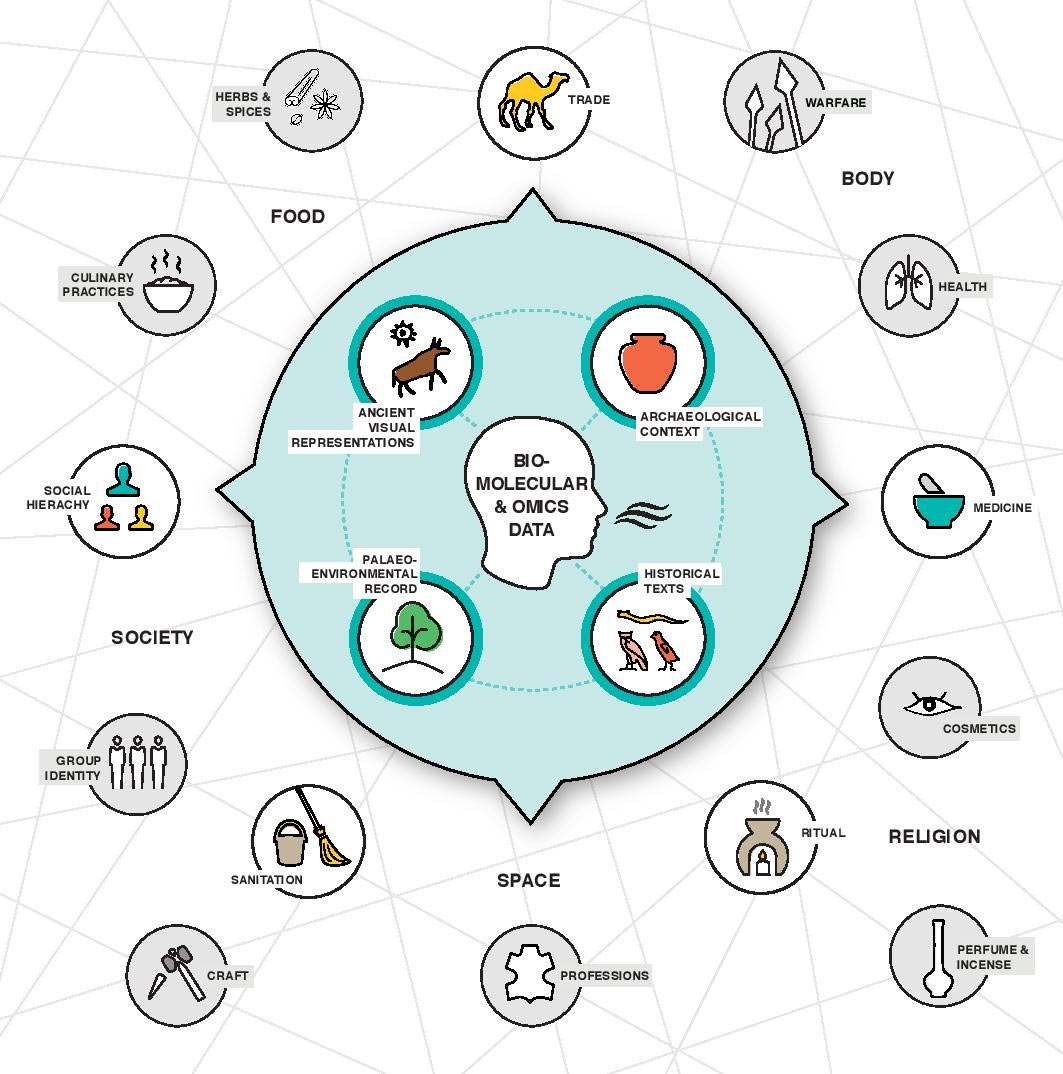
    Scent Data Can Be Contextualized
    Scent data can be contextualized within the framework of relevant historical texts and visual representations, as well as the archaeological and environmental records. Connecting these different sources of information enables the reconstruction of critical aspects of ancient lifeways and society (indicated by arrows emerging from the blue circle). The icons in the outer area of the figure represent examples of some of the themes that can be addressed through this approach (grey boxes indicate broad headings). Credit: Michelle O’Reilly

    Understanding the sensorial dimension of human history and the use of odorous and aromatic substances can contribute knowledge about many aspects of the past – including ritual, perfumery, hygiene, cuisine, trade, and commerce. But because scent is part of how we experience, understand, and navigate the world, ancient scents can also provide insight into more general aspects of the past, from social hierarchy and social practices to group identity.

    “Scent is a powerful and underappreciated aspect of human experience,” notes Professor Nicole Boivin, senior author of the study and Director of the Department of Archaeology at the MPI Science of Human History “Smells reach our brain fairly directly and motivate us in critical ways – whether to avoid danger, identify something that is good for us, or remember something from our past, for example.”

    Unlocking Ancient Smellscapes with New Techniques

    “Using only traces of scented substances preserved in archaeological artifacts and features,” adds Huber, “novel methods are revealing the powerful odors that were a cardinal feature of ancient lived realities, and that shaped human action, thoughts, emotions, and memories.”

    By leveraging potent new biomolecular and omics approaches, such as proteomic and metabolomics techniques, and linking new data with information from ancient texts, visual depictions, and the broader archaeological and environmental records, researchers stand to open up new aspects of the ancient world, our changing societies and cultures, and our evolution as a species. The authors of the new paper hope that more research into the rich ‘smellscapes’ of the past will provide insight into the sensory worlds of long ago, and the diverse ways that people have captured scents from nature in order to shape human experience. 

    Reference: “How to use modern science to reconstruct ancient scent” by Barbara Huber, Thomas Larsen, Robert N. Spengler and Nicole Boivin, 28 March 2022, Nature Human Behaviour.
    DOI: 10.1038/s41562-022-01325-7

    Never miss a breakthrough: Join the SciTechDaily newsletter.
    Follow us on Google and Google News.

    Anthropology Archaeology Max Planck Institute
    Share. Facebook Twitter Pinterest LinkedIn Email Reddit

    Related Articles

    Archaeologists Discover Neanderthals and Homo sapiens Used Identical Nubian Technology

    The “Last Eden?” First Human Culture Lasted 20,000 Years Longer Than Thought

    New Biochemical Research Shows Past Tropical Forest Changes Drove Megafauna and Hominin Extinctions

    Vast Stone Monuments Discovered in Saudi Arabia Were Constructed in 7,000 Years Ago

    DNA of Bones Found in Cave Reveals Major Cultural Transition in Europe Took Place Earlier Than Thought

    10,000 Years of Cultural Interaction Across Africa Exposed by Ostrich Eggshell Beads

    Detailed Insights on the Disappearance of the World’s Largest Mammals From Microscopic Evidence

    Scientists Reveal the Complex Story Behind the Beaker Phenomenon

    Researchers Discover Oldest Images to Date of Dogs on Leashes

    Leave A Reply Cancel Reply

    • Facebook
    • Twitter
    • Pinterest
    • YouTube

    Don't Miss a Discovery

    Subscribe for the Latest in Science & Tech!

    Trending News

    New Research Shows Vitamin B12 May Hold the Key to Healthy Aging

    These Simple Daily Habits Can Quickly Improve Blood Pressure and Heart Risk Factors

    A Common Nutrient May Play a Surprising Role in Anxiety

    Doing This After 9 p.m. Could Double Your Risk of Gut Issues

    Scientists Discover How Coffee Impacts Memory, Mood, and Gut Health

    Why Did the Neanderthals Disappear? Scientists Reveal Humans Had a Hidden Advantage

    Physicists Propose Strange Experiment Where Time Goes Quantum

    Magnesium Magic: New Drug Melts Fat Even on a High-Fat, High-Sugar Diet

    Follow SciTechDaily
    • Facebook
    • Twitter
    • YouTube
    • Pinterest
    • Newsletter
    • RSS
    SciTech News
    • Biology News
    • Chemistry News
    • Earth News
    • Health News
    • Physics News
    • Science News
    • Space News
    • Technology News
    Recent Posts
    • This New Memory Technology Could Make Devices Last Months on One Charge
    • Scientists Turn Cancer’s Own Bacteria Against It in Breakthrough Therapy
    • Cannabis Can Make You Remember Things That Never Happened
    • Doctors Are Surprised by What This Vaccine Is Doing to the Heart
    • Quantum Breakthrough Turns Simple Forces Into Powerful New Interactions
    Copyright © 1998 - 2026 SciTechDaily. All Rights Reserved.
    • Science News
    • About
    • Contact
    • Editorial Board
    • Privacy Policy
    • Terms of Use

    Type above and press Enter to search. Press Esc to cancel.