
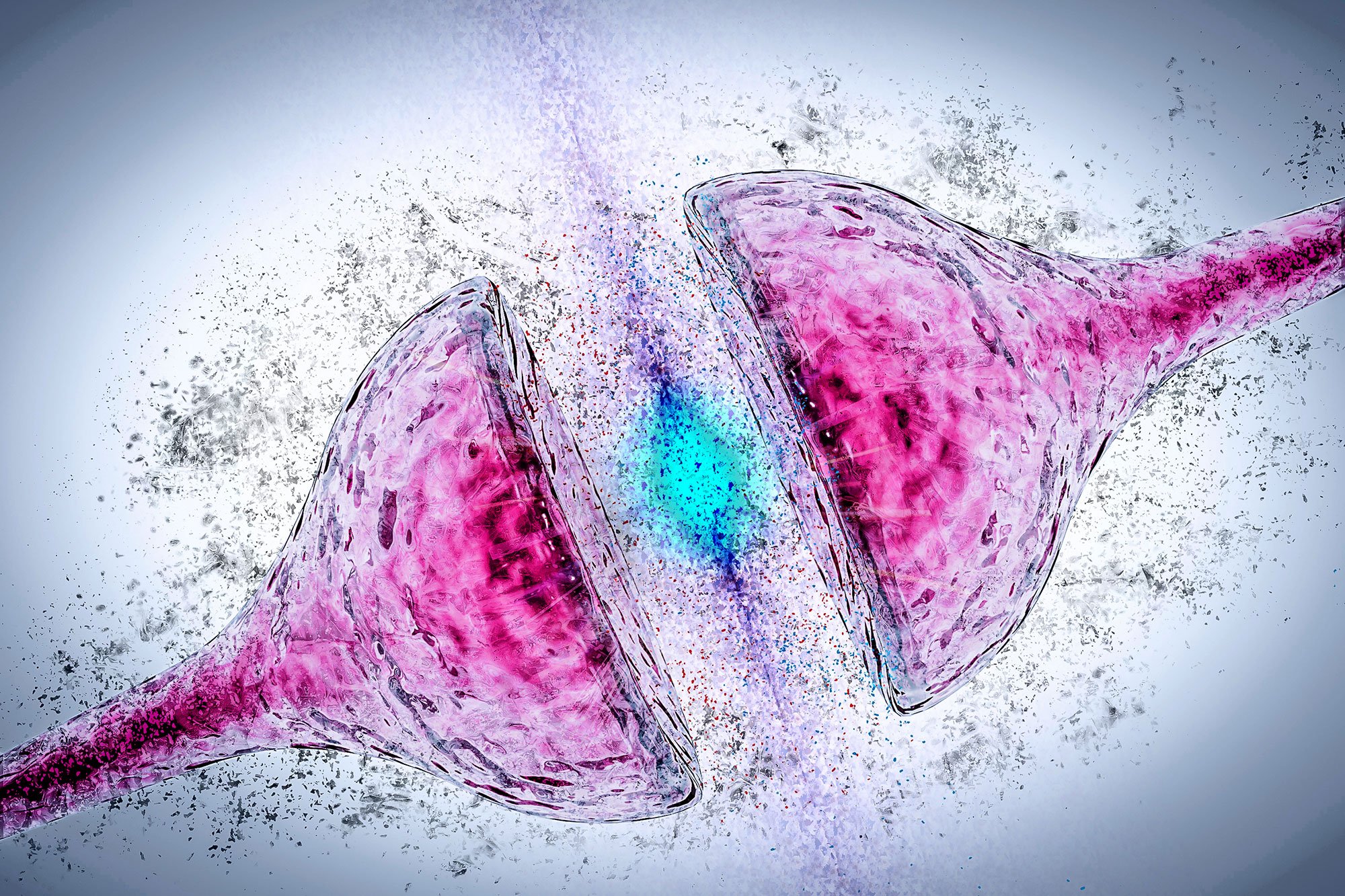
Researchers have designed a peptide that stabilizes a key brain protein linked to Parkinson’s.
Scientists from the University of Bath, working with colleagues at the Universities of Oxford and Bristol, have created a new molecule that stops a key protein from clumping together in the brain. This protein, called alpha-synuclein, is linked to Parkinson’s disease and certain forms of dementia. The research team has already shown that the molecule is effective in an animal model of Parkinson’s, and they believe it could eventually lead to a treatment that slows how the disease progresses.
Alpha-synuclein is a protein found mainly in brain cells (neurons), where it helps control the release of chemical messengers such as dopamine, which allow neurons to communicate with each other.
In people with Parkinson’s disease, alpha-synuclein begins to stick together, forming harmful clusters that damage and kill nerve cells. This process triggers the movement-related symptoms of the disease, including tremors, stiffness, and difficulty controlling motion. Although current medications can ease these symptoms, there is still no cure for Parkinson’s.
Stabilizing the Protein’s Natural State
Normally, alpha-synuclein’s natural or “native state” is like a flexible strand, but when active it shapes itself into a helix, which is critical for its function in binding and transporting parcels of dopamine.
The team engineered a peptide fragment that locks alpha-synuclein into its healthy shape, blocking its conversion into the toxic clumps that cause nerve cell death.
Laboratory tests showed the peptide is stable, penetrates brain-like cells, and restores movement while reducing protein deposits in a worm model of Parkinson’s.
This breakthrough, published in the journal JACS Au, demonstrates the potential of rational peptide design to transform large, unstable proteins into compact drug-like molecules.
The findings mark a significant step towards developing new peptide-based treatments for currently untreatable neurodegenerative conditions.
Professor Jody Mason, from the Department of Life Sciences at the University of Bath, said: “Our work shows that it is possible to rationally design small peptides that not only prevent harmful protein aggregation but also function inside living systems.
“This opens an exciting path towards new therapies for Parkinson’s and related diseases, where treatment options remain extremely limited.”
Expert Reactions and Future Potential
Dr Julia Dudley, Head of Research at Alzheimer’s Research UK, which funded the research, said:
“Dementia isn’t an inevitable part of aging; it’s caused by diseases like Alzheimer’s. To make progress towards a cure for all forms of dementia, we need research focused on developing a broad range of treatments that can slow, stop, and ultimately reverse these diseases.
“Although this is early research in an animal model, it’s exciting to see that this new molecule can prevent the build-up of misfolded alpha-synuclein.
“By stabilizing alpha-synuclein in its healthy form, this could open the door to a new class of treatments that could slow progression in diseases like Parkinson’s and dementia with Lewy bodies. We look forward to seeing this research taken to the next stage, potentially exploring how it would work in people.
“We’re delighted to see such promising advances from Alzheimer’s Research UK-funded work opening up new avenues for treatments of the future, and the potential to change the lives of those affected by neurodegenerative diseases.”
Further research is needed, but the team hopes that continued progress will enable these and similar molecules to advance towards clinical testing in the coming years.
Reference: “Stabilizing a Native Fold of Alpha-Synuclein with Short Helix-Constrained Peptides” by Richard M. Meade, Scott G. Allen, Amy J. Lopez, Christopher Williams, Iona Thomas-Wright, Rachel Heon-Roberts, Mara Carey-Wood, T. M. Simon Tang, Julia E. Sero, Vicky L. Hunt, Richard Wade-Martins, Matthew P. Crump and Jody M. Mason, 4 September 2025, JACS Au.
DOI: 10.1021/jacsau.5c00694
Funding: BRACE, Alzheimer’s Research UK, Biotechnology and Biological Sciences Research Council, Engineering and Physical Sciences Research Council
Never miss a breakthrough: Join the SciTechDaily newsletter.
Follow us on Google and Google News.
2 Comments
Please send all viable Parkinson’s research and potential breakthrough
Send me more info