
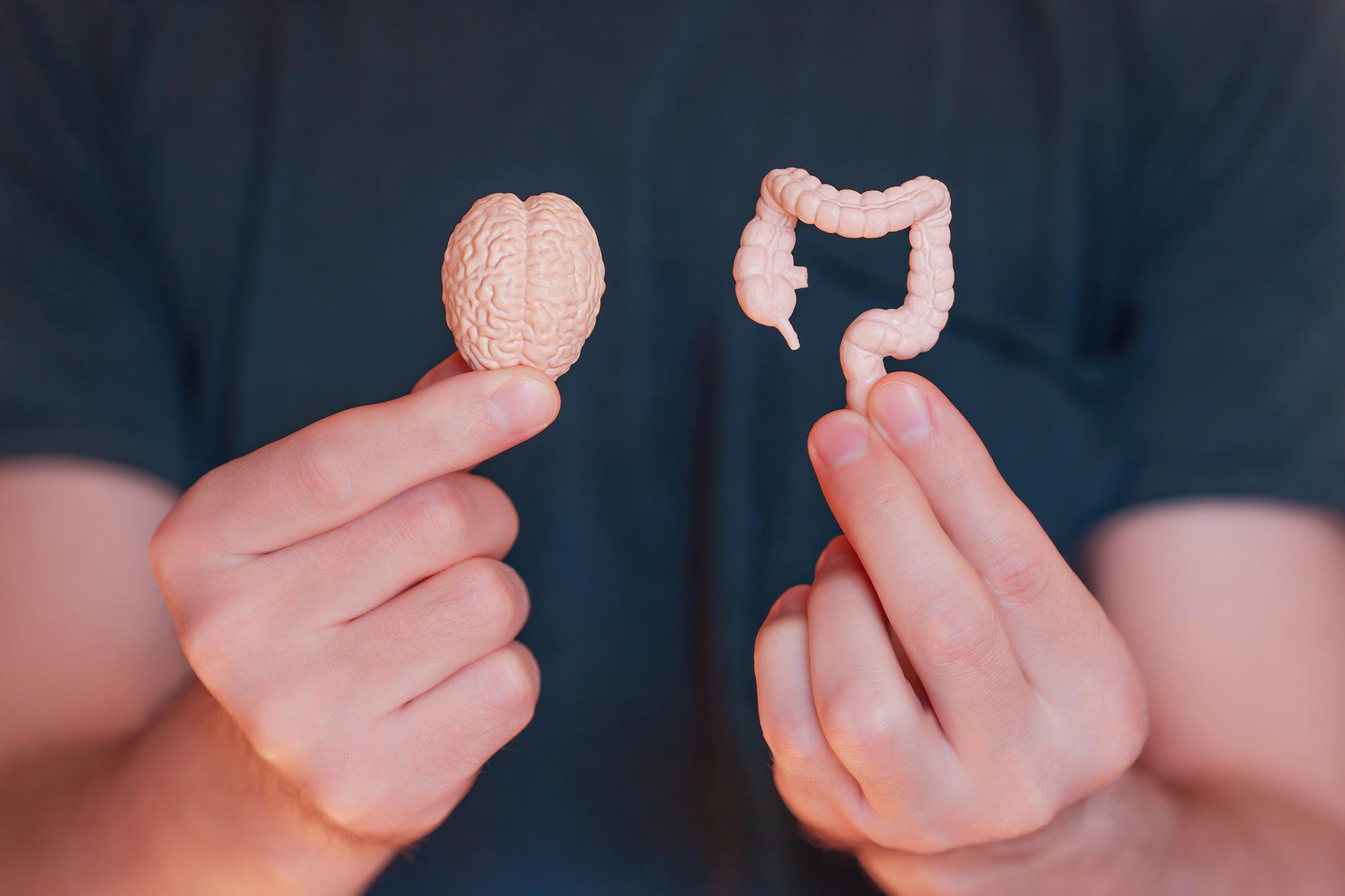
A groundbreaking discovery from Duke University School of Medicine reveals a direct connection between the microbiome and the brain, shedding new light on the regulation of behavior and appetite.
In a major scientific development, researchers have identified a new way the brain and gut interact, unveiling what they describe as a “neurobiotic sense.” This previously unknown system allows the brain to receive immediate signals from the microbes that live in the gut.
The study, published in Nature and conducted by neuroscientists Diego Bohórquez, PhD, and M. Maya Kaelberer, PhD, at Duke University School of Medicine, focuses on specialized cells called neuropods. These tiny sensory cells, found in the lining of the colon, are able to recognize a common protein produced by gut bacteria. Once detected, the neuropods quickly relay signals to the brain, helping to reduce food intake.
According to the researchers, this discovery may only scratch the surface. They suggest that the neurobiotic sense could represent a broader mechanism through which the gut monitors microbial activity. This system might affect not only eating behavior but also emotional states—and potentially, how the brain influences the microbial environment in the gut.
“We were curious whether the body could sense microbial patterns in real time and not just as an immune or inflammatory response, but as a neural response that guides behavior in real time,” said Bohórquez, a professor of medicine and neurobiology at Duke University School of Medicine and senior author of the study.
The Role of Flagellin and Neuropods
The key player is flagellin, an ancient protein found in bacterial flagella, a tail-like structure that bacteria use to swim. When we eat, some gut bacteria release flagellin. Neuropods detect it, with help from a receptor called TLR5, and fire off a message through the vagus nerve – a major communication line of communication between the gut and the brain.
The team, supported by the National Institutes of Health, proposed a bold idea: that bacterial flagellin in the colon could trigger neuropods to send an appetite-suppressing signal to the brain — a direct microbial influence on behavior.
Experimenting With Microbial Messaging
The researchers tested this by fasting mice overnight, then giving them a small dose of flagellin directly to the colon. Those mice ate less.
When researchers tried the same experiment in mice missing the TLR5 receptor, nothing changed. The mice kept eating and gained weight, a clue that the pathway helps regulate appetite. The findings suggest that flagellin sends a “we’ve had enough” signal through TLR5, allowing the gut to tell the brain it’s time to stop eating. Without that receptor, the message doesn’t get through.
The discovery was guided by lead study authors Winston Liu, MD, PhD, Emily Alway, both graduate students of the Medical Scientist Training Program, and postdoctoral fellow Naama Reicher, Ph.D. Their experiments reveal that disrupting the pathway altered eating habits in mice pointed to a deeper link between gut microbes and behavior.
“Looking ahead, I think this work will be especially helpful for the broader scientific community to explain how our behavior is influenced by microbes,” said Bohórquez. “One clear next step is to investigate how specific diets change the microbial landscape in the gut. That could be a key piece of the puzzle in conditions like obesity or psychiatric disorders.”
Reference: “A gut sense for a microbial pattern regulates feeding” by Winston W. Liu, Naama Reicher, Emily Alway, Laura E. Rupprecht, Peter Weng, Chloe Schaefgen, Marguerita E. Klein, Jorge A. Villalobos, Carlos Puerto-Hernandez, Yolanda Graciela Kiesling Altún, Amanda Carbajal, José Alfredo Aguayo-Guerrero, Alam Coss, Atharva Sahasrabudhe, Polina Anikeeva, Alan de Araujo, Avnika Bali, Guillaume de Lartigue, Elvi Gil-Lievana, Ranier Gutierrez, Edward A. Miao, John F. Rawls, M. Maya Kaelberer and Diego V. Bohórquez, 23 July 2025, Nature.
DOI: 10.1038/s41586-025-09301-7
Never miss a breakthrough: Join the SciTechDaily newsletter.
Follow us on Google and Google News.