

Close Menu
    Facebook X (Twitter) Instagram
    SciTechDaily
    • Biology
    • Chemistry
    • Earth
    • Health
    • Physics
    • Science
    • Space
    • Technology
    Facebook X (Twitter) Pinterest YouTube RSS
    SciTechDaily
    Home»Technology»Scientists Have Reimagined the Future of Solar Energy
    Technology

    Scientists Have Reimagined the Future of Solar Energy

    By University of CambridgeMarch 30, 20242 Comments3 Mins Read
    Facebook Twitter Pinterest Telegram LinkedIn WhatsApp Email Reddit
    Share
    Facebook Twitter LinkedIn Pinterest Telegram Email Reddit
    Next Generation Solar Cell Concept
    New research highlights the challenges of significantly boosting solar cell efficiency. Instead, they propose innovative approaches like making solar panels more adaptable and optimizing their arrangement for enhanced solar energy capture, offering promising avenues for global solar energy improvement.

    Scientists are always on the lookout for ways to make our world a better place, and one area they’re focusing on is solar energy. One idea in this area is to make solar cells more efficient by concentrating more solar light onto them.

    While investigating this recently, a group of scientists at the Cavendish Laboratory and AMOLF (Amsterdam NL) have found that improving solar cells’ efficiency in this way is harder than we might think but have discovered other avenues by which it might be possible to improve solar energy capture anywhere on the planet.

    The researchers were interested in finding out if solar cells, devices that turn sunlight into electricity, could be tweaked to perform better in different parts of the world, where the concentration of solar light may be higher. To examine this, they used machine learning models and neural networks (AI) to understand how the sun’s radiation would behave in different spots on Earth.
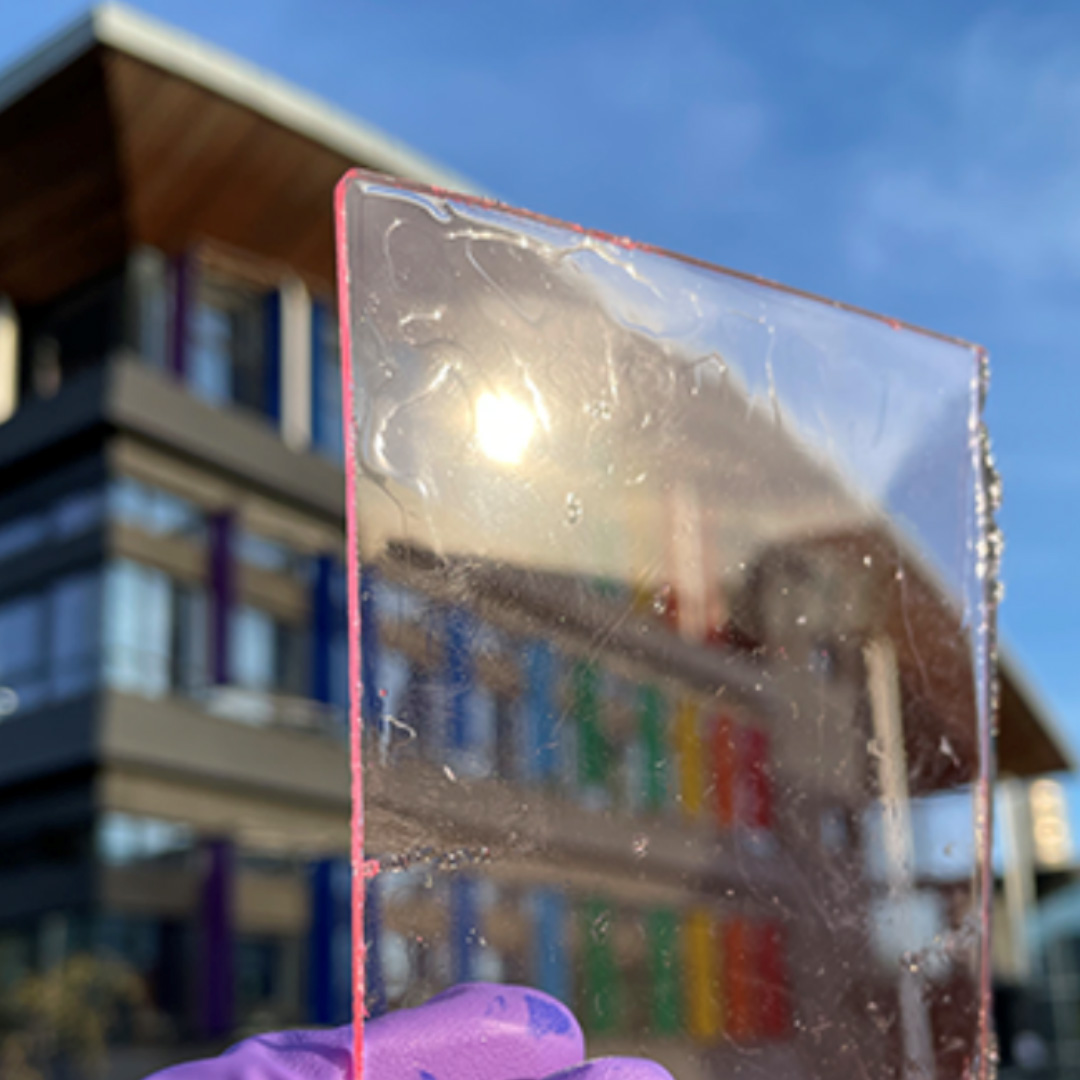
    Photo of a Light Concentrating Device
    Photo of a light concentrating device outside the Maxwell Centre at Cambridge. Credit: Dr. Tomi Baikie, Cavendish Laboratory, University of Cambridge

    They integrated this data into an electronic model to calculate the solar cells’ output. By simulating various scenarios, they could predict how much energy the solar cells could produce at various locations worldwide.

    Innovative Solutions Beyond Efficiency

    Their findings published in Joule, however, revealed a surprising twist. “Making solar cells super-efficient turns out to be very difficult. So, instead of just trying to make solar cells better, we figured some other ways to capture more solar energy,” said Dr. Tomi Baikie, first author of the study and Research Fellow at the Cavendish Laboratory and at Lucy Cavendish College. ”This could be really helpful for communities, giving them different options to think about, instead of just focusing on making the cells more efficient with light.”

    Imagine solar panels that can flex and fold like origami or become partially transparent to blend seamlessly into surroundings and make them easy to install. By enhancing the durability and versatility of these panels, they could be integrated into a wide range of settings, promising longevity and efficiency.
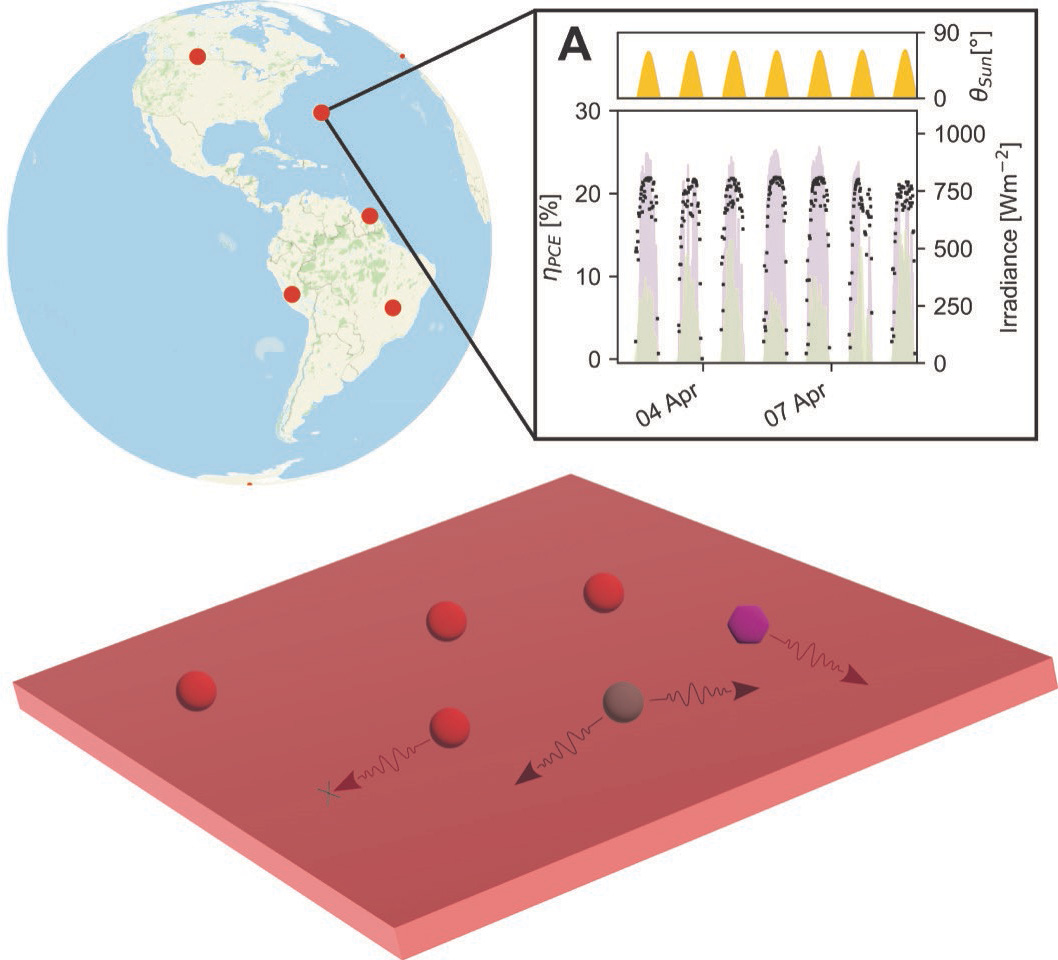
    Simulation Results of Light Concentrating Devices Around the World
    Simulation results of light concentrating devices around the world. Credit: Dr. Tomi Baikie, Cavendish Laboratory, University of Cambridge

    “We suggest a different plan that can make solar panels work well in lots of different places around the world,” said Baikie. “The idea is to make them flexible, a bit see-through/semi-transparent, and able to fold up. This way, the panels can fit into all kinds of places.”

    Furthermore, the researchers advocate the use of patterning the solar capture devices with the aim to optimize their arrangement for maximum sunlight absorption. This approach holds the potential to improve the design of solar arrays, increasing their effectiveness in harnessing solar energy.

    “This realization means that we can now focus on different things instead of just making solar cells work better. In the future, we’re going to examine solar harvesting pathways that includes tessellation. It’s like a puzzle pattern that could help us capture even more sun power,” concluded Baikie.

    Reference: “Revealing the potential of luminescent solar concentrators in real-world environments” by Tomi K. Baikie, Benjamin Daiber, Emil Kensington, James Xiao, Neil C. Greenham, Bruno Ehrler and Akshay Rao, 9 February 2024, Joule.
    DOI: 10.1016/j.joule.2024.01.018

    Never miss a breakthrough: Join the SciTechDaily newsletter.
    Follow us on Google and Google News.

    Energy Solar Energy University of Cambridge
    Share. Facebook Twitter Pinterest LinkedIn Email Reddit

    Related Articles

    Solar Powered “Artificial Leaf” Produces Clean, Car-Ready Liquid Fuels From Sunlight

    3D-Printed “Nano-Skyscrapers” Help Bacteria Convert Sunlight Into Electricity

    Templating Approach Stabilizes “Ideal” Perovskite Material for Cheap, Efficient Solar Cells

    Mystery of High Performing Novel Solar Cells Revealed in Stunning Clarity

    Illuminating Dark, Underground Spaces: Scientists Design “Smart” Device to Harvest Daylight

    Polarized Photovoltaic Properties Emerge in 2D Materials – May Be Superior to Current Solar Cells

    Perovskite Nanocrystal Breakthrough Could Lead to a Better, Cheaper Solar Cells

    New Material Can Store Solar Energy During the Day and Release it Later as Heat

    Surprise Discovery Could Revolutionize Solar Energy

    2 Comments

    1. Habib Nicolas elmedawar on April 1, 2024 1:34 am

      No comment

      Reply
    2. Jim on April 1, 2024 12:20 pm

      Excellent

      Reply
    Leave A Reply Cancel Reply

    • Facebook
    • Twitter
    • Pinterest
    • YouTube

    Don't Miss a Discovery

    Subscribe for the Latest in Science & Tech!

    Trending News

    Breakthrough Bowel Cancer Trial Leaves Patients Cancer-Free for Nearly 3 Years

    Natural Compound Shows Powerful Potential Against Rheumatoid Arthritis

    100,000-Year-Old Neanderthal Fossils in Poland Reveal Unexpected Genetic Connections

    Simple “Gut Reset” May Prevent Weight Gain After Ozempic or Wegovy

    2.8 Days to Disaster: Scientists Warn Low Earth Orbit Could Suddenly Collapse

    Common Food Compound Shows Surprising Power Against Superbugs

    5 Simple Ways To Remember More and Forget Less

    The Atomic Gap That Could Cost the Semiconductor Industry Billions

    Follow SciTechDaily
    • Facebook
    • Twitter
    • YouTube
    • Pinterest
    • Newsletter
    • RSS
    SciTech News
    • Biology News
    • Chemistry News
    • Earth News
    • Health News
    • Physics News
    • Science News
    • Space News
    • Technology News
    Recent Posts
    • Scientists Discover Stem Cells That Could Regrow Teeth and Bone
    • Scientists Discover Natural Molecule That Stops Alzheimer’s Protein Clumps From Forming
    • Early Cannabis Use May Stall Key Brain Skills in Teens
    • Popular Vitamin D Supplement Has “Previously Unknown” Negative Effect, Study Finds
    • Powerful Antioxidant Found To Play a Key Role in Proper Protein Folding
    Copyright © 1998 - 2026 SciTechDaily. All Rights Reserved.
    • Science News
    • About
    • Contact
    • Editorial Board
    • Privacy Policy
    • Terms of Use

    Type above and press Enter to search. Press Esc to cancel.