

Scientists have found a way to turn wasted heat into clean electricity more efficiently than ever before.
Their new TPV device breaks the traditional limits of energy conversion by using an inexpensive glass spacer instead of a vacuum. This game-changing design doubles power density without requiring extreme temperatures, making it a viable solution for industries like manufacturing and renewable energy storage.
Turning Heat into Power: A Revolutionary Discovery
A team of engineers and materials scientists at CU Boulder’s Paul M. Rady Department of Mechanical Engineering has developed a groundbreaking technology that converts thermal radiation into electricity — pushing the limits of fundamental thermal physics.
The discovery comes from the Cui Research Group, led by Assistant Professor Longji Cui, in collaboration with researchers from the National Renewable Energy Laboratory (NREL) and the University of Wisconsin-Madison. Their findings were recently published in Energy & Environmental Sciences.
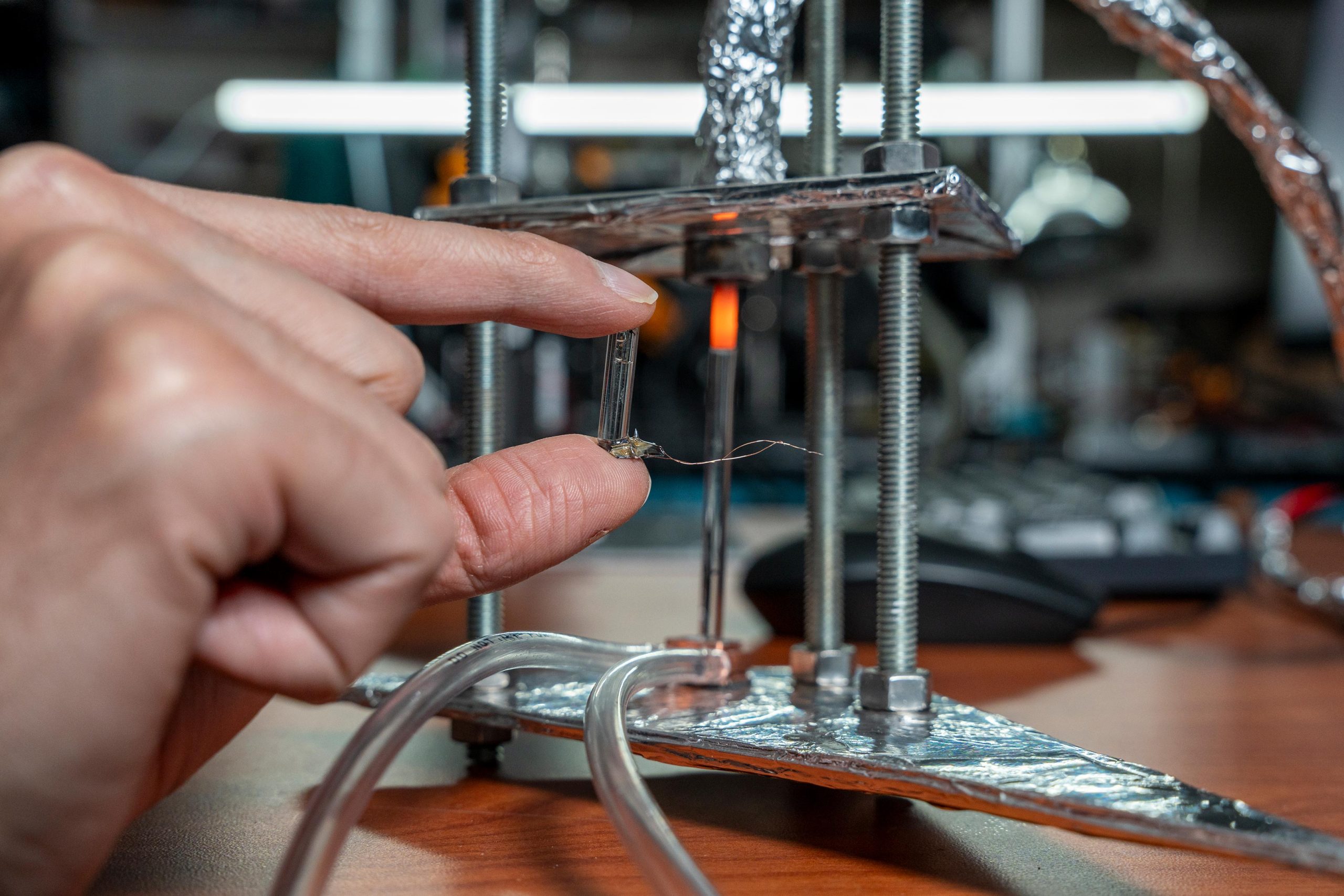
This innovation has the potential to revolutionize manufacturing by increasing power generation without relying on high-temperature heat sources or costly materials. The technology can store clean energy, reduce carbon emissions, and efficiently capture heat from geothermal, nuclear, and solar power plants worldwide.
Simply put, Cui and his team have cracked an age-old challenge: how to do more with less.
“Heat is a renewable energy source that is often overlooked,” Cui said. “Two-thirds of all energy that we use is turned into heat. Think of energy storage and electricity generation that doesn’t involve fossil fuels. We can recover some of this wasted thermal energy and use it to make clean electricity.”
Breaking the Physical Limit in Vacuum
High-temperature industrial processes and renewable energy harvesting techniques often utilize a thermal energy conversion method called thermophotovoltaics (TPV). This method harnesses thermal energy from high temperature heat sources to generate electricity.
But existing TPV devices have one constraint: Planck’s thermal radiation law.
“Planck’s law, one of most fundamental laws in thermal physics, puts a limit on the available thermal energy that can be harnessed from a high temperature source at any given temperature,” said Cui, also a faculty member affiliated with the Materials Science and Engineering Program and the Center for Experiments on Quantum Materials. “Researchers have tried to work closer or overcome this limit using many ideas, but current methods are overly complicated to manufacture the device, costly and unscalable.”

That’s where Cui’s group comes in. By designing a unique and compact TPV device that can fit in a human hand, the team was able to overcome the vacuum limit defined by Planck’s law and double the yielded power density previously achieved by conventional TPV designs.
“When we were exploring this technology, we had theoretically predicted a high level of enhancement. But we weren’t sure what it would look like in a real world experiment,” said Mohammad Habibi, a PhD student in Cui’s lab and leader of both the theory and experiment of this research. “After performing the experiment and processing the data, we saw the enhancement ourselves and knew it was something great.”
The Zero-Vacuum Gap Solution Using Glass
The research emerged, in part, from the group’s desire to challenge the limits. But in order to succeed, they had to modify existing TPV designs and take a different approach.
“There are two major performance metrics when it comes to TPV devices: efficiency and power density,” said Cui. “Most people have focused on efficiency. However, our goal was to increase power.”
To do so, the team implemented what’s called a “zero-vacuum gap” solution into the design of their TPV device. Unlike other TPV models that feature a vacuum or gas-filled gap between the thermal source and the solar cell, their design features an insulated, high index and infrared-transparent spacer made out of just glass.
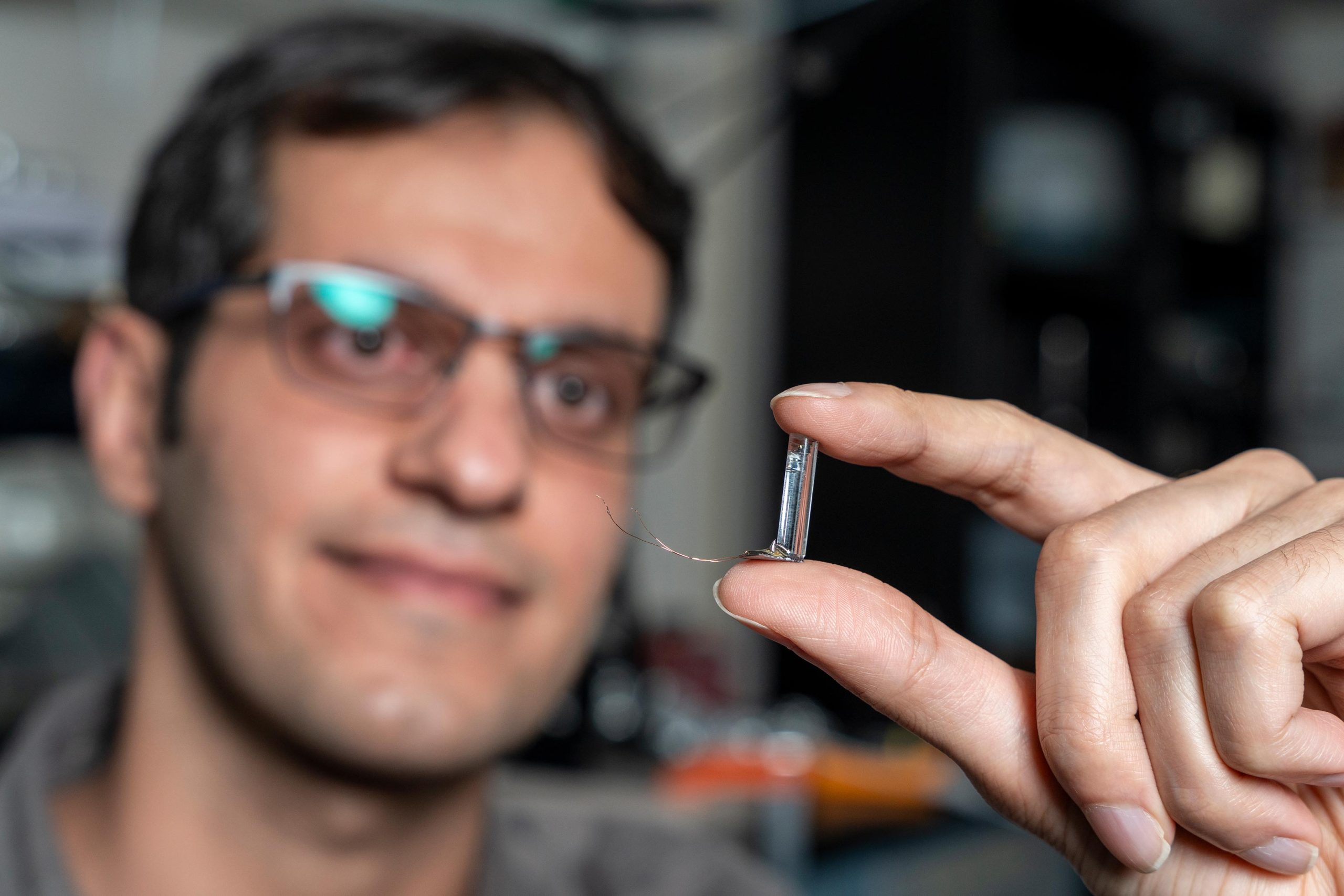
This creates a high power density channel that allows thermal heat waves to travel through the device without losing strength, drastically improving power generation. The material is also very cheap, one of the device’s central calling cards.
“Previously, when people wanted to enhance the power density, they would have to increase temperature. Let’s say an increase from 1,500 C to 2,000 C. Sometimes even higher, which eventually becomes not tolerable and unsafe for the whole energy system,” Cui explained. “Now we can work in lower temperatures that are compatible with most industrial processes, all while still generating similar electrical power than before. Our device operates at 1,000 C and yields power equivalent to 1,400 C in existing gap-integrated TPV devices.”
The group also says their glass design is just the tip of the iceberg. Other materials could help the device produce even more power.
“This is the first demonstration of this new TPV concept,” explained Habibi. “But if we used another cheap material with the same properties, like amorphous silicon, there is a potential for an even higher, nearly 20 times more increase in power density. That’s what we are looking to explore next.”
The Broader Commercial Impact
Cui says their novel TPV devices would make their largest impact by enabling portable power generators and decarbonizing heavy emissions industries. Once optimized, they have the power to transform high-temperature industrial processes, such as the production of glass, steel, and cement with cheaper and cleaner electricity.
“Our device uses commercial technology that already exists. It can scale up naturally to be implemented in these industries,” said Cui. “We can recover wasted heat and can provide the energy storage they need with this device at a low working temperature.
“We have a patent pending based on this technology and it is very exciting to push this renewable innovation forward within the field of power generation and heat recovery.”
Reference: “Enhanced power density in zero-vacuum-gap thermophotovoltaic devices” by Mohammad Habibi, Sai C. Yelishala, Yunxuan Zhu, Eric J. Tervo, Myles A. Steiner and Longji Cui, 27 December 2024, Energy & Environmental Science.
DOI: 10.1039/D4EE04604H
Never miss a breakthrough: Join the SciTechDaily newsletter.
Follow us on Google and Google News.