
Close Menu
    Facebook X (Twitter) Instagram
    SciTechDaily
    • Biology
    • Chemistry
    • Earth
    • Health
    • Physics
    • Science
    • Space
    • Technology
    Facebook X (Twitter) Pinterest YouTube RSS
    SciTechDaily
    Home»Space»Scientists Just Found the Oldest Barred Spiral Galaxy – And It’s a Monster
    Space

    Scientists Just Found the Oldest Barred Spiral Galaxy – And It’s a Monster

    By National Institutes of Natural SciencesJune 7, 20254 Comments4 Mins Read
    Facebook Twitter Pinterest Telegram LinkedIn WhatsApp Email Reddit
    Share
    Facebook Twitter LinkedIn Pinterest Telegram Email Reddit
    Barred Spiral Galaxy Concept
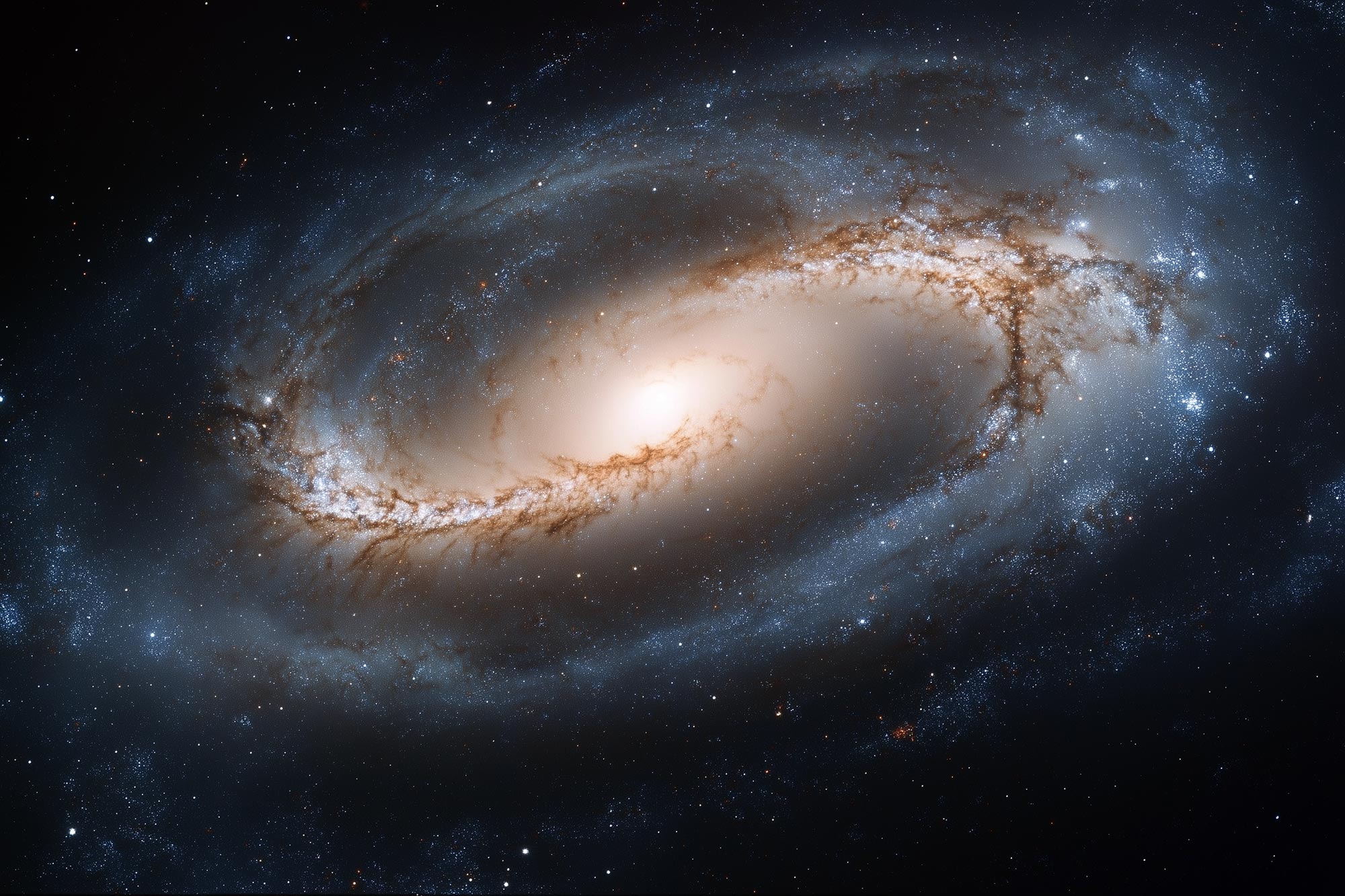
    J0107a, the earliest known barred spiral galaxy, reveals wild star formation and high-speed gas flows—clues to galaxy growth from the dawn of time. (Artist’s concept). Credit: SciTechDaily.com

    A massive barred spiral galaxy from 11.1 billion years ago has been discovered, showing star-forming activity and gas dynamics never seen before. It may reshape our understanding of how galaxies like the Milky Way evolved.

    Astronomers have spotted a massive, highly active spiral galaxy from the early Universe that sheds new light on how galaxies like our own Milky Way take shape. This ancient galaxy features a bright central bar—a structure seen in many modern spiral galaxies—and its discovery is helping scientists better understand how these cosmic giants grow and evolve.

    Some spiral galaxies, including the Milky Way, have a straight bar running through their centers. This bar acts like a funnel, directing gas inward where it can fuel the birth of new stars. But one big mystery remains: why do only about half of spiral galaxies have bars? And what role do these structures play in shaping a galaxy’s future?

    Evolution of Monster Barred Spiral Galaxy
    Left: Near-infrared image captured by the James Webb Space Telescope. The two galaxies at the bottom are the foreground objects. Right: Molecular gas distribution observed by ALMA. Gas accumulates at the leading side of the rotating bar structure and falls toward the center. Credit: NASA, ALMA (ESO/NAOJ/NRAO), Huang et al.

    A Monster Galaxy from the Early Universe

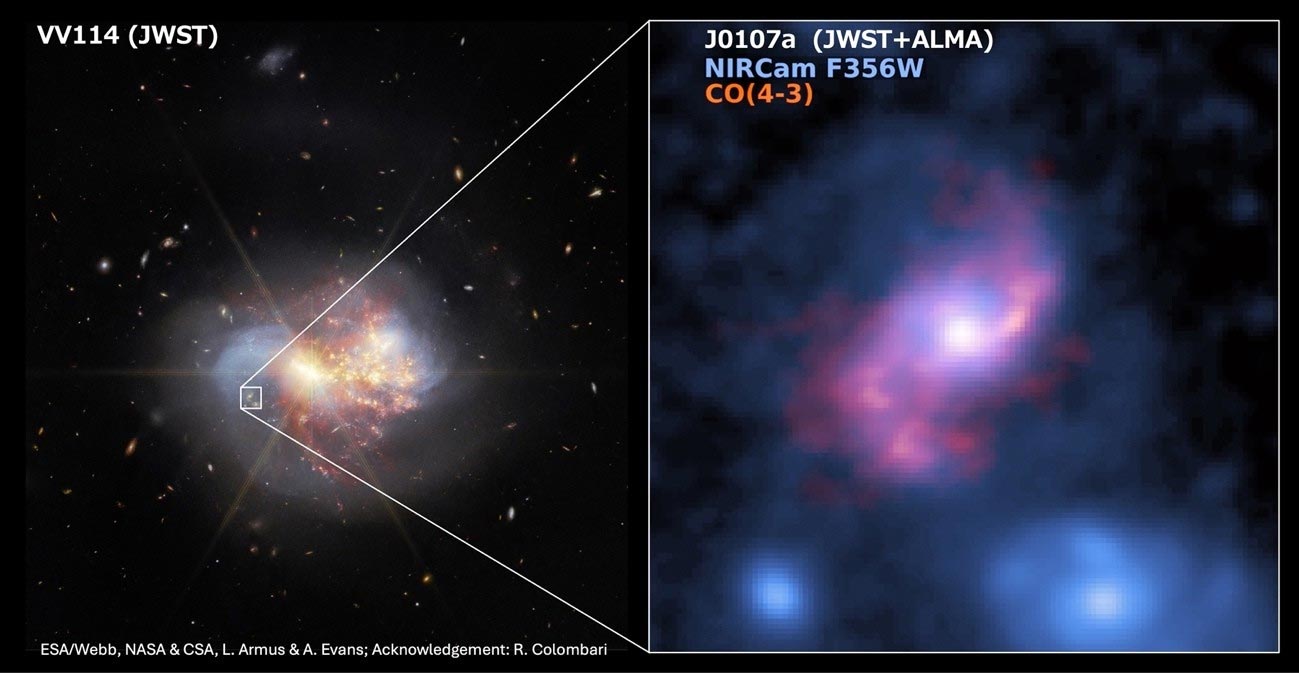
    To explore these questions, a team of researchers led by Shuo Huang at the National Astronomical Observatory of Japan and Nagoya University turned to the powerful ALMA radio telescope. They focused on a galaxy called J0107a, located in the constellation Cetus, which existed an astonishing 11.1 billion years ago. J0107a is what scientists call a “monster galaxy” — a galaxy undergoing a rapid growth spurt by forming stars at an extraordinary rate.

    For a long time, it was nearly impossible to study these distant galaxies in detail. But thanks to the sharp vision of the James Webb Space Telescope, astronomers can now see clear spiral patterns and even central bars in some of these ancient giants. J0107a stands out as the oldest and most massive barred spiral galaxy ever observed. That makes it a powerful time capsule for studying how these majestic galactic structures formed and evolved in the early Universe.
    Evolution of Monster Barred Spiral Galaxy Webb ALMA
    Left: Near-infrared image of a nearby galaxy VV114 and the background monster barred spiral galaxy J0107a at z=2.433 captured by the James Webb Space Telescope. Credit: NASA. Right: Stellar and molecular gas distribution of J0107a. Credit: NASA, ALMA (ESO/NAOJ/NRAO), Huang et al.

    Gas Dynamics and Unexpected Discoveries

    The team found that in J0107a, the distribution and motion of gas in the bar is similar to modern galaxies. But compared to modern galaxies, the concentrations of gas are several times higher, and the speed of the gas flow is faster, reaching several hundred kilometers per second. Astronomers believe that this massive influx of gas to the center will fuel significant additional star formation, helping to drive the evolution of this monster galaxy. This is the first time these features have been observed, and they were not predicted by theoretical or simulation models.

    New Clues to Galactic Evolution

    Huang comments, “We expect that the detailed information about the distribution and movement of gas gained through these observations will provide important clues for exploring not only the origins of the diversity of galaxies, but also the formation and evolution of more normal barred spiral galaxies.”

    Reference: “Large gas inflow driven by a matured galactic bar in the early Universe” by Shuo Huang, Ryohei Kawabe, Hideki Umehata, Kotaro Kohno, Yoichi Tamura and Toshiki Saito, 21 May 2025, Nature.
    DOI: 10.1038/s41586-025-08914-2

    Never miss a breakthrough: Join the SciTechDaily newsletter.
    Follow us on Google and Google News.

    ALMA Astronomy Astrophysics National Institutes of Natural Sciences
    Share. Facebook Twitter Pinterest LinkedIn Email Reddit

    Related Articles

    Newborn Star’s Jet Ignites a Cosmic Blast. Then Gets Slammed by Its Shockwave

    Hidden Rings Around Baby Stars Reveal Earliest Clues of Planet Birth

    Astronomers Reveal Hidden Magnetic Forces Forging New Worlds

    Peering Back 13 Billion Years: Dancing Galaxies Craft a Monster at the Dawn of the Universe

    ALMA Uncovers the Building Blocks of Star Formation in Starburst Galaxy

    Cosmic Cradles and Graves: Tracing Life and Death of Stars in the Most Distant Galaxy

    ALMA Peers Back 12.4 Billion Years and Discovers the Most Ancient Galaxy of Its Kind Ever Observed

    Natural Cosmic Telescope Helps ALMA Discover Rotating Infant Galaxy

    Astronomers Spot Stellar Eggs Near Center of the Milky Way Hatching Into Baby Stars

    4 Comments

    1. Farhangmehr on June 7, 2025 4:35 am

      Thank ypu

      Reply
    2. Farhangmehr on June 7, 2025 4:35 am

      Thank you

      Reply
    3. Jingo Balls on June 7, 2025 3:36 pm

      “Astronomers believe that this massive influx of gas to the center will fuel significant additional star formation,…”

      Did. You mean *did* fuel significant additional star formation. You’re looking back in time 11.1 billion years.

      Reply
    4. Quentin on June 7, 2025 5:41 pm

      The first image, labeled J0107a, is completely different to the third image, also labeled J0107a. I was fooled at first, but such an old and distant galaxy shouldn’t have such a crisp resolution.

      In short scitechdaily, you have got to state if the image is an artist or AI rendition. You did not in this case. If you continue down this road, your reputation will go down the proverbial toilet.

      Please don’t go there!

      Reply
    Leave A Reply Cancel Reply

    • Facebook
    • Twitter
    • Pinterest
    • YouTube

    Don't Miss a Discovery

    Subscribe for the Latest in Science & Tech!

    Trending News

    Millions Take These IBS Drugs, But a New Study Finds Serious Risks

    Scientists Unlock Hidden Secrets of 2,300-Year-Old Mummies Using Cutting-Edge CT Scanner

    Bread Might Be Making You Gain Weight Even Without Eating More Calories

    Scientists Discover Massive Magma Reservoir Beneath Tuscany

    Europe’s Most Active Volcano Just Got Stranger – Here’s Why Scientists Are Rethinking It

    Alzheimer’s Symptoms May Start Outside the Brain, Study Finds

    Millions Take This Popular Supplement – Scientists Discover a Concerning Link to Heart Failure

    The Universe Is Expanding Too Fast and Scientists Can’t Explain Why

    Follow SciTechDaily
    • Facebook
    • Twitter
    • YouTube
    • Pinterest
    • Newsletter
    • RSS
    SciTech News
    • Biology News
    • Chemistry News
    • Earth News
    • Health News
    • Physics News
    • Science News
    • Space News
    • Technology News
    Recent Posts
    • Simple Blood Test May Predict Alzheimer’s Years Before Brain Scans Show Signs
    • Scientists Say Adding This Unusual Seafood to Your Diet Could Reverse Signs of Aging
    • U.S. Waste Holds $5.7 Billion Worth of Crop Nutrients
    • Scientists Say a Hidden Structure May Exist Inside Earth’s Core
    • Doctors Surprised by the Power of a Simple Drug Against Colon Cancer
    Copyright © 1998 - 2026 SciTechDaily. All Rights Reserved.
    • Science News
    • About
    • Contact
    • Editorial Board
    • Privacy Policy
    • Terms of Use

    Type above and press Enter to search. Press Esc to cancel.