
Close Menu
    Facebook X (Twitter) Instagram
    SciTechDaily
    • Biology
    • Chemistry
    • Earth
    • Health
    • Physics
    • Science
    • Space
    • Technology
    Facebook X (Twitter) Pinterest YouTube RSS
    SciTechDaily
    Home»Science»Scientists May Have Been Wrong About Giant Kangaroos
    Science

    Scientists May Have Been Wrong About Giant Kangaroos

    By Scientific ReportsJanuary 22, 2026No Comments3 Mins Read
    Facebook Twitter Pinterest Telegram LinkedIn WhatsApp Email Reddit
    Share
    Facebook Twitter LinkedIn Pinterest Telegram Email Reddit
    Giant Kangaroo
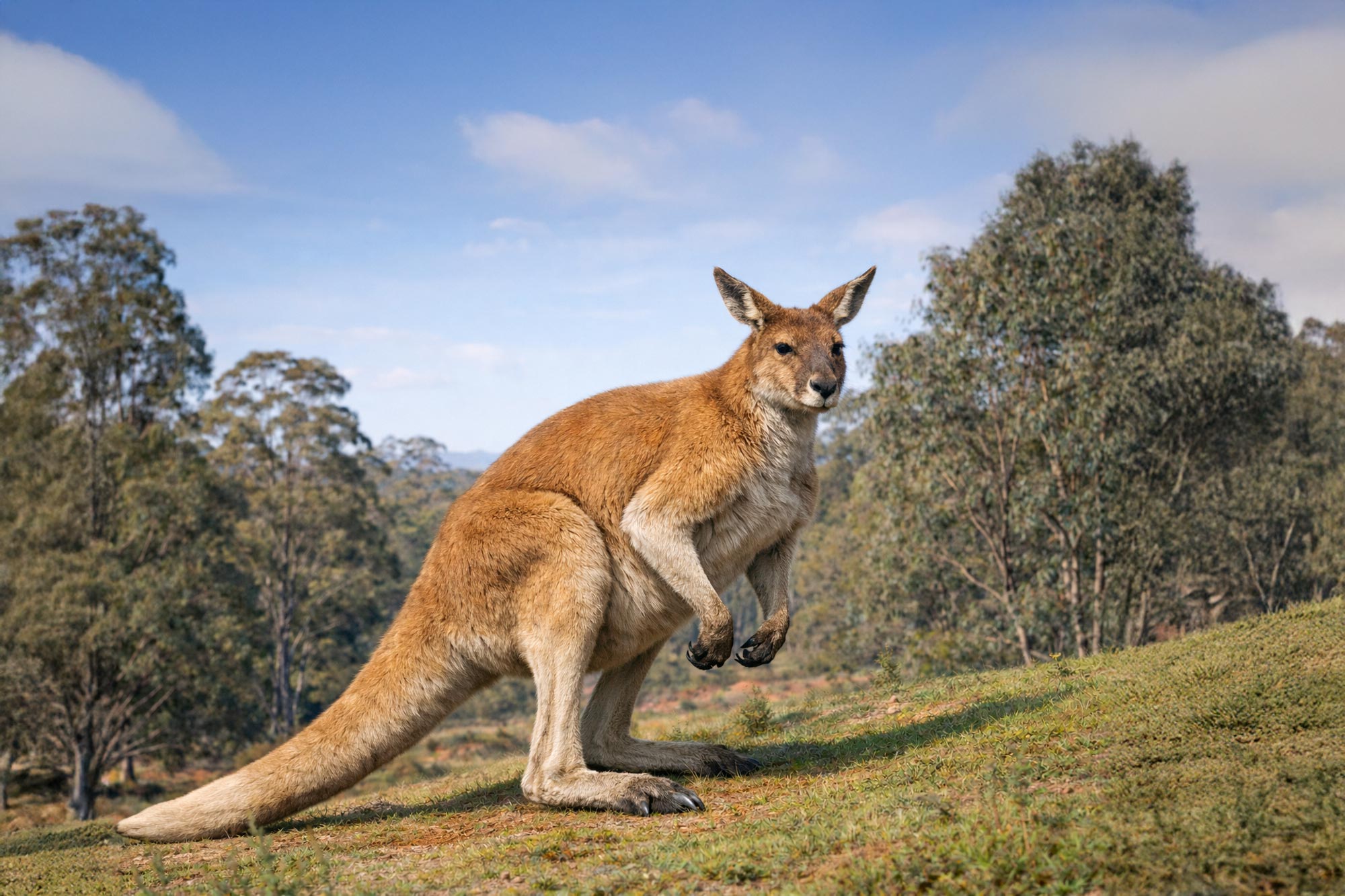
    Giant prehistoric kangaroos may have been able to hop after all, despite earlier claims that they were simply too heavy. Researchers found their foot bones and tendons were robust enough to withstand the stress of hopping, based on detailed comparisons with modern species. (Artist’s concept.) Credit: SciTechDaily.com

    Despite their enormous size, giant ancient kangaroos may have been capable of hopping in short, powerful bursts.

    Ancient relatives of today’s kangaroos, some of which may have weighed as much as 250 kilograms (550 pounds), might not have been as limited in their movement as scientists once believed. New research published today (January 22) in Scientific Reports suggests these massive animals were capable of hopping in short bursts. This conclusion challenges earlier studies that argued kangaroos weighing more than 160 kilograms were simply too heavy for their ankles to handle the forces involved in hopping.
    Sthenurine Hopping Reconstruction
    Reconstruction of Sthenurine Hopping. Credit: Megan Jones

    Fossil Bones Offer New Clues About Movement

    To investigate how these giant kangaroos may have moved, Megan Jones and her colleagues analyzed the hindlimbs of 94 modern specimens and 40 fossil specimens representing 63 species of kangaroos and wallabies. The sample included members of the extinct giant kangaroo group Protemnodon, which lived during the Pleistocene (between 2.6 million and 11,700 years ago).

    For each species, the researchers relied on previously published body weight estimates and detailed measurements of the fourth metatarsal, an elongated foot bone that plays a crucial role in hopping among modern kangaroos. Using the length and diameter of this bone, the team assessed whether the limbs could withstand the physical stresses produced during hopping.
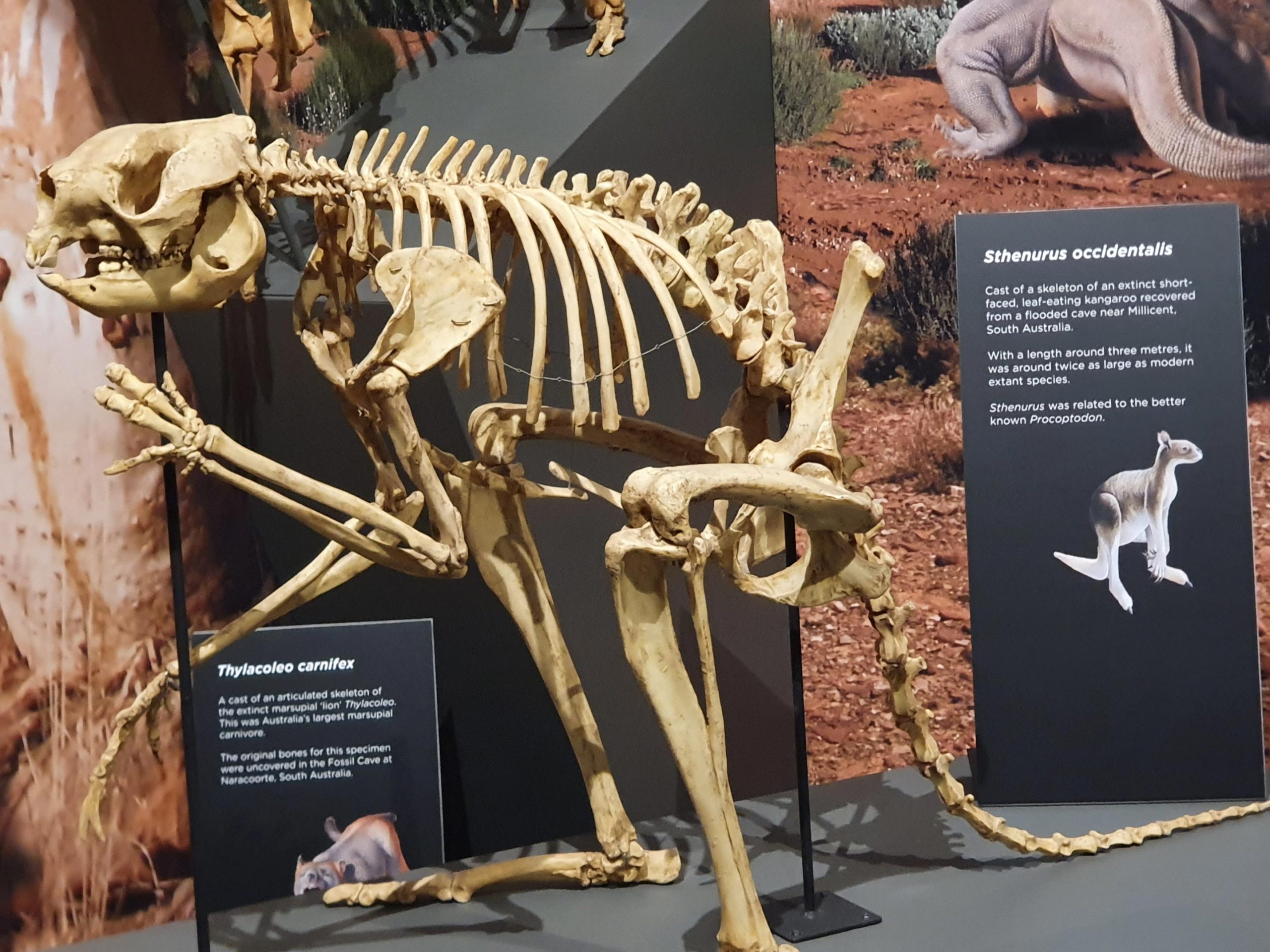
    Sthenurine Skeleton South Australian Museum
    Sthenurine skeleton in the South Australian Museum. Credit: Megan Jones

    Testing Tendons and Heel Bones for Strength

    The researchers also compared the heel bones of giant kangaroos with those of living kangaroo species. They calculated how large the Achilles tendon would need to be to absorb the forces generated during hopping in much heavier animals. The team then evaluated whether the heel bones of giant kangaroos were large enough to accommodate tendons of that size.

    Their analysis indicates that the metatarsals of all known giant kangaroo species were strong enough to tolerate hopping-related stress. The heel bones also appear to have been sufficiently large to support the tendon thickness required for this type of movement.
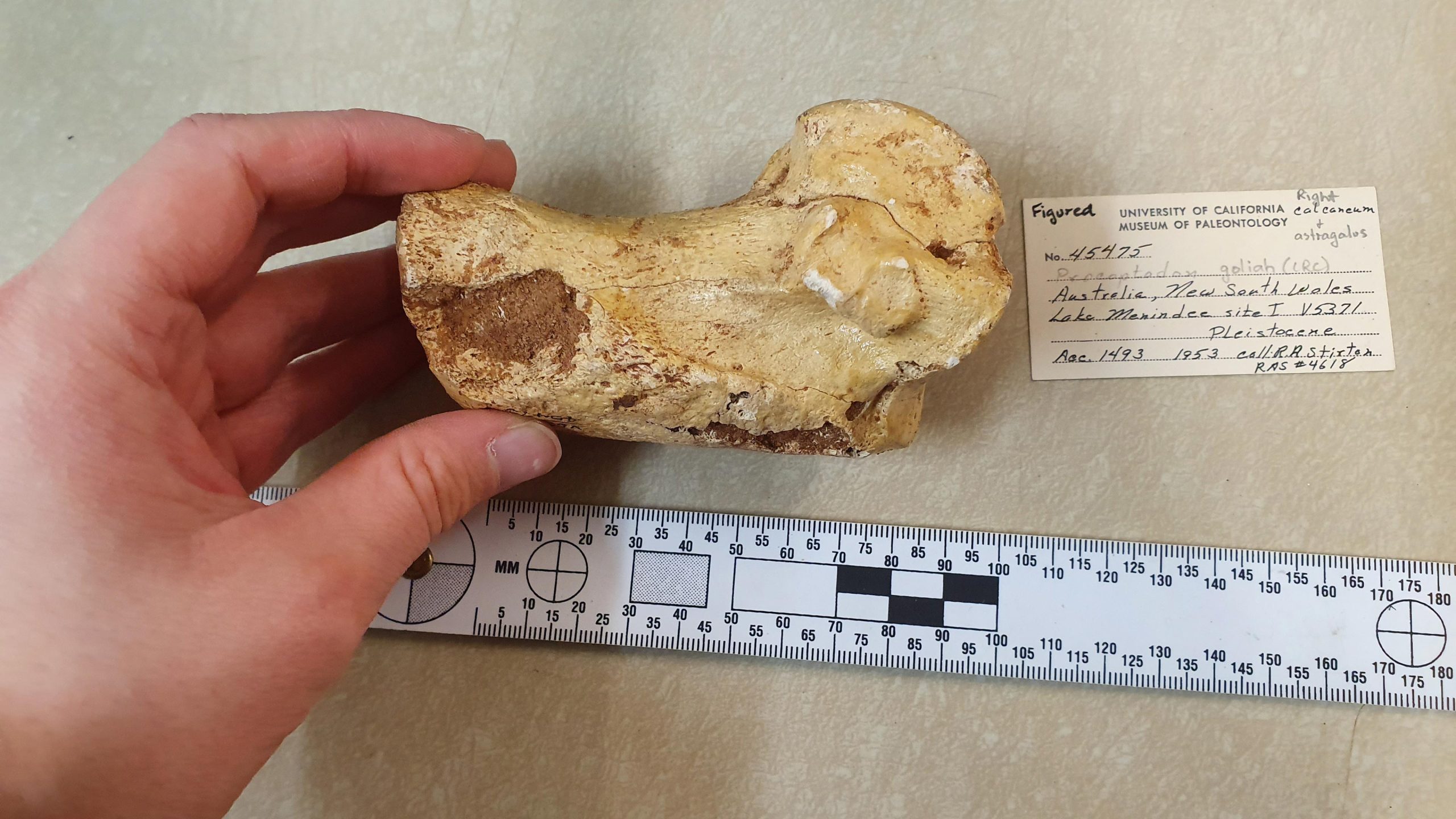
    Procoptodon goliah Heel Bone
    Heel bone of the largest giant kangaroo species, Procoptodon goliah. Credit: Megan Jone, UCMP, Berkeley

    Short Bursts, Not Long Journeys

    Taken together, the results suggest that the hindlimbs of giant kangaroos were mechanically capable of supporting hopping. However, the researchers caution that hopping was unlikely to be their primary way of getting around. Due to their enormous body size, repeated long-distance hopping would have been inefficient.

    Instead, the authors point out that occasional hopping is already seen in many smaller animals today, including hopping rodents and small marsupials. They propose that brief, powerful hops may have given giant kangaroos a survival advantage in specific situations. In particular, these sudden movements could have helped them escape predators such as the extinct marsupial lions known as Thylacoleo.

    Reference: “Biomechanical limits of hopping in the hindlimbs of giant extinct kangaroos” by Megan E. Jones, Katrina Jones and Robert L. Nudds, 22 January 2026, Scientific Reports.
    DOI: 10.1038/s41598-025-29939-7

    Never miss a breakthrough: Join the SciTechDaily newsletter.
    Follow us on Google and Google News.

    Paleontology Scientific Reports
    Share. Facebook Twitter Pinterest LinkedIn Email Reddit

    Related Articles

    Ancient Crocodile-Like Reptile Discovered in Brazil

    49 Feet Long – Ancient Giant Snake Discovered in India

    Wings of Fear: Unveiling the Prehistoric Scare Tactics of Feathered Dinosaurs

    Scientists Discover New Species of Ancient Alligator

    “Big John” Triceratops Specimen Has Skull Injuries That May Have Come From Combat With Another Dinosaur

    Scientists Uncover First Evidence of Respiratory Infection in a Dinosaur

    Fossil Treasure Trove: Earliest Evidence of Complex Social Behavior in Dinosaurs

    Newly Discovered Prehistoric Armored Dinosaur May Have Been Able to Dig

    Hundreds of Lost Fossils From the Darwin Collection Rediscovered by the British Geological Survey

    Leave A Reply Cancel Reply

    • Facebook
    • Twitter
    • Pinterest
    • YouTube

    Don't Miss a Discovery

    Subscribe for the Latest in Science & Tech!

    Trending News

    Millions of People Have Osteopenia Without Realizing It – Here’s What You Need To Know

    Researchers Discover Boosting a Single Protein Helps the Brain Fight Alzheimer’s

    World-First Study Reveals Human Hearts Can Regenerate After a Heart Attack

    Why Your Dreams Feel So Real Sometimes and So Strange Other Times

    This Simple Home Device May Boost Brain Power in Adults Over 40

    Enormous Prehistoric Insects Puzzle Scientists

    Scientists Develop Bioengineered Chewing Gum That Could Help Fight Oral Cancer

    After 37 Years, the World’s Longest-Running Soil Warming Experiment Uncovers a Startling Climate Secret

    Follow SciTechDaily
    • Facebook
    • Twitter
    • YouTube
    • Pinterest
    • Newsletter
    • RSS
    SciTech News
    • Biology News
    • Chemistry News
    • Earth News
    • Health News
    • Physics News
    • Science News
    • Space News
    • Technology News
    Recent Posts
    • Scientists Turn Red Lettuce Green, Unlocking Hidden Nutrients
    • Researchers Discover Natural Compound That Disarms Deadly Superbug
    • New Research Reveals That Your Morning Coffee Activates an Ancient Longevity Switch
    • Researchers Identify the Most Common Recessive Neurodevelopmental Disorder Ever Discovered
    • This Is What Makes You Irresistible to Mosquitoes
    Copyright © 1998 - 2026 SciTechDaily. All Rights Reserved.
    • Science News
    • About
    • Contact
    • Editorial Board
    • Privacy Policy
    • Terms of Use

    Type above and press Enter to search. Press Esc to cancel.