
Close Menu
    Facebook X (Twitter) Instagram
    SciTechDaily
    • Biology
    • Chemistry
    • Earth
    • Health
    • Physics
    • Science
    • Space
    • Technology
    Facebook X (Twitter) Pinterest YouTube RSS
    SciTechDaily
    Home»Science»Scientists Reveal the Surprising Innermost Secrets of Spaghetti
    Science

    Scientists Reveal the Surprising Innermost Secrets of Spaghetti

    By Lund UniversityOctober 22, 20251 Comment3 Mins Read
    Facebook Twitter Pinterest Telegram LinkedIn WhatsApp Email Reddit
    Share
    Facebook Twitter LinkedIn Pinterest Telegram Email Reddit
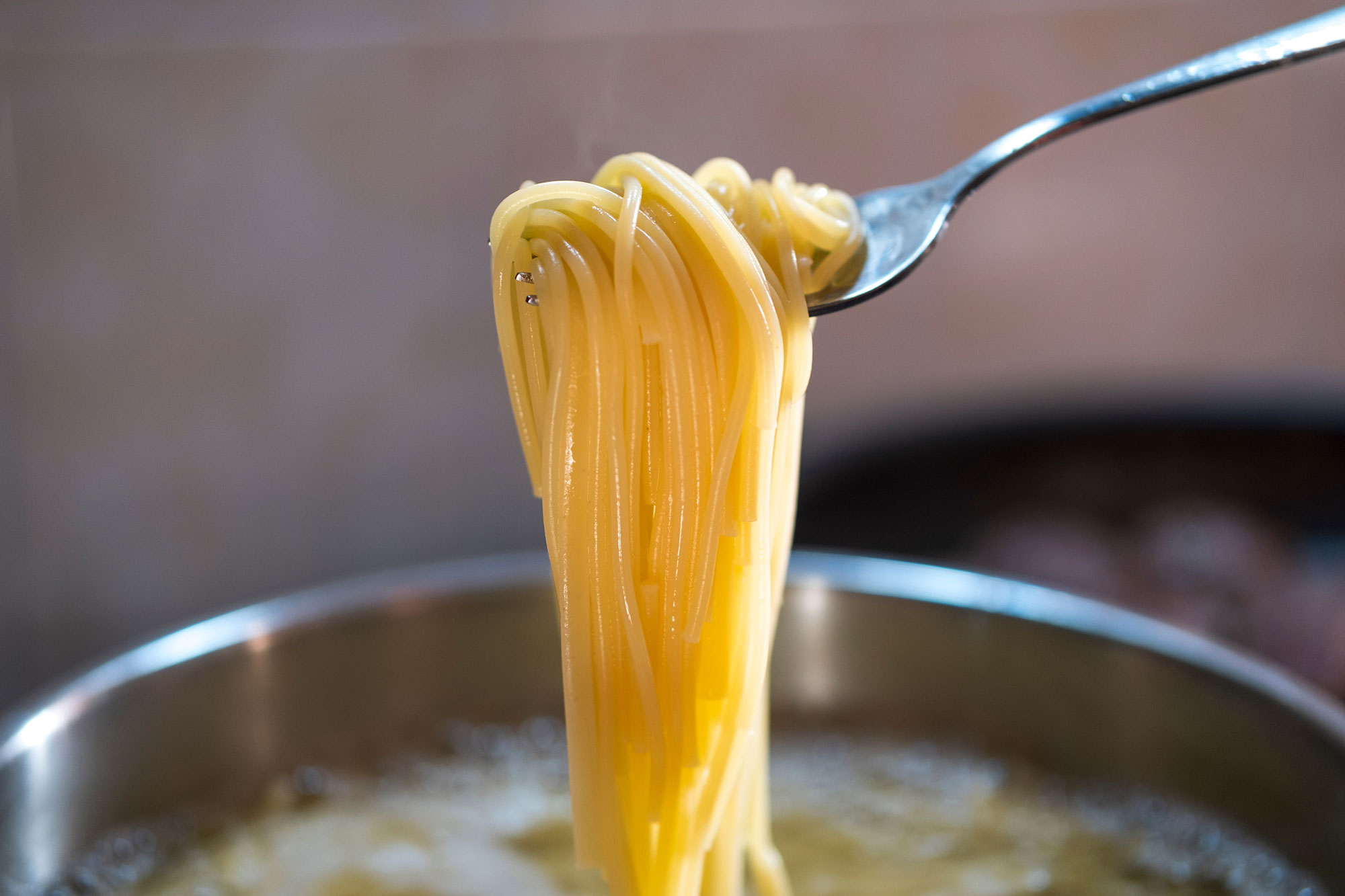
    Boiling Spaghetti Pasta
    By zooming into spaghetti at the molecular level, scientists have uncovered how its structure withstands the chaos of boiling water. Credit: Shutterstock

    New research from Lund University reveals that gluten plays a vital role in keeping spaghetti intact while boiling

    What prevents spaghetti from falling apart when cooked in boiling water? According to recent research, gluten is the key factor. The quantity of salt added to the cooking water also plays a surprisingly important role.

    To investigate, scientists used advanced analytical methods to examine the internal structure of store-bought spaghetti in both regular and gluten-free forms. Their results indicate that gluten is essential for maintaining the pasta’s structure while it cooks.

    “We were able to show that the gluten in regular spaghetti acts as a safety net that preserves the starch. The gluten-free pasta, which contains an artificial matrix, only works optimally under exactly the right cooking conditions – otherwise the structure easily falls apart,” says Andrea Scotti, senior lecturer in physical chemistry at Lund University.

    Scotti used both small-angle neutron scattering and X-rays in the research. These methods make it possible to study foods at the microscopic level – down to a billionth of a meter – and link these findings to product characteristics such as texture, shelf life, and glycaemic index.

    The new study also concludes that the salt in the pasta water plays a role in the end result.

    The Role of Salt in Pasta Perfection

    “Our results show that regular pasta has higher tolerance, or better structural resistance, to less optimal cooking conditions such as being cooked for too long or too much salt being added to the water. So, cooking pasta with the right amount of salt is not just a matter of taste – it also affects the microstructure of the pasta and thus the whole dining experience,” says Andrea Scotti.

    The researchers now plan to continue their work by studying more types of pasta and different manufacturing conditions, as well as replicating what happens to the pasta once it is in the stomach, to see what effect digestion has on its chemical structure.

    “With demand for gluten-free alternatives increasing, we hope that our methods can help develop more durable and nutritious products that stand up to the demands placed on them by both the cooking process and by consumers,” says Andrea Scotti.

    Reference: “A small-angle scattering structural characterization of regular versus gluten-free spaghetti” by J.E. Houston, R. Schweins, N.P. Cowieson, G.N. Smith and A. Scotti, 27 August 2025, Food Hydrocolloids.
    DOI: 10.1016/j.foodhyd.2025.111855

    The research was conducted together with Judith Houston, lead instrument scientist for the LoKI instrument at the European Spallation Source (ESS) in Lund, Sweden, and collaborators from the Institut Laue-Langevin in France and the Diamond Light Source and ISIS Neutron and Muon Source in the UK.

    Never miss a breakthrough: Join the SciTechDaily newsletter.
    Follow us on Google and Google News.

    Food Science Lund University
    Share. Facebook Twitter Pinterest LinkedIn Email Reddit

    Related Articles

    Transgenic Animal Research Lacks Funding & Approval in the USA

    Consuming Fruits & Vegetables Improves Psychological Well-Being

    Genetically Modified Maize Study Faces Even More Scrutiny

    Cutting Food Losses Could Feed an Additional Billion People

    Little Significant Difference in Organic Foods vs. Conventional Alternatives

    Researchers Use Sanitation Techniques to Boost Sap Production

    Intercontinental Crop Losses Caused by Ozone

    More Dolphins Being Eaten In Poor Countries

    Dingo Solves Complex Problem, Moves Furniture to Reach Food

    1 Comment

    1. Boba on October 22, 2025 11:18 am

      A spaghetti scientist – what kind of a job is that?

      I want it!

      Reply
    Leave A Reply Cancel Reply

    • Facebook
    • Twitter
    • Pinterest
    • YouTube

    Don't Miss a Discovery

    Subscribe for the Latest in Science & Tech!

    Trending News

    AI Could Detect Early Signs of Alzheimer’s in Under a Minute – Far Before Traditional Tests

    What if Dark Matter Has Two Forms? Bold New Hypothesis Could Explain a Cosmic Mystery

    This Metal Melts in Your Hand – and Scientists Just Discovered Something Strange

    Beef vs. Chicken: Surprising Results From New Prediabetes Study

    Alzheimer’s Breakthrough: Scientists Discover Key Protein May Prevent Toxic Protein Clumps in the Brain

    Quantum Reality Gets Stranger: Physicists Put a Lump of Metal in Two Places at Once

    Scientists May Have Found the Key to Jupiter and Saturn’s Moon Mystery

    Scientists Uncover Brain Changes That Link Pain to Depression

    Follow SciTechDaily
    • Facebook
    • Twitter
    • YouTube
    • Pinterest
    • Newsletter
    • RSS
    SciTech News
    • Biology News
    • Chemistry News
    • Earth News
    • Health News
    • Physics News
    • Science News
    • Space News
    • Technology News
    Recent Posts
    • Simple and Cheap Blood Test Could Detect Cancer and Other Diseases Before Symptoms Appear
    • Century-Old Cleaning Chemical Linked to 500% Increased Risk of Parkinson’s Disease
    • What if Your Memories Never Happened? Physicists Take a New Look at the Boltzmann Brain Paradox
    • Students Found an Ancient Star That Shouldn’t Be in the Milky Way
    • Astronomers Solve 50-Year Mystery and Reveal Hidden Culprit Behind Strange X-Ray Emissions
    Copyright © 1998 - 2026 SciTechDaily. All Rights Reserved.
    • Science News
    • About
    • Contact
    • Editorial Board
    • Privacy Policy
    • Terms of Use

    Type above and press Enter to search. Press Esc to cancel.